Lebanon festivals put you on the steps of a Roman temple for an opera, or inside a palace courtyard for jazz — and there is nothing else in the world quite like it. But before any US reader plans a trip around Baalbeck or Beiteddine, the current security picture has to shape every decision. This guide covers the seven most significant Lebanon festivals, what the venues actually feel like, and the real-world logistics.
Are Lebanon festivals safe for US travelers to attend right now?
Lebanon is currently under a US State Department Level 4 “Do Not Travel” advisory, the highest warning the department issues. On February 23, the department ordered the departure of non-emergency US government personnel from Beirut and suspended routine consular services. Active military operations in the Bekaa Valley directly affect the Baalbeck festival corridor. US citizens already in the country are being urged to leave while commercial flights remain available.
What this means in practice: the festival institutions described below are real and, in calmer periods, run full programs — Baalbeck staged a full edition with opera and Hiba Tawaji in summer 2025. But right now, the US government cannot provide emergency assistance to Americans in Lebanon, and commercial air service has collapsed to two carriers (Middle East Airlines and Royal Jordanian). Treat this guide as reference for when conditions change, not as a green light to book a ticket this summer.
Pro Tip: Enroll in the Smart Traveler Enrollment Program (STEP) before any Lebanon trip, and check the US Embassy Beirut security alerts page the morning of any travel decision. Advisories shift weekly.
Baalbeck International Festival: Roman temples, opera, and the real benchmark
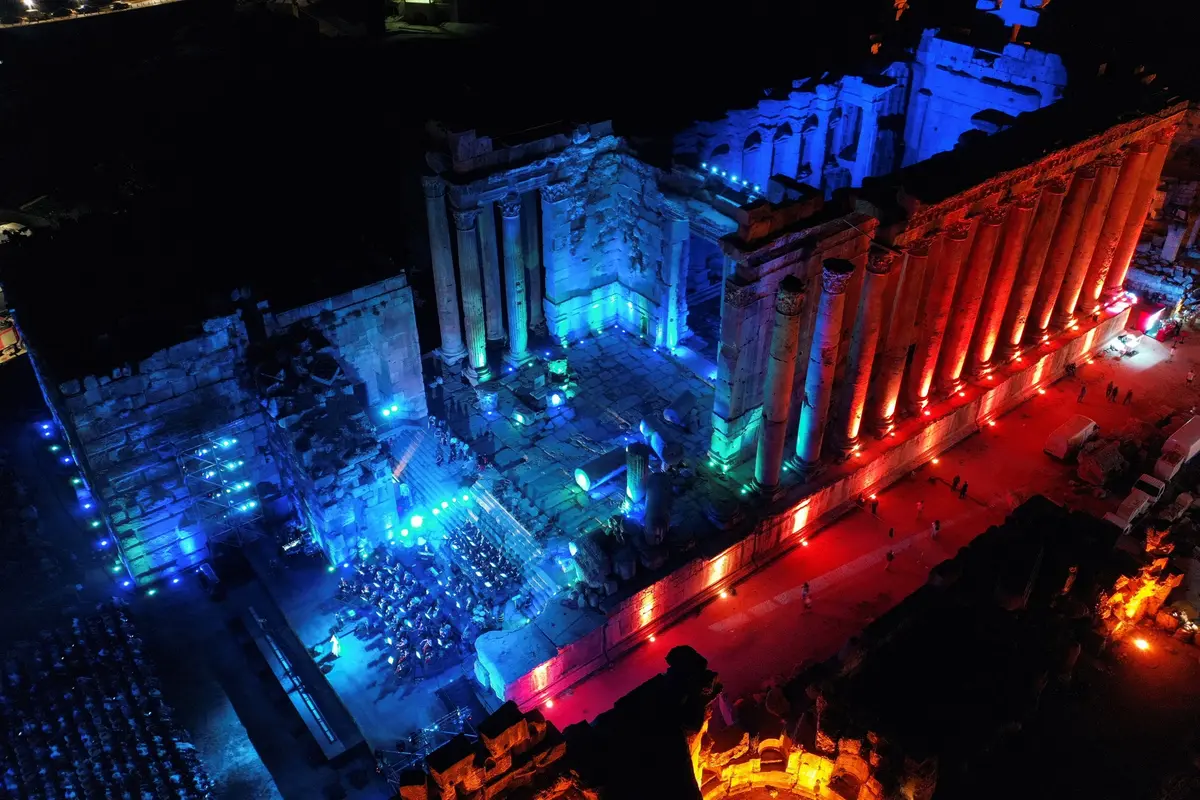
The Baalbeck International Festival is the oldest cultural event in the Middle East — first organized in 1955, formally named the following year — and it is the reason most people discover Lebanon festivals at all. Performances happen on the steps of the Temple of Bacchus or beneath the six remaining columns of the Temple of Jupiter, the largest temple the Roman Empire ever built. It is a UNESCO World Heritage site, and you are sitting inside it.
The scale is the thing. A recent edition opened with a full-orchestra production of Bizet’s Carmen on the Bacchus steps and closed with Hiba Tawaji performing Oussama Rahbani’s “Stages” with orchestra and choir. The programming moves between Western opera, ballet, jazz, and “Lebanese Nights” of traditional music. Over the decades the stage has hosted Ella Fitzgerald, Sting, Fairuz, Umm Kulthum, Charles Aznavour, Jean-Michel Jarre, and Mika.
The honest friction: the ruins are gorgeous, but the seating is raw stone. Bring a cushion if you value your back. Sound carries unevenly — seats off the center axis get a muddier mix.
How do you get to Baalbeck, and what are the real risks?
Baalbeck sits about 53 miles (85 km) northeast of Beirut in the Bekaa Valley. Even in calm periods, the drive crosses the Mount Lebanon range and ends in a region the State Department flags for proximity to the Syrian border and non-state armed groups. In the current environment, both the UK FCDO and US State Department advise against all travel to the Baalbek-Hermel and Beqaa governorates. The festival has historically secured the event corridor heavily on performance nights, but that is conditional on there being a festival to attend.
When conditions do allow travel, the standing logistics:
- Do not self-drive: Roads have missing drain covers, unlit stretches, and aggressive driving norms. Car theft rates run higher than in Beirut.
- Official festival buses: Depart from Charles Helou Station in Beirut on performance nights.
- Private driver: The sensible alternative. Expect $120–$180 round-trip depending on wait time.
- Travel time: Roughly 2 hours each way without traffic, longer on Friday and Saturday nights.
Where should you eat on the way to Baalbeck?
Lakis Farms on the approach road serves Sfiha Baalbeckiye — a small open-faced meat pastry made with local lamb and baked in stone ovens. It is specific to this town and does not translate when attempted elsewhere. The Bekaa Valley also produces over 90% of Lebanon wine, and the drive passes two serious wineries in the Bekaa Valley worth a stop: Château Ksara (tour the Roman caves under the estate) and Château Kefraya (the terrace has a straight view across the vineyards to the mountains).
Quick Stats — Baalbeck International Festival
- Location: Roman Acropolis, Baalbeck, Bekaa Valley (~53 miles / 85 km from Beirut)
- Cost: Tickets typically $40–$200 depending on seat and headliner
- Best for: Opera, classical, and jazz fans who care about venue over convenience
- Time needed: Full day and evening — plan on 12+ hours door-to-door from Beirut
Beiteddine Art Festival: a 19th-century palace in the Chouf Mountains
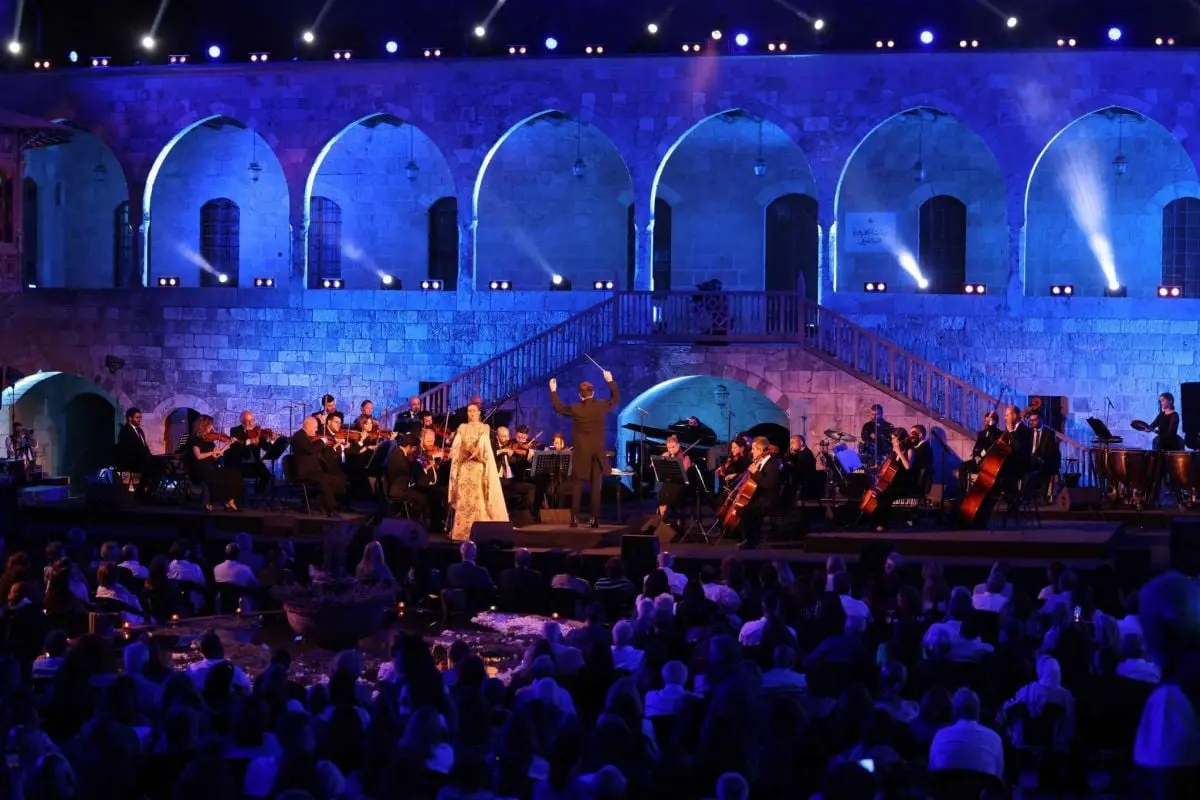
The Beiteddine Art Festival is the counterweight to Baalbeck’s Roman grandeur: smaller scale, more refined, and built around the 200-year-old Beiteddine Palace — the former seat of Emir Bashir Shihab II. The venue sits about 28 miles (45 km) southeast of Beirut in the Chouf Mountains. Note: the festival suspended its most recent planned season in response to the South Lebanon situation, so check beiteddine.org before assuming any given year will run.
What does a night at Beiteddine actually feel like?
The palace itself is the draw. Vaulted stables hold rotating art exhibitions during festival weeks — gold leaf work, landscape painting, installations with what one returning visitor called “archaic power.” The main concert happens in the outer courtyard, Al-Midan, with the palace walls acting as a natural acoustic shell. The sound is noticeably cleaner here than at Baalbeck. The crowd skews older and more formal — fewer Instagram cameras, more shawls and jackets.
My contrarian take: skip the headline-name concerts at Beiteddine and go for the chamber music or art-exhibition nights. The palace is the star. Big-name pop acts feel mismatched to the space.
Why does Beiteddine’s weather surprise US visitors?
The Chouf Mountains sit at about 2,800 feet (850 m) elevation, and they run their own microclimate. Beirut can be 86°F (30°C) and sticky at 8 p.m. while Beiteddine is 64°F (18°C) with ground fog rolling through the courtyards by intermission. A light jacket is not optional. Locals bring wool shawls in midsummer and nobody looks odd doing it.
Pro Tip: The Mir Amin Palace Hotel in nearby Deir el Qamar village is a converted palace that belonged to the Emir’s son. Booking a room here eliminates the post-concert drive back to Beirut, which is the single most dangerous part of any Chouf trip — the road has unlit hairpins and no shoulder.
Quick Stats — Beiteddine Art Festival
- Location: Beiteddine Palace, Chouf Mountains (~28 miles / 45 km from Beirut)
- Cost: Tickets typically $30–$120
- Best for: Classical music, ballet, and art-history travelers who want atmosphere over scale
- Time needed: Full evening, plus 1–2 hours before showtime for exhibitions
Byblos International Festival: the harbor stage with a Crusader castle behind it
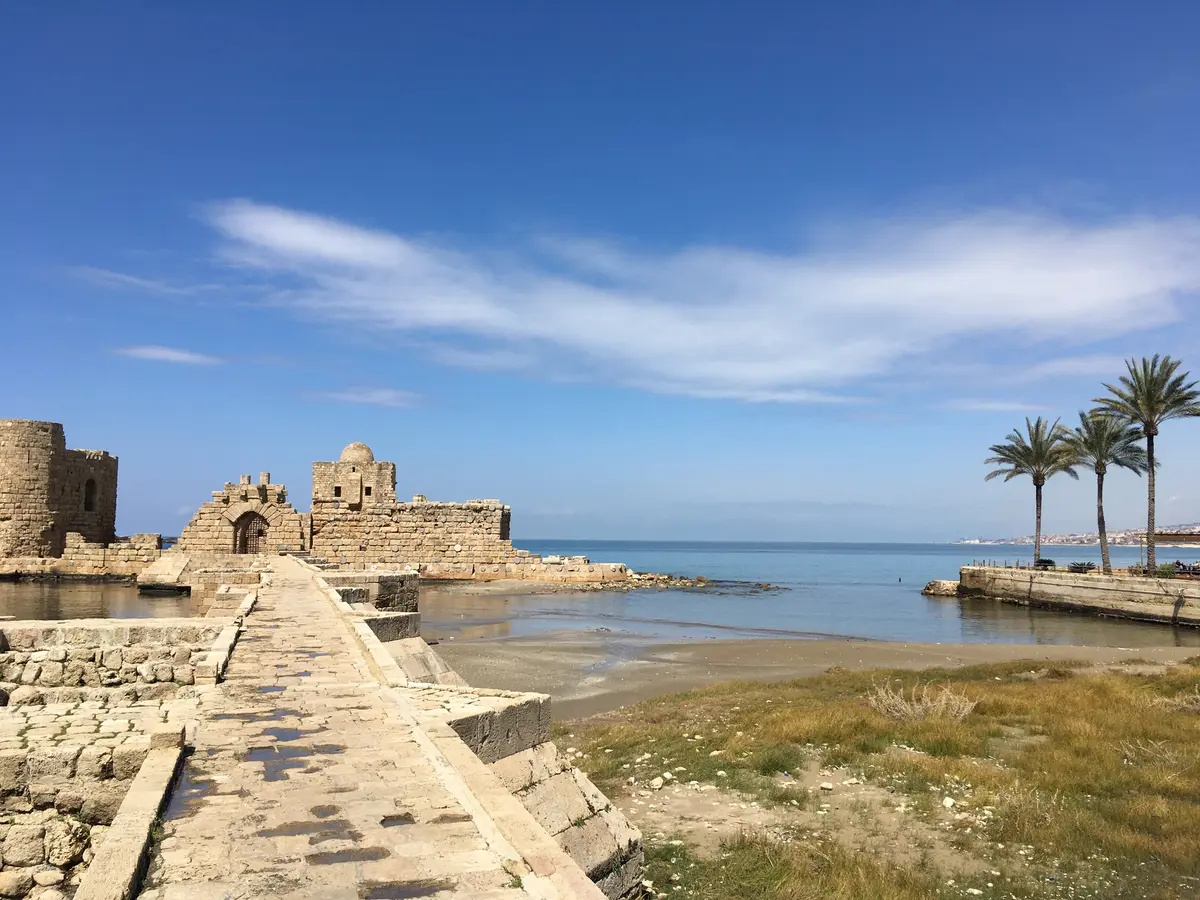
Byblos (also called Jbeil) is one of the oldest continuously inhabited cities in the world, and its festival is the most commercially driven of the Lebanon festivals. The stage is built over the water in the ancient harbor, with a 12th-century Crusader castle lit up as the backdrop. Past lineups have brought in Elton John, The Chainsmokers, Sia, and regional headliners. Crowds stand and dance — it is the opposite of Baalbeck’s seated reverence.
Real talk: Byblos old-town traffic during festival nights is punishing. Park outside the historic center (there are lots near the highway exit) and walk in — about 12 minutes on foot, versus 45 minutes crawling in a car.
Pro Tip: Check the “Off Byblos” program the week of the main festival. It runs free or low-cost fringe performances in side streets and small venues — emerging local artists, more interesting than half the headliners.
Quick Stats — Byblos International Festival
- Location: Byblos harbor, ~23 miles (37 km) north of Beirut
- Cost: $50–$250 depending on act
- Best for: Pop and rock fans, younger travelers, Mediterranean-sunset people
- Time needed: 6–8 hours including dinner in the old souk
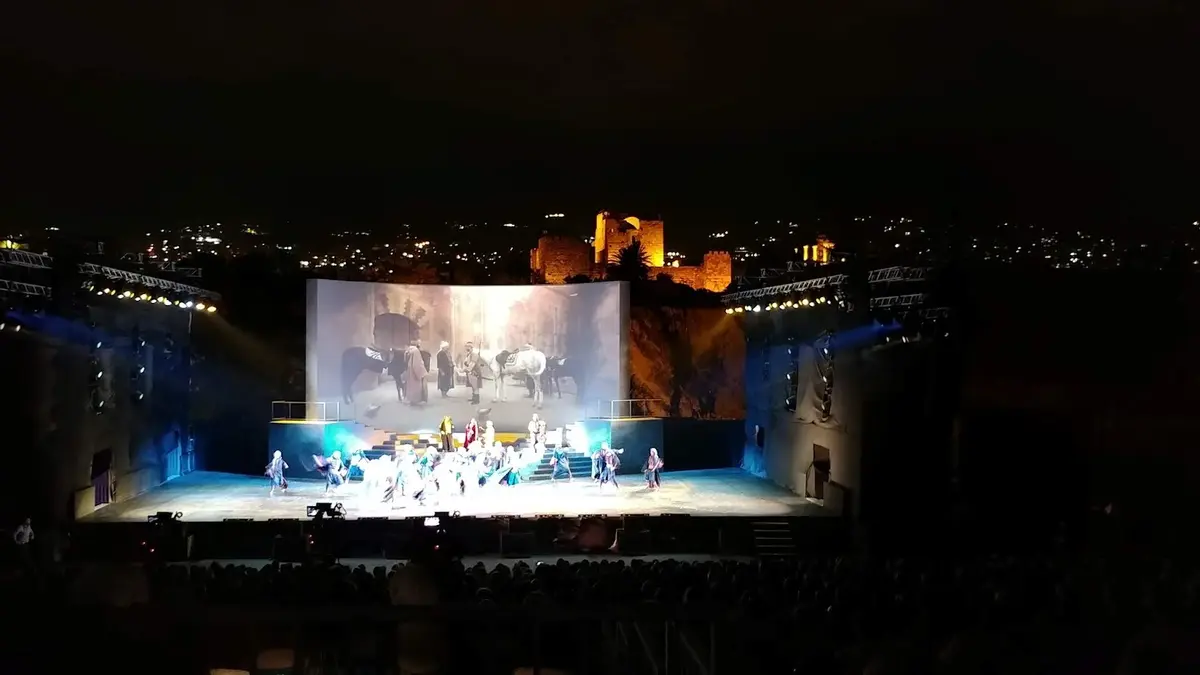
Batroun International Festival: the lifestyle festival
Batroun has become the summer destination for younger Lebanese and diaspora, and its festival reflects that shift — less stage, more street. The town itself becomes the venue: photography exhibitions on the walls of the old sandstone alleys, a Mediterranean Film Festival at outdoor screens, and a Beer, Wine, and Seafood Festival that often runs near the Phoenician sea wall by the fisherman’s port.
Events are decentralized. Main concerts happen at the port; smaller shows cluster around Colonel Brewery, the craft-beer anchor of the town’s nightlife. Rent a bike for the day and cover the old town, the sea wall, and Ixsir Winery in the hills above. For more details on what to see, check out our guide on things to do in Batroun.
Quick Stats — Batroun International Festival
- Location: Old town and port, Batroun (~34 miles / 55 km north of Beirut)
- Cost: Many events free; ticketed concerts $25–$80
- Best for: Solo travelers, foodies, craft-beer and wine drinkers
- Time needed: Weekend — stay overnight to catch both the late nightlife and morning swim
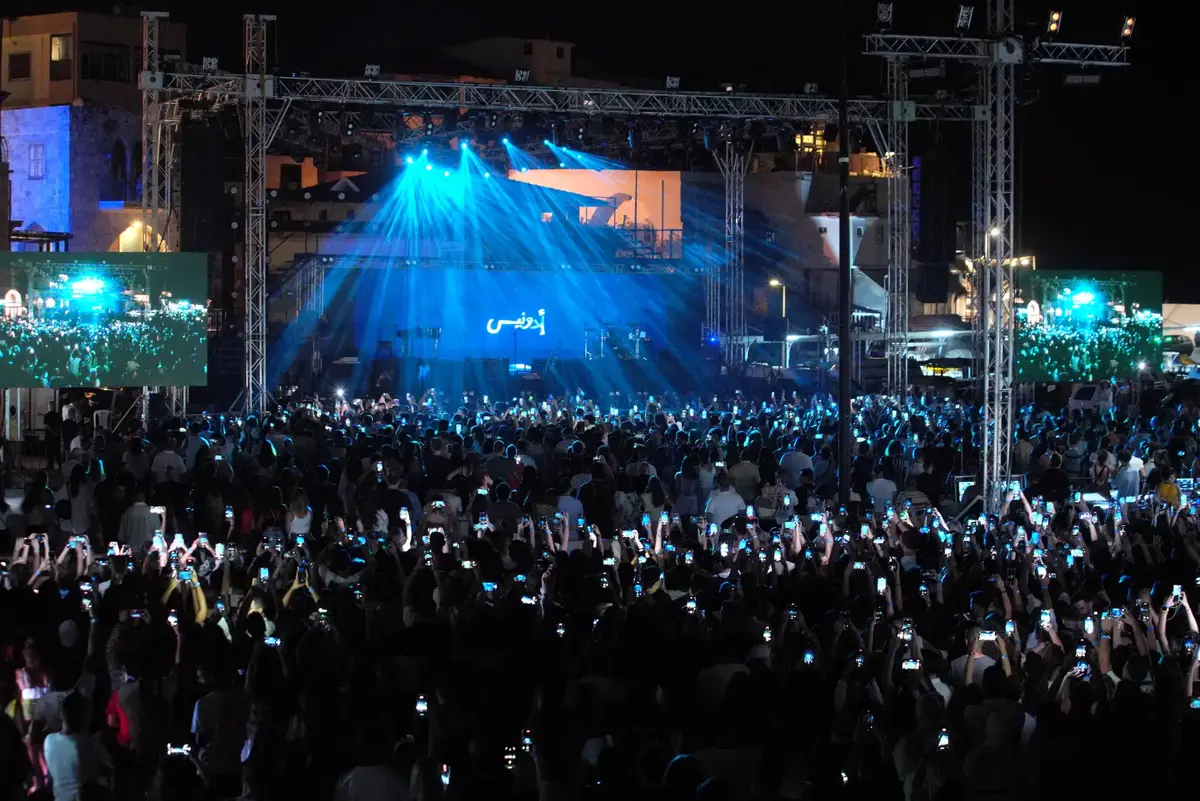
Jounieh International Festival: fireworks over the bay
The Jounieh International Festival is built around one thing: the fireworks display over the Bay of Jounieh, which is genuinely one of the most visually ambitious single events in the region. The show runs 25–30 minutes and is choreographed across barges spread across the bay.
Here is the planning reality nobody tells you: the coastal road turns into a parking lot two hours before showtime. If your plan is “drive up, find a spot, watch,” you will spend the evening staring at a dashboard. Book a rooftop table in advance — The View Rooftop at the Burj on Bay Hotel and the rooftops at Le Royal and Holiday Beach Hotel all have sightlines. Expect $60–$100 minimum spend per person for a table during fireworks night. The festival also uses the Casino du Liban (a 1960s institution) for gala nights, which run more formal than anything in Batroun. During the day, consider paragliding in Jounieh for an aerial preview of the bay.
Quick Stats — Jounieh International Festival
- Location: Bay of Jounieh, ~12 miles (19 km) north of Beirut
- Cost: Street view free; rooftop tables $60–$150/person minimum
- Best for: Families, photographers, anyone who loves a pyrotechnic set piece
- Time needed: Full evening — arrive by 5 p.m. to beat traffic
Al Bustan Festival: the winter chamber-music gem
Every other festival on this list is summer outdoor. The Al Bustan Festival runs in February and March, indoors, at the 450-seat Emile Bustani Auditorium inside the Al Bustan Hotel in Beit Mery — a mountain town overlooking Beirut. It was founded in 1994 to rebuild Lebanon’s cultural life after the civil war, and the programming is strictly classical, opera, jazz, and chamber ensembles.
The room size is the point. At 450 seats you are close enough to hear a cellist breathe. Themes rotate yearly (“Queens & Empresses of the Orient” in one recent edition). Smart winter visitors ski at Mzaar Kfardebian during the day — Lebanon’s largest resort, 6,230 feet (1,900 m) base — and come down to Beit Mery for evening concerts. The hotel’s on-site restaurants, Les Glycines and Il Giardino, run late enough that you will often end up two tables from the night’s soloist at dinner.
Quick Stats — Al Bustan Festival
- Location: Al Bustan Hotel, Beit Mery (~10 miles / 16 km east of Beirut)
- Cost: $40–$150 per concert; festival passes available
- Best for: Classical music travelers, ski-and-culture combo trips
- Time needed: 3–5 night stay to see multiple concerts and ski days
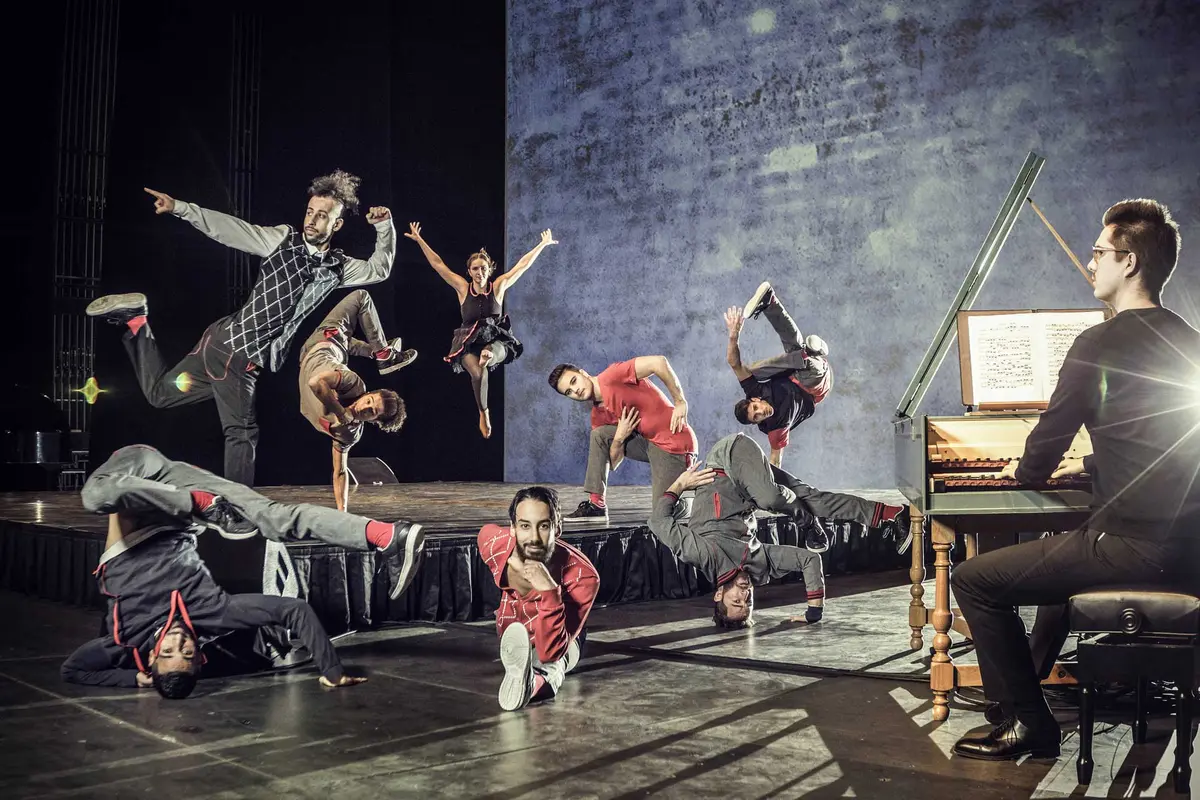
Tyre International Festival: Phoenician heritage in the south
Tyre (Sour) hosts its festival in the Roman Hippodrome — part of the UNESCO site that preserves what was once the Phoenician metropolis. The scale is horizontal rather than vertical: instead of temple columns overhead, you get the long sweep of the hippodrome track, and the acoustic experience is completely different from Baalbeck.
Here is the situation a US reader needs to understand clearly: Tyre sits south of Saida, which the US Embassy currently flags as a “Do Not Travel, Depart If You Are There” zone — all of Lebanon south of Saida. UNIFIL (the UN Interim Force in Lebanon) maintains presence, but military activity has continued in the region since the November 2024 cessation-of-hostilities arrangement. In normal periods the coastal road to Tyre is accessible and the town itself stable, with public beaches and a slower pace than Beirut. In the current environment, this festival is effectively off the table for US visitors.
Quick Stats — Tyre International Festival
- Location: Roman Hippodrome, Tyre, southern Lebanon (~52 miles / 83 km south of Beirut)
- Cost: $25–$90
- Best for: Heritage travelers, archaeology-oriented visitors (when security permits)
- Time needed: Overnight; day-tripping south is not advisable
How much cash do you need for Lebanon festivals?
Lebanon’s economy has de facto dollarized, and most festival-related spending expects physical US currency. Bring fresh dollars — new-design bills with the blue strip, crisp, no tears, no ink marks, no writing. Worn bills get rejected routinely, even $100s. Most vendors near festival venues will not accept cards, and the banking system’s cash withdrawal limits remain restrictive.
Rough cash budget per person for a three-day trip covering one festival:
- Private driver (round trip to venue): $150–$200
- Festival ticket: $50–$200
- Three nights lodging (mid-range): $300–$600
- Meals and wine: $150–$300
- Buffer for tips, taxis, unexpected cash-only vendors: $200
Do not exchange money at Beirut-Rafic Hariri airport — the rates are poor. Use reputable exchange shops in Hamra or Achrafieh, and check the latest on Lebanon currency before traveling.
How do you get around safely for Lebanon festivals?
Ride-sharing apps (Uber and Bolt) work within Greater Beirut and accept cash, but coverage falls off fast outside the city. For any festival more than 15 miles (24 km) from Beirut, arrange a private driver in advance rather than relying on apps or buses showing up. A trusted driver doubles as a translator, a cash-exchange intermediary, and a real-time safety check — they know which roads have flared up that day. Avoid airport SIM cards; go to an official Touch or Alfa store for a Visitor Line, or arrange a sim card for tourists before arrival.
The Beirut–Byblos–Batroun coastal corridor is the most heavily trafficked and generally the most secure. The Chouf (Beiteddine) and Bekaa (Baalbeck) routes require more careful planning, current advisory checks, and a driver who knows the alternate routes. Avoid refugee settlements, the Dahiyeh district of southern Beirut, all border areas with Syria, and anywhere south of Saida. Always verify is Lebanon safe status the week of travel, not the month.
Pro Tip: Save the US Embassy Beirut emergency number and the local Internal Security Forces number (112) to your phone before you land, and share your daily itinerary with someone back home. Standard practice in stable regions; essential here.
Before you book
TL;DR: The seven Lebanon festivals in this guide — Baalbeck, Beiteddine, Byblos, Batroun, Jounieh, Al Bustan, and Tyre — are genuine cultural institutions with programs that have drawn Sting, Fairuz, Elton John, and world-class classical ensembles to venues that range from a Roman temple to a palace courtyard. The current US Level 4 “Do Not Travel” advisory and active military operations mean this is a guide for planning ahead, not for booking immediately. When conditions shift, prioritize Baalbeck for the sheer impossibility of the venue, Al Bustan for intimacy, and Batroun for atmosphere.
Which of these venues would you build a trip around when the situation opens up — the Roman temples, the palace in the Chouf, or the harbor stage at Byblos? Drop your pick in the comments.