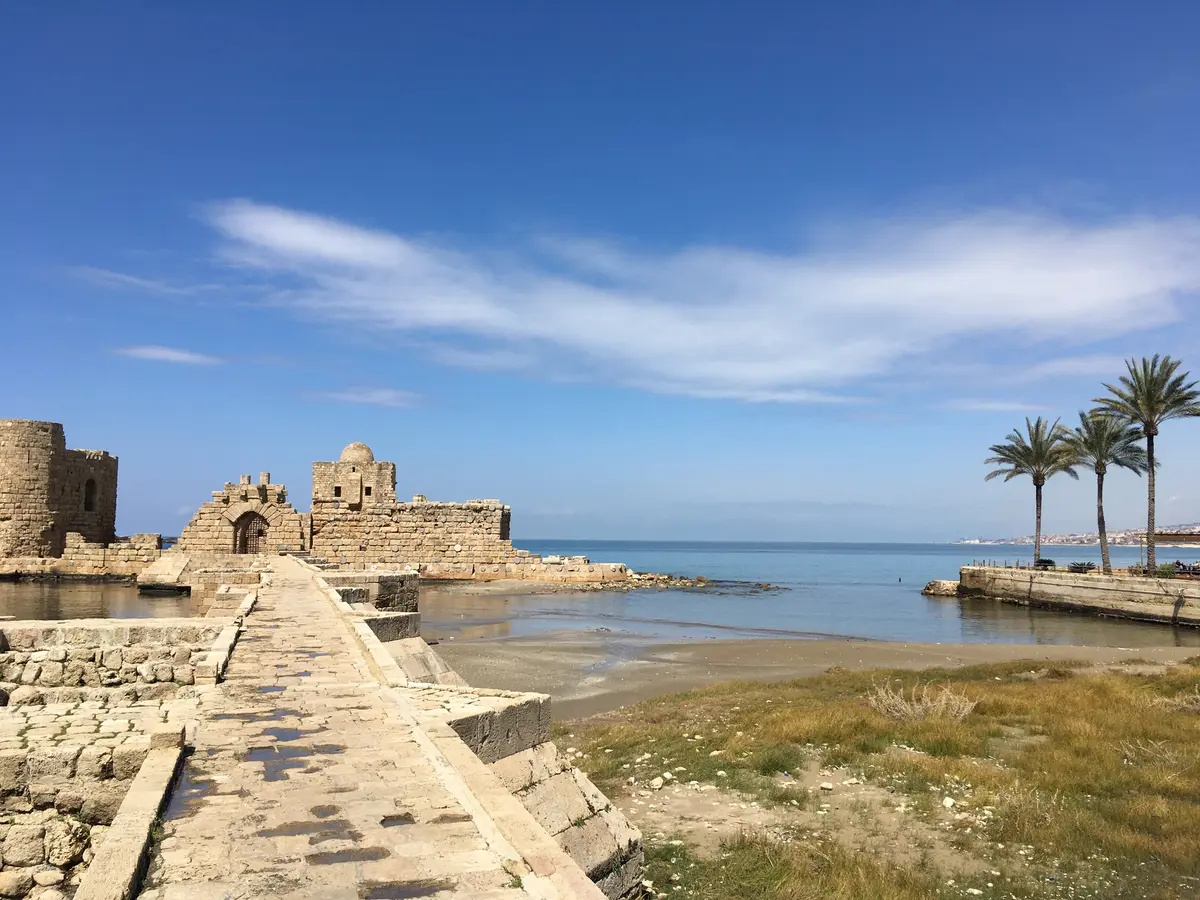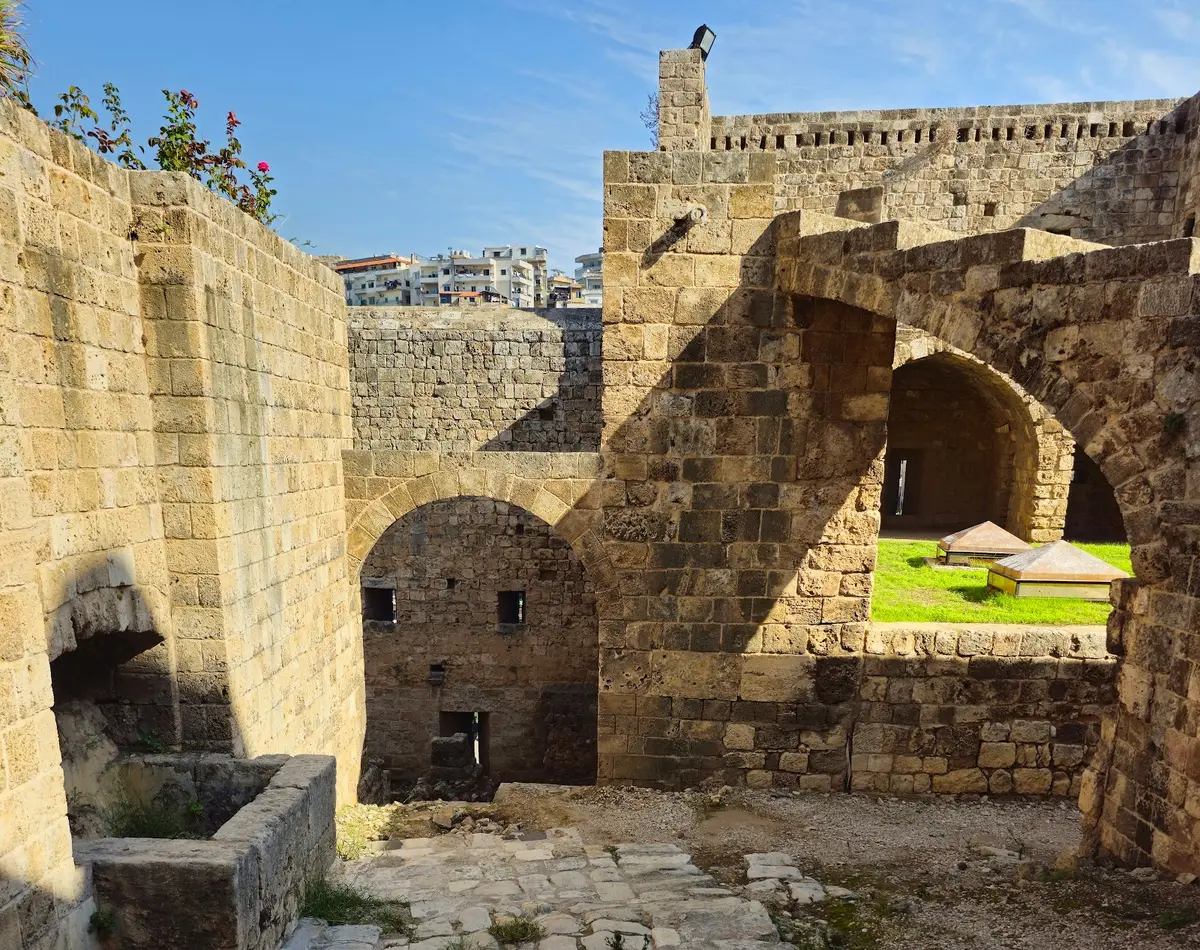
Tyre’s historic peninsula is one of the Mediterranean’s most layered urban experiences — two neighborhoods with different languages of daily life, separated by a road you’ll cross without noticing. The Christian quarter runs on wine, jasmine courtyards, and late dinners by the water. The Muslim quarter and Old Souks run on coffee, spice, and the five daily calls to prayer. This guide — part of our wider Lebanon travel guide coverage — covers what the Tyre Christian and Muslim quarters are actually like, what’s worth your time, and the hard reality of visiting right now.
Is it safe to visit Tyre right now?
No — not at the moment, and the broader question of whether Lebanon is safe for American tourists depends entirely on how the current escalation develops. The US State Department has issued a Level 4 “Do Not Travel, Depart If You Are There” warning for all parts of Lebanon south of the city of Saida, which includes Tyre, citing continued military activity since the November 2024 cessation of hostilities. The UK, Canadian, and Australian governments advise against travel. Much of Tyre’s population has been displaced by forced evacuation orders, and airstrikes have continued into recent weeks.
This isn’t a theoretical risk. Israeli strikes in October 2024 leveled seven buildings in the city center, damaged more than 400 apartments, and hit between several heritage sites including the hippodrome and Phoenician seaside ruins. Around 85% of Tyre’s roughly 60,000 residents have left, and fresh Israeli airstrikes hit the area on Easter Sunday, with IDF ground troops advancing into Lebanese territory just south of the city.
Pro Tip: Standard travel insurance for Lebanon is almost universally invalidated by government “do not travel” advisories. Even if you’re comfortable with the personal risk, the financial exposure from a medical evacuation in an active conflict zone is not something standard policies will touch.
What happens when things settle down
Ceasefires in this region have held before and they can hold again. If travel advisories are downgraded, the peninsula itself — the part described in this guide — is walkable, compact, and genuinely one of the most interesting corners of the eastern Mediterranean. The guide below describes the city as it operated before the 2024 war and as it should operate when the situation stabilizes. Treat it as a reference, not an itinerary for next month.
What makes Tyre’s two quarters unique?
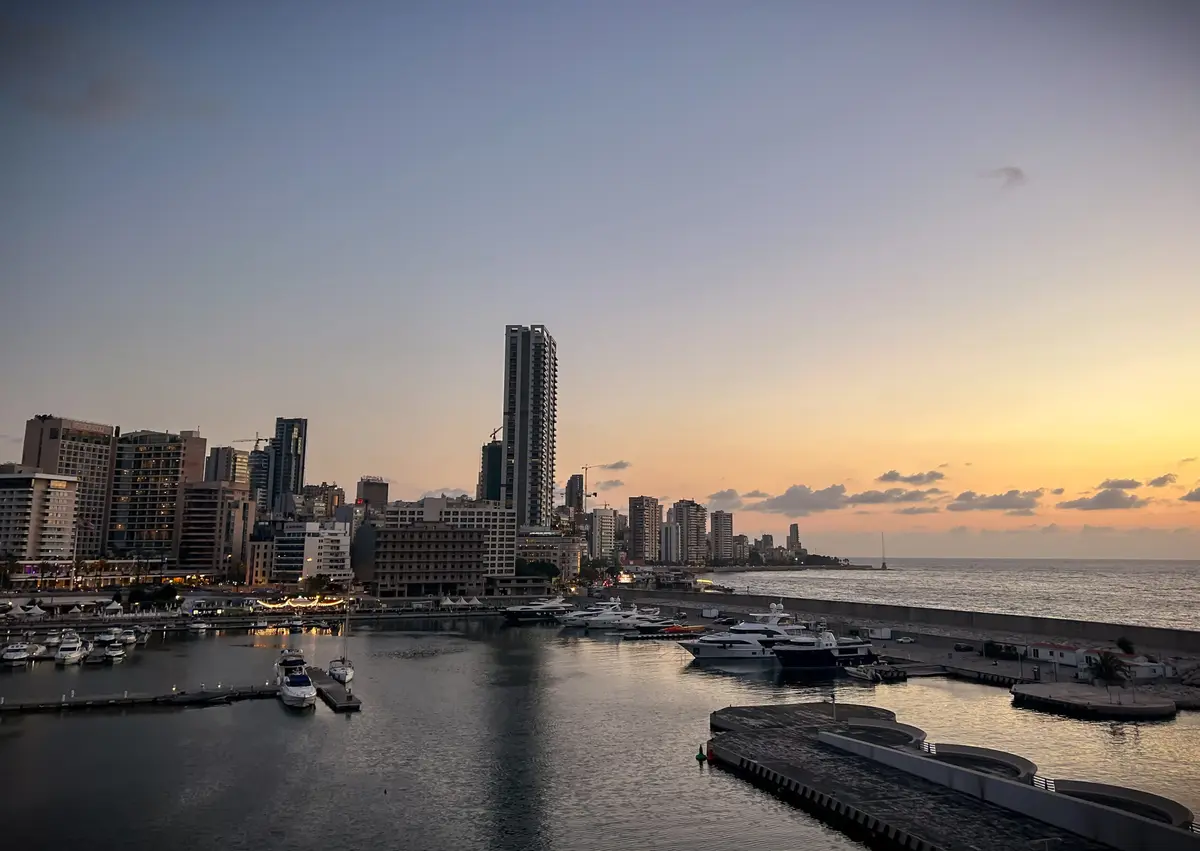
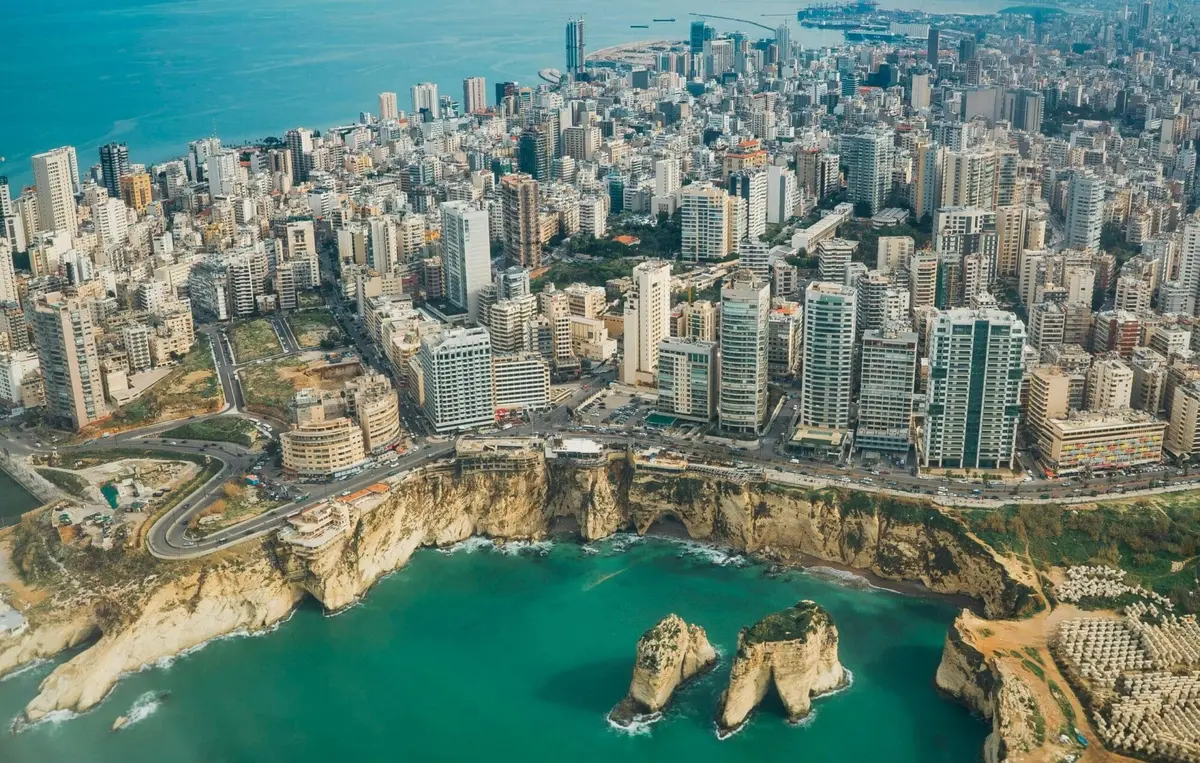
The Tyre Christian and Muslim quarters sit on what was once an island fortress. Alexander the Great’s army built a causeway out to it in 332 BCE during a seven-month siege, and the silt that collected against that causeway turned the island into the peninsula you walk today. Everything — both quarters, the port, the Roman ruins, Lebanon’s largest sandy beach — is packed onto this small finger of land surrounded by Mediterranean on three sides.
The border between the quarters isn’t marked. No walls, no checkpoints, no signs. You’ll walk from one to the other without realizing it until the sensory cues change: wine bars give way to spice stalls, church bells fade under the call to prayer, painted balconies with bougainvillea give way to dense covered markets. The port and the lighthouse at the peninsula’s tip are shared ground where everyone — fishermen, shoppers, kids on scooters — mixes freely.
The compactness is the point. You can eat a proper Tyrian lunch in the souks, walk five minutes across that invisible line, and be drinking a glass of red by the water before sunset. That logistical intimacy is rare anywhere in the Middle East.
Quarters at a glance
- Christian quarter (Haret al-Massihiyi): Northwestern tip of the peninsula. Boutique hotels, seaside restaurants, alcohol served openly, quiet alleys.
- Muslim quarter and Old Souks: Center and east of the peninsula. Ottoman-era covered markets, legendary street food, two major mosques, conservative dress expected.
- Shared zones: Al-Mina port, the lighthouse (Al Fanar), fish market, and the Al-Mina archaeological site.
Where should you stay in the Christian quarter?
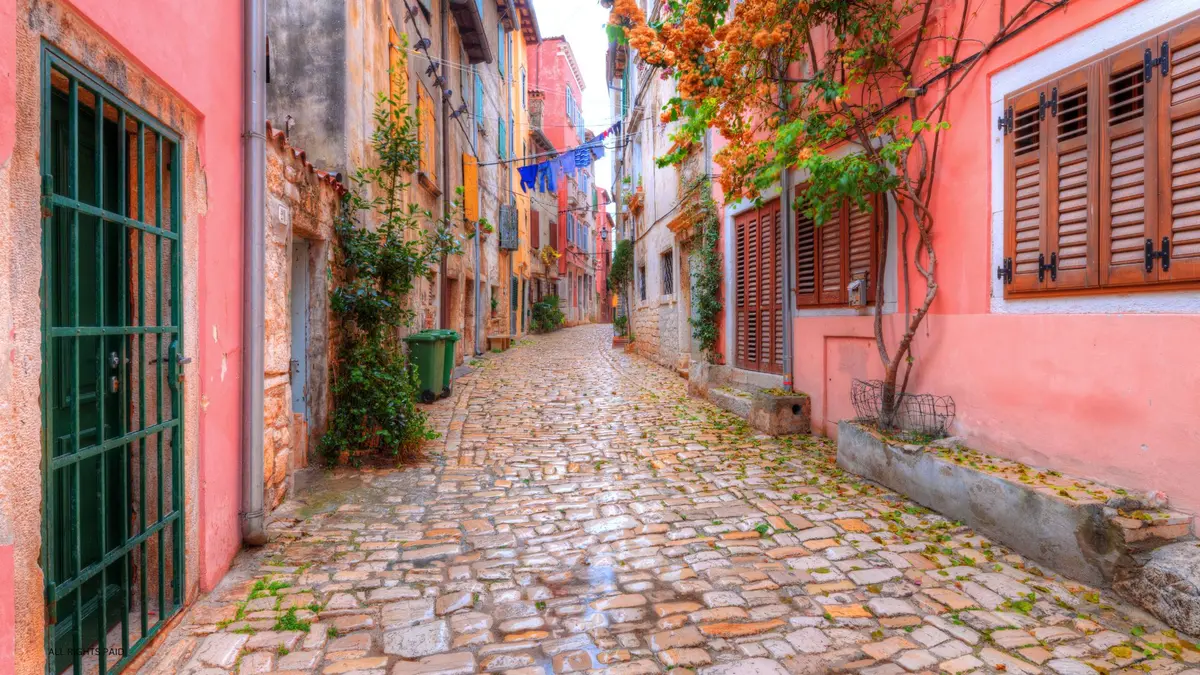
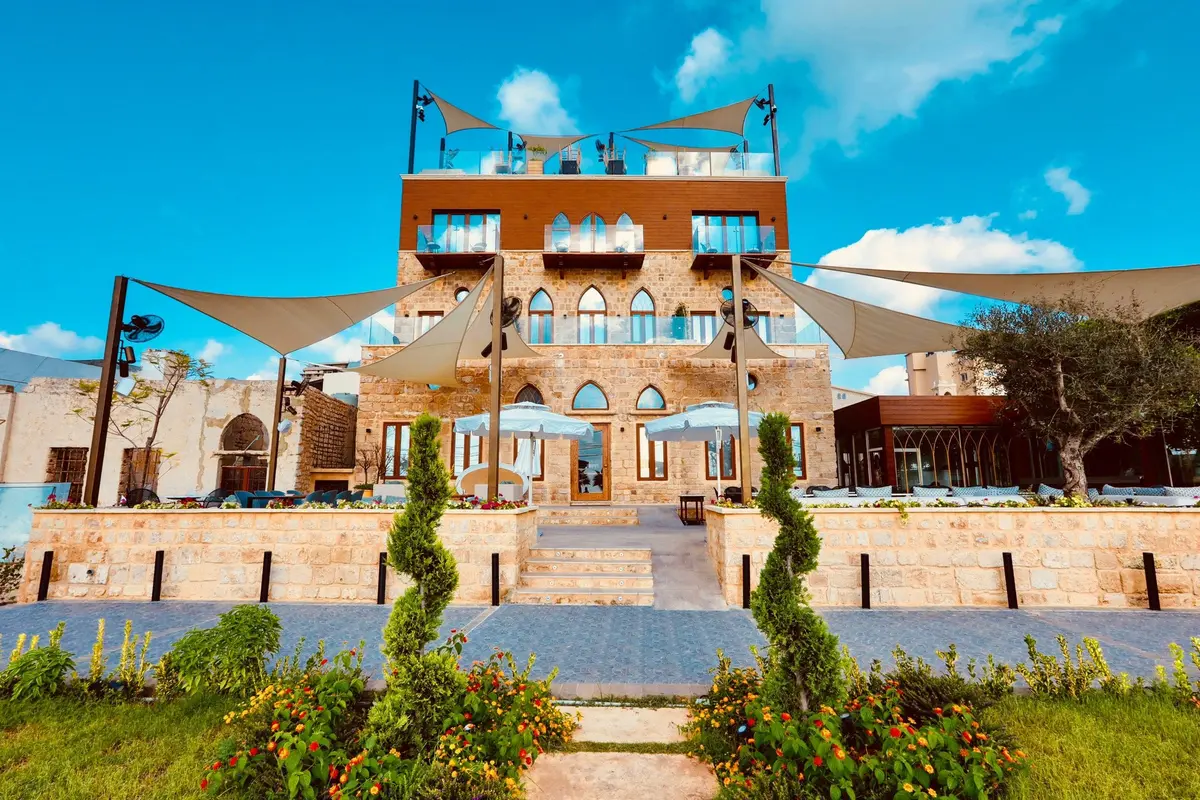
The northwestern corner of the peninsula, right next to the port, feels more Mediterranean-European than Middle Eastern in character. This is where the boutique hotel scene lives, where alcohol is served openly, and where most Western travelers base themselves. Expect restored heritage houses rather than chain hotels — the inventory is small, and places book out in peak months.
Dar Camelia — old-city charm around a courtyard
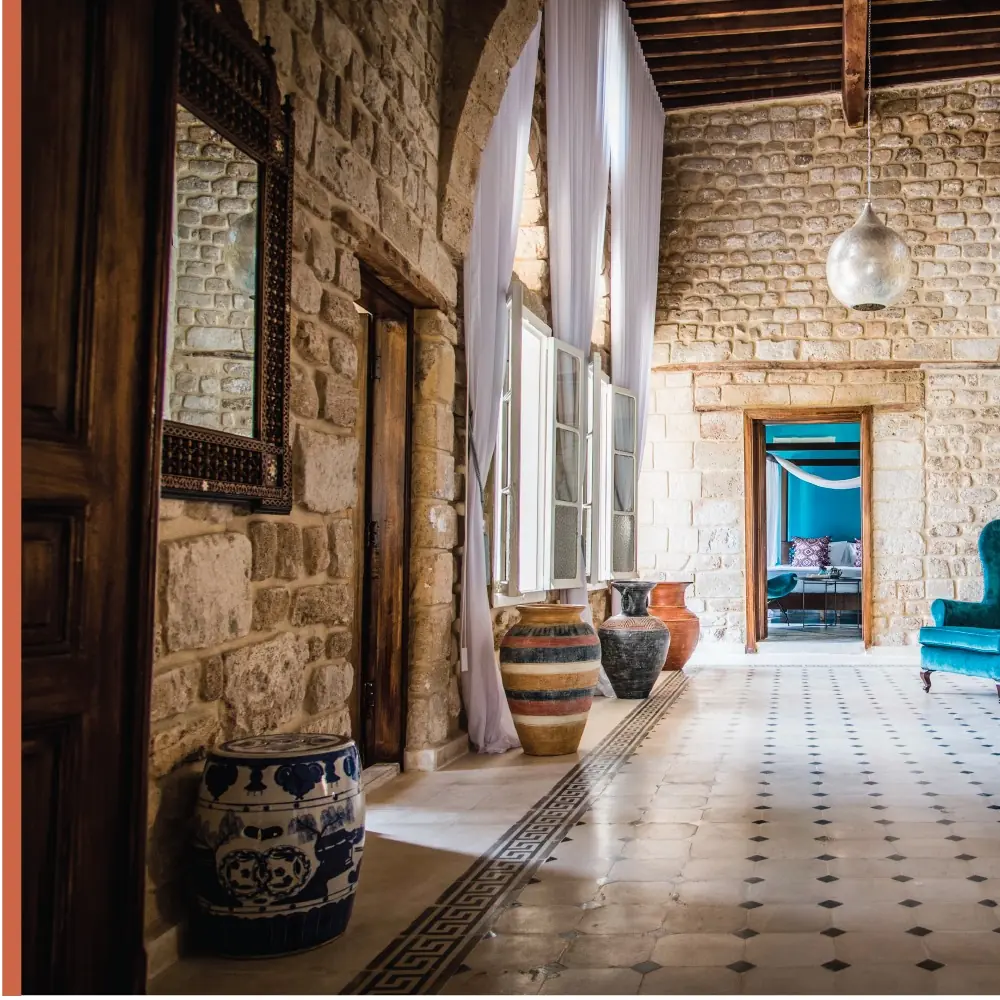
Dar Camelia sits in the heart of Tyre’s old town and pairs Lebanese traditional architecture with Moroccan riad influences. The building is a fully restored 400-year-old house with eight rooms named after flowers (Camelia, Jasmine), all set around an internal courtyard where breakfast is served. Reception staff are warm without being fussy, and there’s a resident parrot named Coucou who genuinely enjoys attention.
The “Verdict”: The courtyard breakfast is the single best reason to stay here — fresh foul, hummus, local produce, served under lemon and jasmine trees. The downside is access: the hotel is on a pedestrian-only alley, so you drop your car at the end of the street and walk in with your bags. All rooms are up one flight of stairs.
- Location: Pedestrian alley in the old city, 1-minute walk to Tyre Harbour, 8 minutes on foot to the archaeological site
- Cost: from about $89/night (breakfast extra)
- Best for: Couples and design-minded travelers who don’t mind walking in with luggage
- Time needed: 2–3 nights to cover both quarters properly
Dar Alma — the one you swim from
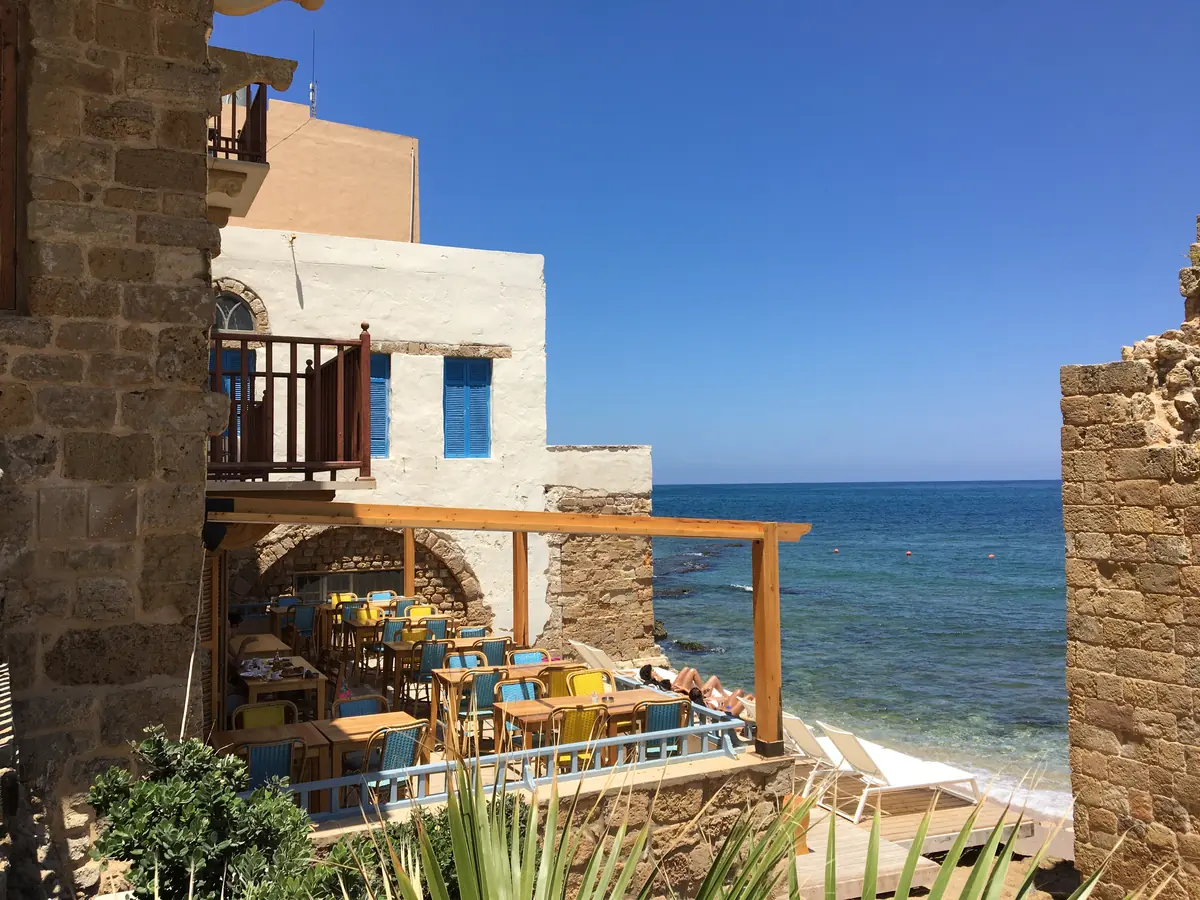
Dar Alma is Dar Camelia’s older sister property and the most coveted address in the quarter because of one thing: the hotel sits directly on the rocky seafront, with a private swimming spot where you can be in the Mediterranean within 30 seconds of leaving your room. Blue-and-white nautical interiors, a waterside restaurant, and the constant wash of the sea are the selling points. Rooms facing the water hear the waves all night — some people love this, others don’t.
The “Verdict”: Book the sea-facing rooms or skip it — the internal rooms don’t justify the premium. The restaurant food gets mixed reviews; use the hotel for the location and the morning swim, eat dinner elsewhere.
- Location: Seafront, Christian quarter, near the Fisherman’s Port
- Cost: from about $70/night for standard rooms, up to around $200 for sea-view suites
- Best for: Travelers who want to swim straight from the hotel
- Time needed: 2 nights minimum to enjoy the pool access and morning swims
Dar Alice — eccentric and residential
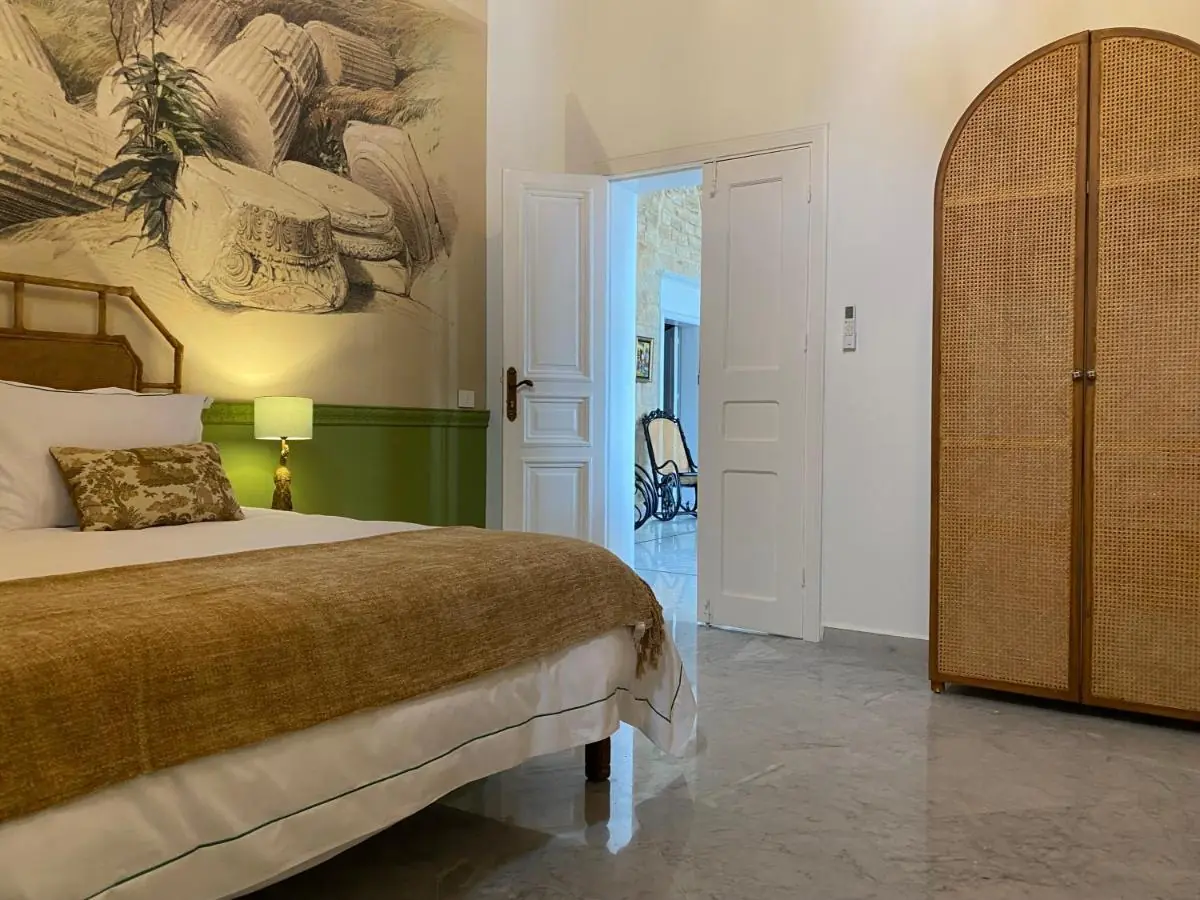
Dar Alice, near the Fisherman’s Port, has the feel of staying in a wealthy, eccentric relative’s house rather than a hotel. Colorful decor, mismatched antiques, and oversized rooms in a restored old palace.
- Location: Near the Fisherman’s Port, Christian quarter
- Cost: mid-range, variable
- Best for: Travelers who like character over consistency
- Time needed: 1–2 nights
El Boutique Hotel — the standard-amenities option
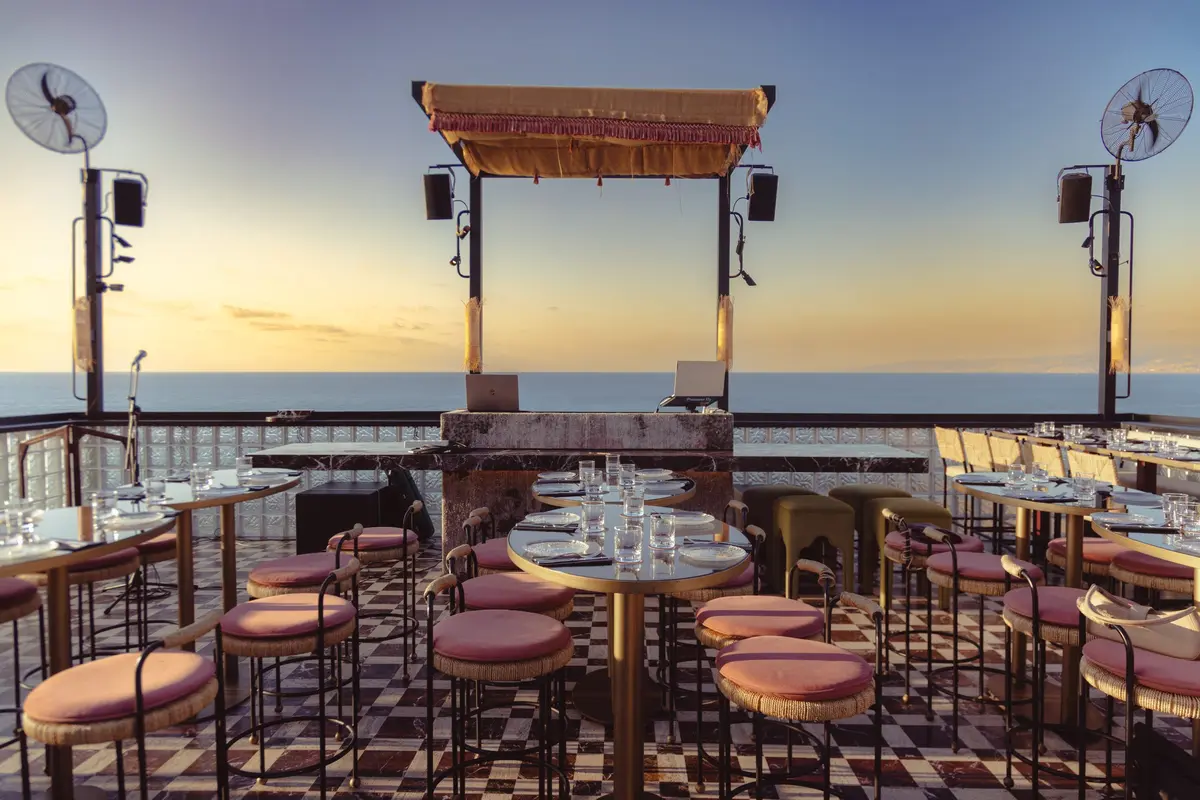
If you want air conditioning that definitely works, a proper bar lounge, and an on-site restaurant, El Boutique on Kharab Street is the 4-star play. Less character than the Dar properties, more predictable.
- Location: Kharab Street, Christian quarter
- Cost: from about $100/night
- Best for: Travelers who want chain-hotel reliability
- Time needed: 1–2 nights
Pro Tip: The Dar Camelia–Dar Alma pairing is the best hack in the quarter — stay at Dar Camelia for the courtyard and the old-town feel, and use your guest access to spend afternoons swimming at Dar Alma. You get the best of both buildings for the price of the cheaper one.
What’s the Christian quarter actually like to walk around?
The Christian quarter is the quietest part of the peninsula — narrow pedestrian alleys, hand-painted doors in deep blues and yellows, balconies overflowing with bougainvillea and potted geraniums. Cars don’t fit in most of these lanes. The walls are whitewashed or warm sandstone. Church bells mark the hours, the sea is audible from everywhere, and the pace is deliberately slow.
This is a residential neighborhood, not a tourist set piece. The flowers and the paint aren’t decoration staged for photos — they’re what the people who live there have done to their own homes. That’s what keeps it from feeling manufactured.
Drinking and nightlife
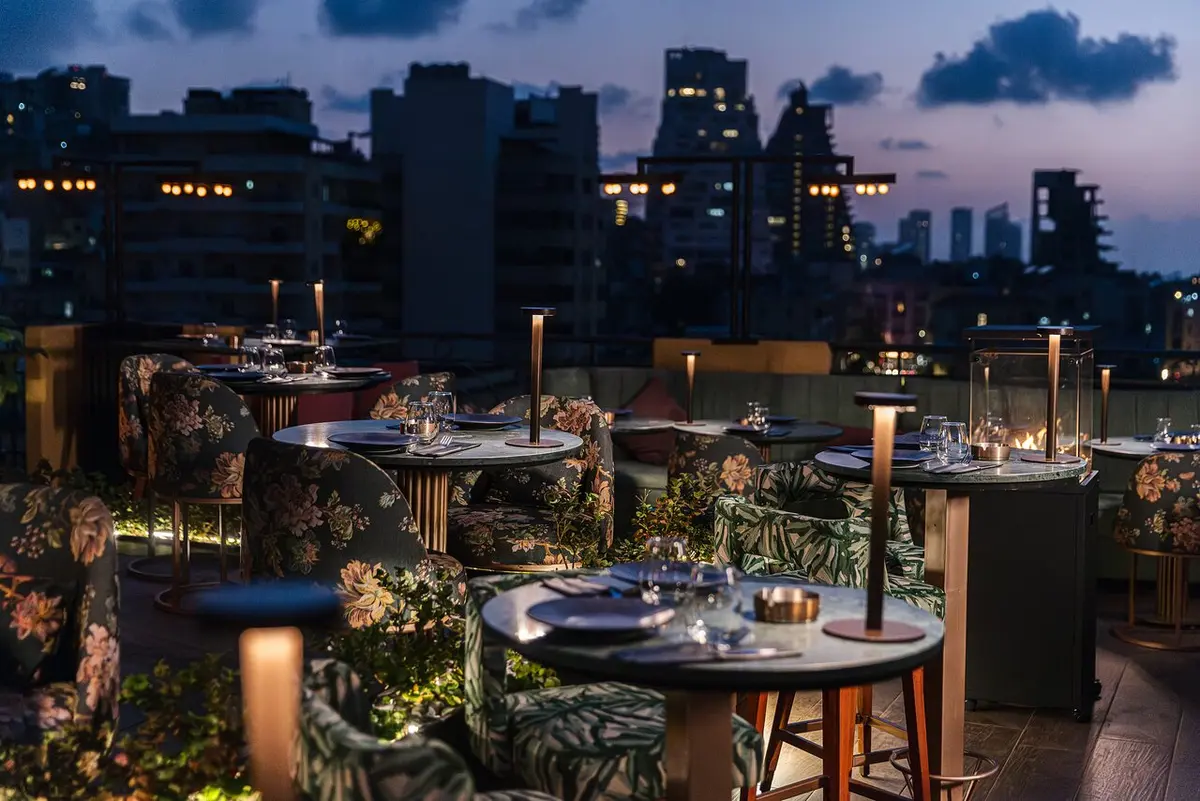
This is the one part of the peninsula where alcohol is served openly, and it’s the cleanest answer to the common question of whether you can drink alcohol in Lebanon at all. Tavolino Pub and The Blue Line Pub are the main nightlife anchors — not large, not loud, but the places where locals and travelers mix. The port promenade restaurants (Le Phenicien, Petit Café) serve Arak, Lebanese wine, and Almaza beer alongside fresh seafood as a matter of course.
One thing to respect: keep alcohol inside the Christian quarter’s boundaries. Don’t carry an open bottle across into the Muslim quarter. The tolerance runs in both directions only if you don’t test it.
The Maronite Cathedral of Our Lady of the Seas
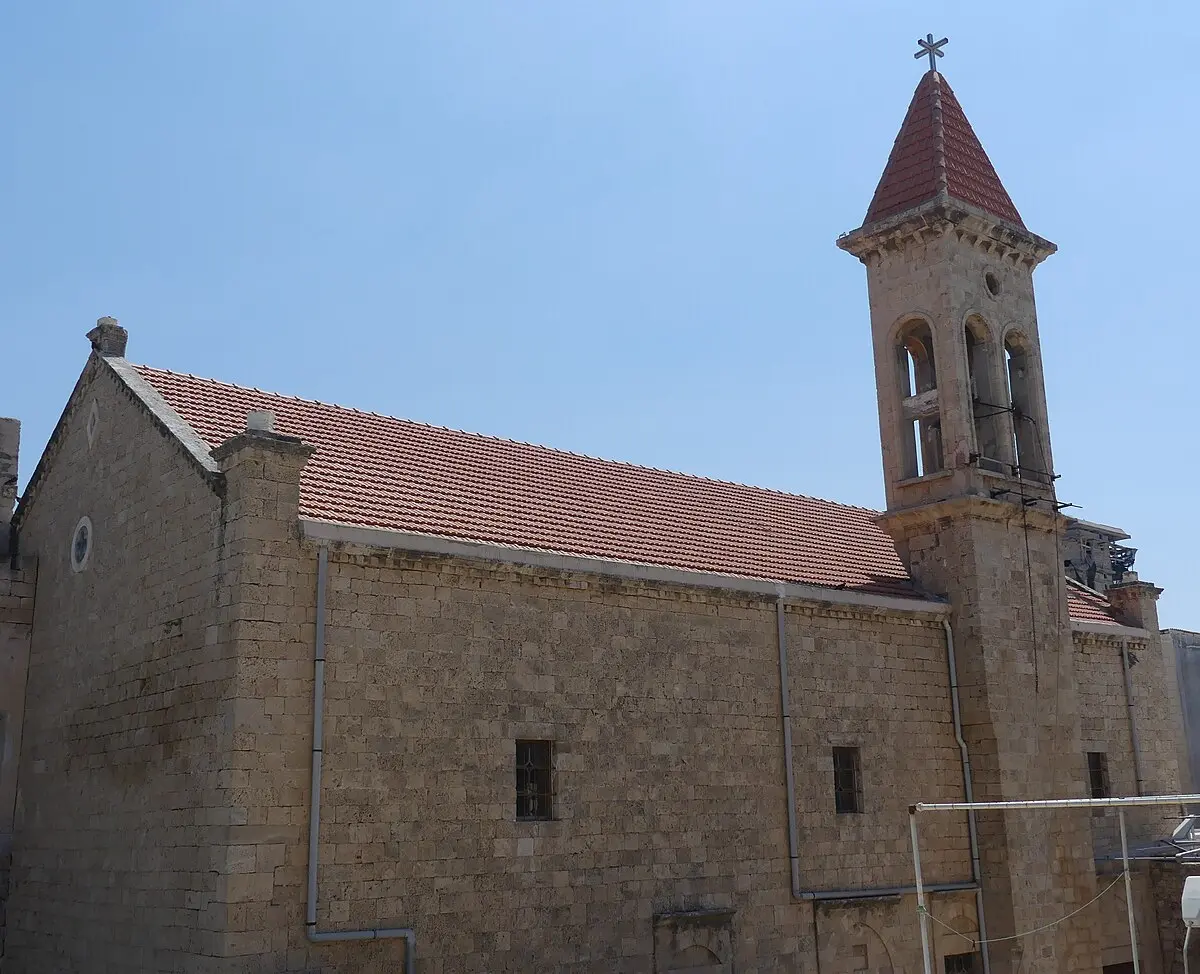
Built in the 19th century on Crusader church foundations, the Maronite Cathedral is the spiritual anchor of the quarter and the seat of the Maronite Archeparchy. The pink marble tabernacle is the detail most visitors remember. Excavations beneath the cathedral have revealed Roman and Hellenistic layers — you’re literally standing on 2,000 years of stacked religious use. The Greek Catholic Archeparchy, serving the Melkite community, is also based in the quarter.
What should you expect in the Muslim quarter and Old Souks?
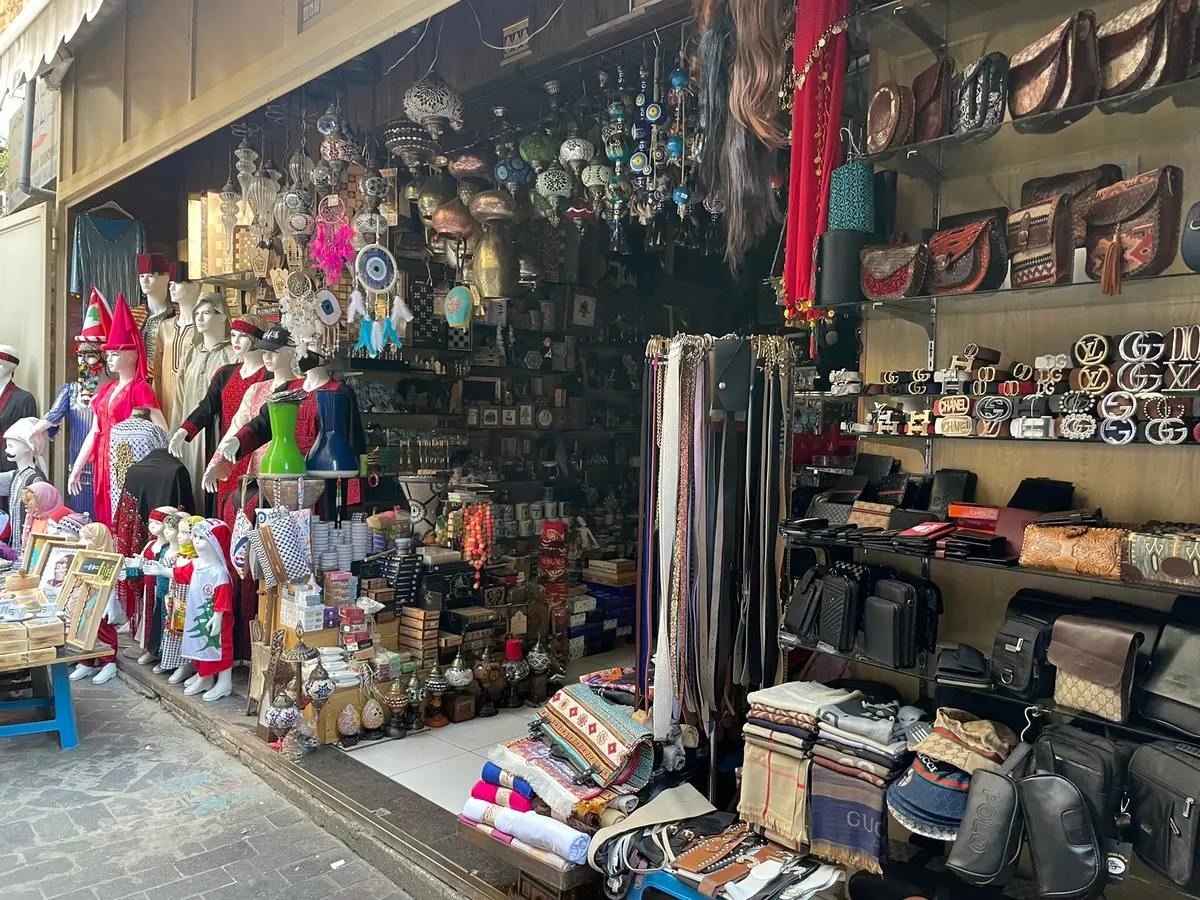
The Muslim quarter is the commercial and culinary heart of the peninsula. Expect Ottoman-era covered passages, vaulted stone ceilings, and a sensory density that the Christian quarter doesn’t try to match — traders calling prices, the metallic tap of gold being weighed, the smell of cardamom coffee and grilling meat from competing stalls. These are working Lebanese markets where locals buy vegetables, gold, and cobbler repairs, not a tourist-choreographed experience.
The souks — what’s actually being sold
The souks are arranged loosely by trade. You’ll find:
- Gold section: Jewelry shops clustered together, with glass cases catching light from the vaulted ceilings
- Fresh produce and meat: Daily-delivered, aimed at residents rather than tourists
- Copper and antiques: Lamps, coffee pots, trays, old household goods
- Tailors and cobblers: Working vintage sewing machines, repairing shoes with generational technique
- Spices and dry goods: Sumac, cumin, za’atar, dried herbs in open sacks
Pro Tip: Go before 10 a.m. The souks come alive at dawn with vendors stocking for the day, and you’ll get honest prices. By late morning, the rhythm shifts and the few tourists around get the tourist rate.
Where to eat in the souks
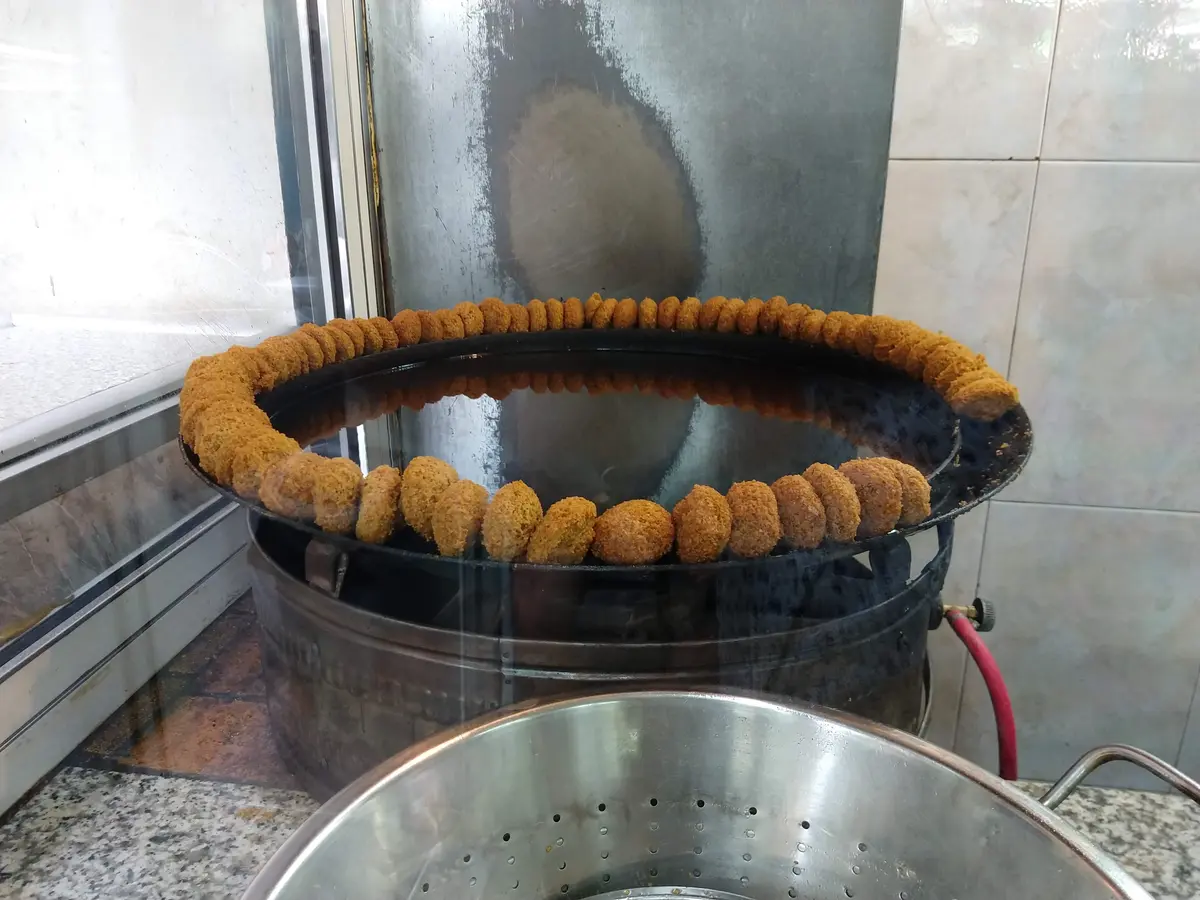
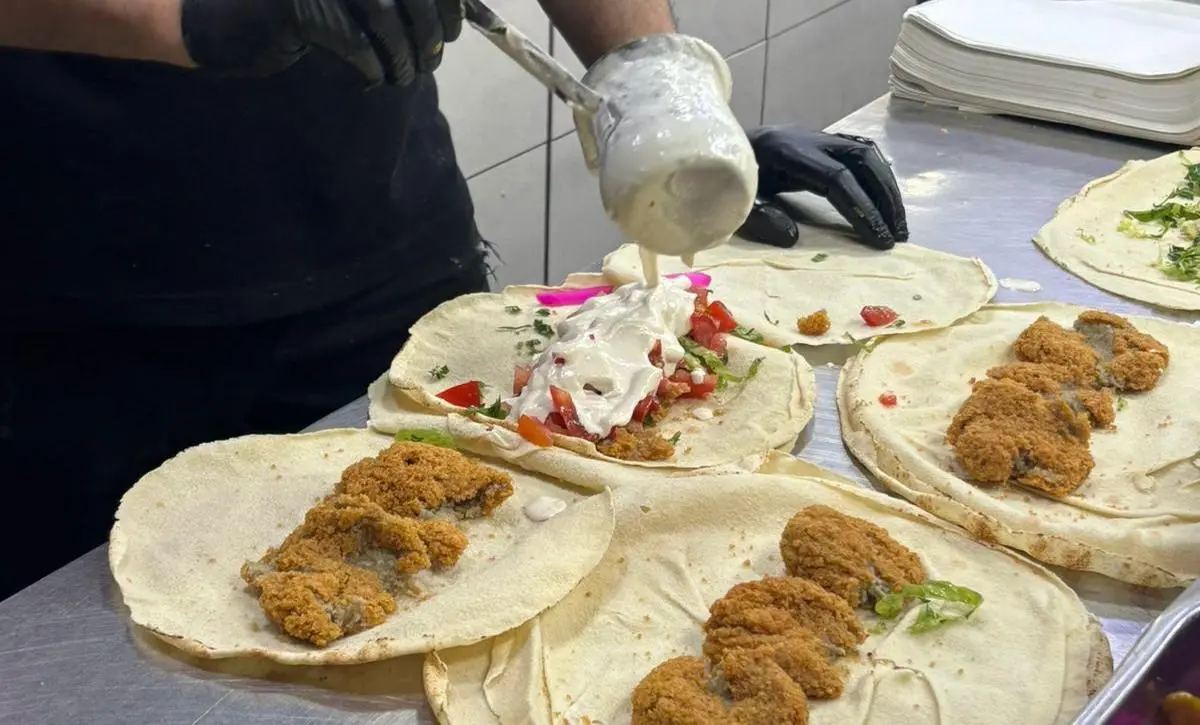
Mahfouz is the culinary landmark. A small sandwich shop with a menu of maybe five or six items — shawarma and fatayel meat filet sandwiches are the anchors. There’s no table service. You stand in line, you order, you eat on the street or on a nearby bench. Locals will tell you with a straight face that this is Lebanon’s best sandwich, and they might be right.
For breakfast, Baroud and Mazraani are the pair of spots that matter. Foul and hummus, nothing fancy, served early. They often sell out or close by afternoon. Seating is elbow-to-elbow with locals, which is the point. Both are solid choices if you’re looking for Vegetarian and Vegan food in Lebanon that isn’t just a salad on a Western menu.
The fish market near the port runs on the “bring your own fish” system: you buy the day’s catch directly from the fishermen, then walk it to a nearby restaurant that will cook it for you for a small fee. Locals swear it’s the only way to eat seafood in Tyre and they’re not wrong.
The two mosques
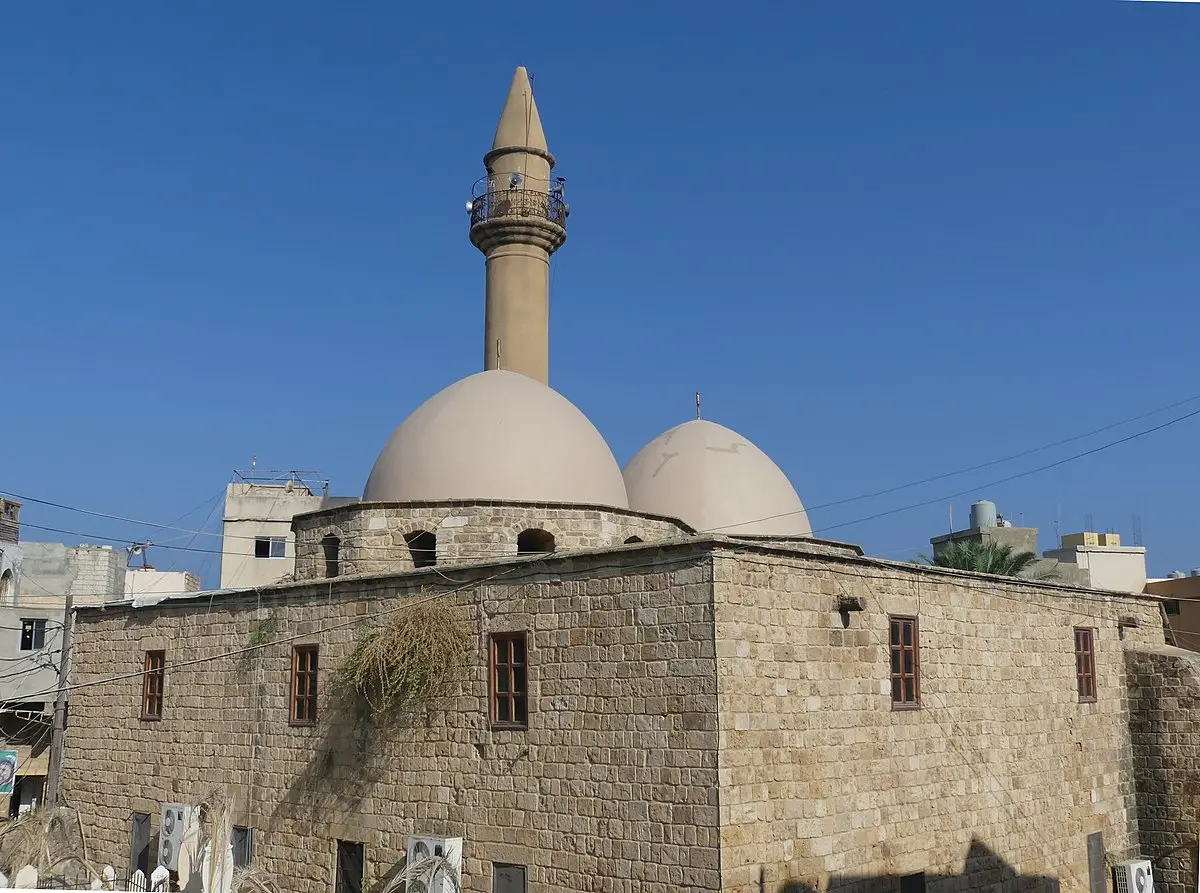
The Old Mosque dates to around 1750 and was built by Ottoman governor Abbas el-Mohamed. Its double-dome structure and prominent minaret are the clearest Ottoman silhouette on the skyline.
The Abdel Hussein Mosque was built in 1928 and named after Imam Sayed Abdul Hussein Sharafeddin, a figure who pushed for inter-communal unity and resisted colonial rule. The Sunni Old Mosque and the Shia Abdel Hussein Mosque sit within earshot of the Christian churches — the physical proof of the coexistence that defines Tyre.
How do the two quarters compare for planning your day?
The quarters run on opposite rhythms, which makes them complementary rather than competing. The Muslim quarter peaks in the morning — markets at full volume, food freshest, coffee shops busy. The Christian quarter peaks in the late afternoon and evening — restaurants open, sunset drinks at the seafront, dinners that run late.
The working rhythm is: souks and mosques in the morning, Al-Mina archaeological site around midday, cross over to the Christian quarter for a late lunch or swim, then stay on that side through sunset, dinner, and bed. Fit it into a 7 days in Lebanon itinerary with two nights on the peninsula and you’ll have covered Tyre properly.
Quick comparison:
- Christian quarter — best for: Accommodation, nightlife, swimming, late dinners
- Muslim quarter — best for: Markets, street food, breakfast, architecture
- Dress codes: Liberal in Christian quarter, modest in Muslim quarter
- Alcohol: Sold and served in Christian quarter only
- Crossing between them: 5–10 minutes on foot, no checkpoints
What else is worth seeing on the peninsula?
Beyond the Tyre Christian and Muslim quarters, the peninsula holds one of the Mediterranean’s most dramatic ancient sites and Lebanon’s largest sandy beach — both inside UNESCO World Heritage territory.
Al-Mina archaeological site
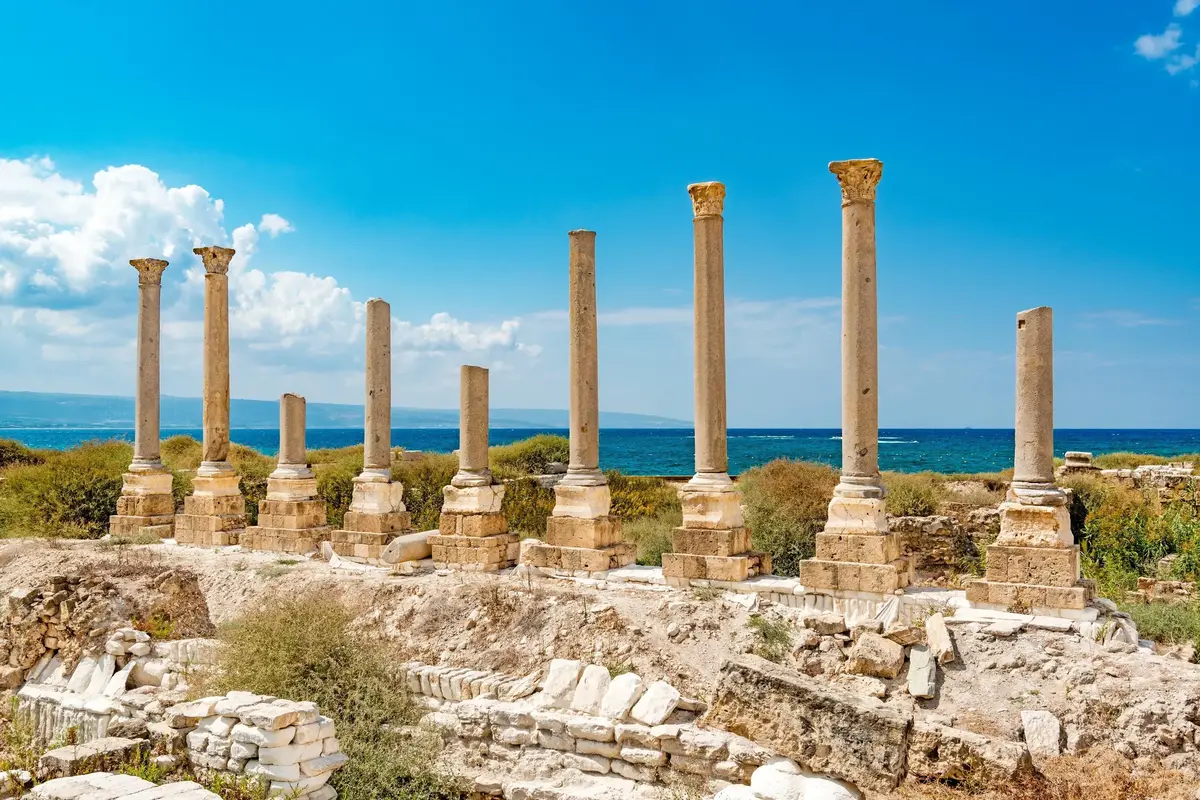
Walk to the tip of the peninsula, past the lighthouse, and you’re at Al-Mina. The headline feature is a Roman colonnaded road that runs straight into the sea — classical columns standing in shallow water, the rest of the original harbor visible beneath the surface on calm days. Roman baths and a rectangular arena (part of the Roman Hippodrome Tyre complex) fill out the site.
- Entry: Ticketed, roughly $5–8 in local equivalent
- Time needed: 1.5–2 hours
- Best time: Morning, before the heat and before tour groups arrive
- Pro Tip: The submerged Phoenician harbor is clearest on days with no wind. Bring polarized sunglasses — you’ll see at least twice as much through the water.
The beaches
Tyre has two distinct coastlines. The rocky coast borders the Christian quarter and lighthouse — this is where Le Phenicien and the seafront restaurants have their terraces. It’s for swimming off the rocks and sunset drinks, not sunbathing.
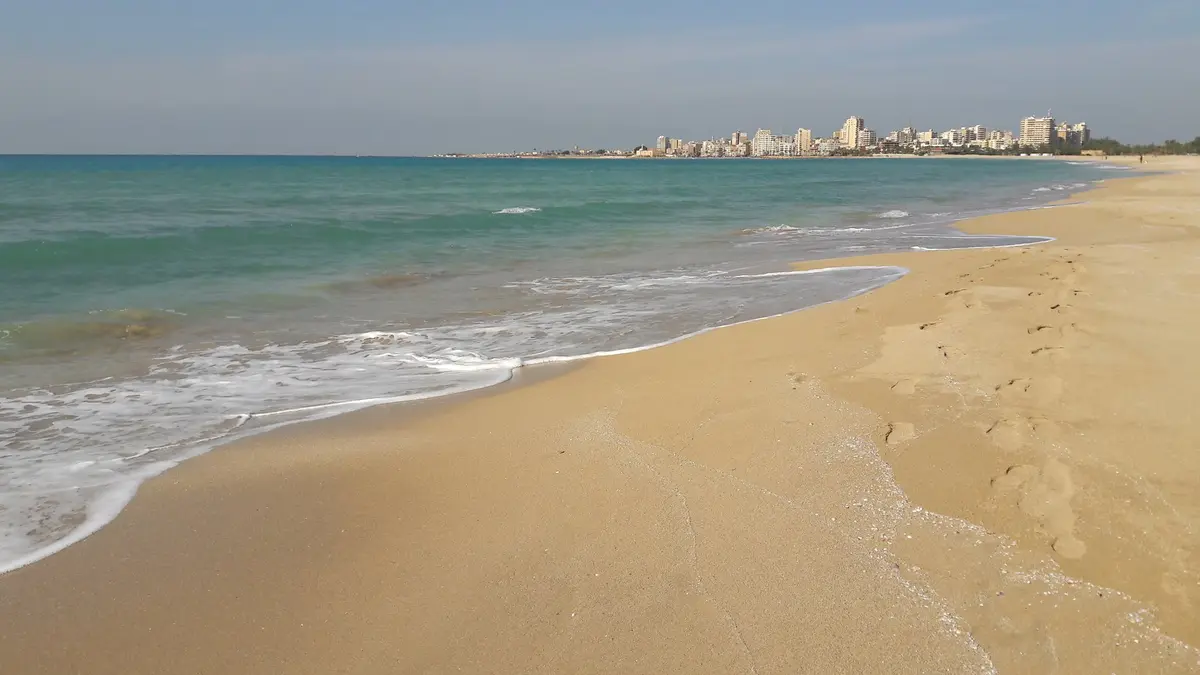
The sandy beach in Tyre stretches south of the city and is the longest stretch of sand in Lebanon. The northern section near Rest House feels like a beach club — umbrellas, loungers, beach service. The southern stretch is a protected nature reserve and is far quieter, with sea turtle nesting sites in season.
What should travelers know about etiquette, money, and logistics?
Dress code
The Muslim quarter is conservative. Women should keep shoulders covered and skip short skirts; long skirts, loose trousers, or linen pants work well in the heat. Men should wear long shorts at minimum, ideally trousers, and avoid tank tops in the souks. The Christian quarter is considerably more liberal — bikinis at the seafront restaurants are fine, summer dresses are fine.
If you’re unsure what to wear in Lebanon in conservative areas, modest always clears the bar. Always ask before taking photos of people in Lebanon, especially in the souks — this is baseline courtesy, and vendors generally say yes if you ask first.
Money and connectivity
Bring US dollars in cash. This is non-negotiable. Lebanon’s prolonged economic crisis means many businesses don’t accept credit or debit cards, US dollars are widely accepted as the main cash currency, and it may be difficult or expensive to access US dollars locally. Fresh bills get better rates than worn ones. Exchange offices consistently beat bank rates. Major hotels take cards; the souks don’t.
Pick up an Alfa or Touch SIM card at Beirut airport on arrival — it’s faster than doing it in Tyre, and you’ll need data for navigation the entire drive down. Also factor in that power cuts in Lebanon are routine; hotels run generators, but expect brief outages.
Pro Tip: Keep two separate cash stashes — one working wallet with small USD bills and one emergency reserve in a different bag. ATMs are unreliable and the banking system can freeze with little warning.
Getting there
From Beirut, Tyre is about 50 miles (80 km) south along the coastal highway. Canadian government travel advice specifies that if you travel to Tyre, use only the main coastal highway. Drive time without traffic is roughly 90 minutes; with Beirut traffic, plan on 2–2.5 hours. Private driver is the realistic option — service taxis exist but aren’t the right tool for a foreign traveler unfamiliar with the routes.
Before you book
TL;DR: The Tyre Christian and Muslim quarters are one of the most walkable and culturally layered peninsulas in the Mediterranean — boutique hotels and wine on one side, Ottoman souks and legendary street food on the other, with a UNESCO archaeological site at the tip. Right now, though, the security situation in southern Lebanon makes travel to Tyre strongly inadvisable under every major Western government’s advisory.
The honest editorial take is this: save this guide, watch the ceasefire situation, and go when the advisories are downgraded to a realistic level. Tyre has survived three millennia of invasions, sieges, and empires. It will be there when it’s safe to visit again, and when that time comes, the peninsula rewards the kind of traveler who wants layered history without the manicured feel of more famous Mediterranean destinations.
Would you prioritize the souks or the seafront on a first trip to Tyre — and what would change your mind?