Paying AT&T or Verizon $10/day to roam in Beirut is the single most expensive mistake US travelers still make on this trip. An eSIM (or a traditional SIM card for tourists in Lebanon) solves it in three minutes. But Lebanon has a quirk most guides miss — the power crisis makes some networks unusable at random hours, so the “best” eSIM here depends on which carrier it rides. This is the guide I wish I’d had before my first visit.
What is the best eSIM for Lebanon travel?
The best eSIM for Lebanon travel depends on trip length: Airalo or Saily for weekends (1GB, ~$9), Nomad’s regional plan for cross-border Middle East trips, and the local Touch Visitor Line ($13 for 10GB) for any stay over a week. Touch beats every international eSIM on price per gigabyte, but requires a 20-minute stop at a store.
A quick comparison for a 7-day trip using about 5GB:
- Airalo (5 x 1GB stacks): ~$47.50
- Saily (5GB plan): ~$14–$20 depending on promo
- Nomad (5GB): ~$22
- Holafly (unlimited, 5 days): $19
- Touch Visitor Line: $13 for 10GB
Below I break down what you actually get, where each fails, and the hybrid strategy that worked best on my last trip.

How do Lebanon’s mobile networks actually work?
Lebanon has two state-owned operators — Touch and Alfa — and no MVNOs. Every eSIM you buy piggybacks on one of these networks. There is no 5G in commercial deployment; expect 4G/LTE with median download speeds around 30 Mbps in Beirut and 10–15 Mbps in the mountains. International traffic routes through European servers, so latency runs 80–150 ms.
Touch (managed by Zain Group)
The larger carrier by subscriber count, with stronger coverage in the north — Tripoli, Akkar, and the Bekaa Valley near Baalbek. Touch has pushed 4G capacity upgrades to reduce congestion in greater Beirut. If you’re heading to the Cedars or up to Tripoli’s souks, Touch is the safer bet.
Alfa (managed by Orascom)
Smaller but slightly more tech-forward. Alfa rolled out 4G+ and VoLTE earlier and performs better in Mount Lebanon — Metn, Keserwan, Jounieh. On my last trip, Alfa held signal on the coastal drive from Byblos to Batroun where Touch dropped for a 6-mile stretch.
Pro Tip: The infrastructure problem nobody warns you about — cell towers run on diesel generators during grid outages, which hit 20+ hours a day in some areas. You may see 4 bars of 4G and still get zero throughput because the tower is power-starved. An eSIM that can switch between Touch and Alfa manually is worth more than any speed rating.
1. Airalo — The Reliable Standard
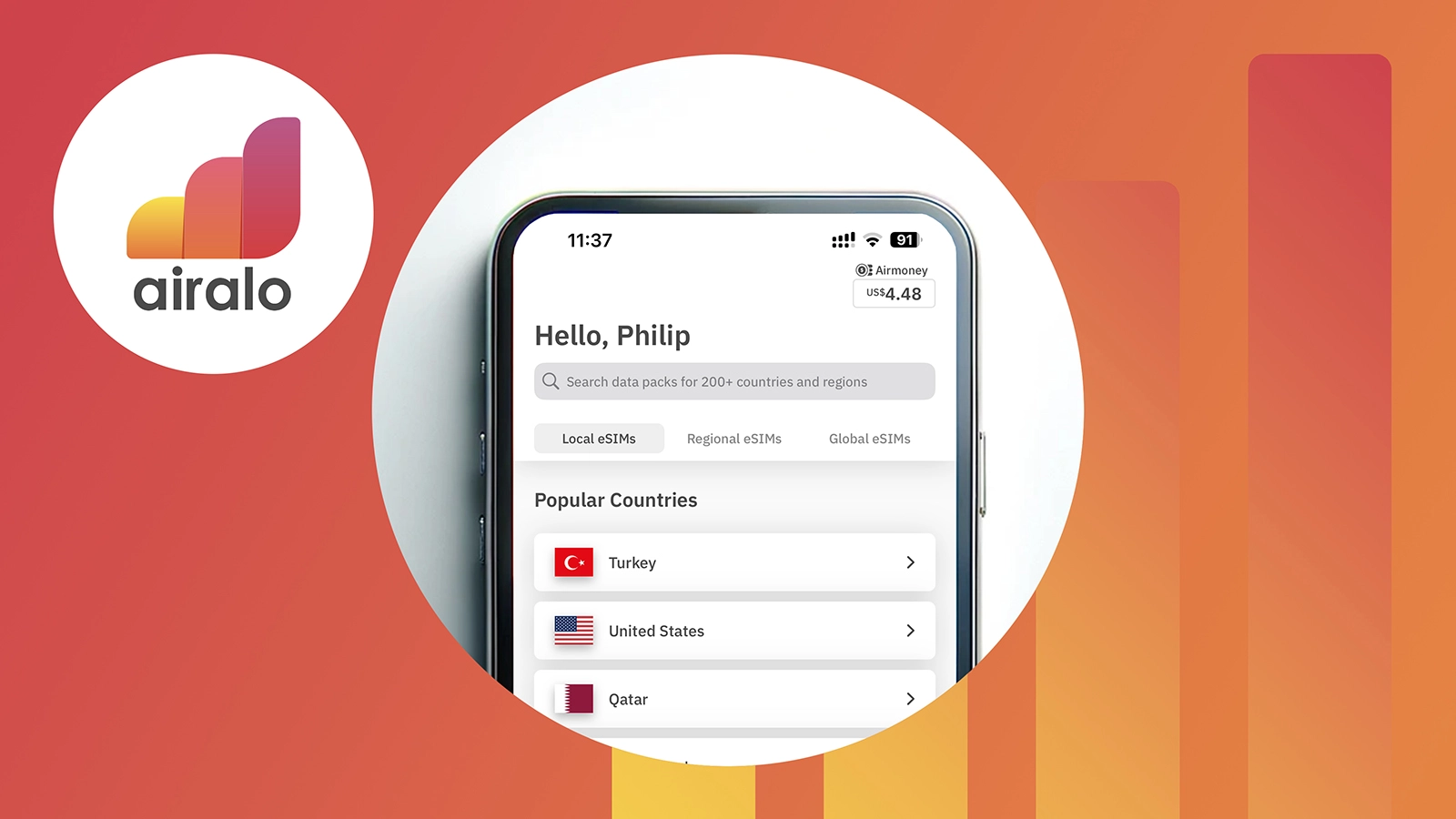
Airalo’s Lebanon package is called “Salbeh” (local slang for “cool”). You get 1GB for 7 days at $9.50. There is no 3GB, 5GB, or 10GB option — if you need more, you stack additional 1GB packages at the same rate.
The app is polished and installs in under two minutes. Airalo rides the Alfa network, which means strong performance in Beirut and along the coast, weaker coverage in Touch-dominated rural areas like Akkar. On my test in Gemmayze, I pulled 28 Mbps down and 6 Mbps up — enough for Uber, WhatsApp video, and map tiles without a stutter.
The friction: at $9.50/GB, Airalo is the most expensive per-gigabyte option on this list. For a 3-day weekend in Beirut, that math is fine. For 10 days, you’ll burn $40+ and still have less data than the local Touch line gives you for $13.
- Best for: Weekenders and first-time eSIM users who want zero friction
- Cost: $9.50 for 1GB / 7 days
- Network: Alfa (4G)
- Hotspot: Yes
- Activation time: Under 2 minutes
2. Holafly — Unlimited Data (With Asterisks)
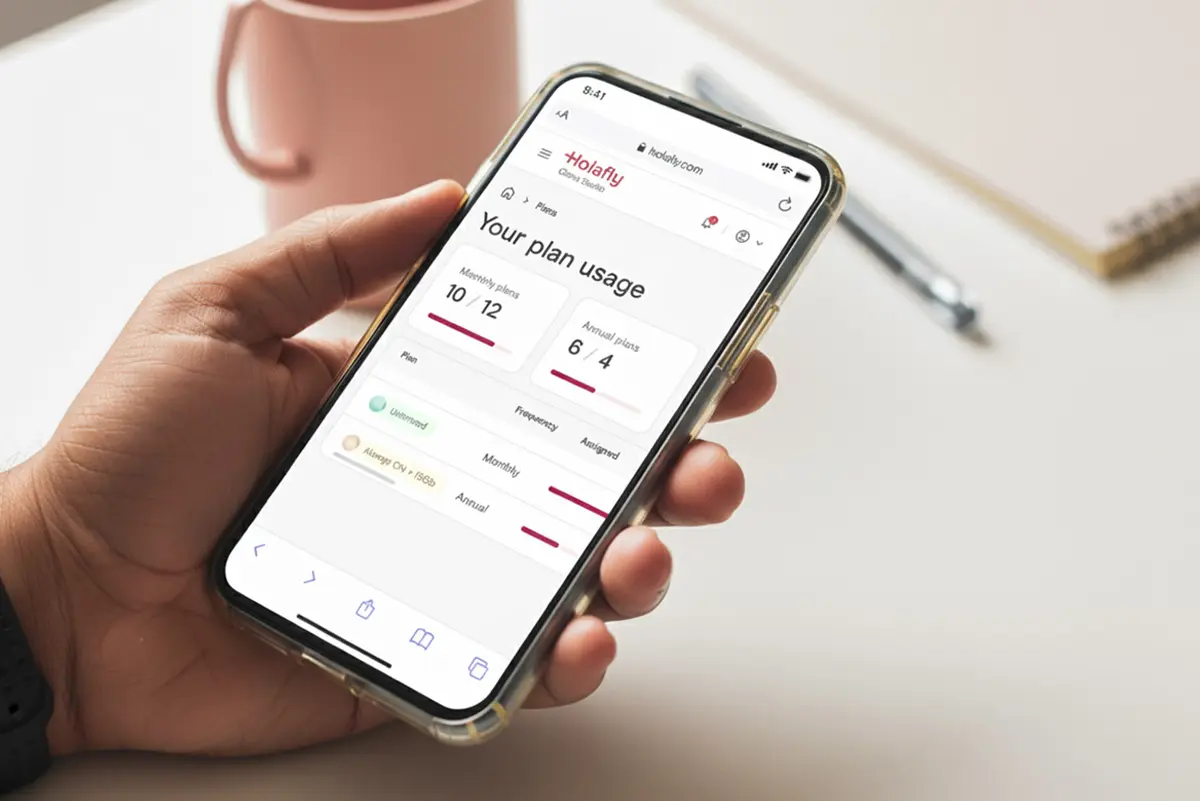
Holafly markets unlimited data for Lebanon at tiered prices — roughly $19 for 5 days up to $99 for 30. Read the fine print before you buy.
Holafly applies a fair-usage throttle after 2–3 GB of high-speed data per day. Once you hit the cap, video streaming becomes a slideshow and map loading gets sluggish, but messaging and basic browsing still work. The bigger catch is tethering — Holafly blocks or limits hotspot usage on most plans, so if you planned to work from a laptop off your phone’s connection, this one is out.
The honest use case: you’re a smartphone-only heavy user (Instagram stories, Google Maps in the car, WhatsApp video calls home) and you don’t want to watch a data meter for a week.
- Best for: Content-first travelers on phone only, 5–15 day trips
- Cost: $19 (5 days) up to $99 (longer plans)
- Network: Varies — check at checkout
- Hotspot: No (or severely limited)
- Activation time: Under 3 minutes
3. Nomad — The Flexible Middle Ground
Nomad sits between Airalo’s rigid single-tier pricing and Holafly’s unlimited premium. For Lebanon specifically, Nomad’s standalone country plan has been inconsistent — their main offering is a Middle East regional plan that sometimes includes Lebanon and sometimes doesn’t, so verify coverage at checkout before you pay.
When a Lebanon-inclusive plan is available, pricing runs roughly $9 for 1GB, $16 for 3GB, and $22 for 5GB. That 3GB tier works out to $5.33 per gigabyte — a real improvement over Airalo’s flat $9.50. The regional plan is the stronger pitch: if Lebanon is one stop on a Jordan-Lebanon-Turkey trip, you avoid buying three separate eSIMs.
Nomad supports hotspot, app setup is under two minutes, and data-only profiles mean no phone number — fine for most travelers.
- Best for: Mid-length trips (1–2 weeks) and multi-country Middle East itineraries
- Cost: From $9 (1GB) to $22 (5GB); regional plans vary
- Network: Depends on plan and location
- Hotspot: Yes
- Activation time: Under 2 minutes
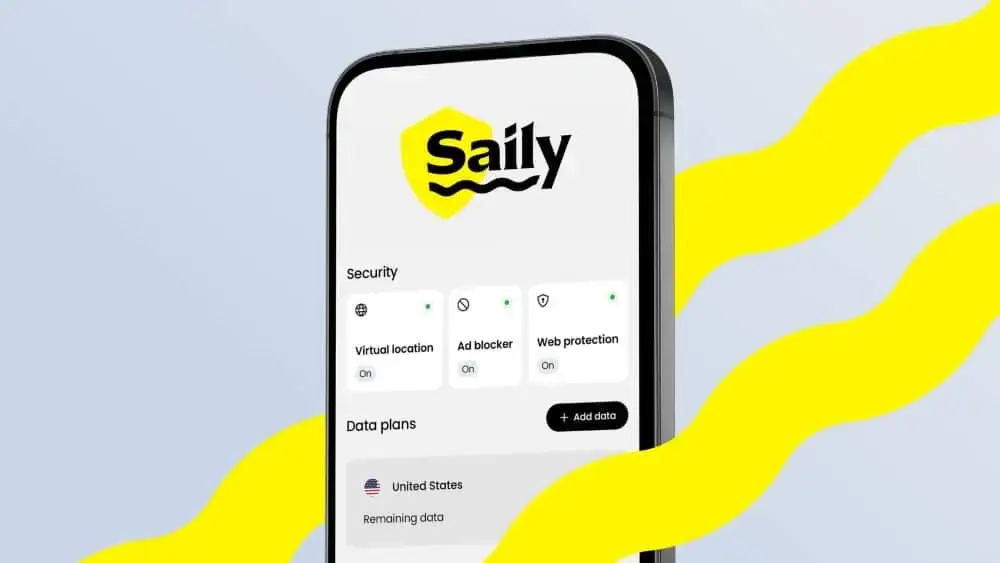
4. Saily — The Privacy-Focused Newcomer
Saily is backed by Nord Security (the NordVPN company), which is a legitimate signal for a region where internet monitoring is a real conversation. Saily’s Lebanon pricing is aggressive — a 1GB/7-day plan around $3.99–$4.99 in most markets, and a 3GB plan that has been listed near $6.20 with promo codes. That undercuts Airalo meaningfully.
Install time is the fastest of the bunch — I had data on my phone 55 seconds after paying. Saily includes a built-in ad blocker that the company claims cuts data consumption by about 28%, which I couldn’t fully verify but did notice fewer page reloads on news sites.
The caveat: Saily is newer, so when things go wrong, community troubleshooting resources are thinner than with Airalo. Twice on my trip, the app showed “connected” but no data moved until I toggled airplane mode. Fixable, but worth knowing.
- Best for: Privacy-conscious travelers and budget-first buyers
- Cost: From ~$3.99 (1GB / 7 days); 3GB plans often under $7 with promos
- Network: Alfa (4G)
- Hotspot: Yes
- Activation time: Under 1 minute
5. Touch Visitor Line — The Local Champion
If you will spend 20 minutes at a Touch service center, this is the single best-value option in the country. The Visitor Line bundle costs $13 and includes 10GB of data, 100 local minutes, and 100 local SMS for 14 days. With VAT and the eSIM setup fee layered in, the total at the counter usually lands between $19 and $21 — still a crushing value at roughly $2 per gigabyte versus Airalo’s $9.50.
Beyond the price, the Visitor Line gives you a real Lebanese +961 number. That matters more than it sounds. Delivery apps like Toters, ride-hailing apps outside the main cities, and any local restaurant that wants to confirm a booking expect a Lebanese number to call or text. International eSIMs are data-only and can’t receive those calls.
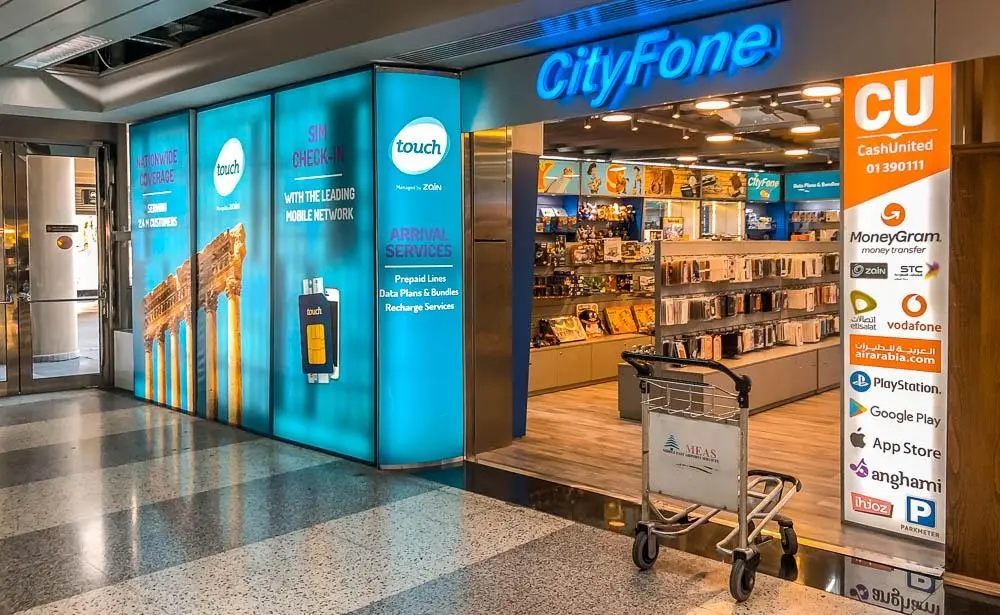
The friction: you have to go to an actual Touch service center with your passport (not a sticker-on-a-wall reseller). The Hamra branch and the Verdun branch both process eSIM versions. Skip the CityFone counter at the Beirut airport on arrival — it was quoting a 400% markup on essentially the same package last time I checked.
Pro Tip: Buy a cheap 1GB Airalo eSIM before you fly so you land with immediate data. Use it for the ride from the airport, then swap to the Touch Visitor Line at a service center on day two. Total cost: about $22–$30 for two weeks of connectivity, a local number, and airport landing coverage.
- Location: Touch service centers (Hamra, Verdun, Achrafieh, and others — full list at touch.com.lb)
- Cost: $13 for the bundle; ~$19–$21 all-in with VAT and eSIM
- Best for: Anyone staying longer than 6 days
- Time needed at store: 15–25 minutes with passport
Which eSIM should you pick for your trip?
Match the option to how long you’re staying and what you need the data for. There is no single winner — the right pick depends on your itinerary.
The weekender (3–5 days)
Go with Airalo or Saily. You land, install, and never think about it again. At this length, paying the convenience premium is worth more than the 20-minute detour to a Touch store. Saily wins on price; Airalo wins if you want the biggest community and support network.
The digital nomad (2–4 weeks)
Get the Touch Visitor Line. Data reliability for tethering, a local number for deliveries, and roughly $70 in savings versus stacking Airalo plans — especially useful if you’re working remotely as a digital nomad in Beirut. Keep a 1GB Nomad or Airalo as an emergency backup in case you hit a Touch-dead zone in the mountains.
The regional explorer
Choose Nomad’s Middle East regional plan (confirm Lebanon is in the country list at checkout — this is the one Nomad spec I’d personally re-verify before paying). If Lebanon is one stop on a Jordan-Lebanon-Turkey loop, a single regional eSIM beats three separate country plans on both price and hassle.
The content creator
Holafly if you’re phone-only. If you tether to a laptop for editing, skip Holafly and use a Touch Visitor Line instead — tethering is the deal-breaker.

Essential tips for staying connected in Lebanon
A few hard-earned lessons from actually using these SIMs in the field.
Skip the airport SIM counter
The CityFone kiosk in the Beirut airport arrivals hall sells a Touch SIM for around $44 with 500MB of data — roughly 400% more than the same carrier’s official store downtown. Use the free airport Wi-Fi (it now gives a full hour, not 30 minutes) to activate your eSIM or call a cab, and buy your Touch Visitor Line the next day at a real service center.
Install a VPN before you land
Several US banking apps geo-block Lebanese IPs, which means Chase, Bank of America, and Venmo can lock you out of your own accounts if you try to log in over mobile data. NordVPN and ExpressVPN both work reliably here. Install before you leave the US — the app stores are not restricted, but you want the account configured in advance.
Master manual network selection
This is the most useful trick in the country. When your phone shows full bars but no data loads, the local tower is probably running on a weak generator during one of Lebanon’s ongoing power cuts. Go to Settings → Cellular → Network Selection, turn off “Automatic,” and manually force a switch to the other carrier. On an iPhone, this fixes a dead connection about 60% of the time.
Download offline maps and insurance docs
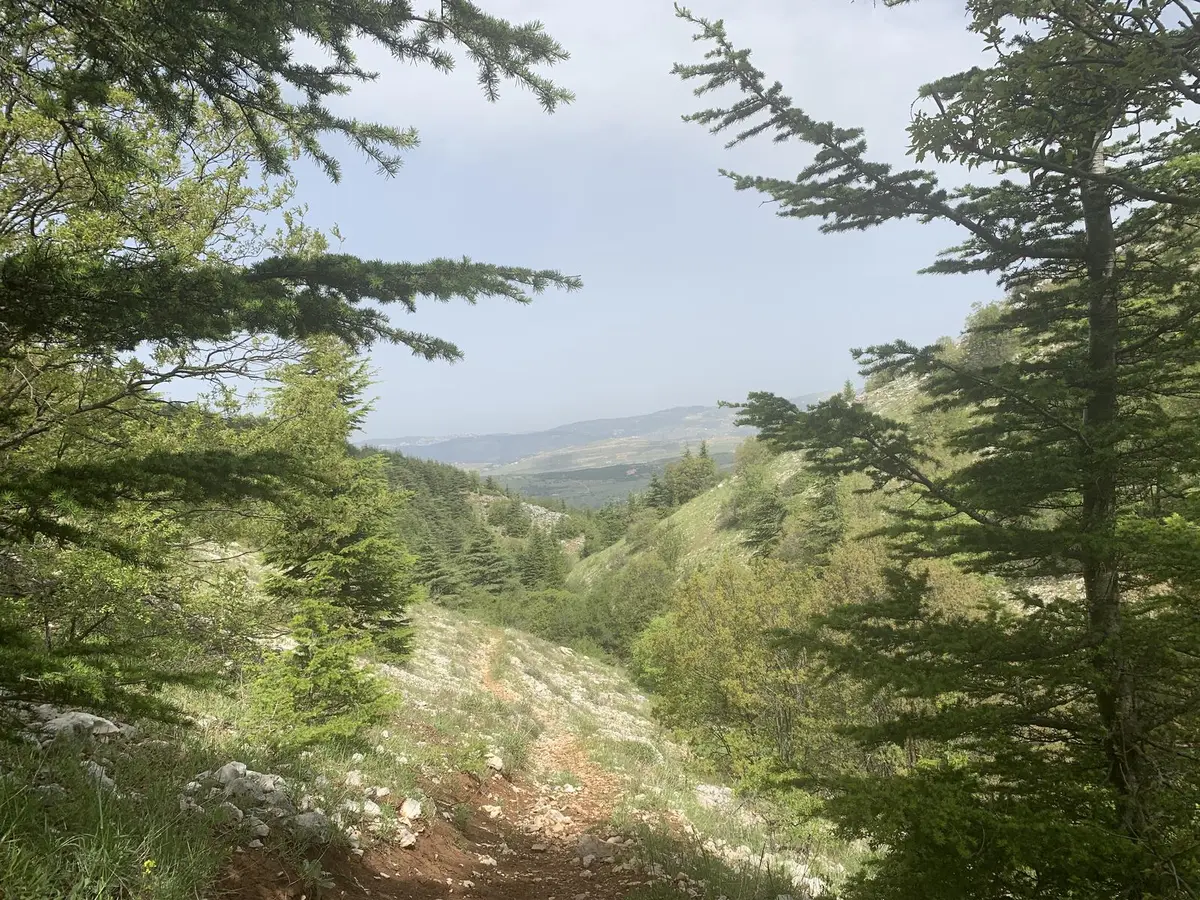
Signal gets unpredictable above 3,000 feet — Mount Sannine, the Qadisha Valley, and the Cedars of God all have dead zones. Download Google Maps offline for every area you plan to visit, and keep PDFs of your passport, visa, and travel insurance for Lebanon saved locally on your phone.
Pro Tip: Lebanese businesses increasingly price in USD cash and reject cards in neighborhoods with frequent power cuts. A working phone with data is not optional — it’s how you navigate when the neighborhood you’re in loses power and your card reader goes down at dinner. Plan your eSIM choice with that in mind.
The bottom line
TL;DR: For trips under 5 days, buy an Airalo or Saily 1GB eSIM before you fly — you’ll land with data and spend under $10. For anything longer than a week, walk into a Touch service center on day two and get the $13 Visitor Line. The hybrid strategy (small international eSIM for landing + Touch Visitor Line for the stay) is cheaper and more reliable than any single option.
Most people overpay because they don’t know the local line exists. Now you do.
What’s your travel style — weekender in Beirut, multi-country Middle East loop, or a month working remotely from Byblos? Drop your itinerary in the comments and I’ll tell you exactly which eSIM setup fits.