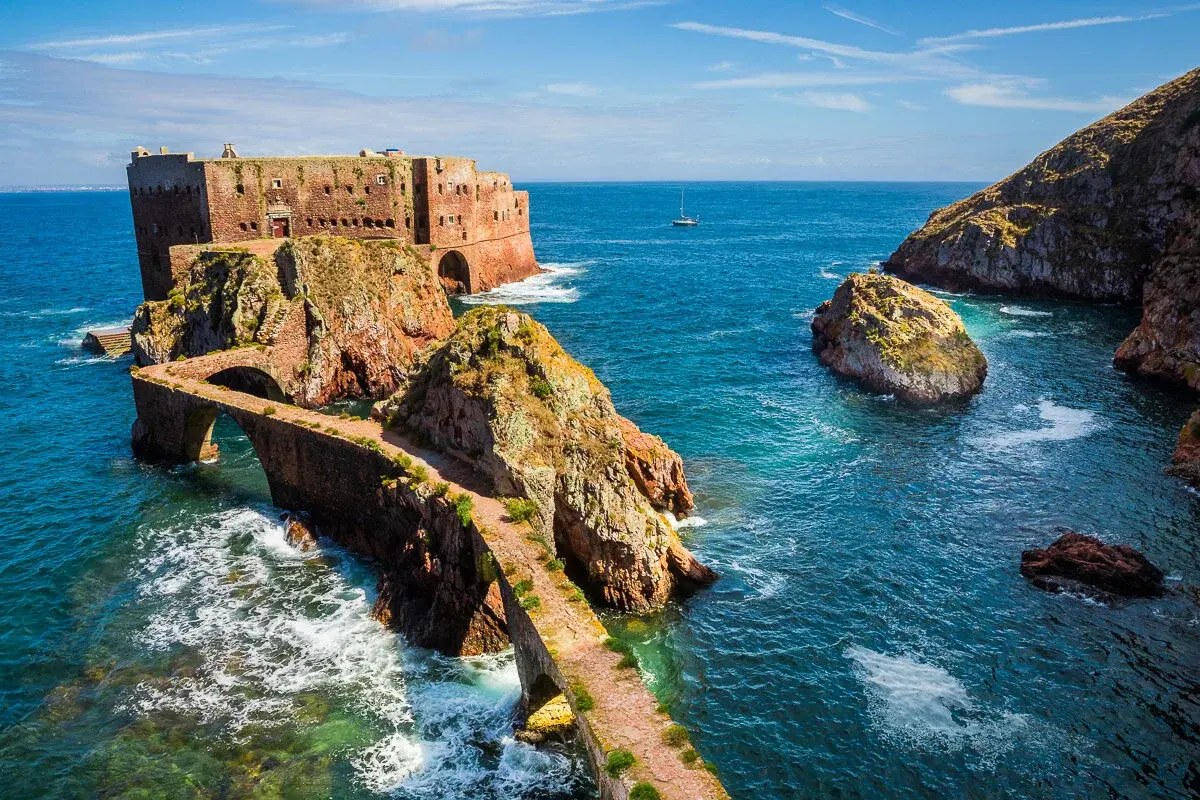
The Berlengas Archipelago is not a place you visit on a whim. A mandatory digital permit, a 550-person daily cap, and a channel crossing that can feel like a mechanical bull ride separate the travelers who plan from the ones turned away at the dock. Here is everything you need to know before you go — and what makes the Berlengas unlike anything else in Central Portugal.
Is the Berlengas Archipelago worth the effort?
Yes — but only if you know what you are walking into. These granite islands off Portugal’s Atlantic coast are a UNESCO Biosphere Reserve: dramatic sea caves, shipwrecks carpeted in marine life, and water clarity that exceeds 30 feet. There is no luxury. There is no resort. What you get is raw Atlantic wilderness — one of Portugal’s top natural attractions for travelers willing to trade comfort for coastline.
The archipelago includes three groups: Berlenga Grande (the main island), the Estelas, and the Farilhões-Forcadas. Most visitors only see Berlenga Grande, which is manageable — you can hike the entire island in a few hours. What you cannot do is skip the permit system, underestimate the crossing, or book accommodation the week of your trip.
Do you need a permit to visit Berlenga Island?
Yes. Everyone who steps onto Berlenga Grande must hold a Berlengas Pass — a separate digital credential from your boat ticket. The island caps daily visitors at 550 people total, covering day-trippers, campers, and fort guests combined. No pass, no entry. The fine for arriving without one starts at €500.
Here is how to get your pass:
- Register online at berlengaspass.icnf.pt. You must create an account with the ICNF (Institute for Nature Conservation and Forests).
- Pay the fee: €3 per person (ages 19-64). Visitors ages 6-18 and seniors 65+ pay €1.50. Children under 5 are free but still need a registered ticket.
- Save the QR code. You will present this digital credential at the port in Peniche and again when you land on the island. Bring a government-issued ID to match the name on the pass.
Pro Tip: Peak season (July-August) passes sell out weeks in advance, especially for weekends. Check the ICNF availability calendar before booking your boat or accommodation. If you arrive with a boat ticket but no pass, you are staying on the boat.
Which ferry to the Berlengas should you take?
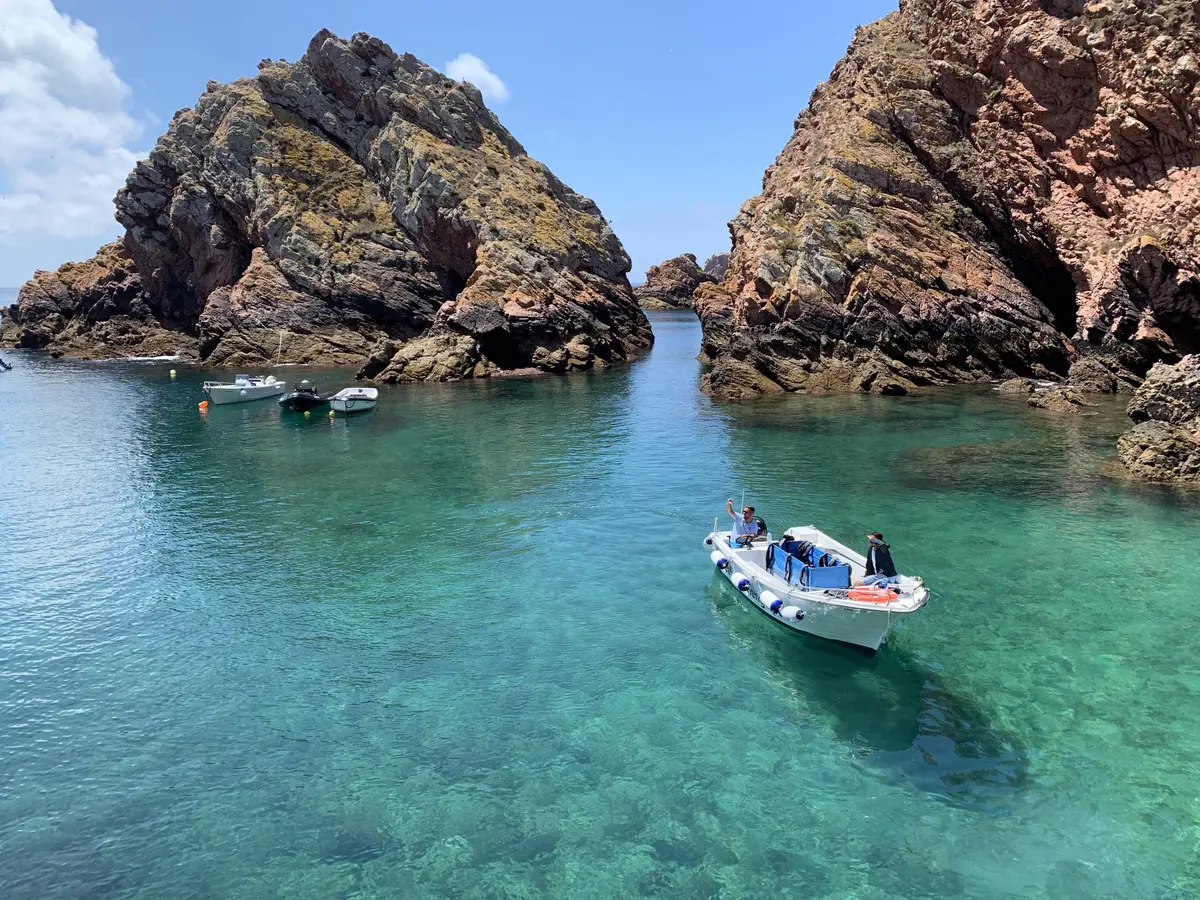
The 6-mile (10 km) crossing from Peniche — a town equally well known for surfing in Portugal — takes 20 to 45 minutes depending on vessel type and sea conditions. The channel is notorious for rough water because the continental shelf drops off sharply here, producing swells even on sunny days. Your main choice is between a large catamaran ferry and a rigid inflatable boat.
Catamaran ferry — the stable choice
Operators like Viamar run twin-hull ferries with up to 185 passengers. The Cabo Avelar Pessoa — Viamar’s flagship, named after the fort’s famous defender — is the largest vessel making this crossing. The ride takes 35 to 45 minutes and offers the smoothest available passage. The twin-hull design reduces rolling motion significantly compared to a monohull.
- Location: Departs from Peniche Harbor
- Cost: €15-€29 ($16-$32) round trip depending on operator and season
- Best for: Families, first-timers, anyone prone to motion sickness
- Time needed: 35-45 minutes each way
Rigid inflatable boat — the adrenaline option
RIBs are speedboats with jockey seats and a 20-minute crossing that earns its reputation. You will slam into swells and take spray from every direction. Passengers describe it as the roughest ride they’ve taken that didn’t require a seatbelt.
- Location: Departs from Peniche Harbor
- Cost: €20-€25 ($22-$27) round trip
- Best for: Thrill-seekers, younger travelers, experienced boat passengers
- Time needed: 20-25 minutes each way
Pro Tip: On a RIB, sit toward the rear. The bow seats absorb the hardest impacts when the boat launches off waves. Take motion sickness medication 30 minutes before departure. Boats run April through October. Winter service cancels due to Atlantic storms.
Where can you sleep on the Berlengas?
Berlenga Grande has three accommodation options, and none of them are hotels. The island runs on limited electricity, scarce fresh water, and no room service. Expect mountain refuge conditions at every price point. Book months ahead — capacity is tiny and the summer season fills fast.
Fort of São João Baptista — the historical option
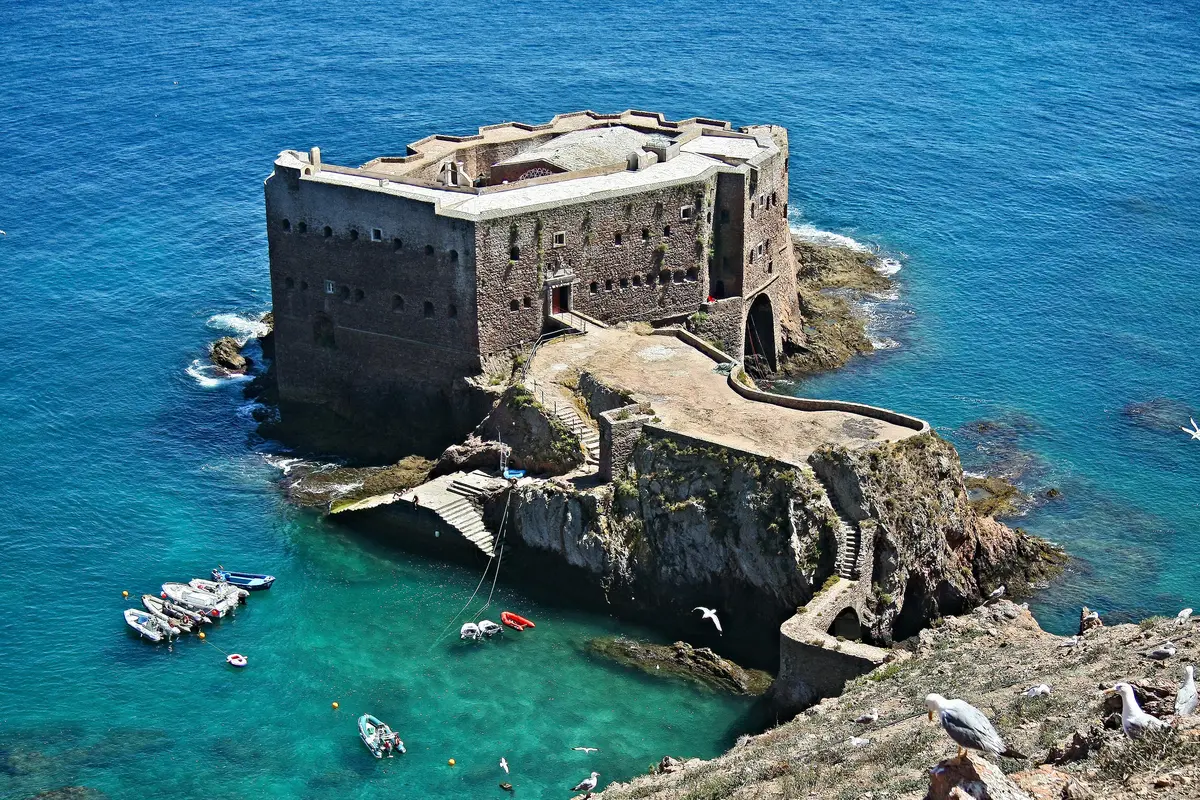
Sleeping inside a 17th-century military fort sounds romantic until you are in a converted garrison cell with communal bathrooms. The beds are metal frames with mattresses. Bring your own sleeping bag, sheets, towels, and pillow. The fort smells like salt and damp stone. Electricity cuts off late at night. Showers run cold or brackish during dry periods, and some toilets flush with seawater.
A small restaurant and mini-market operate inside the fort, but inventory is unpredictable. The communal kitchen makes self-catering the smarter strategy.
A note on future availability: a government decree issued in early 2025 instructs the Ministry of Environment to evaluate converting the fort into an environmental interpretation center. The status of overnight accommodation here may change. Contact the booking office before planning around an overnight stay.
- Location: Fort of São João Baptista, Berlenga Grande
- Cost: €10-€20 ($11-$22) per person per night
- Best for: History buffs, budget travelers, those who want to wake up inside a fortress
- Time needed: Overnight minimum
Booking — contact the Associação Amigos das Berlengas directly (not available on standard travel sites):
- Phone: +351 262 750 244
- Email: [email protected]
- Office: Travessa Proletários, 14 r/c Dtº, 2520 Peniche
Reservations typically open in May for the summer season. Book early.
Berlengas campsite — the wild option
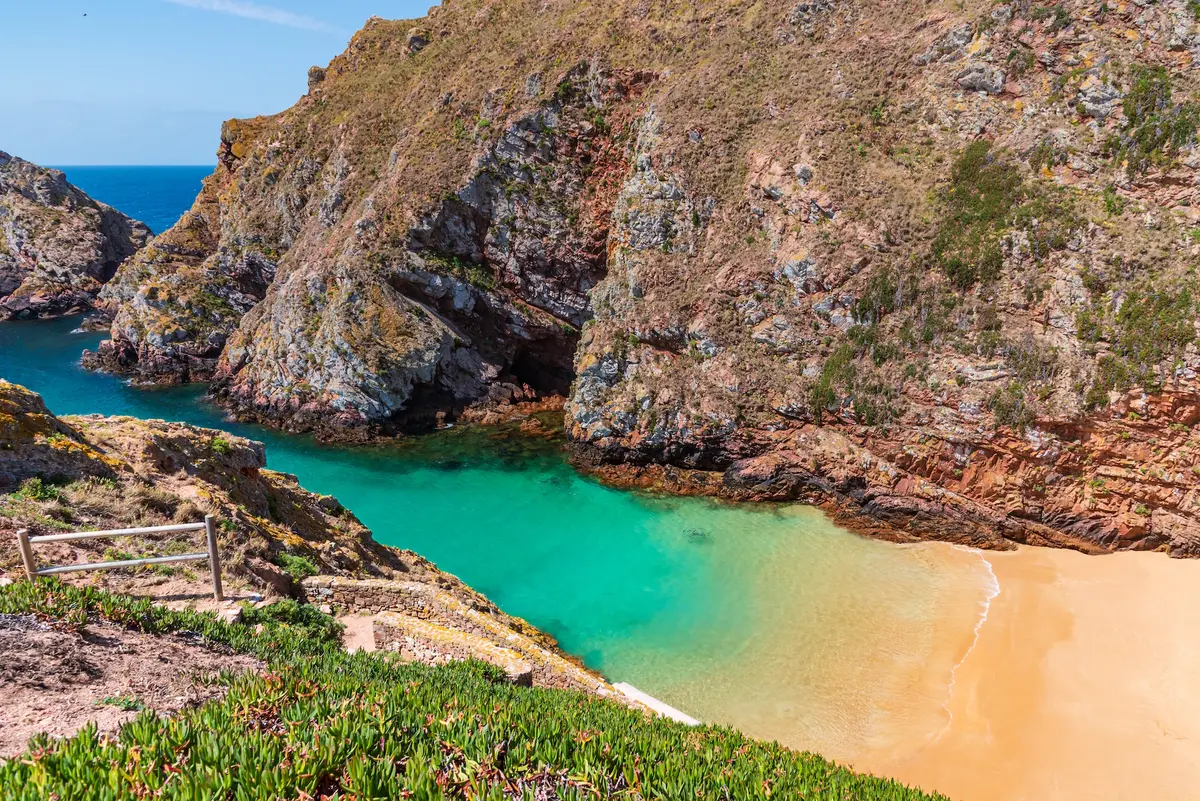
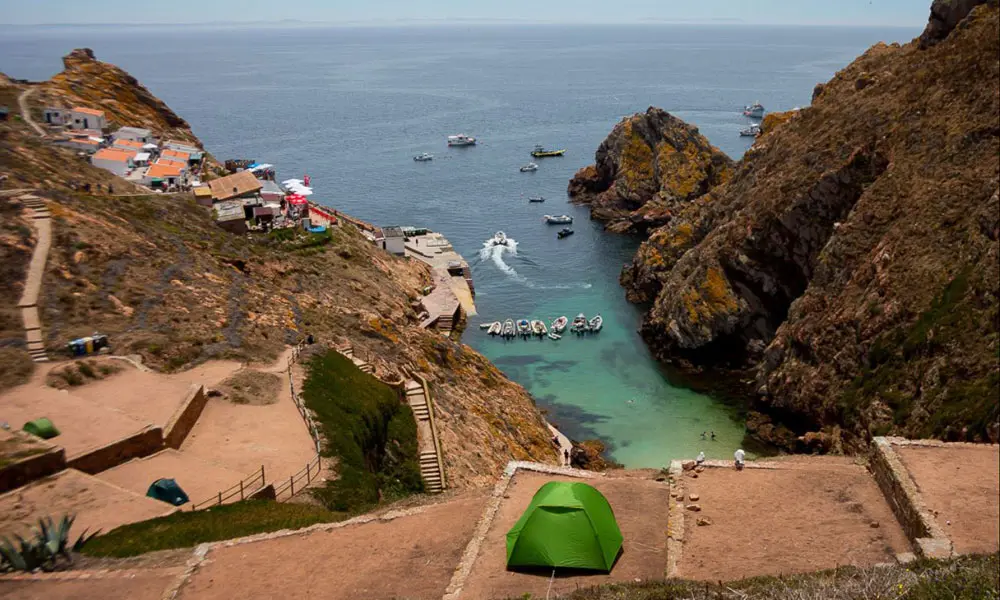
The campsite sits on a rocky terrace above Carreiro do Mosteiro beach. The views are exceptional, but the ground is unforgiving. Soil is shallow and packed with rock, making standard aluminum tent pegs useless. Bring heavy-duty steel pegs and a mallet. Atlantic winds shred tall family tents — low-profile designs only. Experienced campers tie guy lines directly to large rocks. I have seen well-staked tents survive a night that reduced a neighbor’s dome tent to a pile of collapsed poles by 4 a.m.
- Location: Rocky terrace above Carreiro do Mosteiro beach
- Cost: €8-€20 ($9-$22) per tent per night
- Best for: Experienced campers, budget travelers, those who want to wake up to open ocean
- Time needed: Overnight minimum
Booking: The Peniche Municipal Council manages the campsite, limited to 40-50 tents. Email [email protected] with the following details:
- Lead camper’s full name
- Tax ID (NIF for Portuguese residents, passport or ID number for internationals)
- Full address and phone number
- Dates of stay
- Tent capacity
Payment is by bank transfer. Print the receipt and show it to island wardens on arrival.
Pavilhão Mar e Sol — the commercial option
This is the island’s only conventional inn: six rooms, private bathrooms, and provided linens — genuine luxuries on Berlenga Grande. The restaurant here is the culinary hub of the island. The menu centers on fresh Atlantic catch: Caldeirada (fish stew), grilled sardines, and whatever came off the boats that morning. Expect to pay for the privilege. Entrees run €15-€25 ($16-$27), and service slows to a crawl between noon and 2 p.m. when tour boats arrive.
- Location: Near the main landing area
- Cost: Contact for current rates
- Best for: Travelers who want basic comfort, those with higher budgets
- Time needed: Overnight or full day
What is the deal with the Berlengas seagulls?
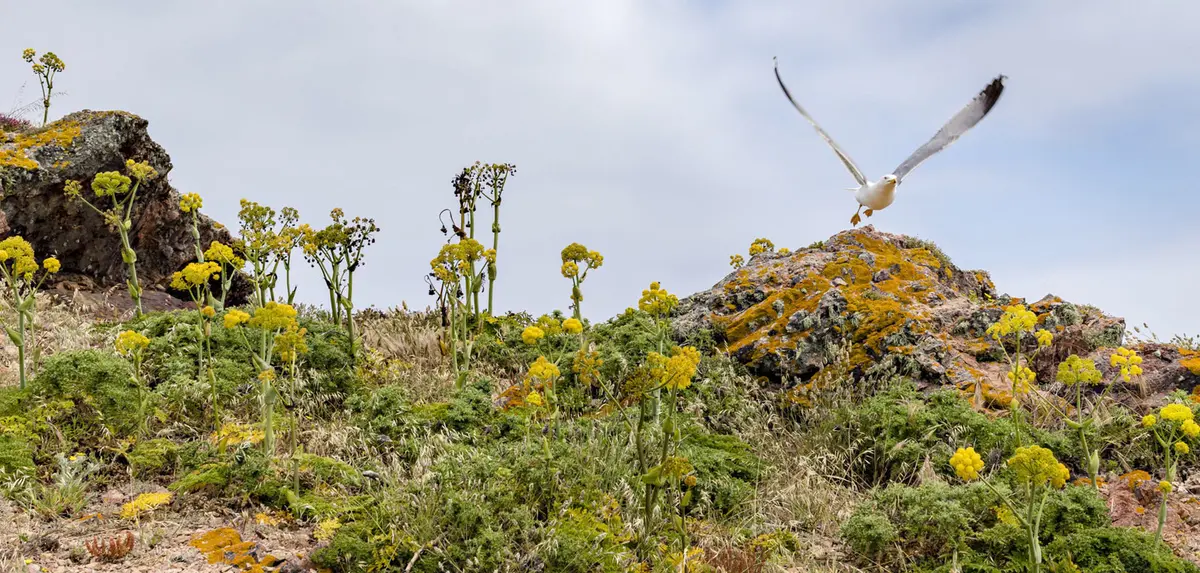
Yellow-legged gulls dominate the Berlengas, and during nesting season (May through July) they will attack you. This is not an exaggeration — island wardens brief visitors on it. Adult gulls protect nests aggressively, targeting your head if you walk near a chick or egg, which are often camouflaged in brush just inches off the marked trail.
How to defend yourself:
- Carry an umbrella or walking stick held above your head. The birds strike the object instead of your skull.
- Stay on marked trails. Nests are everywhere off-trail. One wrong step triggers an assault.
- Walk steadily away from a nesting zone. Shouting or waving escalates their aggression.
Pro Tip: The Ilha Velha Trail loops through the densest seagull colonies. Hike it during nesting season with an umbrella raised, not just awareness.
Is it safe to swim around the Berlengas?
Yes. The Berlengas sit inside a marine reserve with water clarity often exceeding 30-50 feet (9-15 meters). Atlantic currents keep the water cold — expect 60-68°F (15-20°C) even in summer. A wetsuit makes longer swims comfortable. Watch for boat traffic in the main bays, and use a surface marker buoy if you venture beyond the shallows.
Best swimming spots:
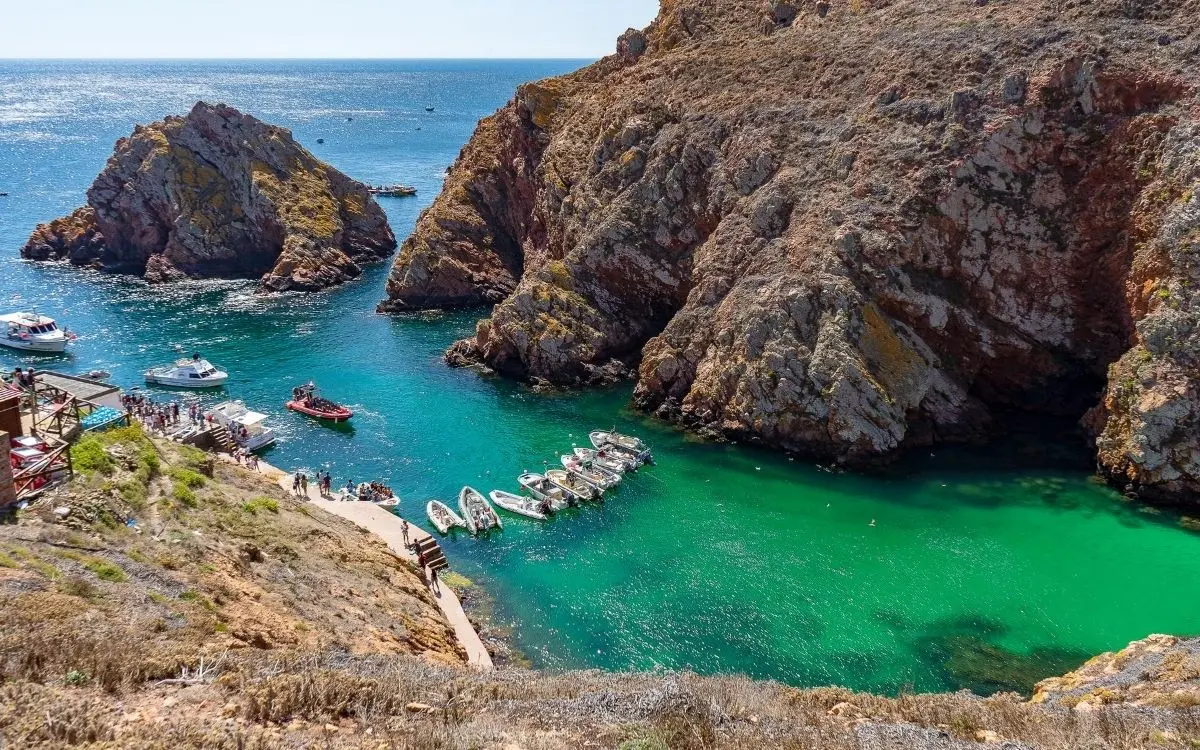
- Carreiro do Mosteiro beach: A small cove near the campsite with calmer, more sheltered water than you find on most Atlantic beaches in Portugal.
- Cova do Sonho (Dream Cave): A shallow bay, 6-40 feet (2-12 meters) deep, ideal for snorkeling. You can drift through the Furado Grande, a natural tunnel that cuts through the island.
What is the diving like in the Berlengas?
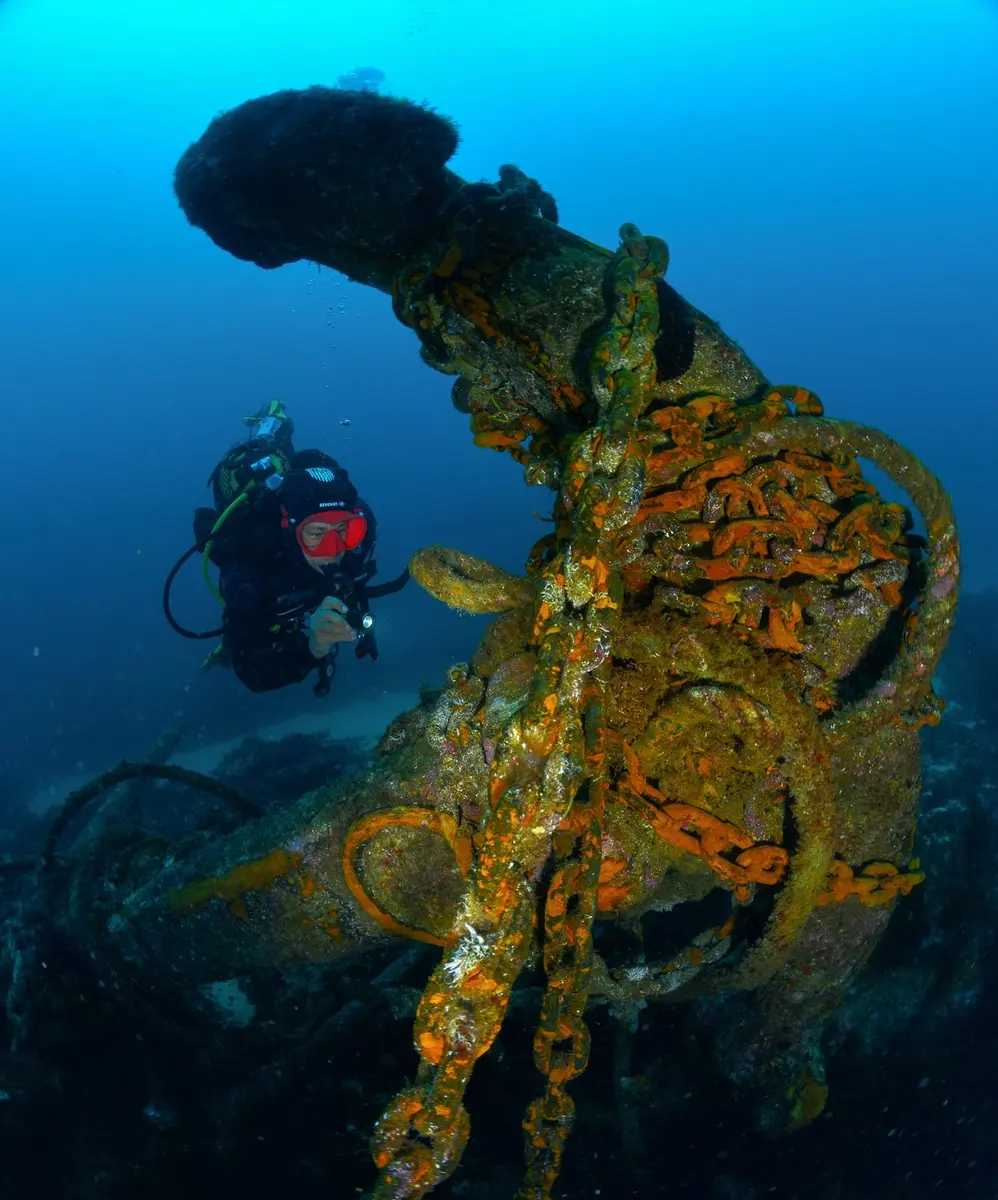
The Berlengas Archipelago is continental Portugal’s best dive destination. Treacherous currents have sunk dozens of ships here over the centuries, leaving wreck sites at depths accessible to recreational divers. Combined with wall dives carpeted in red gorgonians and caves with unusual underwater optics, the variety is exceptional for a single location — and for divers ready to go further, the Azores are the Atlantic’s most logical next step.
Top wrecks you can dive
- Primavera (Italian steamship, 1902): Depth 60-80 feet (18-24 m). Boilers and hull plates are visible. Shallow enough for newer divers and sheltered from swells. A solid entry-level wreck.
- Andreos/Vapor do Trigo (Greek freighter, 1926): Depth 90-100 feet (27-30 m). The stern is relatively intact. The boiler room shelters massive conger eels and lobsters. Watch for Mola Mola (ocean sunfish) drawn by current convergence.
- Highland Hope (English steamer, 1930): Depth 50-72 feet (15-22 m). Located at Farilhão Grande. Ran aground in fog. Scattered wreckage allows long bottom times.
Cave and reef dives
- Parede Rabo de Asno (Donkey Tail Wall): The signature dive. A massive rock wall drops to 100 feet (30 m), covered in red gorgonians. A tunnel penetrates the rock at that depth and requires Advanced Open Water certification.
- Farilhão da Cova: Features a freshwater lens trapped in the cave ceiling. Where it meets saltwater, a halocline blurs the water like frosted glass. Do not enter the freshwater layer — visibility drops to zero.
Pro Tip: If swells exceed 6.5 feet (2 meters), most dive sites are blown out. Check the forecast before committing to a dive trip from Peniche.
How do you hike Berlenga Grande?
Berlenga Grande is small enough to hike completely in one day. Two marked trails cover the island’s main terrain — a compact but rugged taste of hiking in Portugal at its most elemental. Wear proper hiking shoes — the granite is abrasive and scree is loose. Flip-flops will wreck your feet on the descent to the fort. Visitors are legally confined to these two trails, so there is no improvising a route.
The Berlenga/Lighthouse Trail
- Distance: 1 mile (1.6 km) one-way
- Difficulty: Easy to moderate
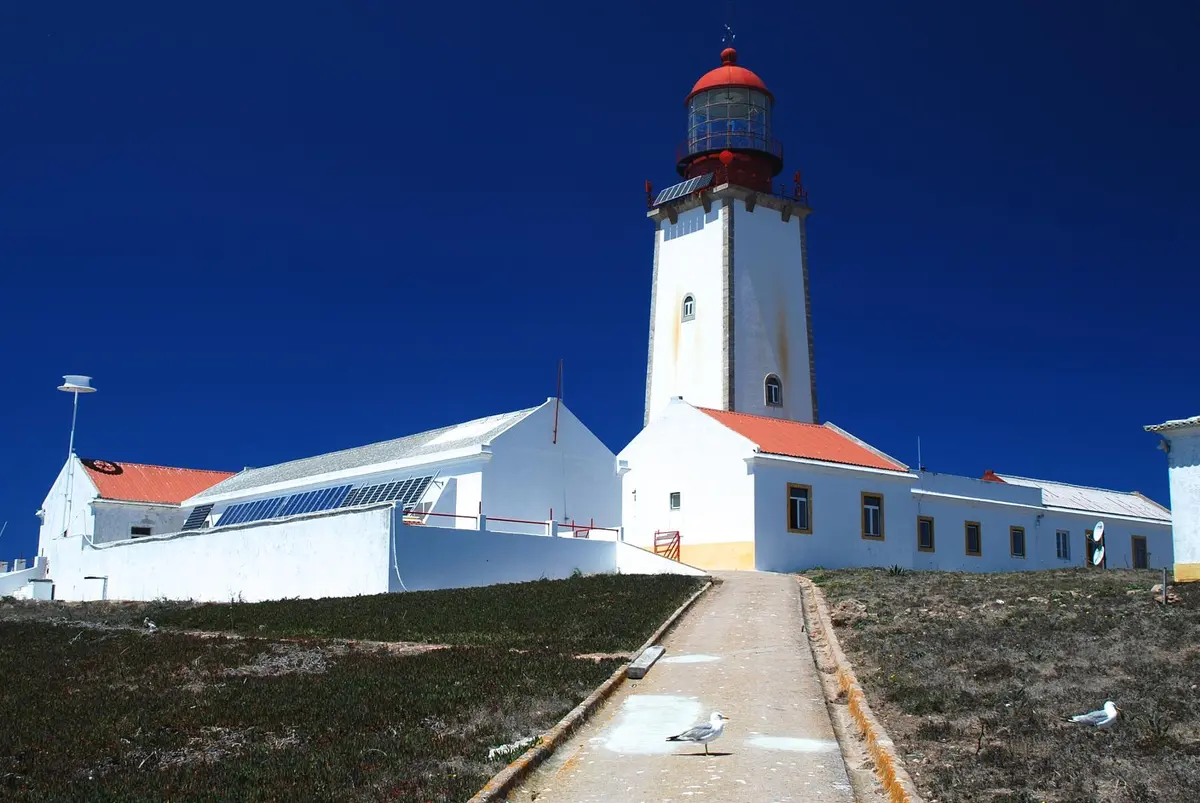
The trail connects the Fishermen’s Ward to the Fort of São João Baptista. You ascend to the island’s central plateau, then descend steep stone stairs to the fort. The key landmark is the Farol Duque de Bragança — built in 1841, solar-powered, standing 95 feet (29 meters) tall at the island’s highest point. Along the way you pass ancient cisterns built by Romans and monks who tried to capture rainwater, the island’s most precious resource.
The Ilha Velha Trail
- Distance: 1.5-mile (2.4 km) loop
- Difficulty: Medium
This loop circles the Old Island headland and delivers the best views of the Estelas and Farilhões islet groups. It also crosses the densest seagull colonies on the island. From May to July, bring an umbrella — you will use it before you finish the loop. Hikers who want to continue after returning to Peniche will find the Fishermen’s Trail a natural extension along the same Atlantic coastline.
What happened at the Fort of São João Baptista?
In 1666, a Portuguese garrison of fewer than 30 soldiers held off a Spanish fleet of 15 ships for two days during the Restoration War. The defenders, commanded by Cabo Avelar Pessoa, inflicted hundreds of casualties before surrendering only after ammunition ran out. The engagement became known as the Thermopylae of the Atlantic and cemented the fort’s place in Portuguese military history. Viamar named their ferry after the man.
Before the fort existed, 16th-century monks had tried to establish the Monastery of Misericordia da Berlenga on the island to aid shipwreck victims — a coastal outpost in the tradition of monasteries across Portugal built to serve those who worked the sea. French and English pirates raided so frequently that the monks abandoned the site. The ruins became the fort’s foundation.
What does a trip to the Berlengas actually cost?
A day trip runs €50-€70 ($55-$77) per person depending on which ferry you take and what activities you add — reasonable by the standards of Portugal travel costs overall, though the permit and ferry combination push the baseline higher than most day trips. Overnight camping pushes the total to €80-€100 ($88-$110). The island runs on cash — card terminals are unreliable this far offshore, so bring euros before you board.
Day trip estimate — per person:
- Berlengas Pass: €3
- Ferry round trip: €15-€29
- Meal at Mar e Sol: €20-€30
- Cave tour (small boat): €6-€10
- Snorkel rental: €10
Overnight camping estimate — add to the day trip costs:
- Camping fee: €8-€20 per tent per night
- Fort accommodation: €10-€20 per person per night
What rules do you need to follow on the island?
The Berlengas are a strictly managed nature reserve, and enforcement is active. Wardens patrol the trails, check permits, and issue fines for environmental infractions. The rules protect the habitat, not inconvenience tourists.
- Carry all trash out. The island operates on carry-in, carry-out. You are responsible for removing your own refuse.
- Stay on marked trails. Deviating is an environmental infraction and a safety risk. Unstable cliff edges and aggressive birds await off-trail.
- Bring your own water. Fresh water is scarce on the island — unlike on the mainland, where tap water in Portugal is perfectly drinkable. The island prioritizes conservation, not tourist comfort.
- Respect restricted zones. Visitors are legally confined to the Trilho da Berlenga and Trilho da Ilha Velha trails.
When is the best time to visit the Berlengas?
Late June or early September gives you the best balance — the same shoulder-season logic behind the best time to visit Portugal more broadly: stable weather, tolerable water temperatures of 60-65°F (15-18°C), and reduced seagull aggression as nesting season winds down. July and August fill the daily 550-person cap weeks in advance, and tour groups dominate every landing boat.
Skip winter (November through March). Scheduled ferry service stops, and Atlantic storms make crossings dangerous even for private charters.
Pro Tip: If the forecast shows swells over 6.5 feet (2 meters), cancel the trip. A rough crossing combined with closed swim spots and soaked gear negates the entire experience.
The bottom line
TL;DR: The Berlengas Archipelago rewards exactly as much preparation as you put in. Secure your Berlengas Pass before booking a ferry — there are more boat seats available than daily permits. Respect the weather window, pack your own water and cash, and expect raw Atlantic wilderness, not a resort island. Do that, and the payoff is real. The Berlengas are one of the most singular entries in any honest Portugal travel guide — precisely because they demand this level of planning.
Have you made the crossing to the Berlengas, or is the logistics maze still putting you off?