East Coast photography rewards planning over luck. Maine’s granite lighthouses, New Hampshire’s fall ridgelines, and Florida’s alligator wetlands sit on one drivable coastline — but each demands the right light, the right tide, and a park pass you probably don’t have yet. Here are the spots, the exact hour to shoot them, and the rules that quietly kill the shot.
Where Is the Best Place for East Coast Photography?
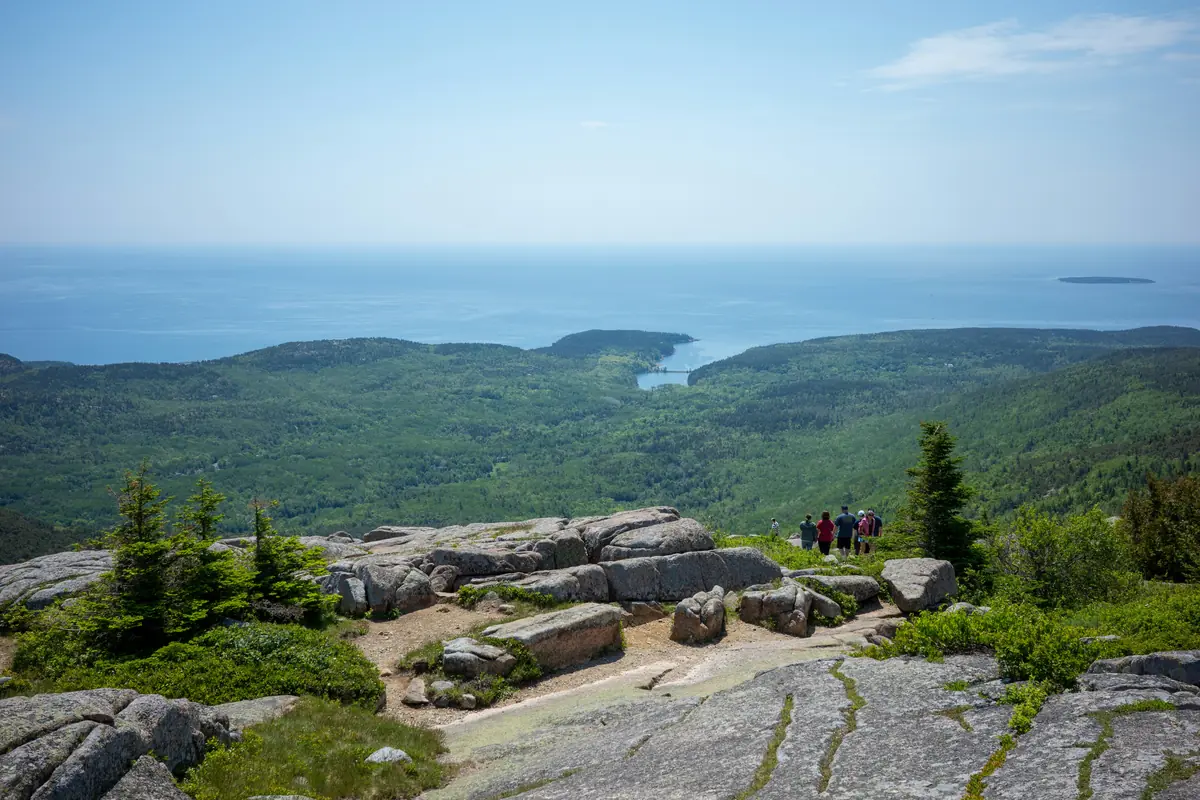
For coastal drama, Acadia National Park in Maine is the strongest single base — mountain, forest, and open ocean in one morning. Portland Head Light leads for lighthouses, the Kancamagus Highway for fall color, Assateague and the Everglades for wildlife, and Boston’s Fan Pier and Brooklyn Bridge Park for skylines.
Acadia goes first because nowhere else on this coast puts mountain, forest, and open ocean inside a single morning’s drive. From there the coastline fans out by subject: lighthouses cluster in Maine, foliage peaks in the White Mountains, skylines belong to Boston and New York, dunes and barrier islands define the Outer Banks, and wildlife concentrates in the Delmarva refuges and the Everglades.
Here’s the shortlist at a glance, matched to the light, the access rules, and the lens each spot wants:
| Spot | State | Best light | Access | Lens |
|---|---|---|---|---|
| Portland Head Light | ME | Sunrise | Park free; paid lots April to mid-November | 16–35mm |
| Bass Harbor Head Light | ME | Sunset | $35 Acadia pass; 27-space lot | 16–35mm |
| Kancamagus Highway | NH | Overcast morning | Overlooks free; forest pass at trailheads | 70–200mm |
| Fan Pier, Boston | MA | Blue hour | Free, urban | 24–70mm |
| Brooklyn Bridge Park | NY | Dawn | Free, urban | 16–35mm |
| Assateague Island | MD/VA | Golden hour | $25 per vehicle, 7 days | 400mm+ |
| Cape Hatteras Lighthouse | NC | Golden hour | Grounds free; tower under scaffolding | 24–70mm |
| Great Smoky Mountains | TN/NC | Sunrise, fall color | No entry fee; parking tag required | 24–70mm |
| Everglades (Anhinga Trail) | FL | Early morning, dry season | $35 per vehicle, 7 days | 100–400mm |
How Do You Plan Light, Tides, and Access?
Plan every East Coast shoot around three variables: light, tide, and access. Scout the sun angle with an ephemeris app, pull a tide chart because many coastal compositions only work at low water, and confirm fees, reservations, and gate hours before you leave. National parks ban drones outright, and several gates do not open early enough for a pre-dawn setup.
Light: Ephemeris Apps, Golden Hour, and Blue Hour
An ephemeris app like PhotoPills or The Photographer’s Ephemeris shows exactly where the sun and moon will rise relative to your subject, so you can pre-plan a composition instead of guessing on site in the dark.
The golden hour — the 30 to 45 minutes after sunrise and before sunset — gives warm, low-angle light. The blue hour, the 10 to 30 minutes after the sun drops, gives even light from any direction and richer sky color. Most guides stop at the first one. That’s a mistake, and I’ll come back to it under gear.
Tides: The Variable Most Guides Skip
Tide direction matters more than most guides admit. A lighthouse base surrounded by photogenic wet rock at mid-tide can be underwater or stranded in dull sand a few hours later.
Photographers keep reporting the same failure: a dawn hike down to a sea-level lighthouse view, followed by the discovery that high tide has swallowed the rocks they planned to stand on.
Pro Tip: Check the tide table the night before, not when you arrive in the dark. Coastal foregrounds are a scheduling problem, not a compositional one.
Access: Fees, Reservations, and Gate Hours
Access is the part that costs money and time — and the part that most often ends a shoot before it starts.
- Acadia entrance: $35 per private vehicle for 7 days, or $70 for the park’s annual pass. Non-U.S. residents 16 and over pay an additional $100 per person. (NPS fees)
- Cadillac Summit Road: a separate $6 timed vehicle reservation, sold only in advance on Recreation.gov. Thirty percent of slots release 90 days out; the other 70 percent drop at 10 a.m. ET two days ahead. (Recreation.gov)
- Payment: Acadia is cashless. Card or mobile payment only, including at the entrance station.
- Gate hours: several marquee locations do not open before dawn. Plan accordingly rather than driving through the dark for nothing.
That last point is the one nobody writes down. Fort Williams Park, home of Portland Head Light, opens at sunrise — not before it. Bombay Hook opens a half-hour before sunrise. Jockey’s Ridge opens at 8 a.m. The standard advice to arrive an hour early is, at three of the best spots on this coast, physically impossible.
Maine’s Lighthouses: Portland Head and Bass Harbor
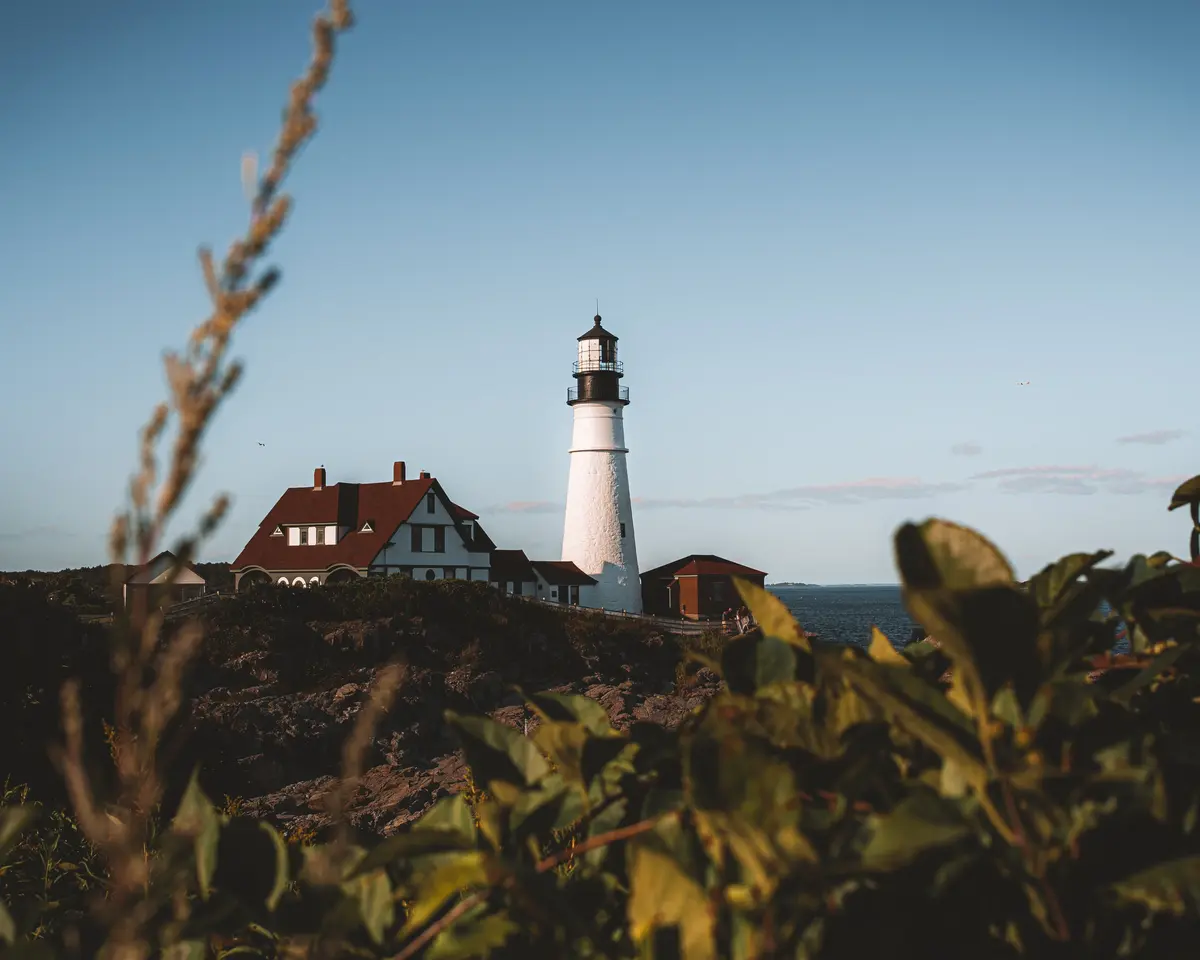
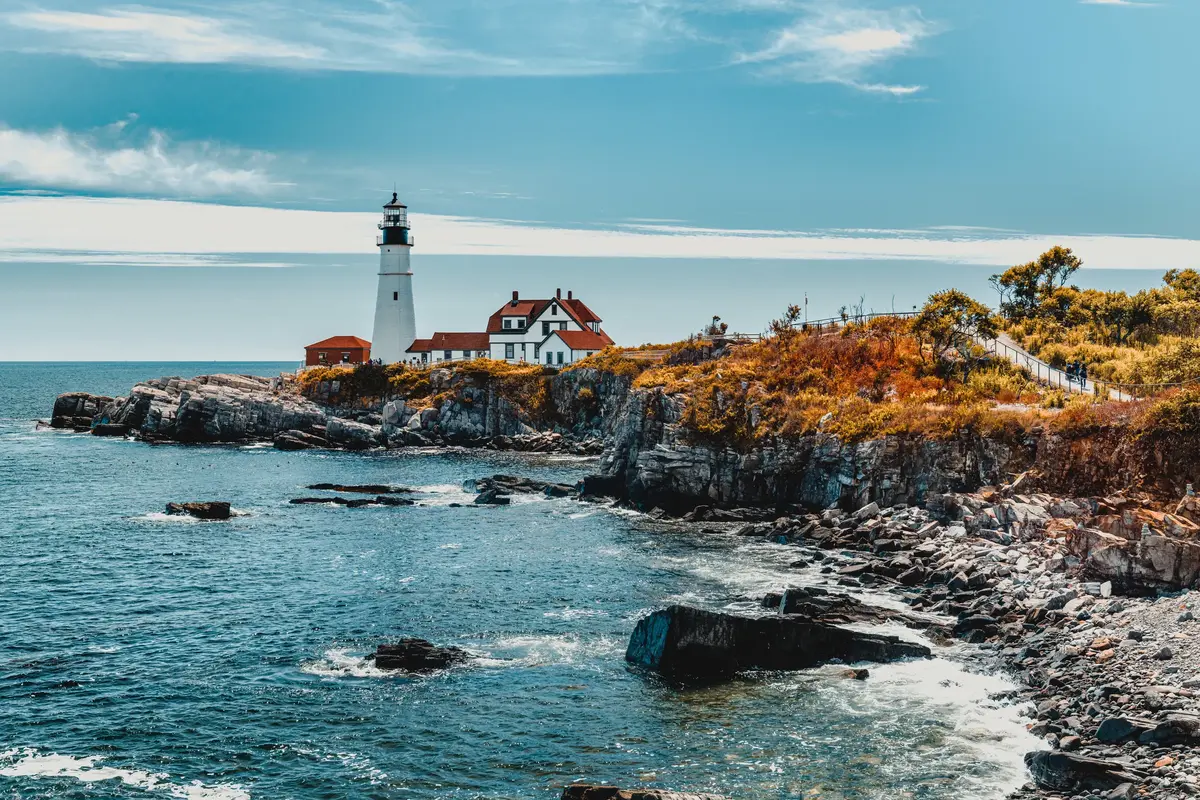
Two towers anchor the Maine coast, and they want opposite ends of the day. Portland Head Light in Cape Elizabeth, first lit in 1791, was the first lighthouse completed under the U.S. government and the oldest in Maine. Bass Harbor Head Light, built in 1858 inside what is now Acadia, faces west across open water. Shoot Portland Head at sunrise. Shoot Bass Harbor at sunset. Trying to reverse them wastes a day.
Portland Head Light, Cape Elizabeth
The light stands in Fort Williams Park, which is free to enter and open sunrise to sunset. That constraint defines the shot: you cannot set up in the dark, so the first legal minute in the park is also the best one. Get through the gate and go straight to the rocks, while the tower is rim-lit by the first sun and the foreground still holds shadow. A 16–35mm lens frames tower, keeper’s house, and rock in one shot.
Parking is pay-and-display in the premium lots from April 1 through mid-November, card only, run by a private operator. The overflow lot is free — worth knowing at 5 a.m. when nothing else is. Commercial photography inside the park requires prior permission. (Park information)
George Washington commissioned the light, and Congress appropriated $1,500 in 1790 to finish it, four years after Massachusetts put up the first $750. The tower itself opens to the public exactly one day a year, on Maine Open Lighthouse Day, so plan on shooting it from outside.
- Location: Fort Williams Park, 1000 Shore Road, Cape Elizabeth, ME
- Cost: free entry; paid parking in premium lots, free overflow lot
- Best for: Sunrise wide-angles; photographers who can be first through the gate
- Time needed: 60 to 90 minutes
- Lens: 16–35mm
Sea smoke is the local prize. It forms when bitterly cold air moves over the warmer water of Casco Bay, curling off the surface in the deep subzero range around -14°F (-26°C). It is the most dramatic condition of the year at this lighthouse, and almost nobody shows up for it.
Bass Harbor Head Light, Acadia
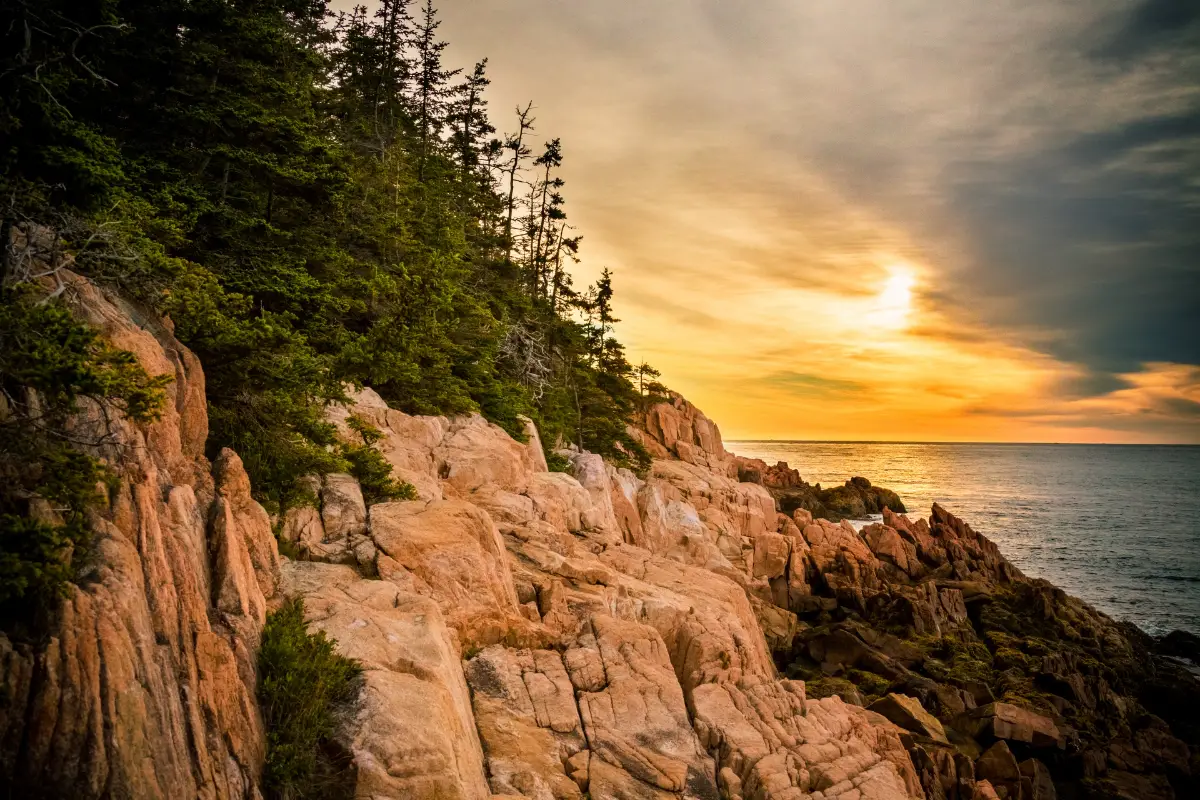
Bass Harbor faces south, and the staircase to the shoreline comes out to its east — which means at sunset you are shooting west, into the light, with the tower on the cliff edge above you. It is the fifth most-visited destination in Acadia, drawing roughly 180,000 people a year to a parking lot with 27 spaces.
Do the math and the friction is obvious. The lot fills more than an hour before sunset in peak season, and the shooting position itself is a rock shelf of maybe 20 by 30 feet, claimed tripod by tripod. Arrive early or accept a cramped spot in the back.
The tower stands 56 feet (17 m) above mean high water. A 6- or 10-stop ND filter stretches the exposure long enough to smooth the surf into mist as the sky goes orange.
- Location: Bass Harbor, Tremont, Mount Desert Island, ME
- Cost: covered by the $35 Acadia entrance pass
- Best for: Sunset long exposures; patient shooters who arrive early
- Time needed: 90 minutes, including the wait for a foreground spot
- Lens: 16–35mm
Pro Tip: Salt spray fogs a filter within minutes on those rocks. Wipe the glass between wave sets and keep the microfiber in a jacket pocket, not in the bag at your feet.
When Is Peak Fall Foliage on the East Coast?
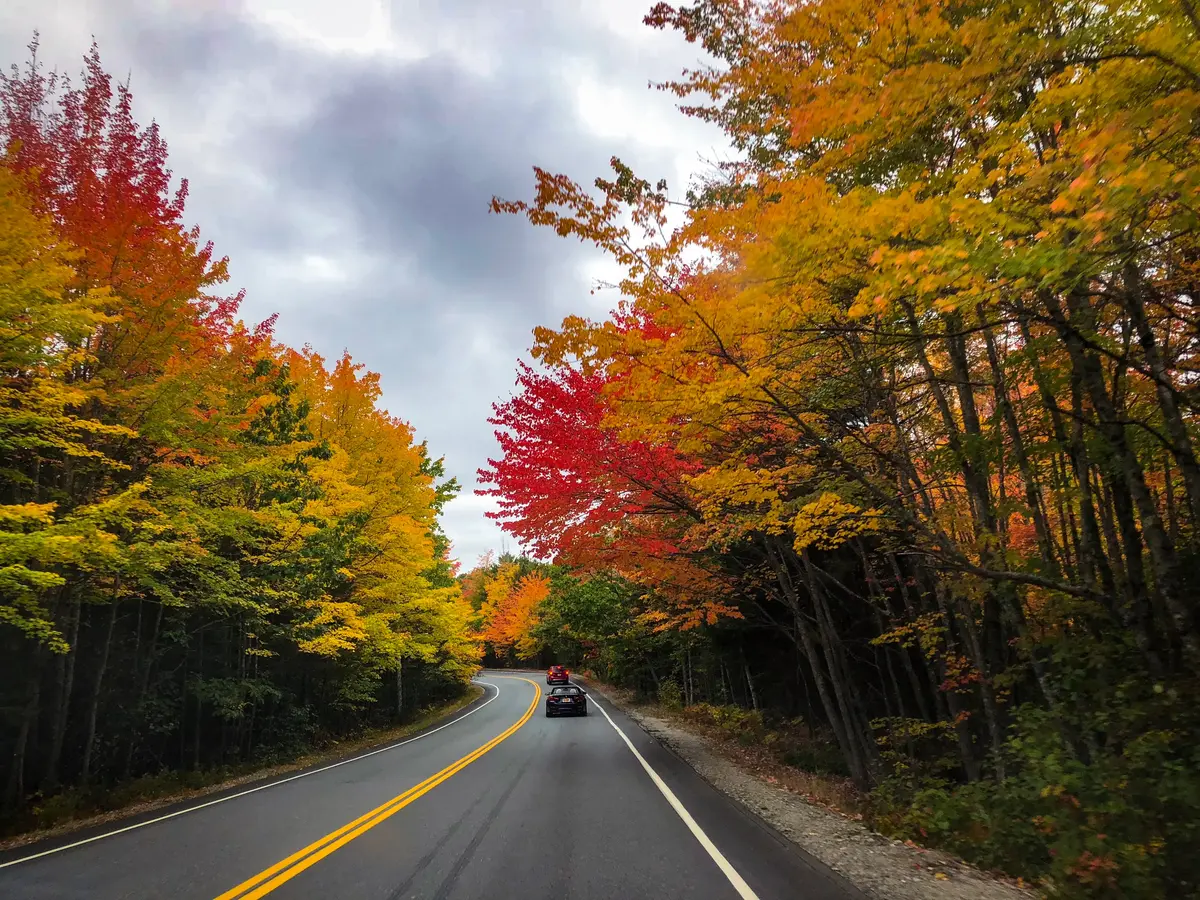
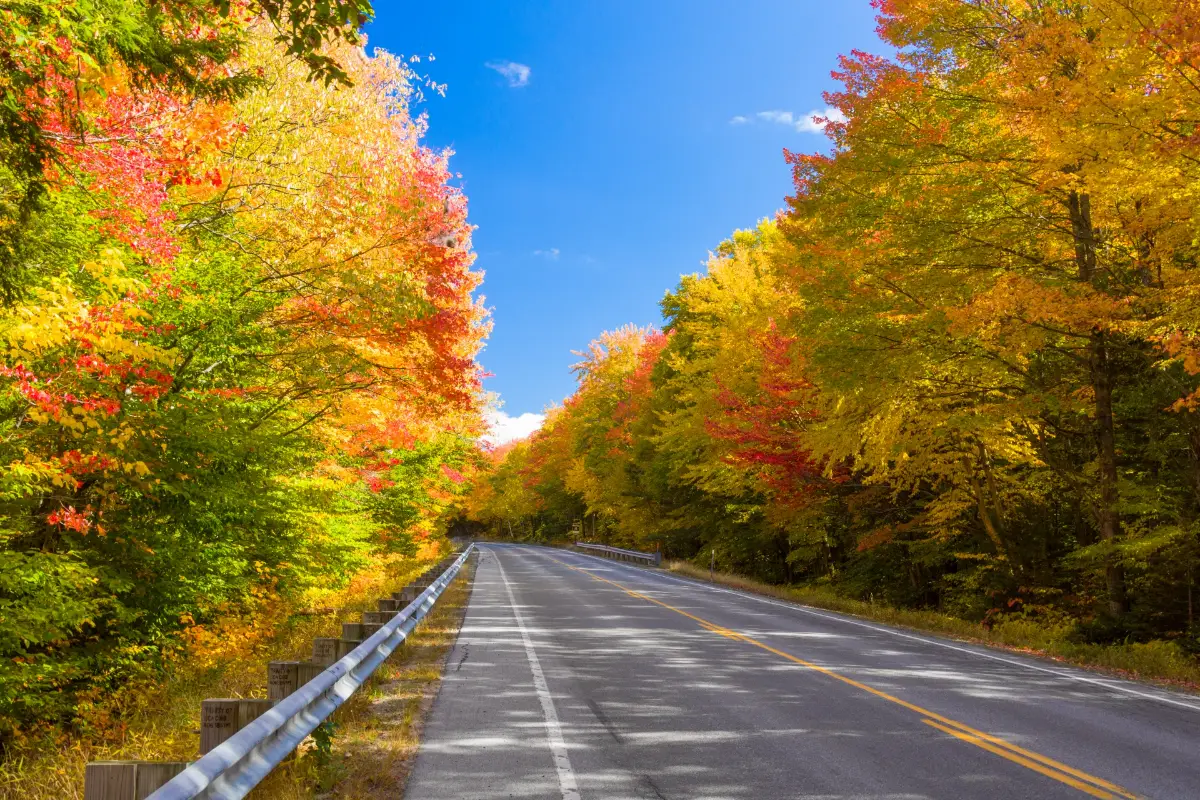
Peak East Coast fall foliage moves north to south. Northern Maine, Vermont, and New Hampshire’s White Mountains peak from late September into early October, while the Blue Ridge and Great Smoky Mountains peak in late October into early November. Follow the color wave south, and shoot overcast mornings for saturated, glare-free leaves.
The Kancamagus Highway is the anchor drive: 34.5 miles of New Hampshire Route 112 between Lincoln and Conway, topping out at 2,855 feet on Kancamagus Pass. Pull-offs stack up over the Swift River, and the west-facing Pemigewasset and Hancock overlooks near the pass turn the whole Osceola Range into a wall of color.
Nearby Franconia Notch and the short climb to Artist’s Bluff give you elevated views over Echo Lake. Peak color holds only about 7 to 10 days at a given elevation, and it climbs down the mountains as the season progresses — so shoot the high passes first.
Two technique notes separate flat foliage frames from rich ones. A circular polarizer cuts the glare off waxy leaves and deepens the color. A 70–200mm telephoto compresses distant hillsides into dense walls of color instead of scattered trees.
Then there’s the practical layer nobody mentions until it costs them. The overlooks along the Kanc are free, but the developed sites — Lower Falls, Rocky Gorge, the Lincoln Woods trailhead — require a White Mountain National Forest recreation pass, sold at self-serve stations and covered by an America the Beautiful pass. (Forest Service passes) There is also no gas, no food, and effectively no cell signal along the full 34.5 miles. Fill the tank in Lincoln or Conway.
Pro Tip: Go mid-week. Foliage weekends draw leaf-peeper traffic that turns empty dawn pull-offs into bumper-to-bumper parking by 9 a.m. Tuesday and Wednesday mornings hand you the overlooks.
Skylines and Barrier Islands: Boston, New York, Outer Banks
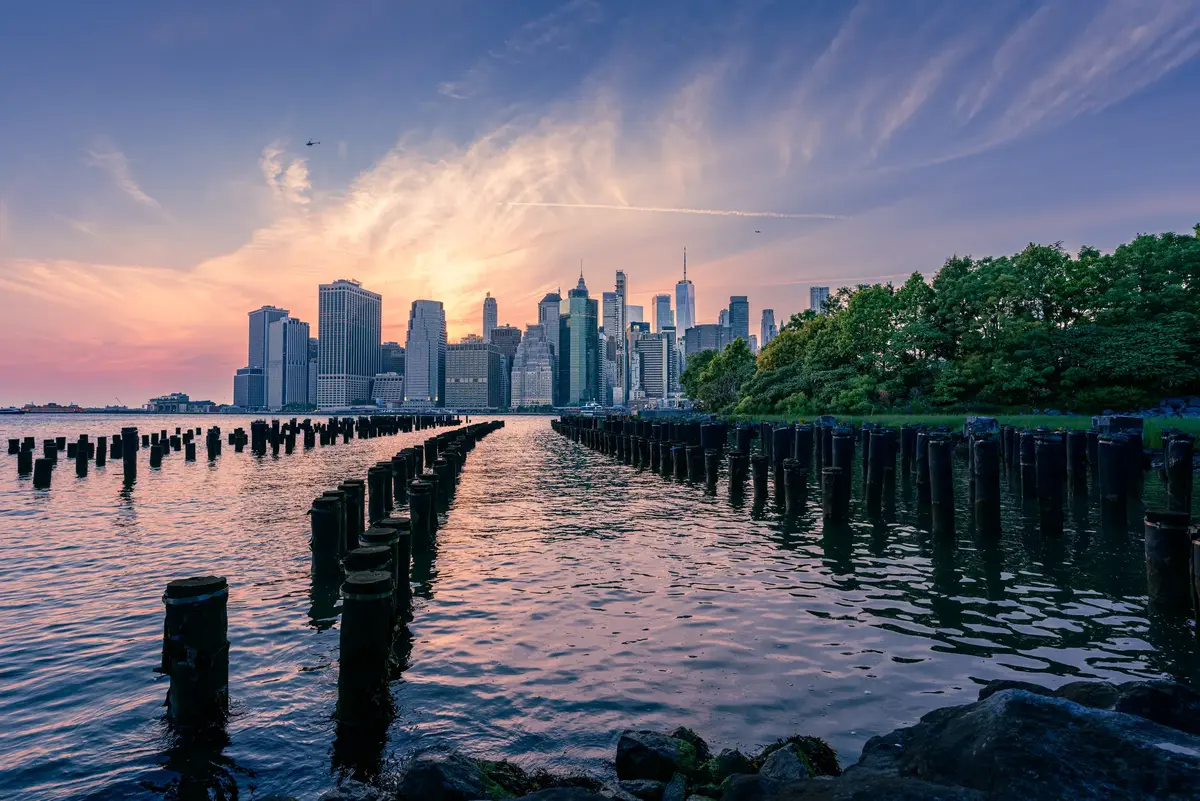
Boston’s cleanest skyline shot is from Fan Pier Park in the Seaport at blue hour. New York’s classic Manhattan view is from Brooklyn Bridge Park in DUMBO at dawn. On the Outer Banks, the barrier-island frames still work — but the lighthouse everyone comes for is currently behind scaffolding, and that changes the plan.
Boston: Fan Pier and Beacon Hill
Fan Pier Park gives you the financial-district towers reflected in the harbor. Set a tripod, drop to ISO 100, and run 20 to 30 second exposures through blue hour until the water goes to glass.
For a different Boston, Acorn Street on Beacon Hill is the most-photographed cobblestone lane in the city, and the Charles River from the Mass Ave bridge frames the skyline behind sailboats on a clear afternoon.
New York: Brooklyn Bridge Park and DUMBO
The pylons of the Brooklyn Bridge frame Lower Manhattan from the park’s piers, and the Washington Street view sets the bridge between the buildings of DUMBO. A wide 16–35mm handles both.
The whole trick is timing. Walk onto the bridge before dawn and the span is quiet for a few minutes at a stretch. By 7 a.m. it is a slow river of joggers and tour groups, and the clean foreground is gone until the next morning.
Outer Banks: Cape Hatteras and Jockey’s Ridge
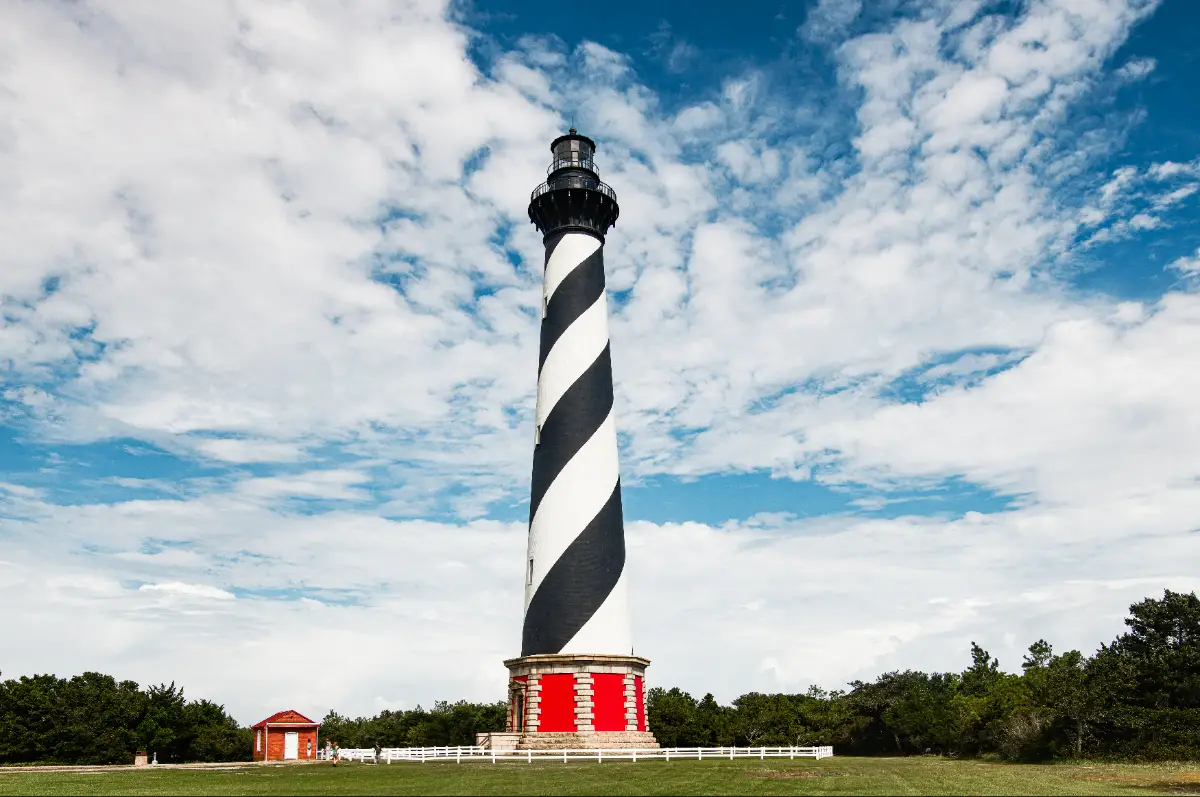
Cape Hatteras is the tallest brick lighthouse in the country at 198.49 feet (60 m), built from roughly 1,250,000 bricks, with 257 steps inside. In 1999, engineers moved the entire tower 2,900 feet (884 m) inland to save it from the encroaching ocean — the “Move of the Millennium.”
Here is the part that will change your trip: the black-and-white spiral is not currently visible. The tower is wrapped in scaffolding for a $19.2 million restoration, closed to climbers, and the work has run well past its original schedule after crews found cracking in most of the 16 cast-iron brackets supporting the gallery deck. (NPS lighthouse climbs) The daymark stripes are the shot. Right now there are no stripes.
Shoot the grounds and the keepers’ quarters anyway, then redirect the lighthouse ambition 43 miles north to Bodie Island Light, whose horizontal stripes are uncovered and whose tower is open for climbing. Then drive to Jockey’s Ridge State Park near Nags Head, the tallest natural dune system on the East Coast at 80 to 100 feet. It is free, and it opens at 8 a.m. — which makes it a sunset location whether you like it or not. (NC State Parks)
- Location: Buxton, Cape Hatteras National Seashore, NC
- Cost: free to photograph the grounds
- Best for: Golden-hour wide shots, keepers’ quarters, barrier-island foregrounds
- Time needed: 1 to 2 hours
- Current condition: scaffolded; climbing closed
Where Can You Photograph East Coast Wildlife?
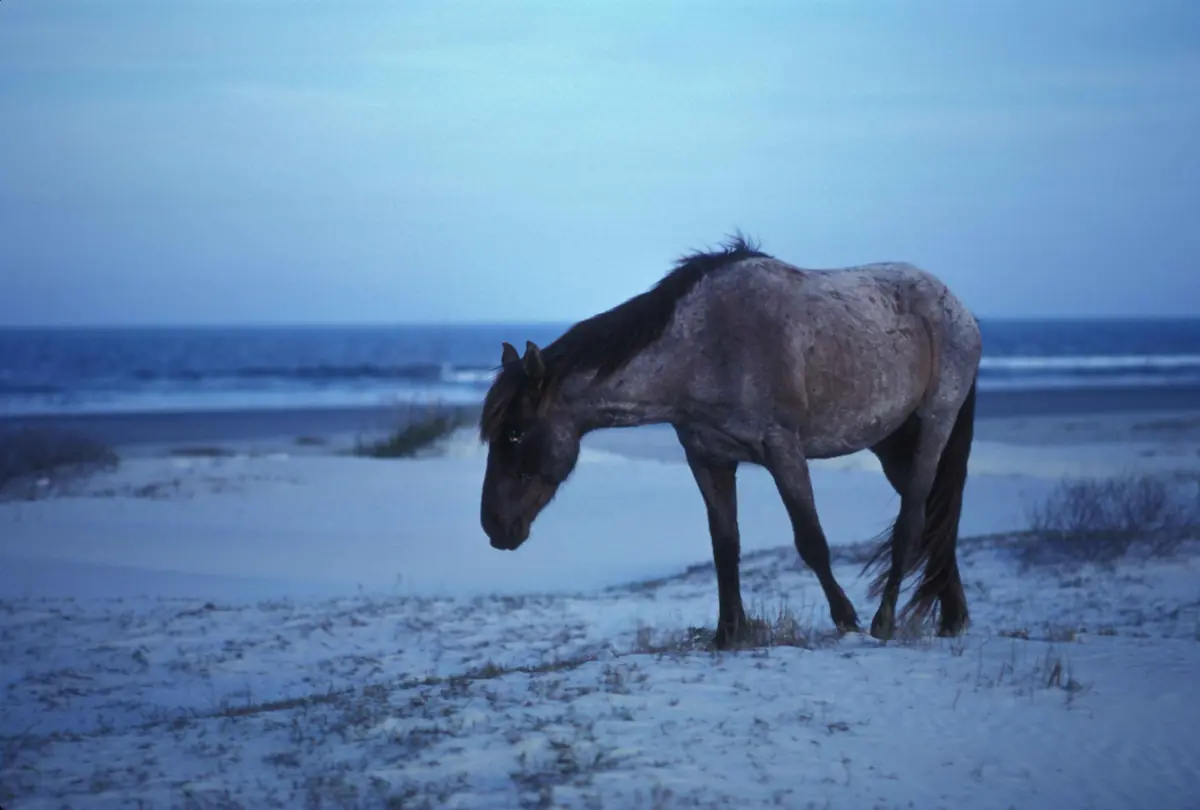
Photograph the wild horses of Assateague Island, the alligators and wading birds of the Everglades’ Anhinga Trail, and the wintering snow geese at Bombay Hook. A 400mm or longer telephoto is essential, you must stay at least 40 feet (12 m) from Assateague’s horses, and the dry winter season in the Everglades concentrates animals at predictable water holes.
Assateague Island: Wild Horses at Golden Hour
The horses roam free across dune and marsh, and low golden light throws warm color across the grass behind them. The Maryland herd runs in the low 80s, managed toward a target of 80 to 100 animals.
The 40-foot rule — about a school bus length — is not a suggestion. Rangers enforce it, fines start around $100, and the horses bite, kick, and have been known to trample a latched cooler to get at food. Let a long lens do the work, and use your car as a blind when horses are near the road.
One friction point worth budgeting for: on summer weekends, the wait to enter the over-sand vehicle zone can run up to four hours. (Assateague Island National Seashore)
- Location: Assateague Island National Seashore, MD/VA
- Cost: $25 per vehicle for a 7-day pass; $45 annual
- Best for: Wildlife shooters with a 400mm+ telephoto
- Time needed: Half a day, including scouting drive time
- Lens: 400mm+
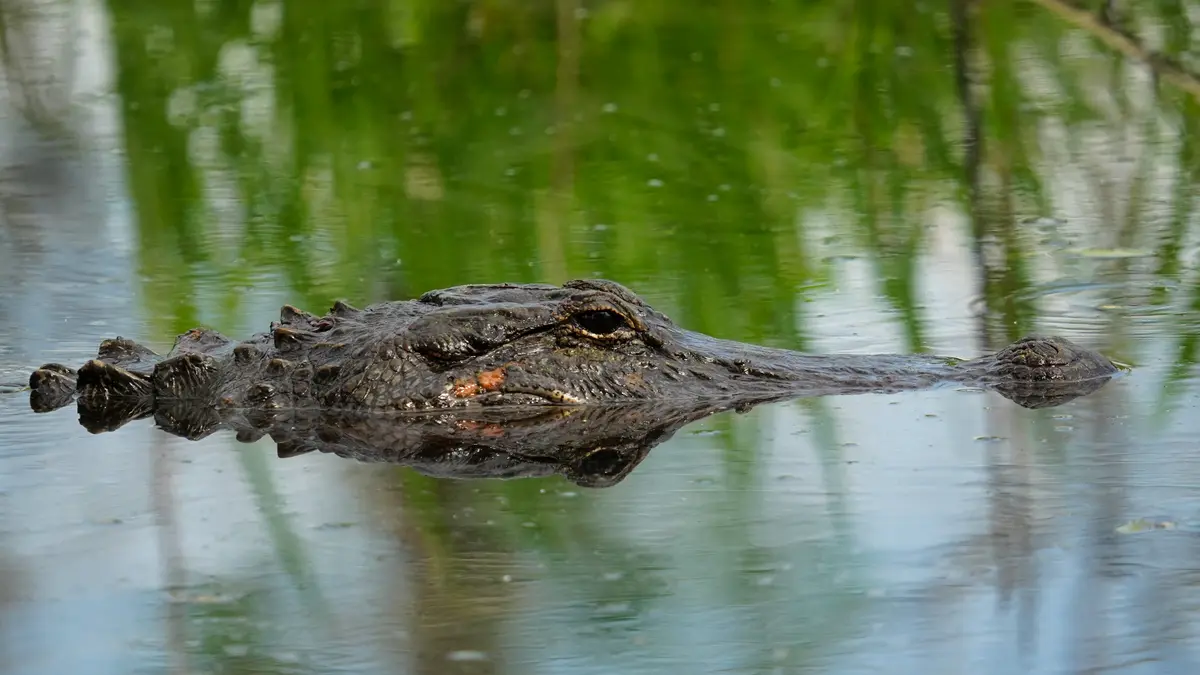
The Everglades: Alligators on the Anhinga Trail
The Anhinga Trail is the single most reliable wildlife spot in the park — a short boardwalk off the Royal Palm Visitor Center where alligators, anhingas, herons, and egrets gather feet from the railing. Shark Valley adds a 15-mile loop road thick with gators, though its road closes to vehicles at 6 p.m.
The dry season runs roughly November through April, when receding water forces wildlife into shrinking pools. Use a shutter speed of 1/1000s or faster to freeze birds in flight.
- Location: Royal Palm, Homestead entrance, Everglades National Park, FL
- Cost: $35 per vehicle, 7 days; non-U.S. residents pay $100 more per person (NPS fees)
- Best for: Close-range reptiles and wading birds without a guided tour
- Time needed: 2 hours on the boardwalk; half a day with Shark Valley
- Lens: 100–400mm
Bombay Hook: Snow Geese on the Auto Loop
Bombay Hook National Wildlife Refuge in Delaware sits on the Atlantic Flyway, and in winter its impoundments hold roughly 100,000 snow geese. A 12-mile auto tour route lets you shoot from the car window — rest the lens on a bean bag against the door frame for a stable, low-angle platform.
Now the constraint that ruins pre-dawn plans: the refuge opens a half-hour before sunrise and closes a half-hour after sunset. There is no arriving an hour early to set up. You get the tail of civil twilight and nothing before it. The auto tour route also closes completely on a handful of managed hunt days each fall, with only the visitor center open. Check before you drive. (FWS visitor information)
- Location: 2591 Whitehall Neck Road, Smyrna, DE
- Cost: roughly $4 per vehicle; covered by an America the Beautiful pass
- Hours: half an hour before sunrise to half an hour after sunset
- Best for: Mass-flock frames and car-window birding
- Time needed: 2 to 3 hours for a slow loop
Can You Fly a Drone in a National Park?
No. Under National Park Service Policy Memorandum 14-05, launching, landing, or operating a drone is prohibited across every National Park Service unit, including Acadia, the Everglades, and the Great Smoky Mountains. Violation is a federal misdemeanor carrying up to six months in jail and a fine of up to $5,000.
The ban covers seashores and national monuments too, so the Statue of Liberty, Cape Hatteras National Seashore, and Cape Cod National Seashore are all off-limits. Weight makes no difference — a sub-250-gram mini is treated exactly like a heavy rig. (NPS drone policy)
Two details are worth knowing before you gamble. Rangers can seize the drone, the controller, and the memory cards, and in practice most first-offense fines land in the $200 to $1,500 range rather than at the $5,000 ceiling. And the FILM Act, which loosened permit rules for small filming crews, did not touch the drone ban at all — a point plenty of blogs still get wrong.
National forests generally allow drones outside designated wilderness areas, which makes the White Mountains a legal alternative to the parks. Wherever you fly, follow FAA Part 107 rules and check the B4UFLY app for airspace restrictions before takeoff.
Pro Tip: Leave the drone in the car at every national park entrance. Rangers have confiscated them at the Statue of Liberty ferry security line. A seized drone plus a federal citation is a steep price for one aerial frame.
What Gear Do You Need for East Coast Photography?
A versatile East Coast photography kit covers a wide-angle zoom (16–35mm) for coast and skylines, a standard zoom (24–70mm) for cities, and a telephoto (100–400mm or longer) for wildlife. Add a sturdy tripod, a circular polarizer for foliage, and 6- or 10-stop ND filters for silky surf and long harbor exposures.
A few items earn their weight on this coastline specifically:
- Weather sealing: salt spray and sudden coastal rain are constant; a sealed body and lens save shots and gear.
- Microfiber cloths: pack several. One fogged filter ends a sunrise shoot.
- Spare batteries: cold New England mornings drain them fast. Keep a spare in an inside pocket where body heat slows the drop.
- A bean bag: turns a car window into a stable wildlife rest at Assateague and Bombay Hook.
- A printer at home: the Smokies will not accept a digital parking tag. More on that below.
And a piece of standard advice worth arguing with: the reflexive “just use golden hour” line is incomplete on this coast. The 10 to 30 minutes of blue hour after sunset often beat it outright — richer sky color, even light from any direction, and a fraction of the crowd, because most people pack up the moment the sun clears the horizon. Pair a tripod with 20 to 30 second exposures and the harbor turns to glass while the towers light up.
How Do You Drive This Coast From Maine to Florida?
A complete East Coast photography road trip runs north to south: start in Acadia and coastal Maine, drop into New Hampshire’s White Mountains, shoot Boston and Cape Cod, then New York City, the Delmarva refuges, the Outer Banks, the Great Smoky Mountains, and finish in the Florida Everglades. Time the drive to chase fall color southward.
The route covers nearly 2,000 miles of Atlantic coastline. The smart move is sequencing it around the foliage wave: because peak color drops from late September in the Whites to early November in the Smokies, driving south at the right pace lets you shoot peak foliage twice — once up north, again two weeks later down south. Build in editing and weather-buffer days, because a single fogged-out sunrise can cost you a marquee location.
Skip the Cadillac Mountain sunrise scrum in Acadia. It requires the $6 timed reservation, it sells out, and park studies show roughly 75 percent of Acadia’s visitors head to that summit at some point in their stay — which is exactly what the platform feels like at first light. Compose slightly below the main viewing area for cleaner foregrounds, or shoot Bass Harbor at sunset instead and skip the crowd entirely.
The Great Smoky Mountains anchor the southern stretch: the most-visited national park in the country, with more than 12 million visits a year, and no entrance fee. That last fact traps photographers. There is no entrance fee, but any vehicle parked longer than 15 minutes needs a parking tag — $5 daily, $15 weekly, $40 annual — and an America the Beautiful pass does not cover it. Daily and weekly tags must be physically printed and displayed on the dashboard; a phone screenshot is not accepted. (NPS parking tags)
Cades Cove and the Kuwohi approach (the peak formerly named Clingmans Dome, at 6,643 feet) reward sunrise shooters who beat the loop-road traffic. Note that Kuwohi Road closes from December through late March, so a winter summit means a long walk in.
What Most Guides Get Wrong About This Coast
The subjects are the easy part. The East Coast stacks lighthouses, foliage, skylines, dunes, and wildlife onto one drivable seaboard, and every guide will tell you that much.
What they leave out is that the shot is usually lost before you lift the camera — at a gate that opened at sunrise instead of before it, at a dashboard without a printed tag, at a lighthouse wearing scaffolding, at a rock shelf already covered in tripods. Get the light, the tide, and the access right, and this coast rivals anywhere in the country for variety.
So: Acadia for the single best all-around base. Portland Head at sunrise, first through the gate. The Kancamagus mid-week, under cloud. The Everglades in dry season with a 400mm. And if you take one thing from all of this, take the boring one — check the gate hours the night before. It is the cheapest fix in photography and the one nobody makes.