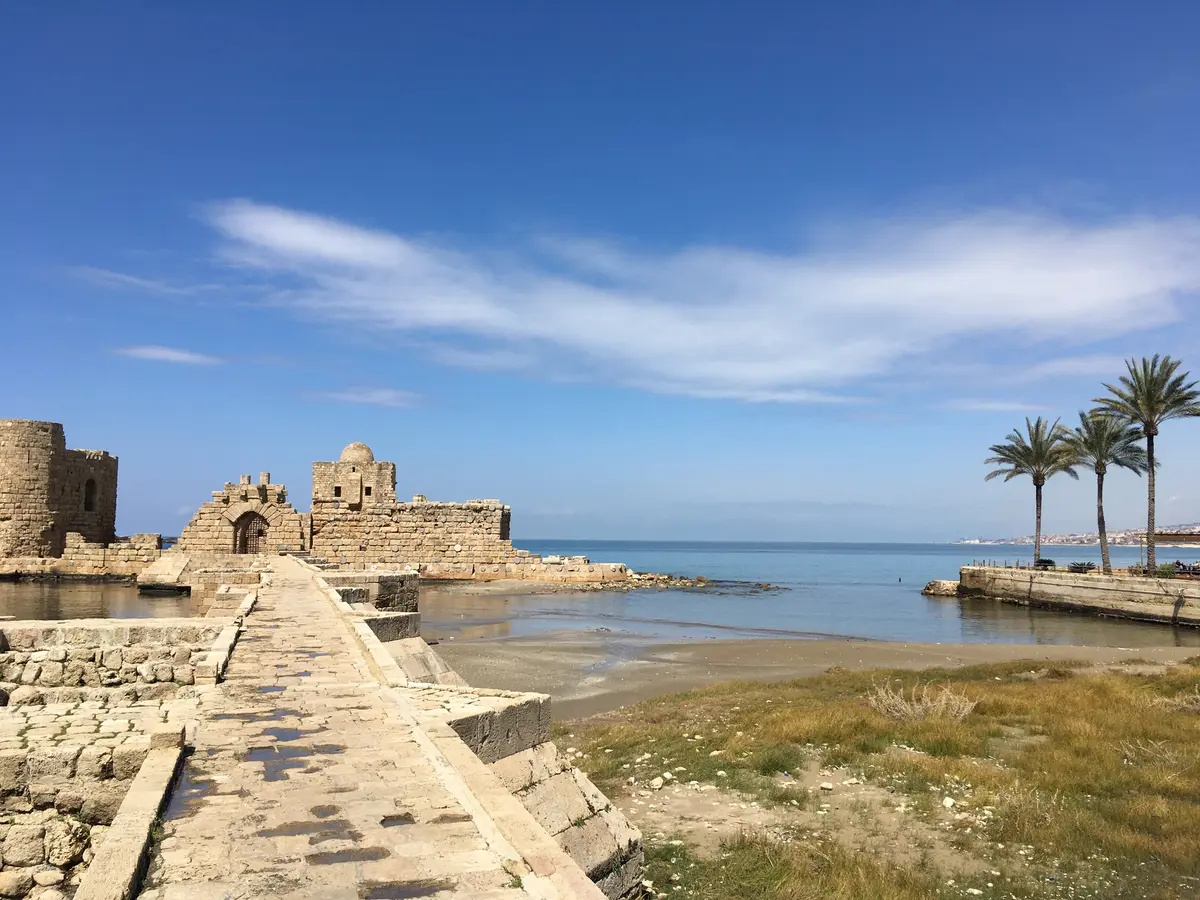
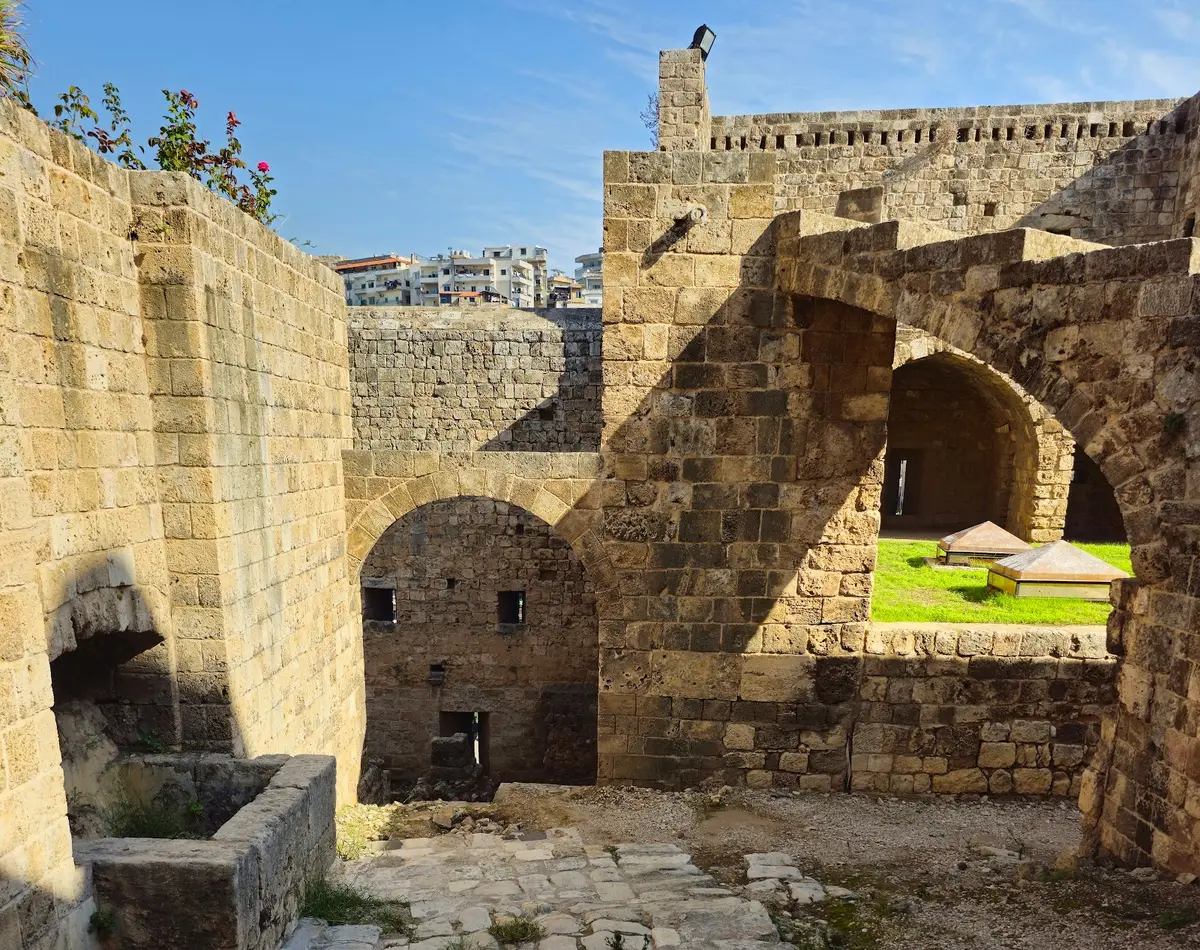
Six Roman columns 72 feet (22 m) tall at Baalbek. An 8,000-year-old port at Byblos where the alphabet was born. A hippodrome in Tyre that once held 20,000 fans screaming over chariot races. The Lebanon archaeological sites pack the punch of Rome and the depth of Athens — without the lines. Here’s what’s worth your time, what to skip, and how to do it without stress.
Are the Lebanon archaeological sites safe to visit right now?
Yes — for the main tourist sites covered in this guide. Baalbek, Byblos, Tyre, Anjar, Sidon and the Qadisha Valley sit well away from the volatile southern and Syrian border zones that drive most government advisories. Travelers consistently report feeling safe and welcomed. The smart move is hiring a local driver who knows the checkpoints.
Government advisories tend to paint the whole country one color, but the on-the-ground reality at the main sites is closer to “tea offered by strangers” than “danger.” The friction is real but predictable: army checkpoints, occasional road closures, and a currency situation that confuses first-timers.
Practical safety rules I follow
- Hire a local driver or guide. This is the single biggest decision you’ll make. A trusted driver handles checkpoints in 30 seconds instead of 30 minutes and knows which roads to skip that morning. Expect $150–$200 USD for a full-day private car with driver.
- Stay out of border zones. Avoid anywhere within 3 miles (5 km) of the Syrian border (Hermel and east of it), the southern border strip, and refugee camps. None of the sites in this guide require entering those areas.
- Skip protests and don’t photograph soldiers. Both rules are non-negotiable and locals will quietly warn you if you forget.
- Carry crisp USD in small bills. ATMs are unreliable and most site fees, taxis and meals are easier to settle in dollars. Bring $20s, $10s and $5s — torn or marked bills get refused.
- Register with your government’s traveler program before you fly. It takes five minutes and gives you alerts if anything shifts.
For more on the security picture, see our guide on whether Lebanon is safe for American tourists.
1. Baalbek — Roman ruins that make Rome look modest
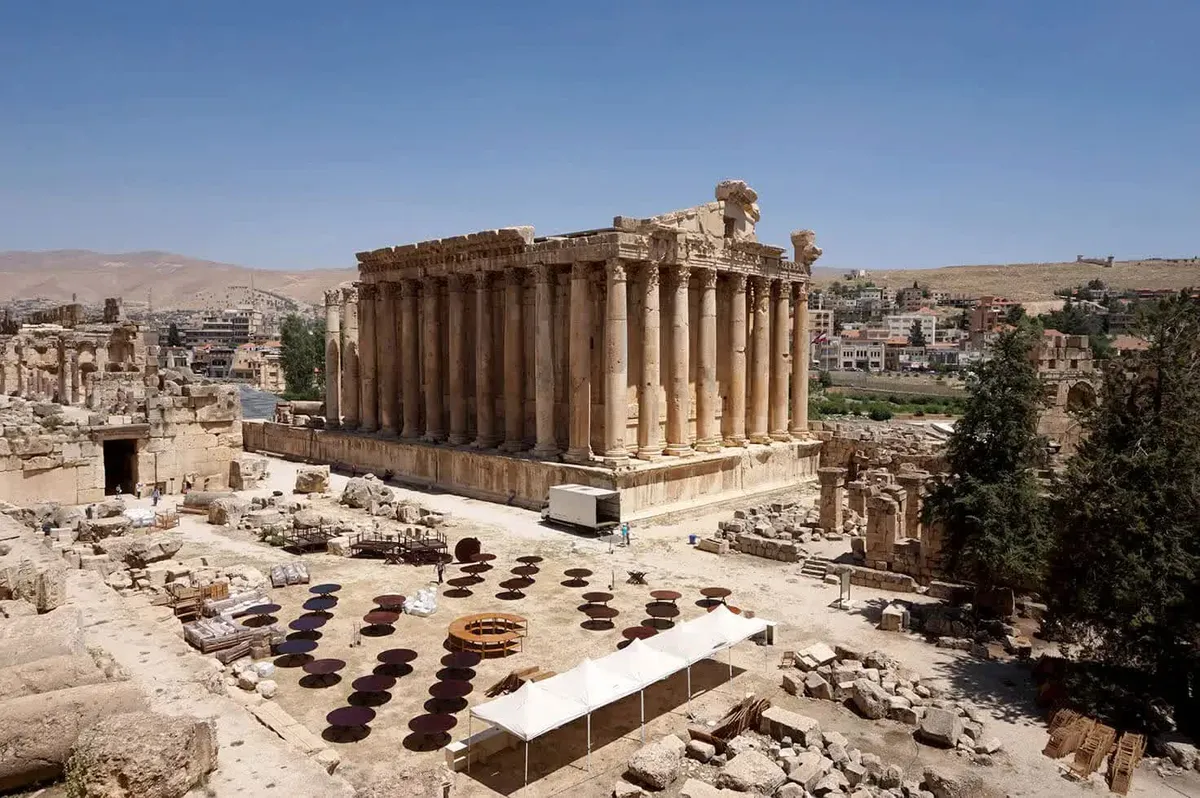
Of all the Lebanon archaeological sites, Baalbek is the one that physically stops you in your tracks. The temples in the Bekaa Valley were built on a scale Rome itself never matched, and the six surviving columns of the Temple of Jupiter — each 72 feet (22 m) high and visible from a mile down the road — are only a fraction of the original 54.
The Phoenicians built here first, dedicating the site to Baal. The Greeks renamed it Heliopolis. The Romans then spent two centuries turning it into a pilgrimage complex for Jupiter, Venus and Mercury, layering it on top of an older megalithic platform whose origins archaeologists still argue about.
What you actually walk through
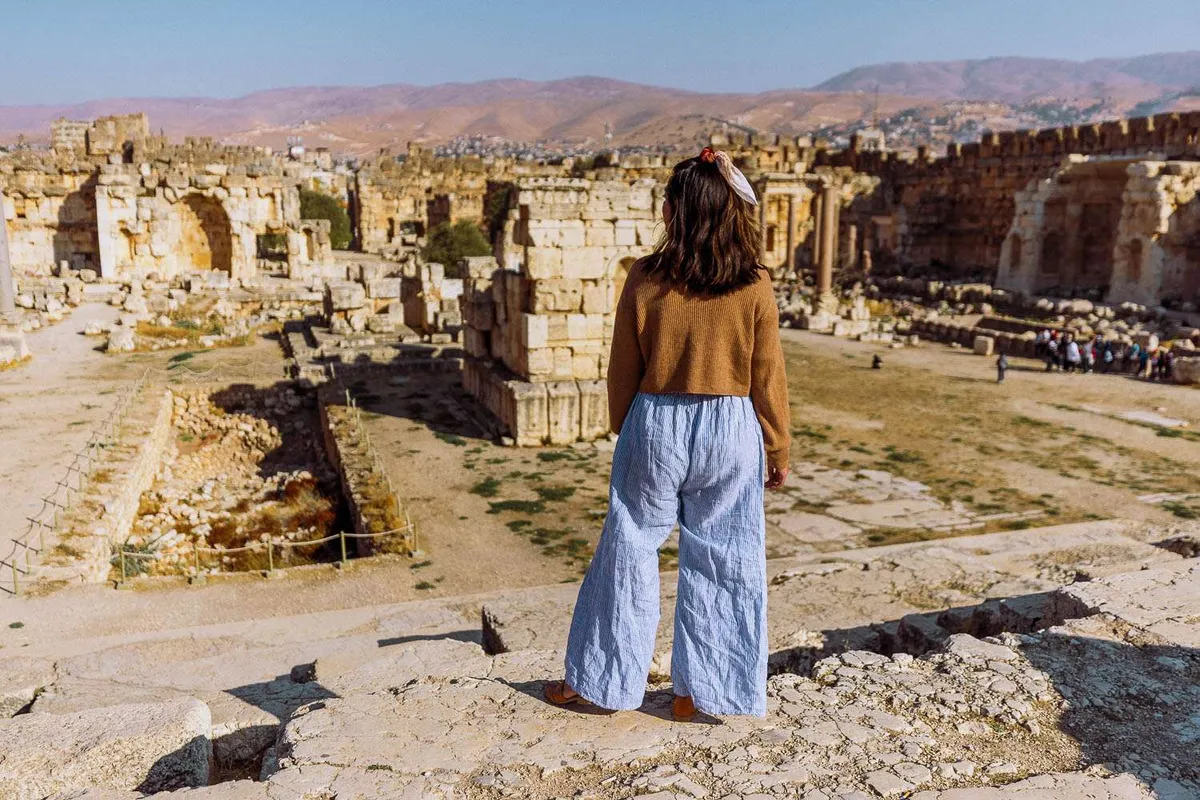
You climb the monumental staircase, pass through the Hexagonal Court, and emerge into the Great Courtyard where the six Jupiter columns dominate everything. The real surprise is next door: the Temple of Bacchus, one of the best-preserved Roman temples on Earth. The carved doorway alone is worth the drive — gods, vines and grape clusters cut so cleanly you can run your fingers along the lines.
A 10-minute walk from the main gate, in the old quarry, sits the Stone of the Pregnant Woman — a single carved block estimated at over 1,000 tons. It’s still half-attached to the bedrock, as if the masons walked off the job 2,000 years ago.
Pro Tip: Go on a Tuesday or Wednesday morning before 10 a.m. Tour buses from Beirut don’t roll in until late morning, and Friday closes most of the surrounding restaurants — I learned that the hard way and ate gas-station crisps for lunch.
- Location: Baalbek, Bekaa Valley — 53 miles (85 km) northeast of Beirut, about a 2-hour drive
- Cost: $10 USD (15,000 LBP), pay at the gate in dollars
- Hours: Daily, 9 a.m. to 6 p.m. (closes 4 p.m. in winter)
- Best for: History travelers, photographers, anyone who liked the Forum and wants more
- Time needed: 2.5 to 3 hours including the quarry
2. Byblos — where the alphabet (and the word “bible”) was born
Baalbek wins on scale. Byblos wins on depth. UNESCO calls it one of the oldest continuously inhabited cities on Earth, and that 8,000-year stretch is layered into roughly two acres you can walk in an afternoon. The Greeks called it “bublos” after the papyrus traded through its port — that one word gave us “bible” and “bibliography.”
The Phoenician alphabet itself surfaces here too: the sarcophagus of King Ahiram, excavated on site, carries the earliest known full inscription of it.
What’s actually worth your time
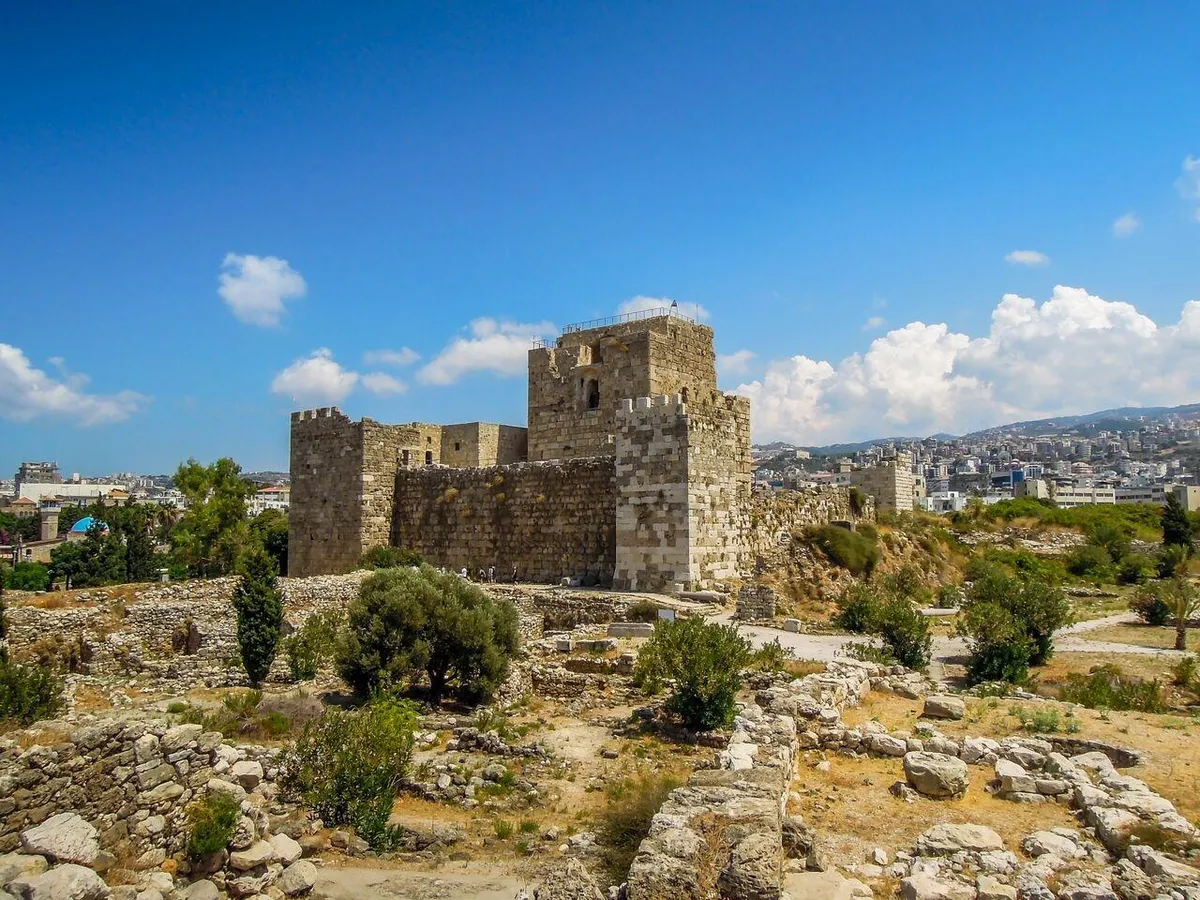
Start at the Crusader Castle. It was built in the 12th century from recycled Roman blocks, and the keep gives you the only useful overhead view of the site — from up there you can pick out the L-shaped Temple of the Obelisks and the deep shafts of the Royal Necropolis without a guide pointing them out.
Walk down through the ruins to the small Phoenician harbor. The Old Souk wraps around it — cobblestones, arched doorways, soap shops and a couple of decent fish restaurants on the waterfront. Unlike most Lebanon archaeological sites, Byblos is still a living town, which is why it works as a half-day trip from Beirut.
Pro Tip: Eat lunch at Pepe’s Fishing Club or one of the smaller harbor places. Order the daily catch grilled and ask for arak on the side. Skip the souvenir glass blowers near the entrance — the same pieces sell for half the price in Beirut.
- Location: Jbeil (Byblos), 23 miles (37 km) north of Beirut — about 1 hour by car
- Cost: Around $8 USD for the archaeological site (gate price varies with the LBP rate)
- Best for: First-time visitors, families, anyone short on time
- Time needed: 3 to 4 hours including lunch
3. Tyre — chariot races, Roman roads and ruins in the surf
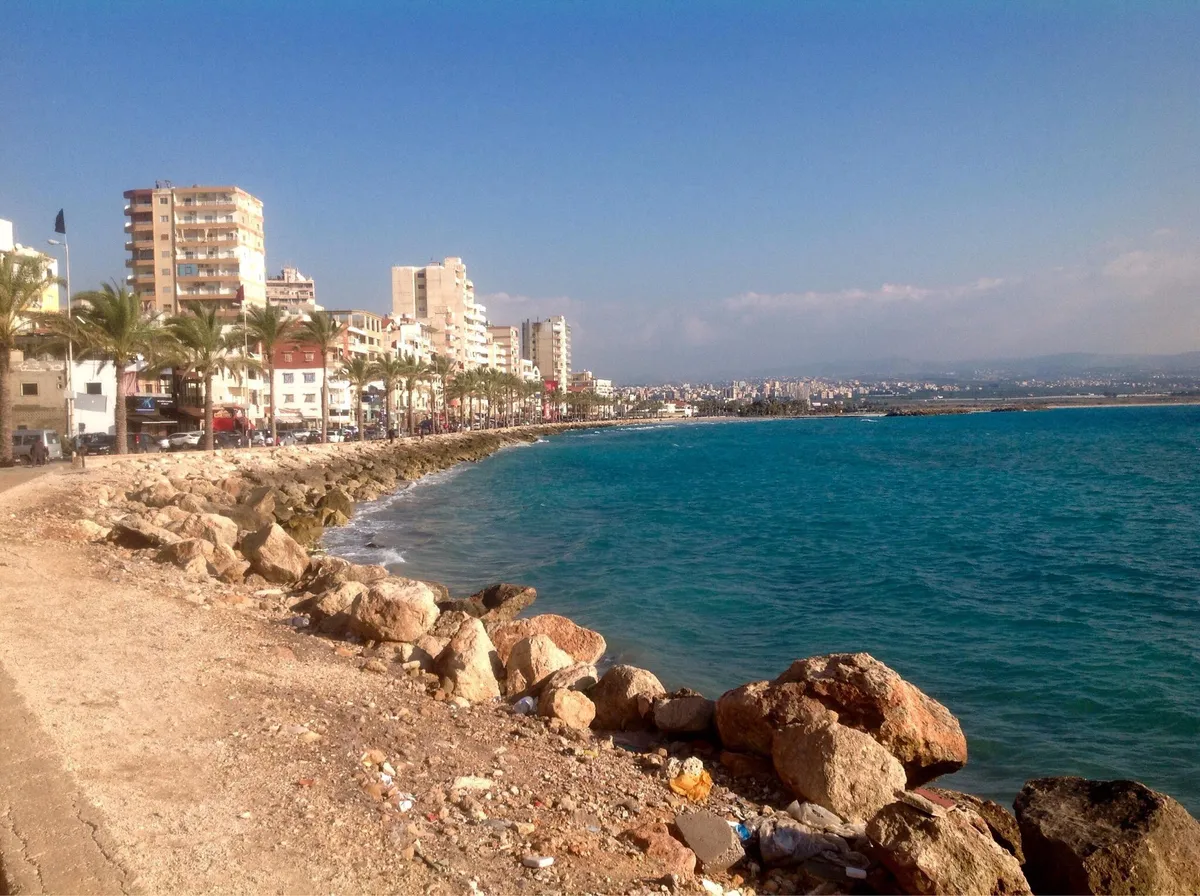
The southern coastal city of Tyre is the one most travelers underrate. Once the headquarters of the Phoenician maritime empire and the city that held out against Alexander the Great for seven months, today it splits into two ticketed UNESCO areas: Al-Bass inland and Al-Mina on the seafront.
The Al-Bass site — the hippodrome is the headline
Al-Bass opens with a long Roman road running through a Necropolis of carved sarcophagi, then funnels you under a Triumphal Arch and into the main event: the Roman Hippodrome. It’s one of the largest ever built — the spina down the middle is intact, and you can walk the full length of a track that once seated around 20,000 chariot-race spectators. Standing at one end and looking down it is the closest thing in the country to time travel.
Al-Mina — the seaside ruins
A short drive away, Al-Mina sits right on the Mediterranean. A colonnaded street runs toward the water, Roman bath foundations spread across the headland, and several columns now stand half-submerged at the tide line. Bring a hat — there’s almost no shade on either site, and the marble bounces the sun back at you.
Pro Tip: Do Al-Bass first thing in the morning when the hippodrome is still in shadow on one side, then drive 10 minutes to the corniche for grilled fish before tackling Al-Mina around 4 p.m. when the light hits the columns sideways. The nearby Tyre beaches are some of the cleanest in the country if you want a swim after.
- Location: Sour (Tyre), 50 miles (80 km) south of Beirut — about 1.5 hours by car
- Cost: Around $8 USD (single ticket covers both sites)
- Best for: Roman history fans, anyone who wants ruins without the crowds
- Time needed: 3 to 4 hours total for both sites
4. Anjar — the Umayyad city frozen at one moment
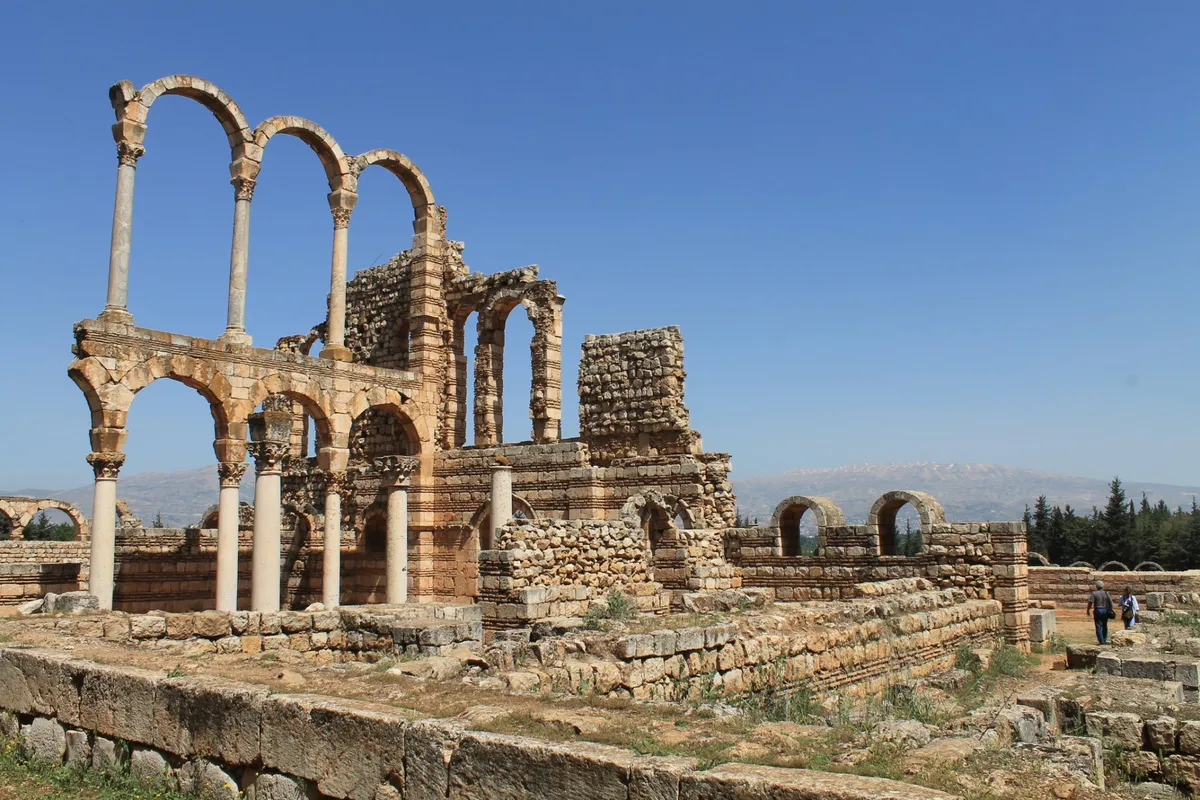
Anjar is the odd one out. Where every other major site in Lebanon shows you layer after layer of civilizations on top of each other, Anjar shows you exactly one: a planned Umayyad commercial city built around 705 AD by Caliph Walid I and largely abandoned within 30 years.
That short life is what makes it valuable. Two main avenues cross at a Tetrapylon, splitting the walled city into four neat quadrants — a Roman military layout repurposed for an Islamic trading hub. You can trace the Grand Palace, a smaller palace, a mosque and the public baths without a map.
It’s small. An hour does it. But it pairs perfectly with Baalbek for a single Bekaa Valley day, and the contrast — Roman imperial ambition in the morning, early Islamic urban planning in the afternoon — is the whole reason to come.
- Location: Anjar, Bekaa Valley — about 35 miles (56 km) east of Beirut
- Cost: Around $4 USD
- Best for: History nerds, anyone visiting Baalbek the same day
- Time needed: 1 hour
5. Sidon — a Crusader sea castle and a souk people still shop in
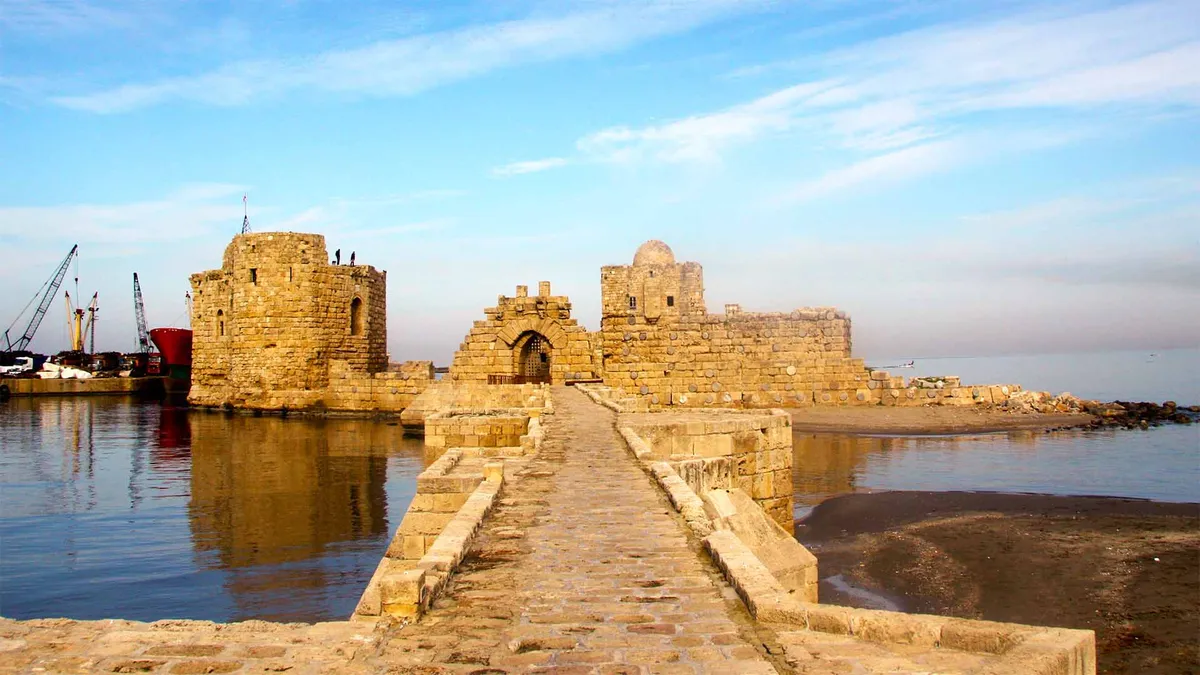
Sidon (Saida) doesn’t try to be a museum. The Phoenician port underneath is mostly buried under a working city, and what you actually visit is a 13th-century Crusader Sea Castle on a small island connected by a stone causeway, plus an Old Souk that locals — not tourists — still use daily.
The Sea Castle is small but worth the climb for the view back at the city and the fishing boats below. From the castle, the Old Souk is a 5-minute walk: vaulted alleys, butchers, spice stalls, and the small but excellent Soap Museum housed in a restored 17th-century soap factory. It’s the most “lived-in” of the Lebanon archaeological sites — and the easiest to combine with a swim or seafood lunch.
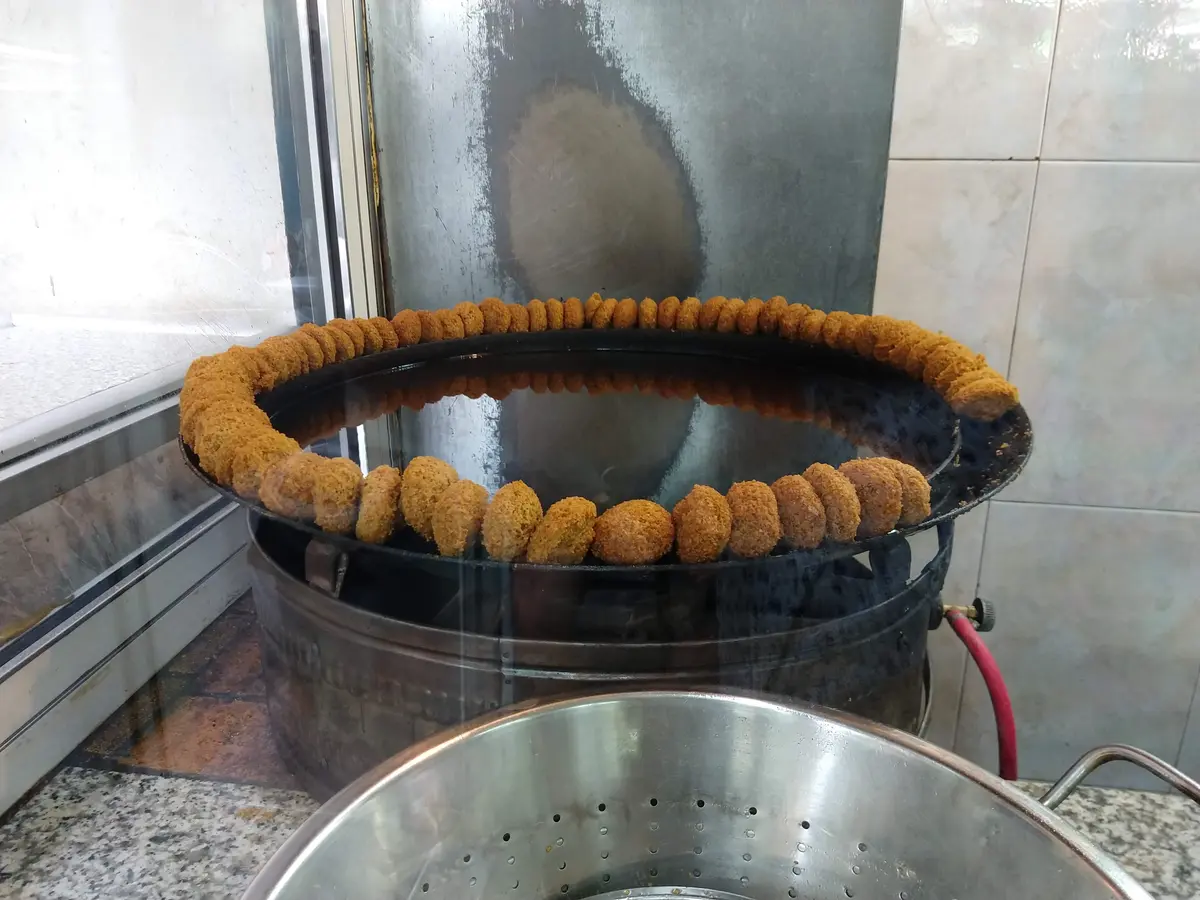
Pro Tip: Eat at Falafel Akra near the souk for the best chickpea sandwich in the country. Then walk to the harbor and watch the fishermen mend nets — it’s the kind of afternoon that doesn’t show up in any guidebook.
- Location: Saida (Sidon), 28 miles (45 km) south of Beirut — about 1 hour by car
- Cost: Around $4 USD for the Sea Castle; the souk is free
- Best for: Travelers who want history blended with daily life
- Time needed: 2 to 3 hours
6. Ouadi Qadisha and the Cedars of God — a sacred valley in the mountains
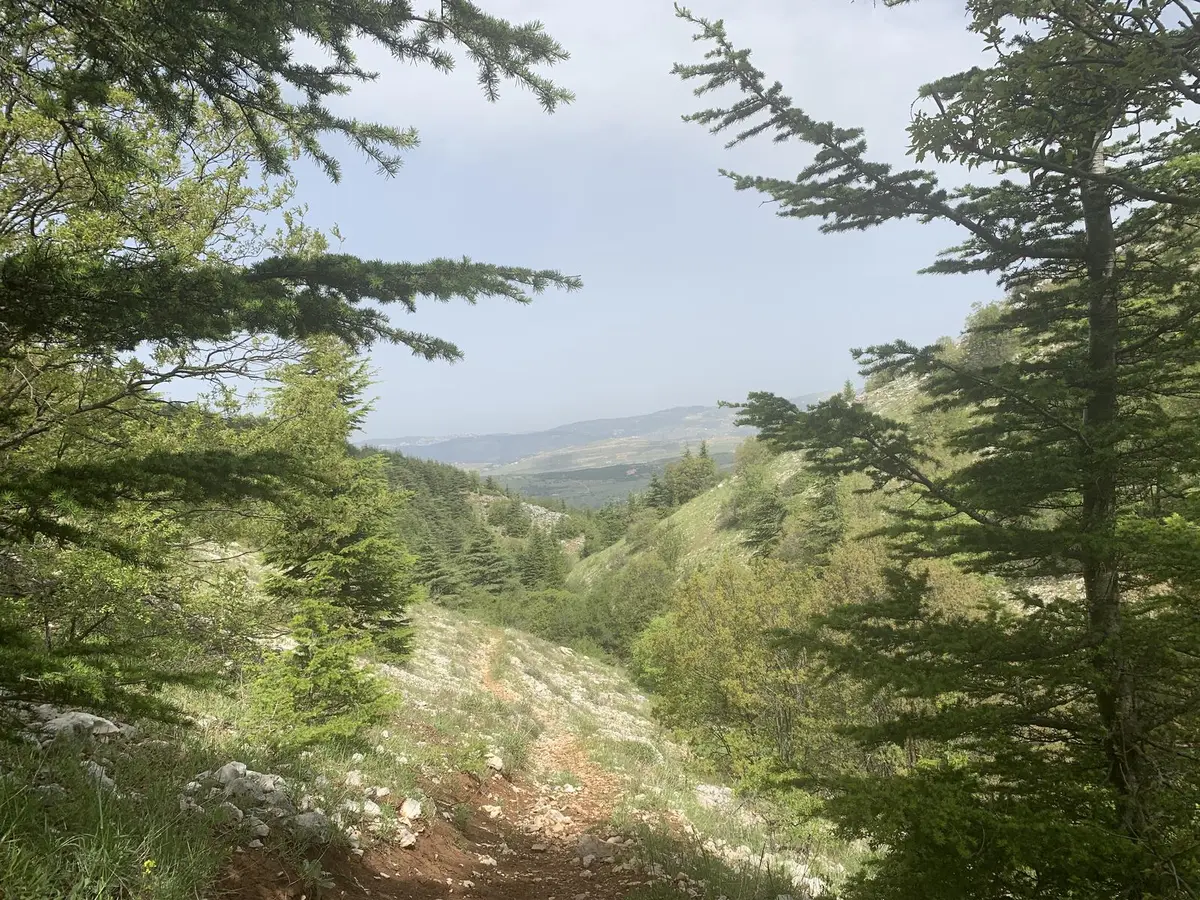
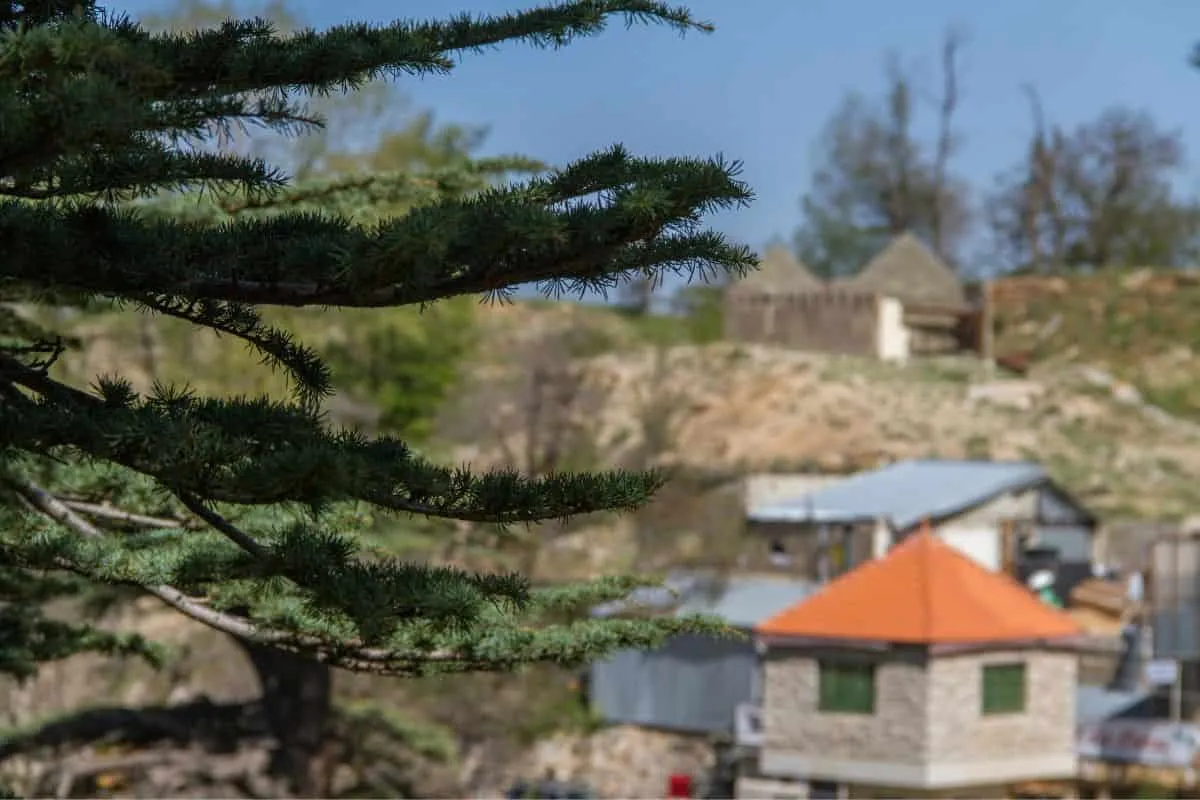
The Qadisha Valley breaks the pattern. It’s not a single ruin but a 22-mile (35 km) UNESCO-listed canyon in the northern mountains where early Christian monastic communities carved monasteries directly into cliff faces from the 4th century onward. Above it, the Forest of the Cedars of God is a small protected grove of trees that the Phoenicians used to build their merchant fleets and that the Bible mentions repeatedly.
Visit St. Anthony of Qozhaya monastery, hike the valley floor between cliffs that hit 3,300 feet (1,000 m) on either side, and finish at the cedars. It’s the only site on this list where the air is colder than the coast and you might want a fleece in May.
Pro Tip: Honest take — some of the cedars look smaller than the mythology suggests, but the older specimens (marked along the loop trail) are 1,500+ years old and worth the short walk uphill. Skip it in winter unless you’re skiing nearby.
How should you structure a trip across the Lebanon archaeological sites?
The smartest approach is to base yourself in Beirut and run three day-trips: one to the Bekaa Valley (Anjar + Baalbek + a winery), one south (Sidon + Tyre), and one north (Byblos + Jeita Grotto). Add a fourth day for the Qadisha Valley if you have it. A private driver makes all of this dramatically easier than public minivans.
Three day-trip itineraries that actually work
- Bekaa Valley classic: Beirut → Anjar (1 hour) → Baalbek (3 hours) → Chateau Ksara wine tasting → Beirut. Total: 10 hours.
- Coastal north: Beirut → Jeita Grotto → Byblos (lunch at the harbor) → Beirut. Total: 8 hours.
- Coastal south: Beirut → Sidon (Sea Castle + souk) → Tyre (both sites) → Beirut. Total: 9 hours.
For a longer trip, see our 7 days in Lebanon itinerary and the Lebanon itinerary for history buffs.
What should you know about etiquette and money before you go?
Dress modestly at religious sites — shoulders and knees covered for both men and women, and women should carry a scarf for monastery visits. Bring crisp USD bills (the Lebanese pound has been deeply unstable and most fees and taxis quote in dollars). Learn three Arabic words: marhaba (hello), shukran (thank you), and yalla (let’s go) — they go a long way.
- Cash: Bring more crisp USD than you think you need. ATMs are unreliable.
- Tipping: 10% at restaurants if service isn’t included, $10–$20/day for a private driver
- Dress: Modest at religious sites; anything goes on the corniche in Beirut
- Language: Arabic is the official language; French and English are widely understood in tourist areas
See our guides on what to wear in Lebanon and Lebanon currency for more.
The bottom line
TL;DR: Baalbek is the must-do — book a private driver for a Bekaa Valley day combining it with Anjar and a winery. Add Byblos for a half-day from Beirut, and pick either Tyre (for Roman ruins) or Sidon (for living history) depending on your taste. The main Lebanon archaeological sites are safe with a local driver, dramatically less crowded than equivalent ruins in Italy or Greece, and among the best value in the Mediterranean. Bring USD, skip the years-old advisory panic, and go.
Which of these would you put at the top of your list — Baalbek’s scale, Byblos’s depth, or Tyre’s hippodrome? Tell us in the comments.