Security note before you read further: The US State Department currently lists Lebanon as Level 4 “Do Not Travel,” and there is active military activity along the southern border and intermittent strikes in the Bekaa Valley. This guide is written for the country as it functions in stable periods — use it to plan, but verify your government’s advisory and our current read on whether Lebanon is safe for American tourists before you book a flight. The South Lebanon section (Day 8) assumes the security situation has normalized.
If you can spot Roman spolia in a Crusader wall and you own more than one book about the Phoenician alphabet, a Lebanon itinerary for history buffs belongs at the top of your travel list. This small Mediterranean country stacks Phoenician, Roman, Byzantine, Umayyad, Crusader, Mamluk, and Ottoman layers on top of each other within a two-hour drive — and most of the sites you’ll reach aren’t roped off, rebuilt, or overrun.
What should you know before planning a Lebanon history trip?
A Lebanon history trip works best as a nine-day private-driver loop based in Beirut, hitting Baalbek, Byblos, Tripoli, Qadisha, and the Chouf — with the southern coast (Sidon and Tyre) added only when advisories allow. Budget around $150–$200 per day per person including driver, hotels, and meals, and bring at least $800–$1,200 in clean USD cash per traveler. If you want the broader context before diving into dates, our full Lebanon travel guide covers visas, seasons, and regional logistics in one place.

How does the cash-only dollar economy actually work?
Lebanon runs on a parallel “fresh dollar” economy because the banking sector collapsed and most cards no longer work in normal shops.
- Bring: post-2013 USD notes with the blue security strip. Crease-free. Older or marked bills get refused without apology.
- Denominations: stock up on $1, $5, $10, $20. Nobody at a kiosk has change for a $100.
- Cards: accepted only at a handful of five-star hotels and high-end Beirut supermarkets, usually at a punishing rate.
- ATMs: avoid. They can dispense Lebanese pounds at the old official rate, turning $100 into pocket change.
- Daily mix: USD for hotels, drivers, guides, and major restaurants; Lebanese pounds for taxis, bakeries, and street food.
Pro Tip: Count your cash in private, in your hotel room, before you leave in the morning. Pull out only what you need for the day. Counting a fat stack of hundreds at a checkpoint or market stall draws exactly the attention you don’t want. For a deeper breakdown of notes, rates, and exchange points, see our guide to Lebanese currency.
Why do you need a private driver in Lebanon?
Self-driving a rental in Lebanon is a bad idea for foreign visitors. Lane discipline is optional, checkpoints appear without warning, and mountain roads to Qadisha and Baalbek are unlit and unforgiving after dark — our full rundown on driving in Lebanon explains why even experienced road-trippers tap out. A private driver is also a fixer — they know which restaurants are open on Fridays in Baalbek, which road to Bsharri is washed out, and how to handle a soldier who wants to see a passport.
- Typical cost: $120–$180 per day for car and driver, split between passengers.
- Book through: your hotel or a licensed local agency, not random hotel lobby offers.
- Cheaper option: Uber works reliably inside Beirut. Use it within the city; hire a driver for day trips.
Which areas of Lebanon are stable enough for history tourism?
The stable corridor for visitors runs along the central and northern coast plus the northern mountains: Beirut, Jounieh, Byblos, Batroun, Tripoli, Bsharri, the Cedars, and the Qadisha Valley. The Chouf (Beiteddine, Deir el Qamar) is generally fine. The Bekaa Valley (Baalbek, Anjar) is reachable during daylight via the main Damascus highway but has been hit by airstrikes in recent escalations — check advisories the morning of your trip. Everything south of Saida, including Tyre, is currently a no-go zone with unexploded ordnance and active military activity.
Day 1 — Beirut: the city that’s been destroyed and rebuilt seven times
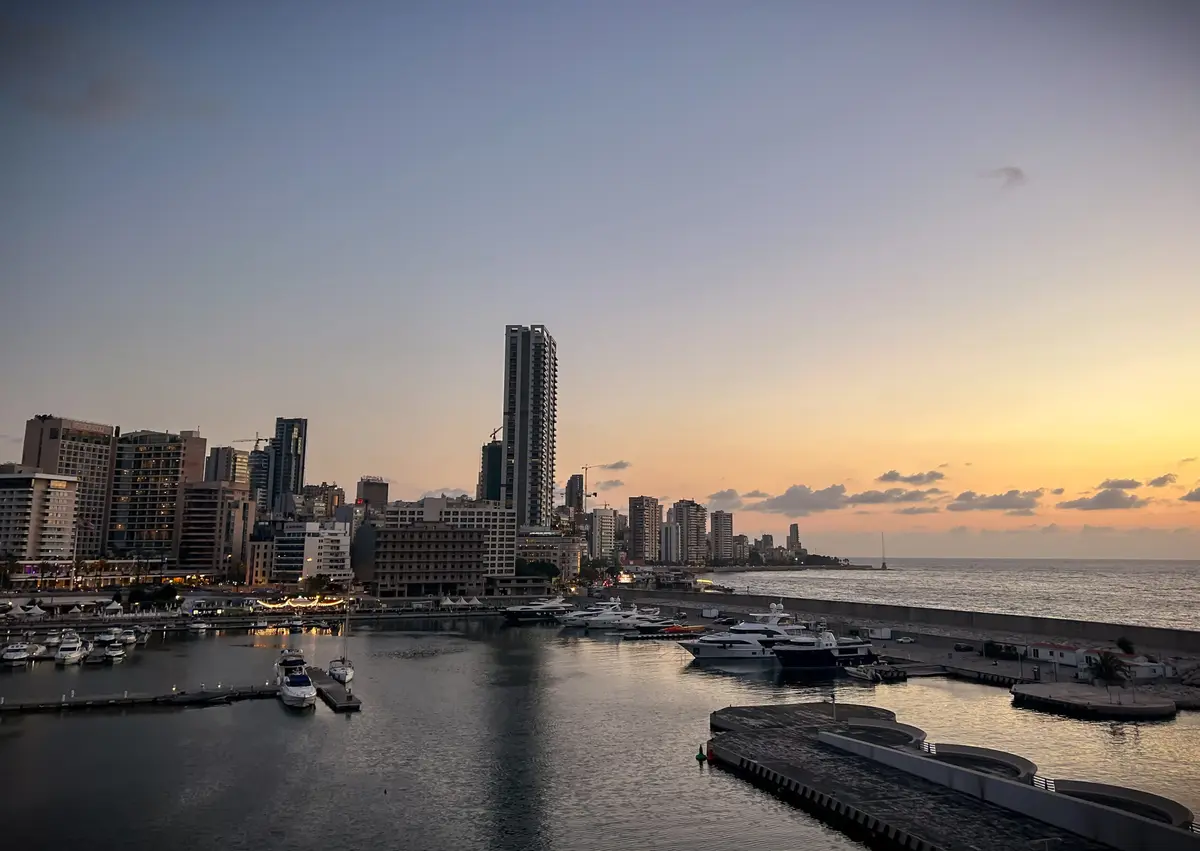
Fly into Beirut–Rafic Hariri International Airport and arrange a pre-booked airport transfer; taxi touts at arrivals overcharge aggressively. Base yourself in Gemmayzeh, Mar Mikhael, or Hamra — all walkable to the sites below. Spend the afternoon easing in with a walk through the Ottoman-era streets of Gemmayzeh, where bullet-pocked balconies sit next to new cocktail bars.
National Museum of Beirut — the collection that survived a civil war
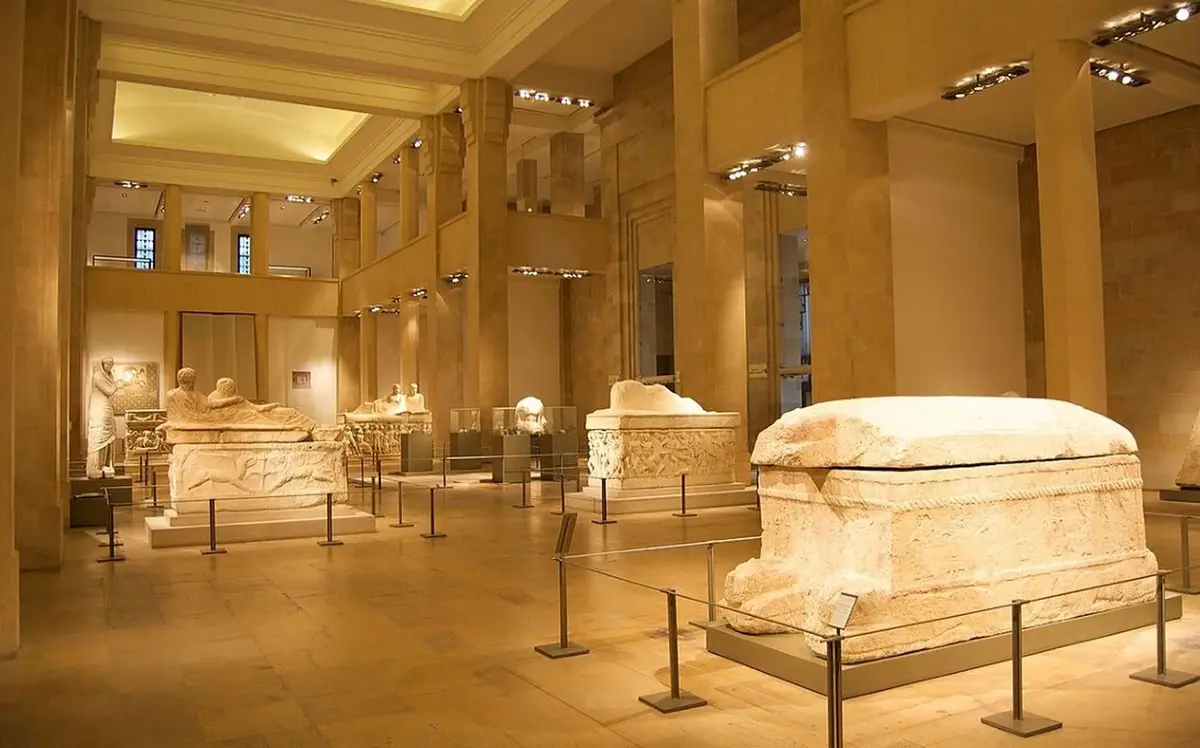
During the 1975–1990 war, the museum stood directly on the Green Line separating east and west Beirut. Curators encased the Phoenician sarcophagi in reinforced concrete where they stood. The building was shelled repeatedly. When the concrete was broken open years later, the collection was intact. That story is half the visit.
The headline piece is the Sarcophagus of Ahiram, carved around 1000 BCE, bearing the earliest known inscription in the fully developed Phoenician alphabet — the direct ancestor of Greek, Latin, and the letters you’re reading now. Also don’t skip the basement, reopened in 2016, for the frescoed Roman tomb and the anthropoid sarcophagi from Sidon.
- Location: Museum Street, Badaro, Beirut
- Cost: 15,000 LBP (around $5) for foreign visitors; reduced for students
- Hours: Tuesday–Sunday, 9 AM–5 PM; closed Mondays
- Best for: Anyone who wants a chronological baseline before fieldwork
- Time needed: 2.5–3 hours
Pro Tip: Leave your passport at the front desk and borrow a free iPad — you scan labels to get audio commentary on key pieces. Bring your own headphones; the loaners have seen better days. English signage is thin in some rooms, so the iPad matters more than the official guide most people offer at the door.
Day 2 — Roman layers and the architecture of war
Beirut’s second day is the whiplash day: Roman baths in the morning, a preserved war ruin by lunch. It’s the best way to understand why this city has been flattened seven times and keeps coming back — and if you want to extend the theme, our dedicated Beirut for history buffs guide breaks out the capital’s historical sites into a full standalone day.
Beit Beirut (The Yellow House)
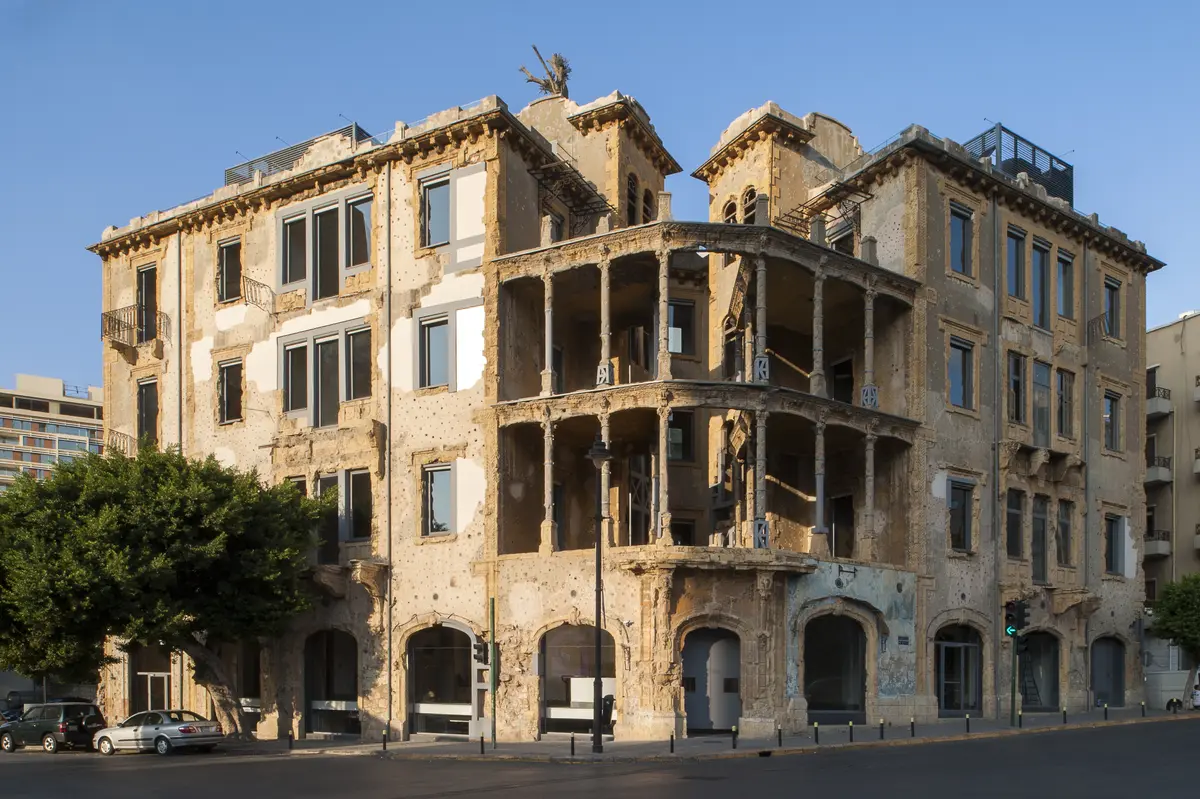
At the Sodeco intersection on the former Green Line, this 1920s Neo-Ottoman building was a sniper’s nest from 1975 to 1990. The restoration deliberately preserved the damage — you can still see the sandbag emplacements cut into interior walls and militia graffiti left where it was found. It’s not a polished museum; it’s a warning that’s been left standing on purpose.
- Location: Sodeco Square, Ashrafieh
- Cost: Free when open
- Hours: Opening schedule is erratic; check the day of your visit
- Time needed: 1 hour
Roman Baths and the Cardo Maximus
A short walk from Grand Serail, the uncovered Roman Baths sit below street level with the hypocaust heating system clearly visible. Fragments of the Cardo Maximus — Roman Beirut’s main north–south axis — surface near St. George Cathedral. These are outdoor, unticketed, and usually empty.
- Location: Rue des Banques (baths); Nejmeh Square area (Cardo fragments)
- Cost: Free
- Time needed: 45 minutes for both
The Holiday Inn — vertical warfare as monument
You can’t go inside, but walk past the shell-pocked Holiday Inn tower near Phoenicia Street. It’s been left untouched since the 1975–76 “Battle of the Hotels.” Stand across the street, look up at the rocket holes on every floor, and you understand urban warfare in a way no museum can teach you.
Pro Tip: If you have time after lunch, take the 12-minute drive to the Mohammad Al-Amin Mosque on Martyrs’ Square. The mosque sits right next to the rebuilt Roman cardo and across from the crater of the 2020 port blast — three eras of Beirut in a single 360° view.
Day 3 — Jeita Grotto and Byblos: geology meets the alphabet
Head 20 miles (32 km) north of Beirut for the easiest day of the itinerary. Jeita in the morning, lunch at Byblos harbor, the archaeological park until closing.
Jeita Grotto — why the Phoenicians settled here
Jeita Grotto isn’t a historical site, but it explains why this coast has been inhabited for 7,000 years: fresh water. The two-cave system feeds Beirut’s water supply. The upper grotto is dry, with formations you walk past on an elevated path. The lower grotto is a cold underground river you cross by electric boat — if it’s open. The boat closes in winter when the water gets too high.
- Location: Jeita, Keserwan (18 miles / 29 km north of Beirut)
- Cost: Around $15 for adults (all three attractions: upper cave, lower cave, cable car)
- Hours: Roughly 9 AM–5 PM summer; shorter in winter; closed Mondays in low season
- Time needed: 2 hours
- Photography: Strictly forbidden inside the caves — you check your phone and camera at the entrance
Byblos (Jbeil) — the city that named the book
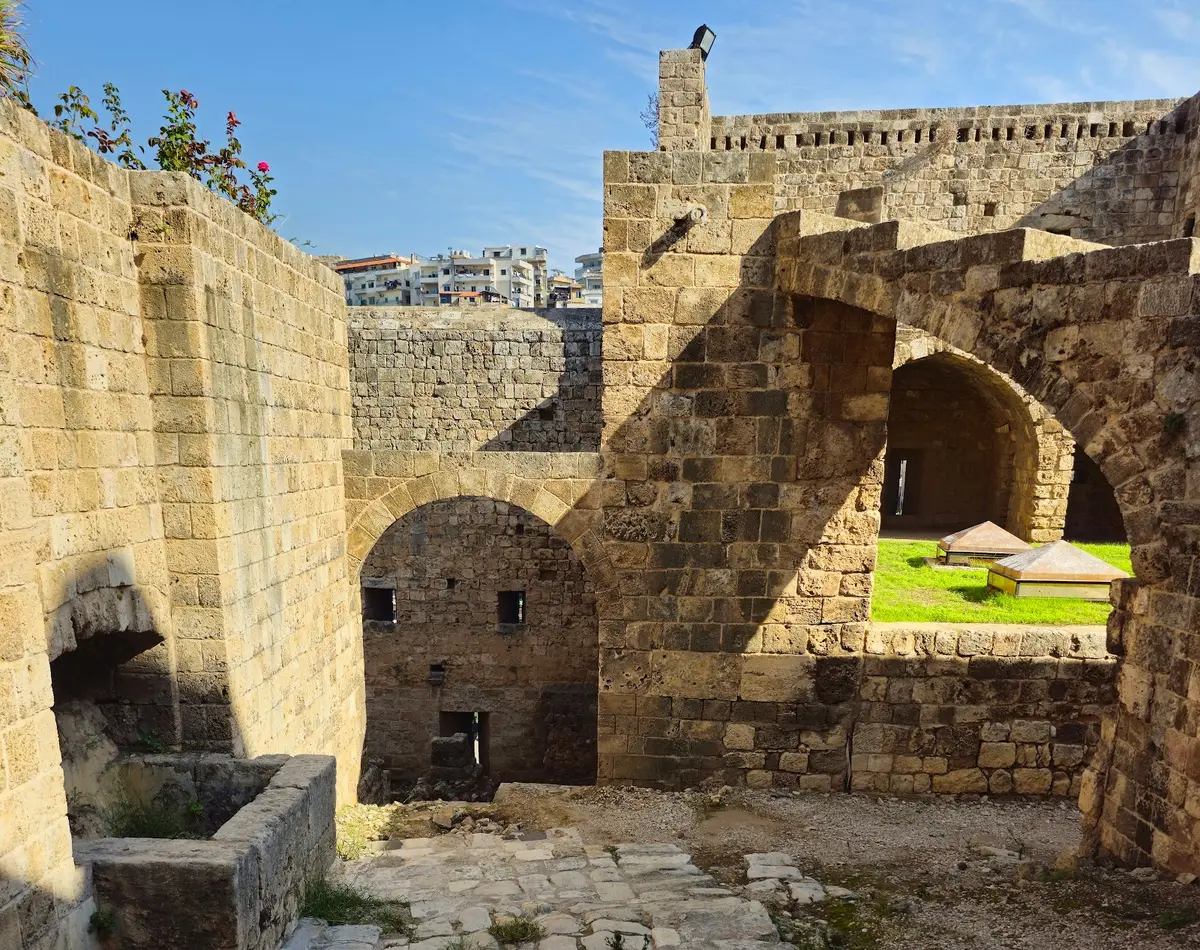
Byblos has been continuously inhabited for at least 7,000 years, which makes the archaeological park a layer cake of foundations. Neolithic hut bases sit next to the Phoenician Royal Necropolis sit next to the Crusader Citadel — and the Crusader castle was built using Roman columns as rubble. It’s one of the clearest visual examples of spolia you’ll see anywhere in the Mediterranean.
The Phoenicians shipped cedar out of this harbor to Egypt and imported papyrus in return. Greeks started calling the city “Byblos” because it was where you bought biblos — papyrus. That’s where “Bible” and “bibliography” come from.
- Location: Jbeil, 23 miles (37 km) north of Beirut
- Cost: Archaeological site around $5 (8,000 LBP)
- Hours: Daily, roughly 9 AM–6 PM
- Best for: Anyone who wants to stand where the alphabet was exported
- Time needed: 2.5–3 hours in the archaeological park; another hour for the old souk
Pro Tip: Skip the restaurants on the cobbled “souk” street — they’re priced for cruise-ship groups. Walk five minutes to the fishing port and eat at Pepe Abed’s or Chez Sami instead. The mezze is better, the prices are reasonable, and you’re looking at the same Phoenician harbor they did.
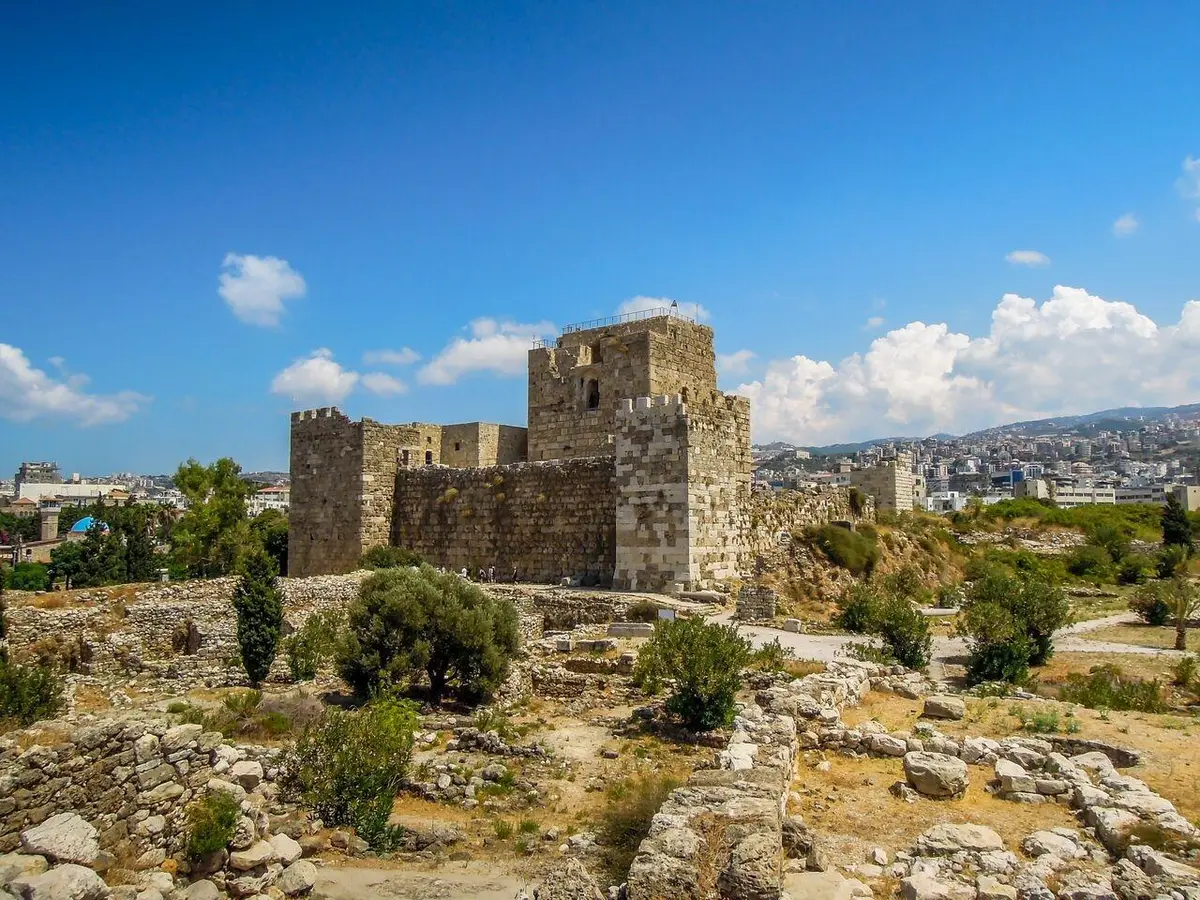
Day 4 — Mseilha, Batroun, and Tripoli
The drive north tightens into a day of forts and Mamluk old cities. This is the day that shows you Lebanon’s identity is not only Phoenician-Roman but deeply Ottoman and Arab.
Mseilha Fort
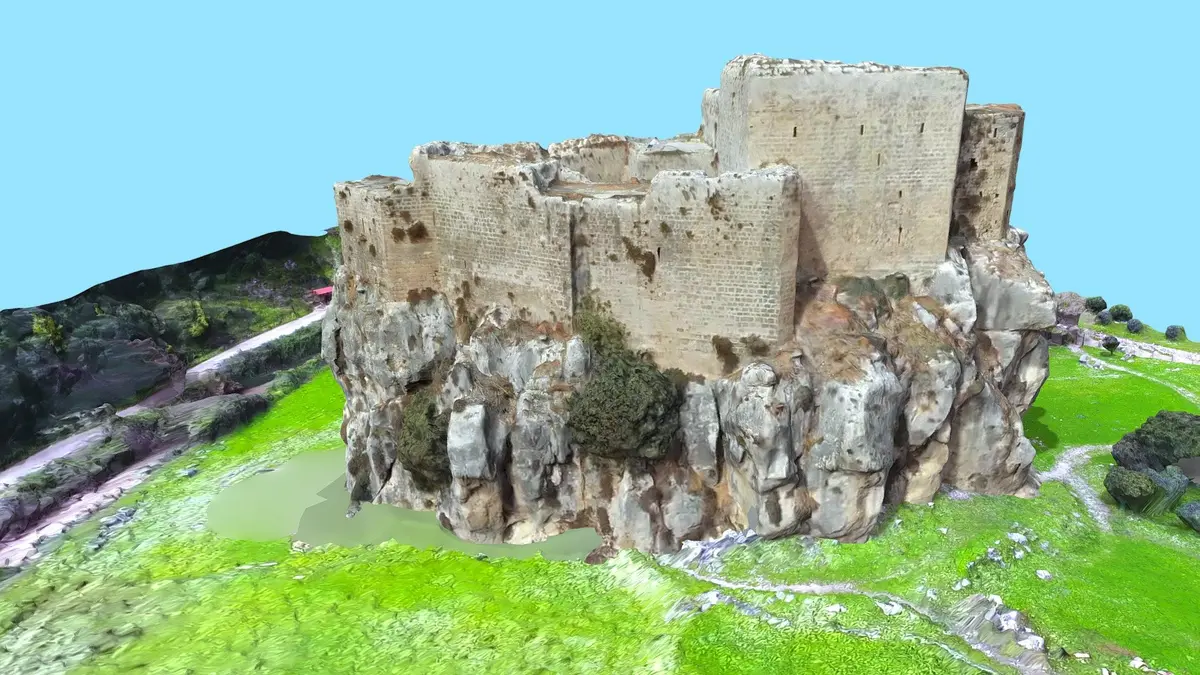
The small 17th-century fort of Emir Fakhreddine II perches on a limestone outcrop along the Nahr el-Jawz river, built to guard the coastal road to Tripoli. The walls follow the shape of the rock — a textbook example of adaptive fortification.
- Location: 2 miles (3 km) south of Batroun, just off the coastal highway
- Cost: Free; you walk up from the parking area
- Time needed: 30 minutes
Batroun — the Phoenician sea wall
The old fishing town of Batroun hides a surprise in the surf: a natural sandstone ridge the Phoenicians reinforced with cut stone to break the waves for their harbor. You can walk along the wall at low tide while the Mediterranean breaks against 2,500-year-old masonry. The old souk behind it is working, not touristic — barbers, bakeries, lemonade stands.
- Location: Batroun old town, 34 miles (55 km) north of Beirut
- Cost: Free to walk
- Time needed: 1.5 hours including a lemonade at Hilmi’s
Tripoli — the best Mamluk architecture outside Cairo
Tripoli is Lebanon’s second city and gets skipped by most itineraries, which is exactly why it’s the best stop on this one. The Citadel of Raymond de Saint-Gilles dominates the skyline, but the real prize is the medieval souk below — hammams, madrasas, and khans in striped Mamluk ablaq stonework (alternating black and white courses). Visit Khan al-Saboun, the centuries-old soap khan, and Hammam Izzedine if it’s open.
- Location: 53 miles (85 km) north of Beirut; 1h 15m drive
- Cost: Citadel around $3; souk free
- Best for: Anyone who has done Cairo and wants to see what Mamluk architecture looks like with a fraction of the crowd
- Time needed: Half day minimum
Pro Tip: Tripoli is conservative compared to Beirut — dress modestly and skip visible alcohol. Finish your day at Hallab 1881 for knefe (sweet cheese pastry) for breakfast or dessert; it’s been made there since the Ottoman period and it’s the single best reason to plan a second visit.
Day 5 — Qadisha Valley and the Cedars of God
Drive inland and up from Tripoli into the mountains. Altitude gets to 6,500 feet (2,000 m). This is the day of monasteries, printing presses, and the tree that named the country.
The Holy Valley (Wadi Qadisha)
A UNESCO World Heritage site and a continuous refuge for Maronite Christians for more than a thousand years. Monks cut hermitages straight into the cliff walls. Deir Qannoubine and Mar Antonios Qozhaya are the two to prioritize — Qozhaya holds the first printing press in the Middle East (1585), which printed psalters in Syriac when presses were still banned in the Ottoman Empire. If you want to leave the car behind, our guide to hiking the Qadisha Valley lays out the main trailheads and which monasteries you can reach on foot.
- Location: Access via Bsharri or Hadchit; multiple trailheads
- Cost: Free; monastery donations appreciated
- Time needed: 3–4 hours including a short hike
The Cedars of God (Arz el-Rab)
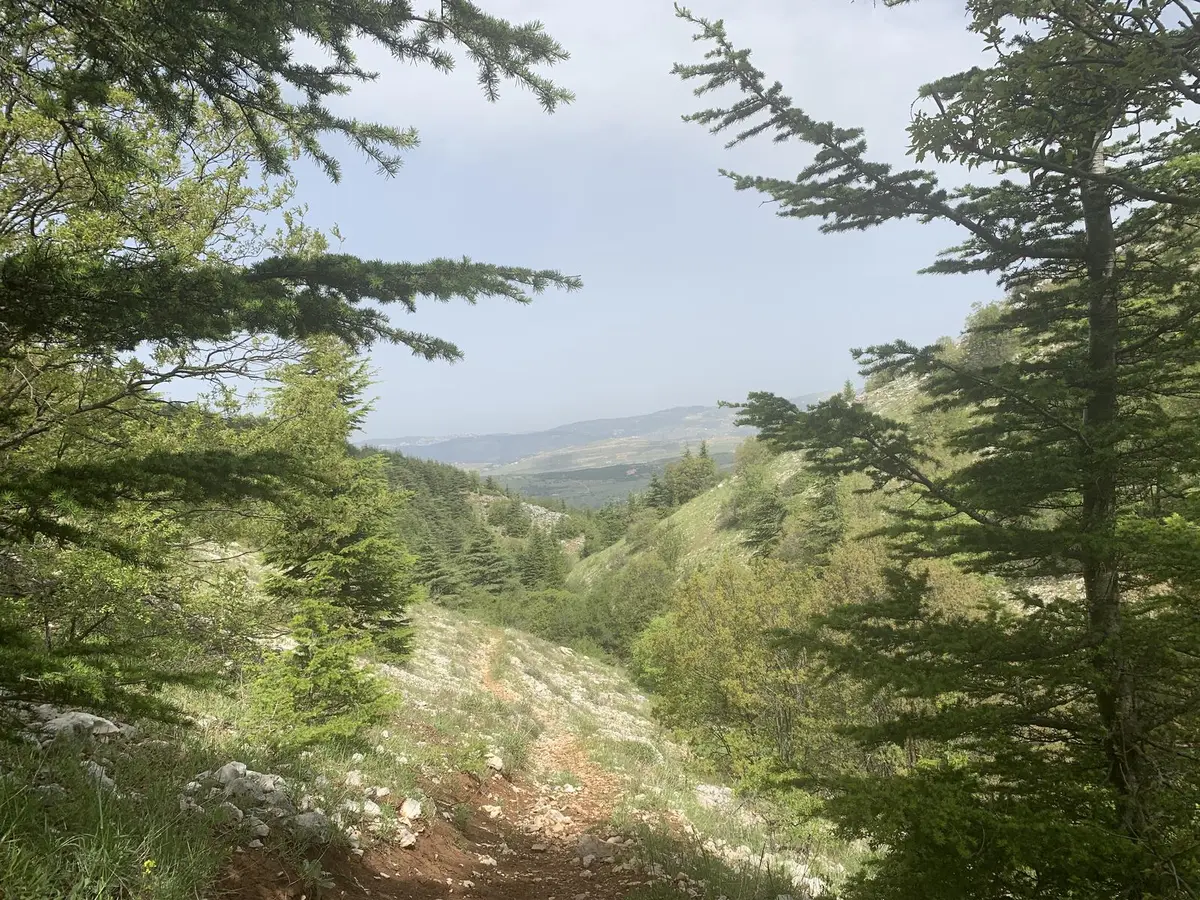
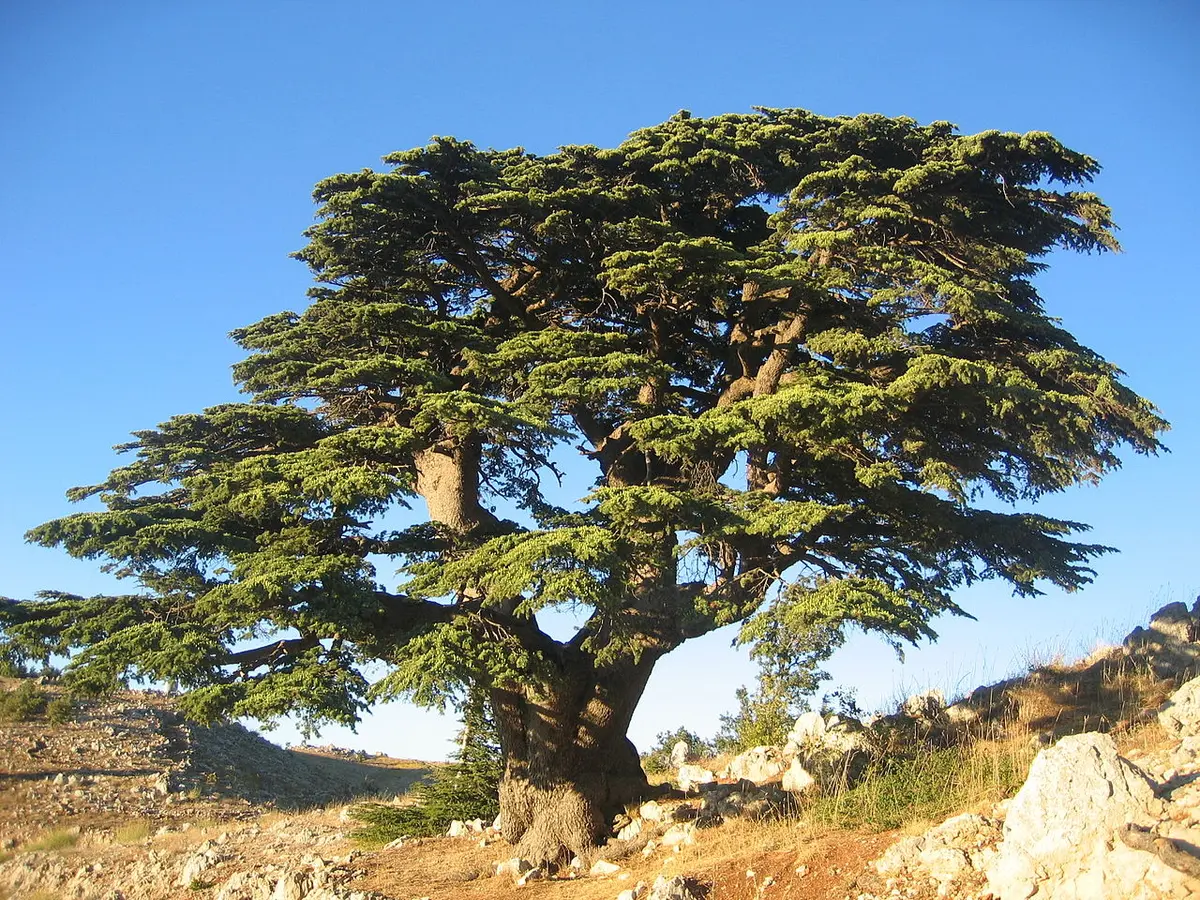
A small, fenced grove of the biblical Cedars of God above Bsharri — trees that were shipped to Egypt for Khufu’s funerary boat and to Jerusalem for Solomon’s temple. Only around 375 mature trees remain in this specific grove, with the oldest estimated at 3,000 years. The fence is there because goats once ate every cedar sapling in the country and there would be nothing left otherwise.
- Location: Above Bsharri, elevation 6,400 ft (1,950 m)
- Cost: Around $3 (small fee to the local committee)
- Hours: Daylight hours; snow-bound December–March
- Best for: Pairing with a stop at the Gibran Museum in Bsharri
- Time needed: 1 hour in the grove
Pro Tip: The mountain road between Tripoli and Bsharri has blind hairpins and local drivers who take them wide. Do not do this road after dark or in rain, and do not attempt it in a rental. This is the single clearest argument for the private driver.
Day 6 — Baalbek and Anjar: the Roman and Umayyad high points
This is the day most history buffs come to Lebanon for. Leave Beirut by 7:30 AM for the 53-mile (85 km) drive over the mountains to the Bekaa Valley. Check advisories the morning-of — the Bekaa has been hit by strikes during recent escalations.
Baalbek — the largest Roman temple complex in the world
Baalbek was the Romans’ Heliopolis, and the ambition on display here is hard to process. The Temple of Jupiter had columns 66 ft (20 m) tall — six remain standing. The Temple of Bacchus, next door, is better preserved than anything in Rome itself, with most of its cella still roofed and its sculpted cornice intact. The foundation stones of the platform are the “trilithon” — three monoliths weighing around 800 tons each. A fourth one, the “Stone of the Pregnant Woman,” still lies in the quarry a mile away because the Romans couldn’t figure out how to move it.
- Location: Baalbek, Bekaa Valley; 53 miles (85 km) northeast of Beirut; around 2 hours’ drive
- Cost: Around $10 (15,000 LBP) for foreign adults; reduced for students
- Hours: Daily, 9 AM–6 PM April–October; 9 AM–4 PM November–March
- Best for: Skip this and you don’t have a history trip; you have a long weekend in Beirut
- Time needed: 2.5–3 hours at the site itself
Anjar — the Umayyad snapshot
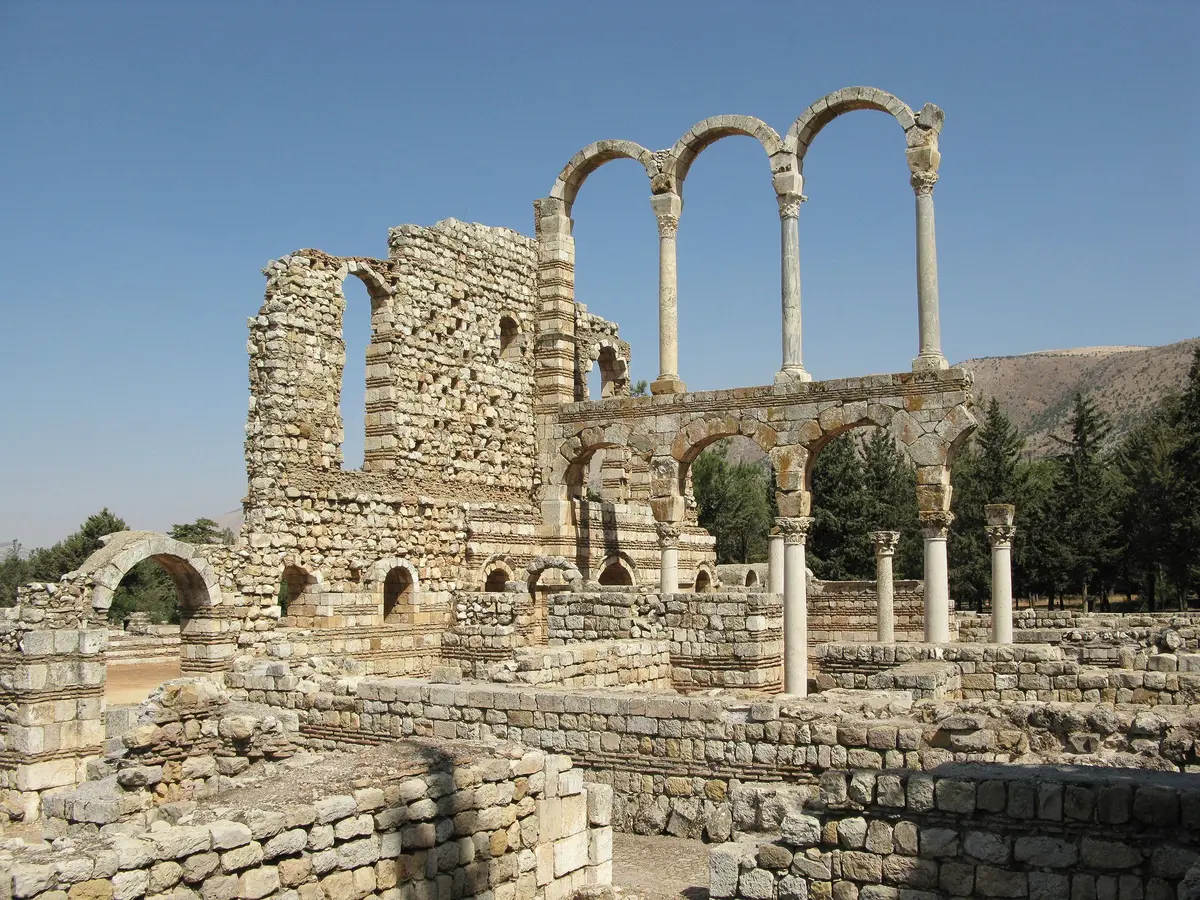
Thirty miles (48 km) south of Baalbek sits Anjar, built by Umayyad Caliph Walid I around 714 CE and abandoned after 25 years. Because it was occupied so briefly, it’s a frozen-in-time grid city — two perpendicular colonnaded streets, a palace, a mosque, and clear residential blocks. The construction technique is Byzantine (alternating brick and stone courses), the plan is Roman (a quadrant layout), and the politics are Arab Islamic. Nowhere else shows the transition that clearly.
- Location: Anjar, 36 miles (58 km) south of Baalbek
- Cost: Around $5 (8,000 LBP)
- Hours: Daily, 8:30 AM–6 PM
- Best for: Pairing with Baalbek for the Roman-to-Umayyad arc
- Time needed: 1.5 hours
Pro Tip: Honest contrarian take — the Temple of Bacchus at Baalbek is more impressive than the Parthenon. It’s more complete, more decorated, and you can walk straight into the cella without a rope line. The only reason the Parthenon has the reputation it does is that Greece is an easier visa.
Day 7 — The Chouf Mountains: Deir el Qamar and Beiteddine
A one-hour drive south of Beirut into the Druze heartland of the Chouf. After the scale of Baalbek, this day is about craftsmanship and politics.
Deir el Qamar — the Emirs’ capital
A preserved stone village that served as Lebanon’s administrative capital from the 16th to the 18th centuries under the Maan and Shihab emirs. The central square has a mosque with a distinctive octagonal minaret, the Fakhreddine Palace, and a silk khan — all within a two-minute walk. The whole village is a single protected heritage zone, so no new construction breaks the stone skyline.
- Location: Chouf District, 29 miles (46 km) south of Beirut
- Cost: Free to walk; small fees at individual sites
- Time needed: 2 hours
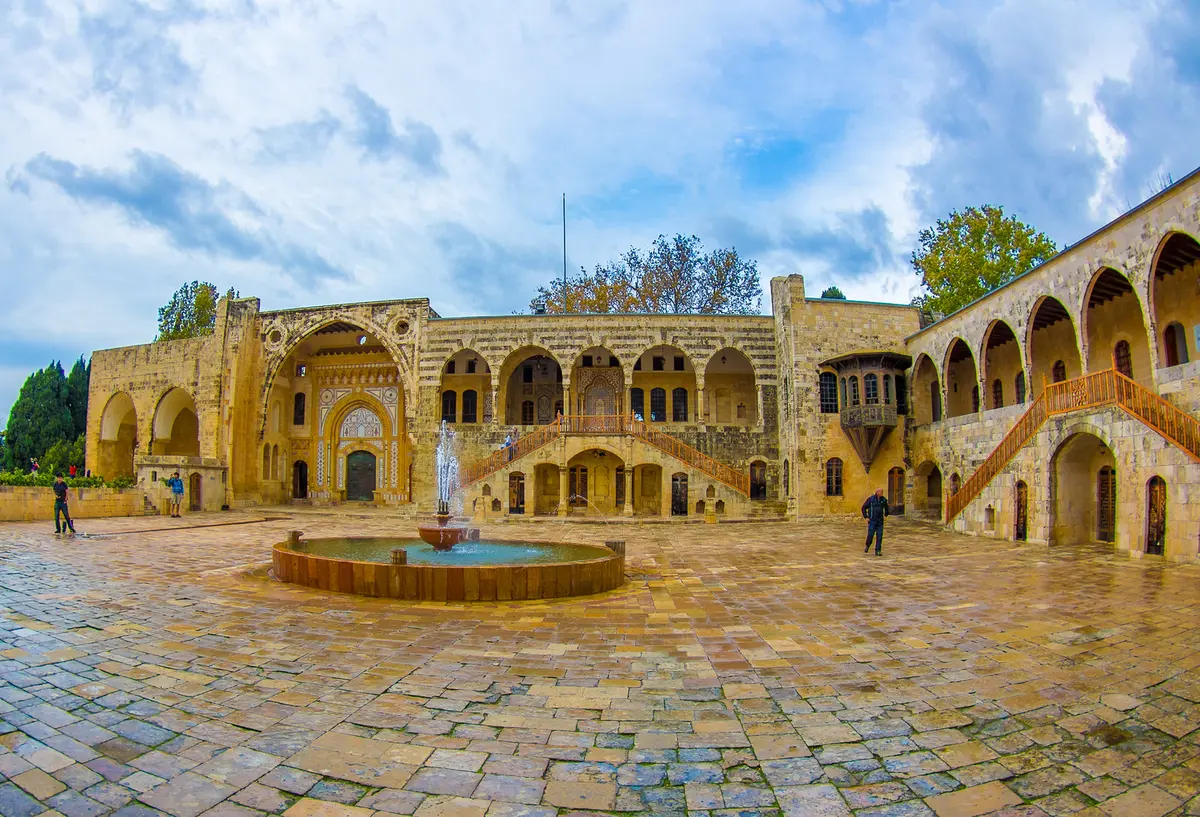
Beiteddine Palace
Built between 1788 and 1818 by Emir Bashir II, Beiteddine Palace is the clearest single statement of Ottoman-era Lebanese architecture — Italian craftsmen, Damascene marble, Arab plasterwork, all at once. The hammam is intact. The central courtyard runs cool even in July because of how it was designed to pull air. The lower level houses one of the finest collections of Byzantine mosaics in the country, rescued from Jiyeh.
- Location: Beiteddine, 4 miles (6 km) from Deir el Qamar
- Cost: Around $5
- Hours: Tuesday–Sunday, 9 AM–5 PM (October–April); to 6 PM in summer
- Best for: Travelers who’ve seen the Alhambra and want to know what the same artistic conversation produced in the Levant
- Time needed: 2 hours
Pro Tip: Eat lunch in Deir el Qamar, not near the palace. Al Midan in the main square does traditional Druze mezze — try the kibbeh nayeh if you trust your stomach — and it’s half the price of the palace-adjacent restaurants.
Day 8 — The South (Sidon and Tyre) — plan for it, but check first
Include this day in your plan only when the security situation in the South has stabilized. At time of writing, everything south of Saida is Level 4 “Do Not Travel,” with active hostilities and unexploded ordnance. If and when it reopens to visitors, here’s what’s worth your day.
Sidon (Saida) — the Crusader Sea Castle
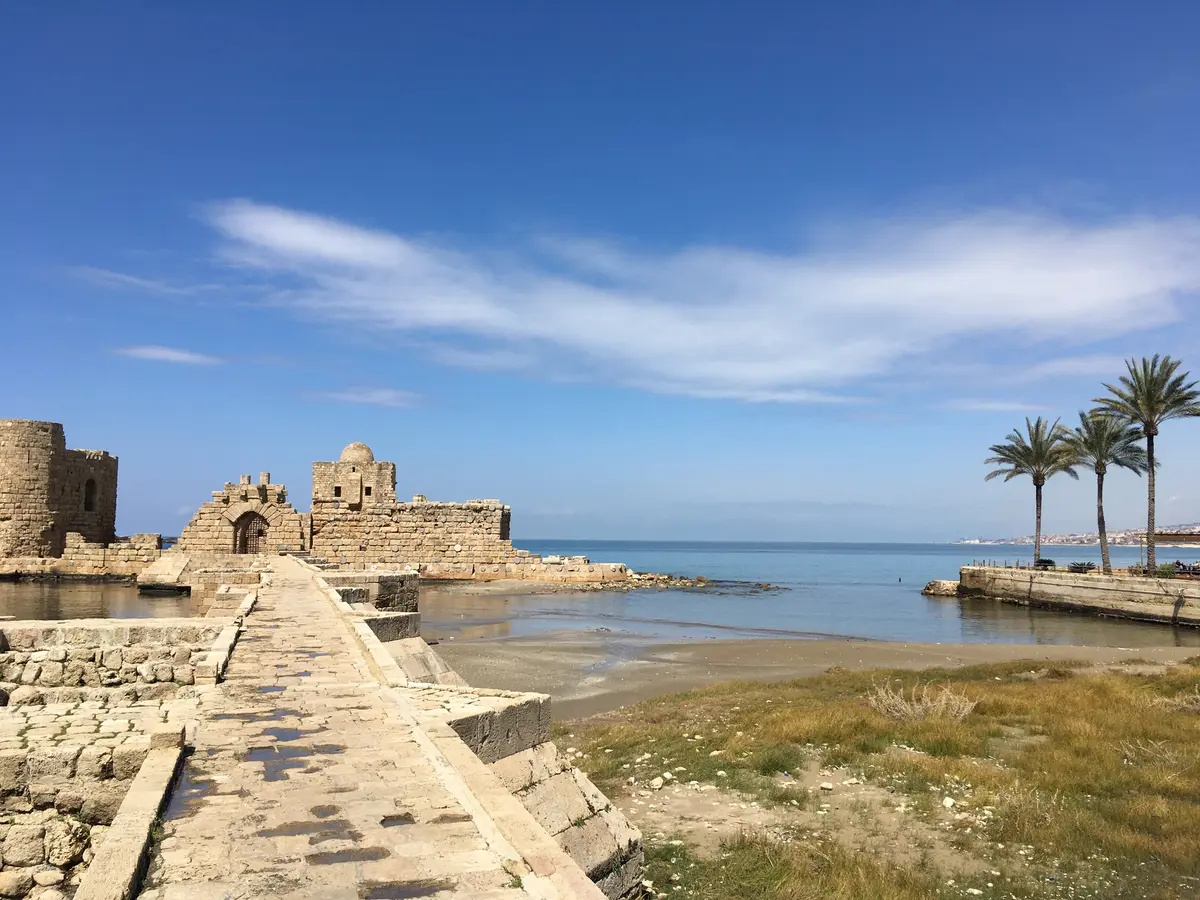
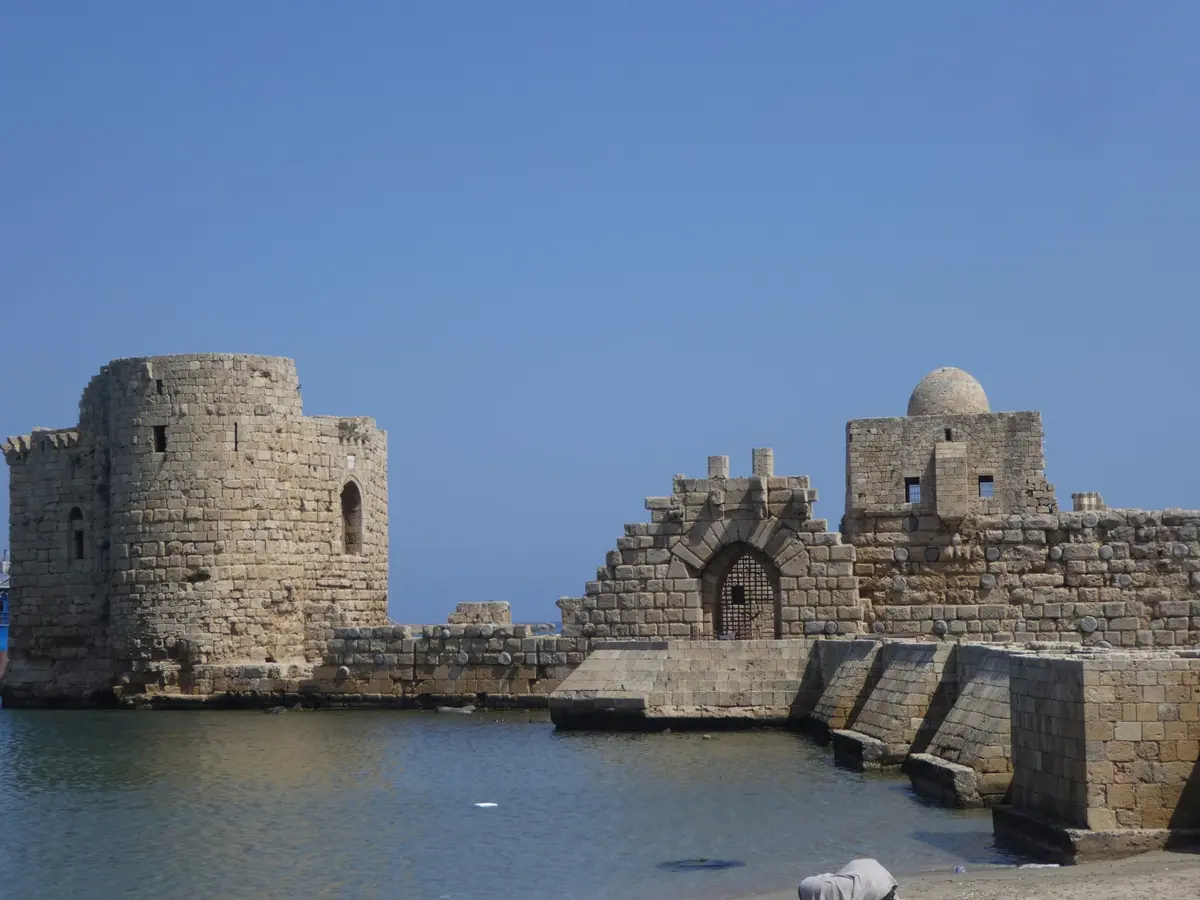
The Sidon Sea Castle sits 80 yards (75 m) offshore on a rocky island, connected to the mainland by a short stone causeway. The Crusaders built it in 1228 on top of a Phoenician temple, reusing Roman granite columns horizontally as internal bracing — you can see the column ends sticking out of the castle walls like rebar. A five-minute walk inland, the restored Khan el-Franj (1610) shows what a working caravanserai looked like.
- Location: Sidon (Saida), 28 miles (45 km) south of Beirut
- Cost: Sea Castle around $3
- Time needed: 2 hours including the old souk
Tyre (Sour) — Alexander’s causeway and the largest Roman hippodrome
Tyre has two separate archaeological zones. Al-Bass holds the largest and best-preserved Roman hippodrome in the world — 1,500 ft (450 m) long, seating 20,000 — and a monumental necropolis lined with sarcophagi along a Roman colonnaded road. The Al-Mina site on the peninsula has a Roman bath complex, mosaic floors, and a colonnaded street that runs directly into the sea. That peninsula was originally an island — Alexander the Great built a causeway across to besiege it in 332 BCE, and the causeway silted up into permanent land.
- Location: Tyre (Sour), 52 miles (83 km) south of Beirut
- Cost: Each archaeological zone around $5
- Best for: Serious ancients nerds — Tyre outranks Baalbek for Roman civic architecture
- Time needed: Full day between both sites
Pro Tip: If the South remains closed, replace Day 8 with a return to Beirut for the American University of Beirut Museum (third-oldest museum in the Near East after Cairo and Istanbul), and a slow afternoon on Bliss Street. You don’t get Tyre, but you don’t get blown up either.
Day 9 — A slow Beirut day to process what you saw
Nine days of sarcophagi and citadels is a lot. Use the last day in Beirut to decompress and see what you missed.
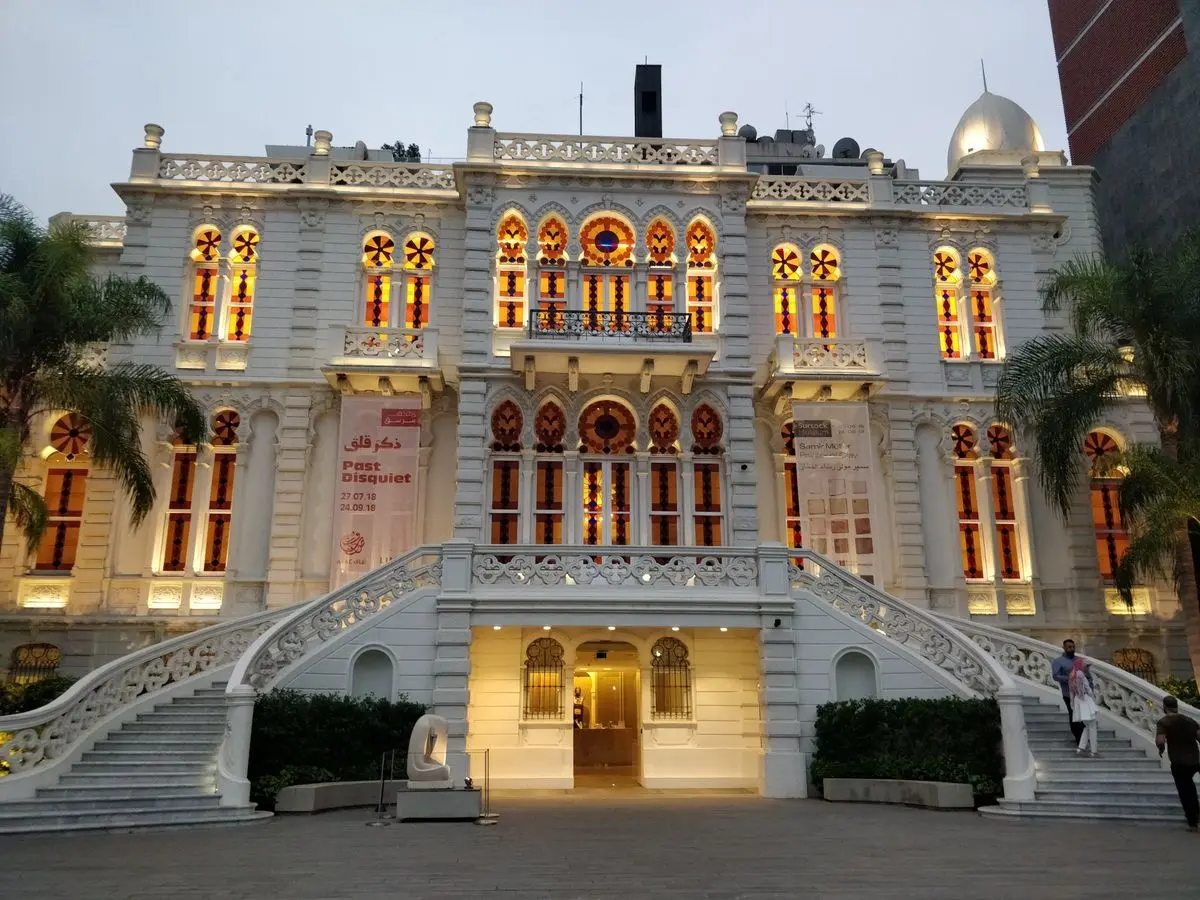
- Sursock Museum — modern and contemporary Lebanese art in a restored 1912 villa. Free entry.
- AUB Archaeological Museum — smaller than the National, but stronger on daily-life artifacts. Free entry; Monday–Friday, 9 AM–5 PM.
- Hamra Street — bookshops (try Antoine and Librairie Orientale), cafés, and the best manakish breakfast at Zaatar w Zeit’s Hamra location.
- Shopping: Books on Lebanese archaeology, Saida soap from Khan el-Franj, Bsharri silver, and Ksara or Musar wine. Skip the generic “I ♥ Beirut” merchandise in Hamra.
Where should you stay and eat on a history-focused trip?
Accommodation shapes the trip more than you’d think. A 19th-century converted merchant’s house teaches you more about Lebanese living than a chain hotel ever will.
- Beirut: Albergo Hotel (Ashrafieh) — a 1930s-building hotel with a rooftop view straight to the Mediterranean; or Hamra Urban Gardens for budget. Avoid hotels in the southern suburbs regardless of price.
- Batroun: Bebabouch Suites or Boutique Hôtel L’Auberge de la Mer — restored stone houses in the old town.
- Bsharri: L’Aiglon Hotel for mountain access to Qadisha.
- Food to seek out: kibbeh nayyeh in the Chouf, sfiha Baalbakiyeh in Baalbek (a flat lamb pie — you buy the filling at a butcher, who walks it to a bakery to cook), knefe in Tripoli, and any meal at Em Sherif or Tawlet in Beirut for the high-end and home-cook versions of Lebanese cuisine respectively.
Is Lebanon worth it for a history buff?
Yes, when the country is stable — more than almost any other destination in the Mediterranean. You get Roman architecture that outscales Italy’s, the physical birthplace of the alphabet, Crusader castles that reuse the temples they conquered, and Mamluk souks that still function as souks. No velvet ropes, minimal signage, and often no other foreign tourists in the frame.
The trade-off is real: the logistics are harder, the security situation is volatile, and everything is cash in USD. You’re doing homework and accepting risk that you wouldn’t in Rome or Athens. For the right traveler, that’s not a downside — it’s the reason you came.
Before you book
TL;DR: Fly into Beirut, hire a private driver for 9 days, bring $1,000+ in clean USD, prioritize Baalbek and Byblos above everything else, and write off the South until advisories shift. Check your government’s travel advisory the week you leave and again the morning you fly.
What’s the one historical site you’ve been trying to get to but keep postponing — and what’s been stopping you? Tell me in the comments.