East coast sightseeing means stitching one long corridor together — Maine’s granite coast down to Key West — through Boston, New York, Washington, DC, Charleston, Savannah, and Miami. This guide hands you the route, honest drive times, current ticket prices, and the right season for each stop, so you plan once and travel smart.
The classic east coast sightseeing trip runs north-to-south along I-95 and U.S. Route 1, from Acadia National Park in Maine to Key West in Florida — roughly 2,000 miles (3,200 km). Allow 10 to 14 days for the highlights, or two to three weeks to do it justice. The anchor stops are Boston, New York City, Washington, DC, Charleston, Savannah, and Miami.
What Is the Best East Coast Sightseeing Route?
The best east coast sightseeing route runs north-to-south along I-95 and U.S. Route 1: Acadia and Bar Harbor, then Portland, Boston, New York City, Philadelphia, Washington, DC, the Outer Banks, Charleston, Savannah, St. Augustine, Miami, and finally Key West. Heading south means warming weather and mile markers that count down to Mile 0.
Two roads define the trip. I-95 is the fast spine — the interstate that lets you cover ground when you need to. U.S. Route 1 is the slower, older highway that runs all the way from Fort Kent, Maine, to Key West, and it’s the one you peel onto for coastal towns, lobster shacks, and small-harbor detours.
The full East Coast spans 14 states from Maine to Florida. You won’t stop in all of them, but knowing the spine helps you decide where to crawl and where to cruise. The Northeast cities cluster tight; the Carolinas and Georgia spread out; Florida is its own long leg at the bottom.
Pro Tip: Drive south rather than north. The weather warms as you go, and on the Overseas Highway at the end, the mile markers count down toward Key West’s Mile 0 — a small psychological reward that a north-bound trip never gives you.
Starting in Maine in early October, the lobster shacks still steam at the Portland piers while the first red maples flare along US-1. That single visual — steam and red leaves — is the reason the southbound fall route works so well.

How Many Days Do You Need for an East Coast Trip?
Plan 10 to 14 days for the East Coast’s headline stops, and two to three weeks to travel the full Maine-to-Florida corridor without rushing. One week works for the Northeast core alone — Boston, New York, Philadelphia, and Washington, DC — which all sit within a four-hour drive of one another.
Here’s how the timing breaks down by trip length:
- 7 days: Northeast cities only (Boston, New York, Philadelphia, Washington, DC)
- 10–14 days: The headline stops from New England through Florida’s coast
- 21 days: The full Maine-to-Key West corridor, with room to slow down
The Boston-to-DC corridor is about 440 miles (708 km), or 7 to 8 hours of pure driving — 9 to 10 with realistic stops. That’s the densest, most walkable stretch of the whole route.
On a seven-day Boston-to-DC sprint, the car sits unused for two of those days. Both Manhattan and DC are faster and cheaper on foot and transit than behind the wheel, so a tight Northeast trip barely needs a rental at all.
How Far Apart Are the East Coast Cities?
Key driving legs: Boston to New York runs about 215 miles (4 hours); New York to Philadelphia about 95 miles (2 hours); Philadelphia to Washington, DC about 135 miles (2.5 hours); Charleston to Savannah about 107 miles (2 hours); and Miami to Key West about 165 miles (4 hours). Build buffer time around New York, DC, and Baltimore traffic.
Here is the full corridor leg by leg:
| Leg | Distance | Drive Time |
|---|---|---|
| Boston → New York City | 215 mi (346 km) | ~4 hrs |
| New York City → Philadelphia | 95 mi (153 km) | ~2 hrs |
| Philadelphia → Washington, DC | 135 mi (217 km) | ~2.5 hrs |
| Washington, DC → Outer Banks (Nags Head) | 245 mi (394 km) | ~5 hrs |
| Outer Banks → Charleston | 280 mi (451 km) | ~5.5 hrs |
| Charleston → Savannah | 107 mi (172 km) | ~2 hrs |
| Savannah → St. Augustine | 175 mi (282 km) | ~3 hrs |
| St. Augustine → Miami | 310 mi (499 km) | ~5 hrs |
| Miami → Key West | 165 mi (266 km) | ~4 hrs |
The numbers on Google Maps assume light traffic, which the Northeast rarely has. Three chokepoints will wreck your timing if you ignore them: the approaches to New York City, the DC and Baltimore stretch of I-95, and any river crossing into a major city at rush hour.
The Delaware Turnpike toll plaza north of Maryland routinely backs up a mile on summer Fridays. Leave before 7 a.m. to skip it, or you’ll lose 30 to 45 minutes sitting still on what should be an open highway.
Pro Tip: Get an E-ZPass transponder, or rent a car with one included. The DC-to-NYC tolls run about $30 to $45 each way, and the cash and license-plate-billing lanes are slower and pricier than the transponder lanes.
What Should You See in Each City?
Each anchor city has one sight you shouldn’t miss: Boston’s 2.5-mile Freedom Trail, New York’s Statue of Liberty, Washington’s National Mall, Charleston’s Rainbow Row, and Miami as the gateway to the Overseas Highway. Most can be covered in one well-planned day per city, on foot and transit.
Boston: Walking the Freedom Trail
The Freedom Trail is a red-brick line set into the sidewalk that links 16 historic sites across 2.5 miles, from Boston Common to the Bunker Hill Monument. You follow the bricks. There’s no ticket, no gate, and no wrong turn — just a 90-minute to half-day walk depending on how many stops you actually go inside.
The free outdoor walk is the deal. Paying for guided tours or interior admissions is optional, and several of the best stops — the Common, the old churches’ exteriors, Paul Revere’s neighborhood — cost nothing.
- Location: Starts at Boston Common, downtown Boston, MA
- Cost: Free to walk; interior admissions and guided tours optional
- Best for: History buffs, families, walkers who want a self-paced route
- Time needed: 2 hours fast, half a day with interior stops

New York City: Lady Liberty and the Skyline
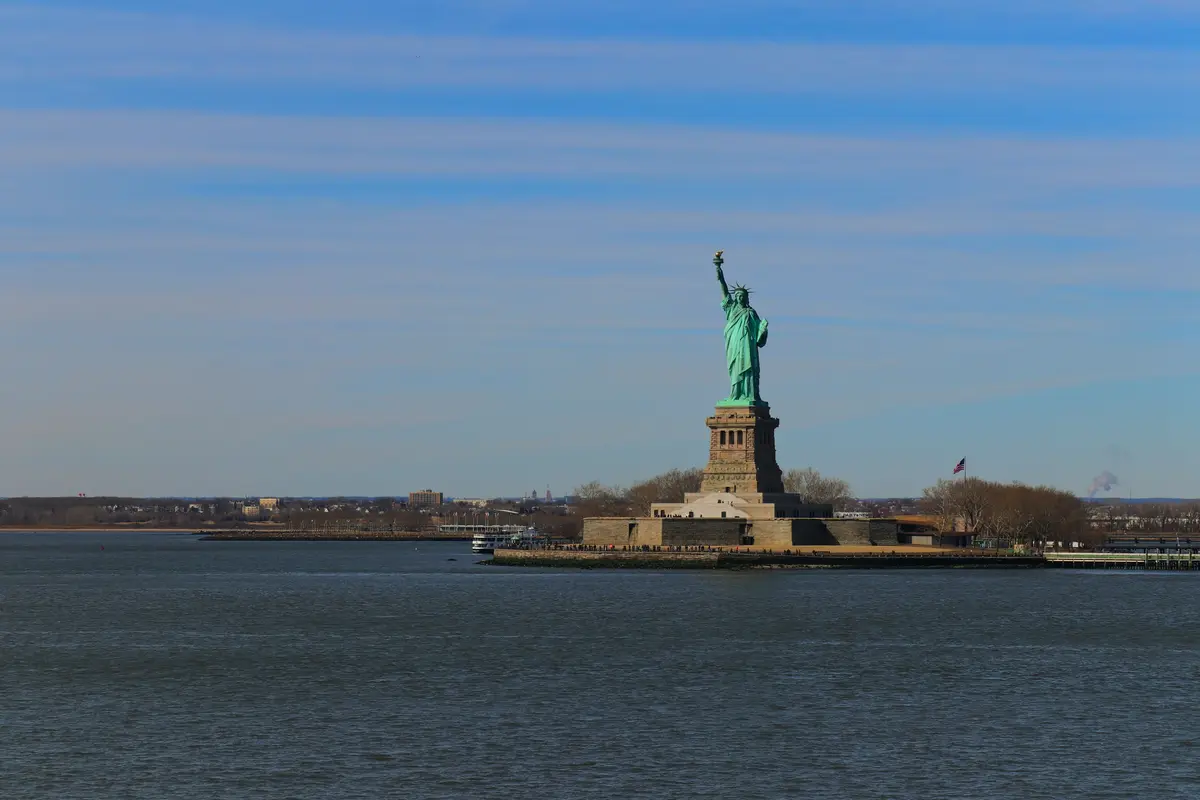
The Statue of Liberty and the Manhattan skyline are the two sights everyone wants, and both come with real cost and crowd decisions. The base ferry to Liberty and Ellis Islands — run by the only authorized operator, Statue City Cruises — costs about $25.50 for adults, $16.50 for children (ages 4–12), and $22.50 for seniors (62+). Adding Pedestal or Crown access costs only about 30 cents more — the catch is that Crown tickets sell out weeks ahead.
For the skyline, the Empire State Building’s 86th-floor deck starts around $44, plus a small booking fee. If you plan to hit several big attractions, the New York CityPASS runs about $164 for adults and $136 for children (ages 6–17), bundles five attractions, stays valid for nine days, and can save up to roughly 42 percent.
The line at the Statue City Cruises security tent in Battery Park can run two hours by mid-morning. The first 9 a.m. ferry from Liberty State Park in New Jersey, by contrast, is nearly empty — same island, same statue, a fraction of the wait.
- Location: Statue ferry departs Battery Park (NY) or Liberty State Park (NJ)
- Cost: Base ferry around $25.50 adult; CityPASS around $164 adult for 5 attractions
- Best for: First-time visitors, families, skyline photographers
- Time needed: Half a day for Liberty and Ellis Islands; full day with the skyline
Washington, DC: The National Mall and the Smithsonian
The National Mall and the Smithsonian museums are the rare big-city attraction that costs nothing. Every Smithsonian museum and the monuments along the Mall are free to enter, which makes DC the best-value day on the entire route. You can fill a full day — Air and Space, Natural History, the Lincoln Memorial — without paying admission once.
The Mall is about two miles end to end, and walking it in summer heat is a slog. Pace yourself, carry water, and treat the museums as air-conditioned breaks between monument walks.
- Location: National Mall, central Washington, DC
- Cost: Free (Smithsonian museums and monuments)
- Best for: Families, budget travelers, history buffs
- Time needed: A full day, easily two

Charleston and Savannah: Two Walkable Historic Districts
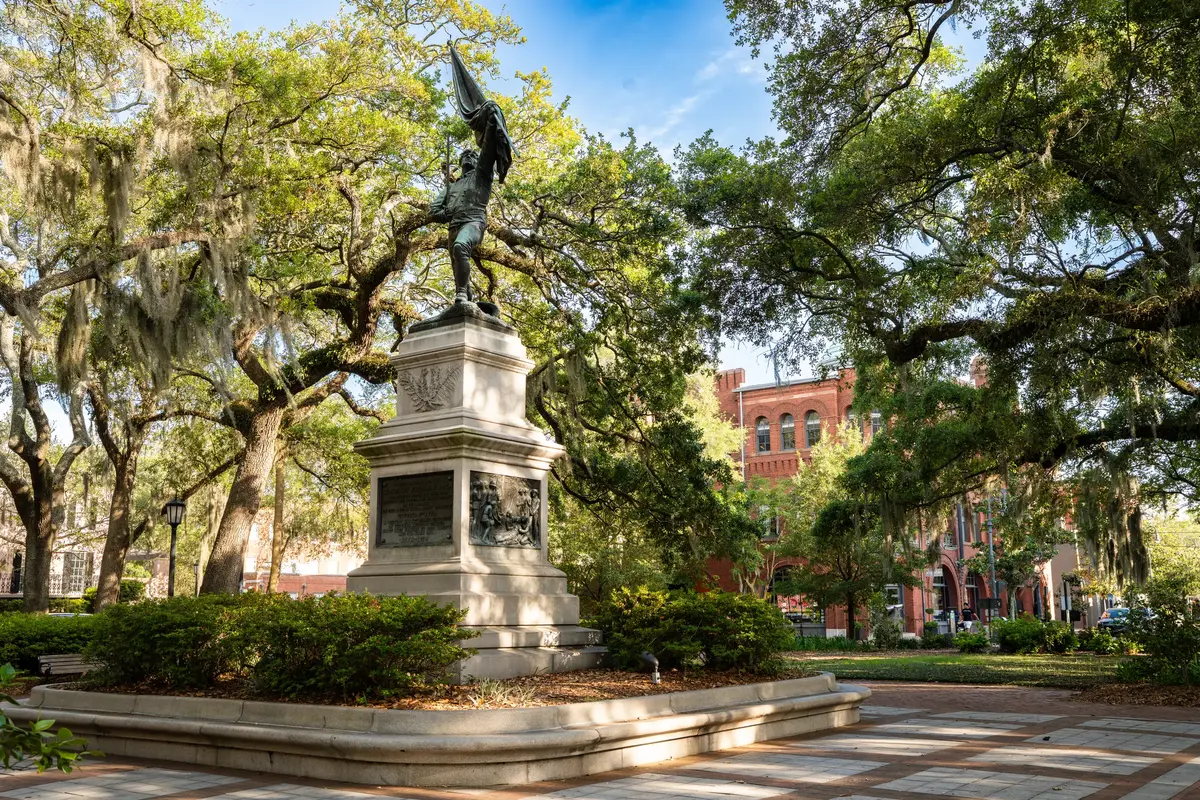
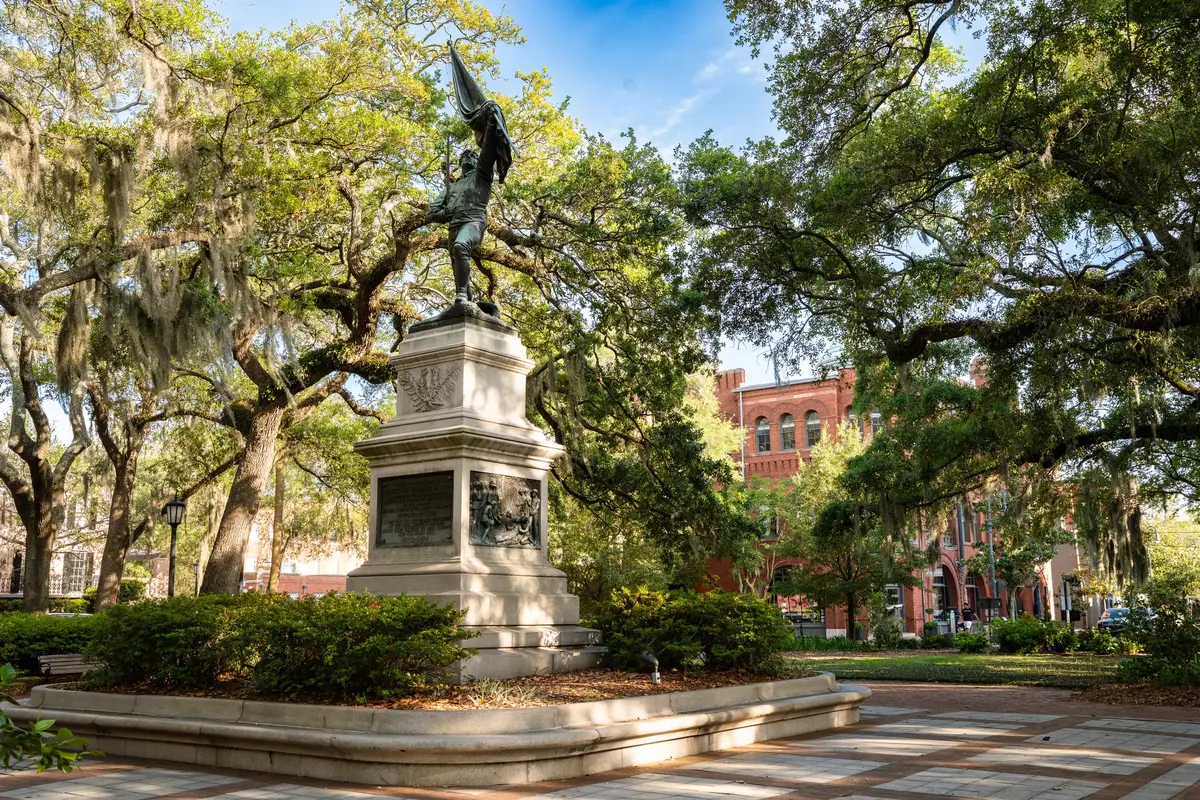
Charleston and Savannah are the South’s two great walking cities, about 107 miles (172 km) apart — roughly a two-hour drive. Charleston’s Rainbow Row and waterfront are tighter and more polished; Savannah’s grid of shaded squares under live oaks is slower and more spread out. You can see both in a day each, mostly on foot.
Charleston leans pricier for food and lodging. Savannah is the better budget base of the two, and the historic district’s squares are free to wander at any hour.
- Location: Charleston, SC and Savannah, GA (about 107 mi / 172 km apart)
- Cost: Both free to walk; tours, carriage rides, and house museums extra
- Best for: Couples, history buffs, slow travelers
- Time needed: One full day in each
Miami and the Keys: The Gateway to Mile 0
Miami is where the corridor turns tropical, and it’s the launch point for the Overseas Highway down to Key West — 165 miles (266 km) and about four hours of bridge-hopping. Miami Beach and the Art Deco district fill a day or two; the real reward is the drive south afterward, across 42 bridges to the end of the road.
Miami runs expensive on parking and beach-club fees. The Keys cost more for lodging the closer you get to Key West, so book the bridge towns ahead in peak season.
- Location: Miami, FL; Overseas Highway south to Key West
- Cost: Miami Beach free; Keys lodging climbs sharply toward Key West
- Best for: Couples, beach travelers, road-trip finishers
- Time needed: 1–2 days in Miami, plus a full day for the Keys drive
How Much Does an East Coast Trip Cost?
Budget travelers can do the East Coast for roughly $150 to $200 per person per day; mid-range runs about $250 to $400. The big variables are big-city hotels, tolls (DC to NYC runs about $30 to $45 each way), and fuel, which has been sitting in the high-$3 to $4-a-gallon range — well above the old $3 figure many guides still quote.
That fuel number matters. A lot of older guides still budget gas at around $3 a gallon, and that’s no longer realistic — the national average has been hovering near $4, dipping into the high $3s and spiking higher when oil markets tighten. On a 2,000-mile (3,200 km) trip, that gap adds up to real money, so build your fuel line around the higher figure.
Here’s a rough daily breakdown per person:
| Category | Budget | Mid-Range | Luxury |
|---|---|---|---|
| Lodging (per night) | $70–110 | $150–250 | $350+ |
| Fuel (per day) | $25–40 | $25–40 | $25–40 |
| Tolls (avg per day) | $5–15 | $5–15 | $5–15 |
| Food (per day) | $30–45 | $60–90 | $120+ |
| Attractions (per day) | $15–30 | $40–70 | $80+ |
| Daily total | $150–200 | $250–400 | $500+ |
Attraction prices swing widely. Some sample base rates to plan around:
- Biltmore Estate (Asheville, NC): roughly $55–$85, depending on the season
- Kennedy Space Center (Cocoa Beach, FL): around $77 adult
- Walt Disney World Magic Kingdom: single day from around $139
- Statue of Liberty base ferry (NYC): around $25.50 adult
- Smithsonian museums and the National Mall (DC): free
In Washington, DC the best-value day is almost free — every Smithsonian museum and every monument costs nothing to enter. Stack your DC days to offset the pricier attraction days in Orlando or the Keys, and the whole trip’s average comes down.
Pro Tip: Big observation decks, the Biltmore, Disney, and Kennedy Space Center all use dynamic or seasonal pricing, so the “from” price is rarely the price you’ll pay on a busy weekend. Check the official checkout page for your exact dates before you commit.
When Is the Best Time for East Coast Sightseeing?
Spring (April through June) and fall (September through November) are the best times for east coast sightseeing — mild weather and thinner crowds. Visit New England in October for peak foliage, Washington, DC in late March or early April for cherry blossoms, and Florida from November through April to dodge heat and hurricane season.
The East Coast covers a lot of climate. What’s perfect up north is often miserable down south on the same date, so match the season to the region:
| Season | Best Region | Avg High | What’s On | Crowds |
|---|---|---|---|---|
| Spring (Apr–Jun) | DC, Mid-Atlantic | 60–75°F (16–24°C) | Cherry blossoms in DC | Moderate |
| Summer (Jul–Aug) | New England coast, Maine | upper 80s°F (~31°C) | Beaches, long days | Heavy |
| Fall (Sep–Nov) | New England, Shenandoah | 50–70°F (10–21°C) | Peak foliage mid-Oct | Busy at foliage peak |
| Winter (Dec–Mar) | Florida | 70–78°F (21–26°C) | Warm escape | Light north, heavy Florida |
A few timing facts worth planning around: Acadia’s foliage peaks in mid-October and lasts only about two weeks, so the window is tight. Hurricane season runs June through November, which is the main reason to push Florida toward the winter months. And Northeast summer highs in the upper 80s°F (~31°C) make the cities sticky — the coast and the mountains stay more comfortable.
By mid-October the Skyline Drive overlooks in Shenandoah glow amber, but the 35 mph limit and weekend RV traffic mean the 105-mile (169 km) drive eats a full day. Treat fall foliage as the main event of that day, not a quick detour you squeeze in before dinner.

Should You Drive, Take the Train, or Fly?
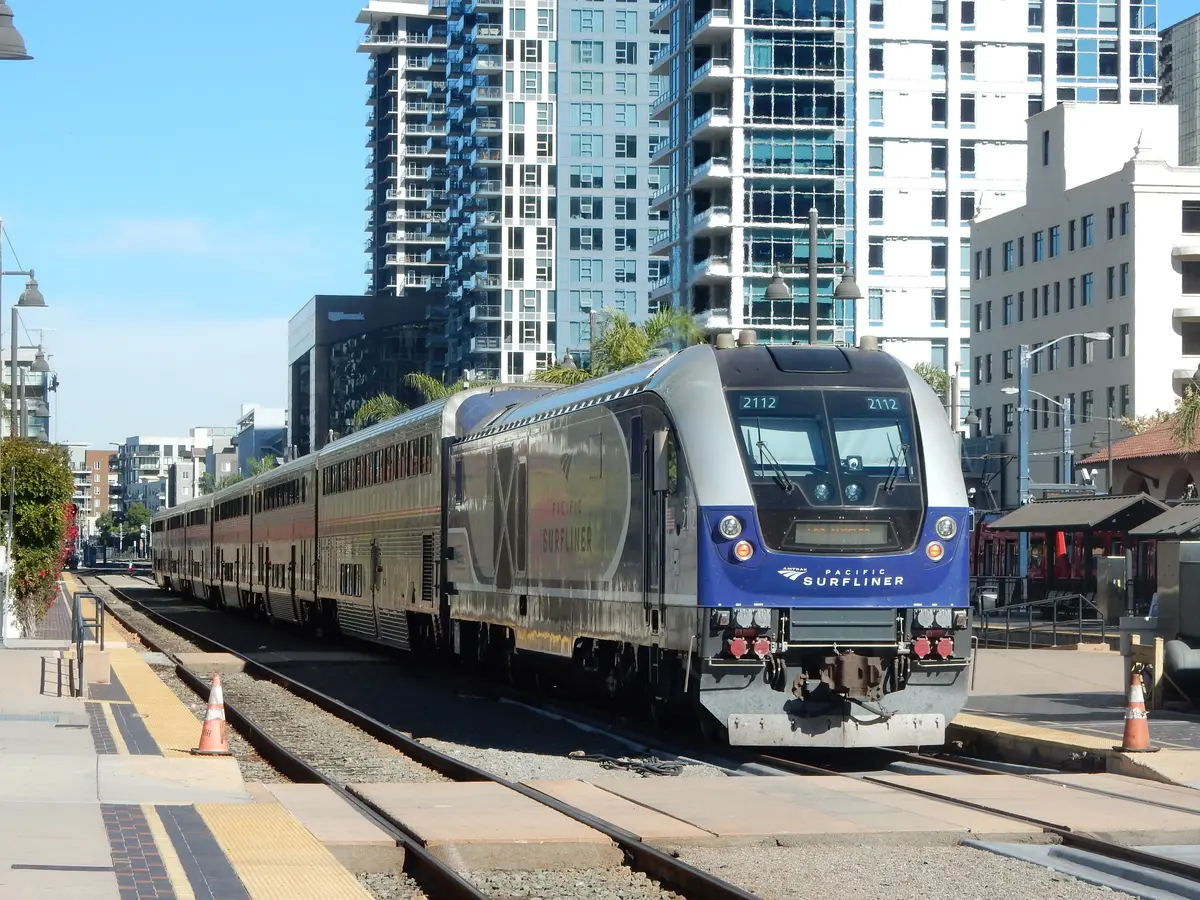
For the Northeast cities — Boston, New York, Philadelphia, and Washington, DC — Amtrak’s Northeast Corridor beats driving. Northeast Regional fares between New York and DC start around $28 to $29 one-way and average about 3 hours 20 minutes. South of DC, a car becomes essential as rail and transit thin out.
The decision splits cleanly at Washington, DC:
- North of DC: Take the train. Parking is expensive, traffic is brutal, and the cities are built for transit. Northeast Regional runs roughly $29 to $89; the faster Acela does New York to DC in as little as 2 hours 47 minutes at speeds up to about 150 mph.
- South of DC: Rent a car. Rail and bus options thin out fast, and the Carolinas, Georgia, and the Florida coast assume you’re driving.
The Acela’s quiet car between New York and DC is the closest thing to a stress-free commute in the corridor — power outlets at every seat, no security theater, and you arrive in the center of each city instead of a distant airport.
Pro Tip: If you’re flying in to start the trip, the practical hub airports are Boston Logan (BOS), New York (JFK, LGA, EWR), Washington (DCA, IAD, BWI), Charleston (CHS), Orlando (MCO), Miami (MIA), and Portland, Maine (PWM). Pick the one closest to where your route actually starts.
A one-way road trip means one-way car rentals, which carry drop fees. If you fly into Maine and out of Miami, expect to pay a premium to leave the car at a different city than you picked it up.
Which East Coast Scenic Drives Are Worth It?
Three drives define East Coast scenery: the 469-mile Blue Ridge Parkway (Virginia to North Carolina), Shenandoah’s 105-mile Skyline Drive, and Florida’s Overseas Highway, a 113-mile leap across 42 bridges to Key West. All three reward slow travel over speed — plan to stop often.
Blue Ridge Parkway: 469 Miles of Ridgeline
The Blue Ridge Parkway runs 469 miles (755 km) along the spine of the Appalachians from Virginia into North Carolina, with no entry fee anywhere along it. It’s a touring road, not a connecting route — speed limits are low, overlooks are frequent, and you’ll average far less than highway pace. Drive a section, not the whole thing, unless you have days to spare.
- Location: Virginia to North Carolina (Appalachian ridgeline)
- Cost: Free (no entry fee)
- Best for: Foliage chasers, slow drivers, photographers
- Time needed: A few hours per section; days for the whole road

Skyline Drive: Shenandoah at 35 MPH
Skyline Drive runs 105 miles (169 km) through the length of Shenandoah National Park, capped at 35 mph the entire way. Entry is via the park fee — about $35 per vehicle for a 7-day pass. With overlook stops, the drive realistically takes most of a day, so don’t pencil it in as a quick scenic shortcut.
Pro Tip: Big Meadows Wayside, at milepost 51.2, is the only gas station inside Shenandoah. Fill up before you enter the park, because there’s no quick exit to a highway station once you’re on the drive.
- Location: Shenandoah National Park, Virginia
- Cost: Around $35 per vehicle (7-day park pass)
- Best for: Foliage chasers, families, leisurely drivers
- Time needed: Most of a full day with stops
The Overseas Highway: 113 Miles of Bridges to Key West
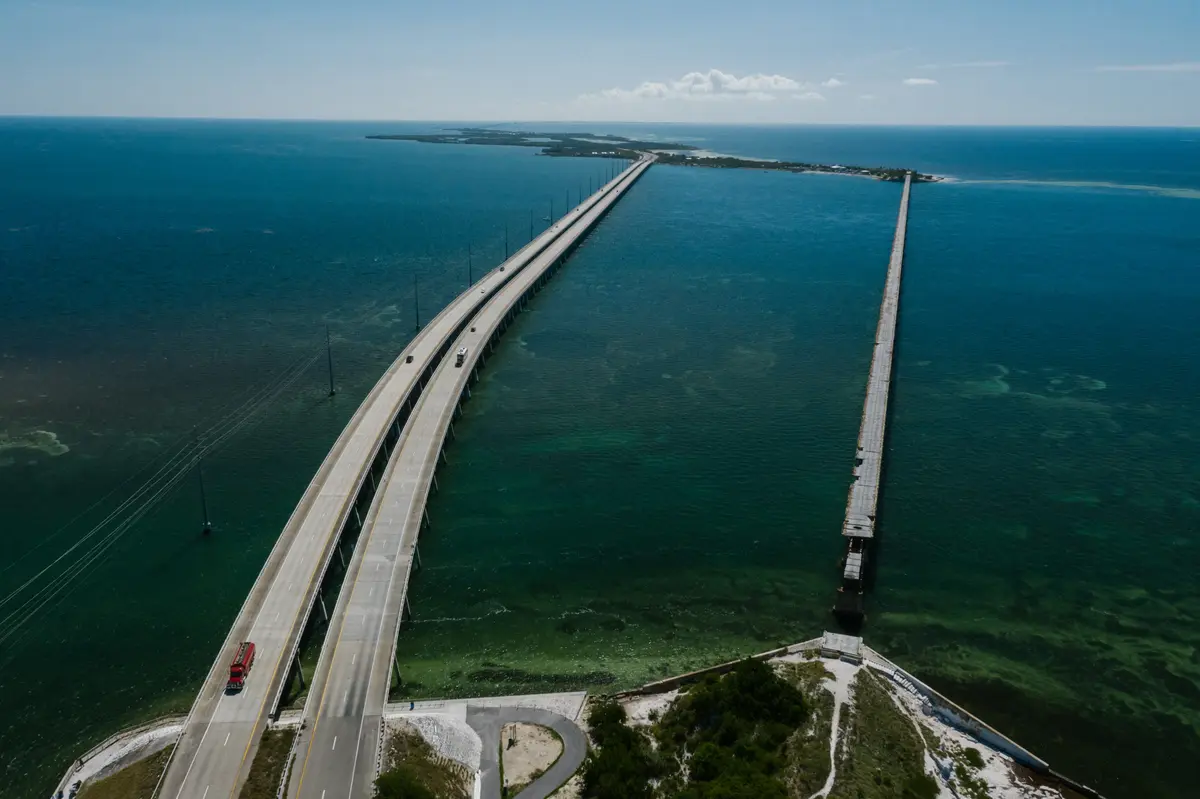
The Overseas Highway carries U.S. Route 1 across 113 miles (182 km) and 42 bridges from the Florida mainland to Key West, including the long Seven Mile Bridge. The mile markers count down toward Key West’s Mile 0, which doubles as your navigation system — most businesses in the Keys give their address as a mile marker.
On the Seven Mile Bridge, the old parallel span sits crumbling beside you, and pelicans use its broken pilings as fishing perches. It’s the kind of detail that tells you you’ve reached the end of the road in the most literal way.
- Location: Florida City to Key West, FL (U.S. Route 1)
- Cost: Free to drive
- Best for: Road-trip finishers, couples, photographers
- Time needed: A full day with stops
Is East Coast Sightseeing Easy for International Visitors?
International visitors should fly into a hub like Boston (BOS), New York (JFK), or Miami (MIA), and rent a car only for the legs south of Washington, DC. The U.S. drives on the right, the currency is the U.S. dollar, and tipping of 15 to 20 percent is expected at restaurants.
A few practicalities that trip up first-timers:
- Visas: Most visa-waiver-eligible visitors need an approved ESTA before flying; check your country’s status well ahead.
- Driving side: The U.S. drives on the right, and most rental cars are automatic.
- Tipping: Plan on 15 to 20 percent at restaurants; it’s not optional in practice.
- Tolls: Many highways use E-ZPass gantries with no booths — your rental car’s transponder gets billed automatically, often weeks later.
One newer rule catches international visitors off guard: non-U.S. residents now pay an added surcharge of around $100 per person (ages 16 and up) on top of the standard fee at 11 national parks, including Acadia and Everglades — both of which sit on this route. The non-resident America the Beautiful annual pass runs about $250, versus roughly $80 for residents. If you’re a non-resident hitting several parks, the math changes, so price it out before you buy.
Coming from the UK, the hardest adjustment isn’t the driving side — it’s the unsigned toll gantries that bill your rental’s transponder weeks after you’ve flown home. Budget a cushion for tolls you won’t see itemized until later.
Where Should Families and Budget Travelers Go?
Families get the best value in Washington, DC (free Smithsonian museums), on Cape Cod’s calm beaches, and at Florida’s theme parks. Budget travelers should lean on free sights — the National Mall, Boston’s Freedom Trail, and the Staten Island Ferry’s free views of the Statue of Liberty.
For families, the standout free-to-cheap stops are:
- Washington, DC: Free Smithsonian museums and monuments
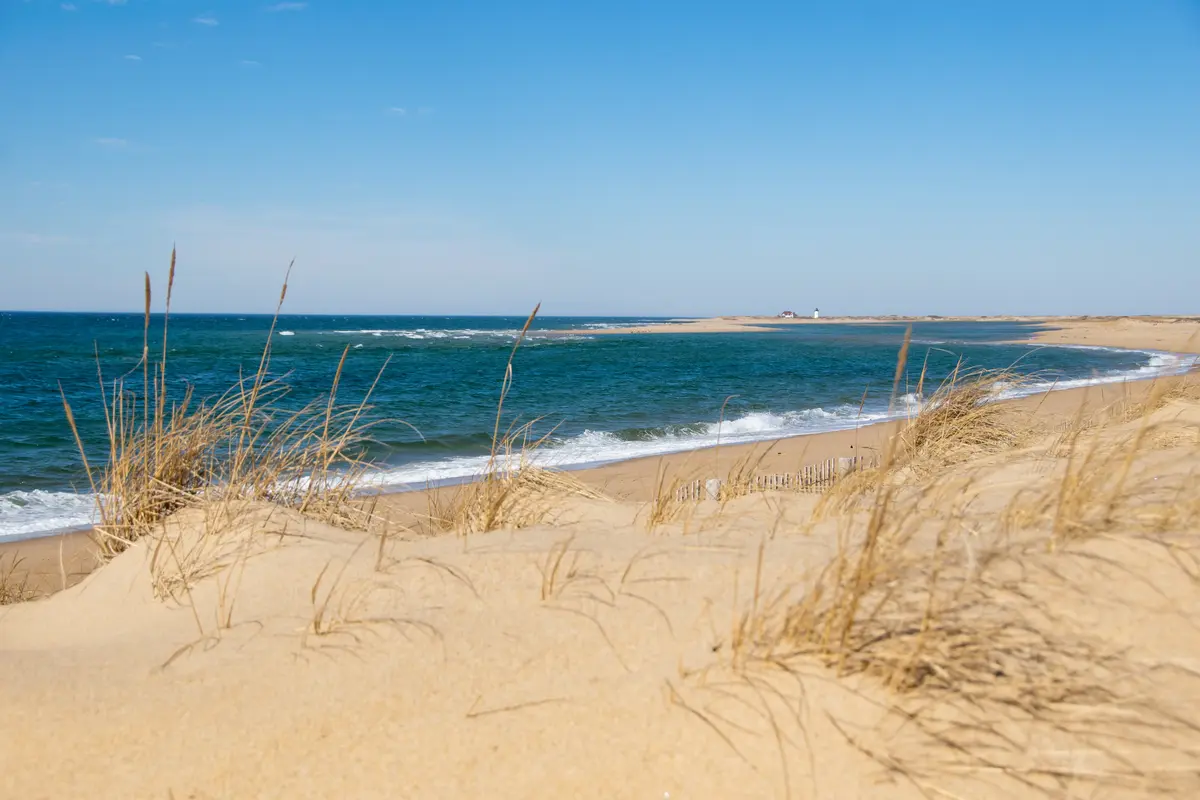
- Cape Cod National Seashore: About 40 miles (64 km) of protected beach
- Outer Banks, NC: Wide beaches and the Wright Brothers history at Kitty Hawk
- Kennedy Space Center, FL: Around $77 adult, for space-obsessed kids
For budget travelers, the move is to stack free sights against the few paid ones. Washington, DC alone can fill two nearly free days. In New York, the Staten Island Ferry glides within about 500 yards of the Statue of Liberty for free — ride the outbound trip on the right (starboard) side for the clearest view, and skip the paid harbor cruise entirely.
Pro Tip: Staying just outside the expensive city cores saves real money, but check the trade-off. You can save $40 a night in an outer neighborhood, then spend $15 each way on rideshare to the sights — sometimes the pricier central hotel wins once you add it all up.
Before You Hit I-95
East coast sightseeing rewards travelers who treat it as one connected route rather than a list of scattered cities. Drive it north-to-south so the weather warms as you go, and let the season decide your region — New England in October, DC in spring, Florida in winter.
The short version: point the car south along I-95 and U.S. Route 1, budget 10 to 14 days for the highlights or two to three weeks for the full Maine-to-Key West run, take Amtrak between the Northeast cities, and rent a car once you’re south of DC. Do that, and the corridor stops reading as a checklist of cities and starts feeling like one long, unbroken coastline that ends at a mile marker counting down to zero.