A Beirut to Byblos day trip covers 25 miles of coastline, 7,000 years of layered history, and one of the best seafood harbors in the Mediterranean. Most guides sell you the postcard version. This one covers what actually works — which stops earn the stop, which restaurants overcharge tourists, and how the cash economy will trip you up if you show up unprepared.
Byblos — known locally as Jbeil — is a UNESCO World Heritage site where Phoenician, Roman, Crusader, and Ottoman ruins sit inside the same walls. Getting here from the capital is straightforward. Getting it right takes a bit of planning.
How do you plan a Beirut to Byblos day trip?
A Beirut to Byblos day trip works best as a full-day loop: leave the capital by 9 a.m., combine Jeita Grotto and Harissa on the way up, arrive in Byblos by early afternoon, and stay until sunset. Budget $60–$150 per person depending on transport. Bring crisp US dollars — cash rules Lebanon.
The two things most first-timers get wrong: they underestimate how much cash they need on hand, and they rely on patchy Wi-Fi instead of a local SIM. Fix both before you leave your hotel and the rest of the day runs smoothly.
How should you handle money on the trip?
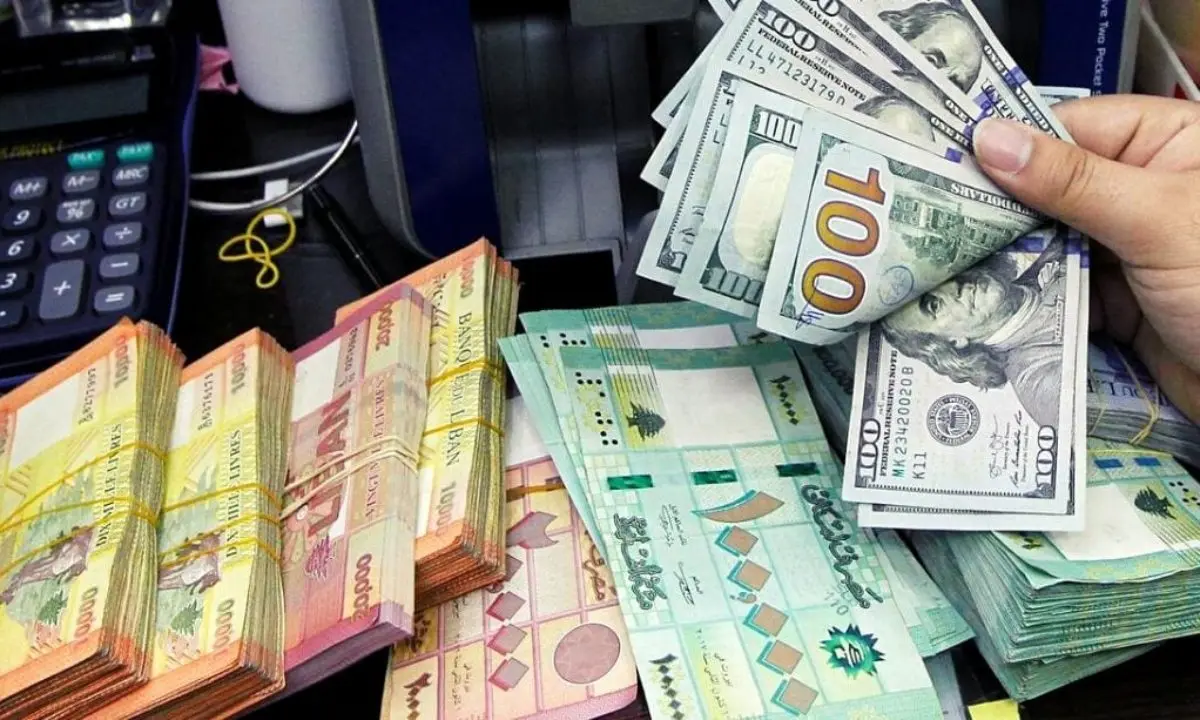
Lebanon runs on a dual-currency cash economy. You can pay in US dollars almost everywhere, but credit cards are rarely accepted outside high-end hotels and a handful of Beirut restaurants. The term you’ll hear locally is “fresh dollars” — physical cash, not bank transfers or cards.
A few rules that will save you awkward standoffs at ticket counters:
- Bring crisp, unmarked bills: Torn, taped, or heavily worn notes get rejected. This applies especially to the $100 bill (the blue-strip version).
- Carry small denominations: Load up on $1, $5, $10, and $20 notes. The “no change” problem is real — a vendor selling you a $3 manouche will not break a $50.
- Keep some Lebanese Lira for the small stuff: Street snacks, shared taxis, and tips go easier in LBP. Exchange $50–$100 at a Sarraf (exchange house) in Hamra or near your hotel, not at the airport.
- ATMs are unreliable: Some dispense USD, most don’t, and withdrawal limits are low. Do not plan to restock mid-trip.
Pro Tip: Split your cash. Keep the bulk in your hotel safe and carry only what you need for the day in a front pocket or money belt. Lebanon is safe for tourists, but standard travel caution applies.
Do you need a local SIM card?
Yes. Wi-Fi in Lebanon is slower and less reliable than most travelers expect, and drivers will call to confirm pickup spots — you need a Lebanese number to make that painless. Grab a tourist SIM card at Beirut–Rafic Hariri International Airport arrivals hall before you leave the terminal.
Touch and Alfa are the two operators. Tourist packages run $15–$25 and include enough data for a week of navigation, WhatsApp, and rideshare apps. The airport kiosks set the SIM up on the spot.
When is the best time for a Beirut to Byblos day trip?
Spring (April to May) and autumn (September to October) are the best time to visit Lebanon, with daytime temperatures of 68–77°F (20–25°C) and low rainfall. The Citadel ruins at Byblos are largely unshaded — July and August push past 90°F (32°C) and the stone radiates heat well into the evening.
Winter (December to March) has its own quiet appeal. You’ll have the archaeological site almost to yourself, harbor restaurants stay open, and rain rarely lasts all day. The catch: the lower grotto at Jeita sometimes closes when water levels rise, so check before you commit to the drive north.
Pro Tip: Avoid Sundays if you want the site to yourself. Byblos is a popular weekend escape for Beirutis, and the harbor restaurants fill up by 1 p.m.
What’s the best way to get from Beirut to Byblos?
The 25-mile (40 km) drive takes 45 minutes to 1 hour 15 minutes depending on traffic. You have four options, and the right one depends on whether you’re combining Jeita Grotto and Harissa into a full loop or going straight to Byblos. Cost ranges from $3 one-way on a public bus to $150 for a full private driver day.
Private driver — the loop option
A private driver for the full Beirut–Jeita–Harissa–Byblos loop runs $75–$150 for the vehicle (not per person), depending on car type and negotiation. This is the right call if you want all three sites in one day without dealing with Lebanese traffic yourself.
- Cost: $75–$150 for the full day, vehicle-inclusive
- Best for: Couples, small groups, first-time visitors, anyone not fluent in aggressive Mediterranean driving
- Time saved: ~2 hours vs. public transport
- Book via: Your hotel concierge or WhatsApp contacts — avoid airport touts
The downside is isolation. You’ll miss the mini-bus conversations and the random detours that make Lebanon feel like Lebanon.
Uber and Bolt — the rideshare option
Both rideshare apps operate in Lebanon on the Beirut–Byblos corridor. Bolt is usually 15–25% cheaper on the same route. Expect $25–$45 one-way to Byblos depending on the time of day.
The friction point: many drivers refuse card payments because of banking delays in the country. Message your driver in the app the moment you book — confirm cash payment in USD or LBP and the pickup spot. Getting back to Beirut after dark takes longer; drivers thin out in Byblos past 9 p.m., and a return ride can take 15–20 minutes to appear.
Connexion and LCC buses — the budget option
The Connexion bus from Charles Helou Station in Beirut is the best-value option for Byblos-only trips. Large, air-conditioned coaches run regularly and cost around $2–$3 one-way. They leave once full, not on a fixed schedule.
Two things to know:
- They drop you on the coastal highway, not downtown. You’ll need to use the pedestrian overpass to cross safely — do not walk across the highway at grade.
- Walking distance to the old town: About 10 minutes downhill from the bus stop.
LCC Bus No. 6 is the cheaper alternative (under $2), but it stops constantly and turns a 45-minute drive into a 90-minute slog. Take it if you want full local immersion or if the Connexion queue is long.
Pro Tip: Charles Helou Station in Beirut is chaotic. Arrive knowing which bay the Connexion bus uses — ask at the ticket window, which is unmarked but sits near the eastern entrance.
What stops are worth making on the way to Byblos?
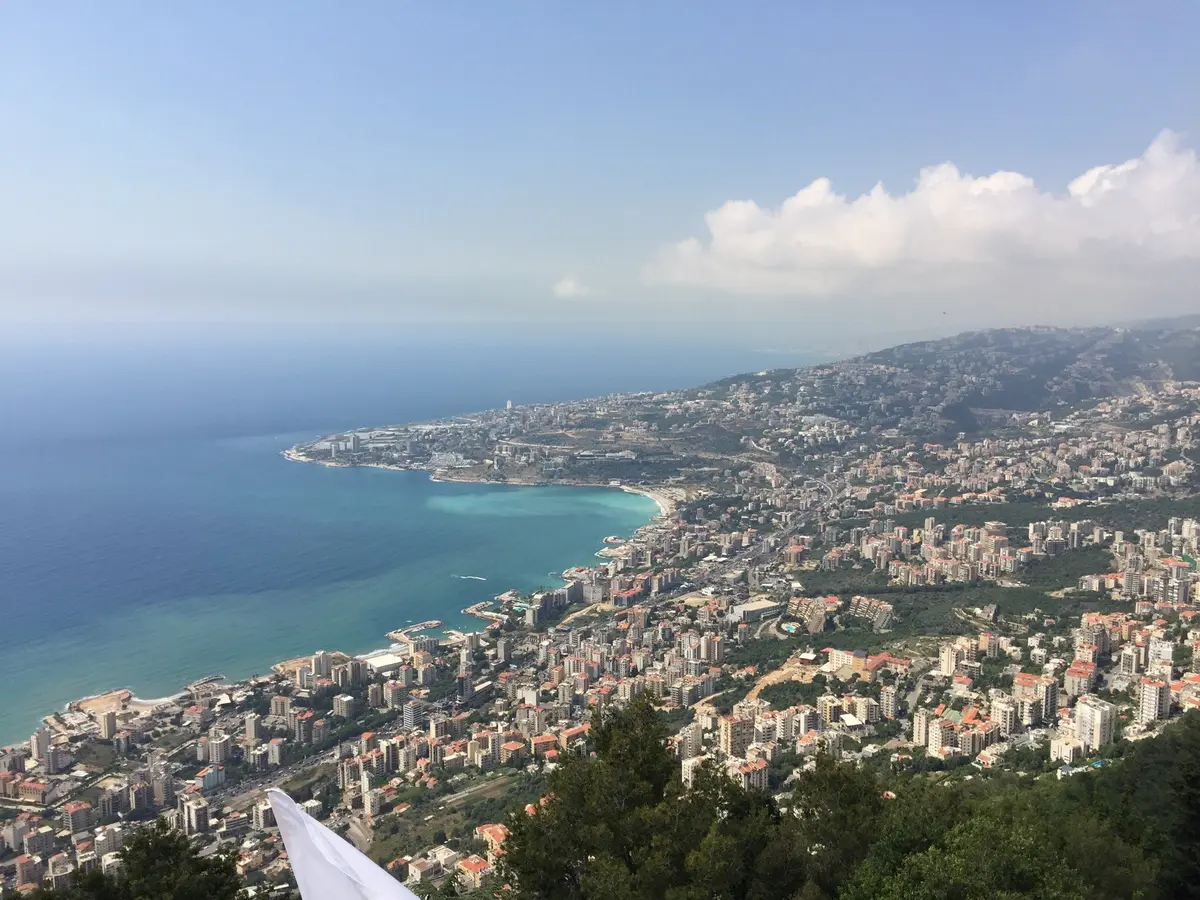
Two stops genuinely earn the detour: Jeita Grotto and Harissa. Both sit within 11 miles (18 km) of Beirut, both are logistically on the way to Byblos, and together they turn a one-site trip into a full-country sampler. Add 3–4 hours to your day if you include both.
Jeita Grotto — the underground river
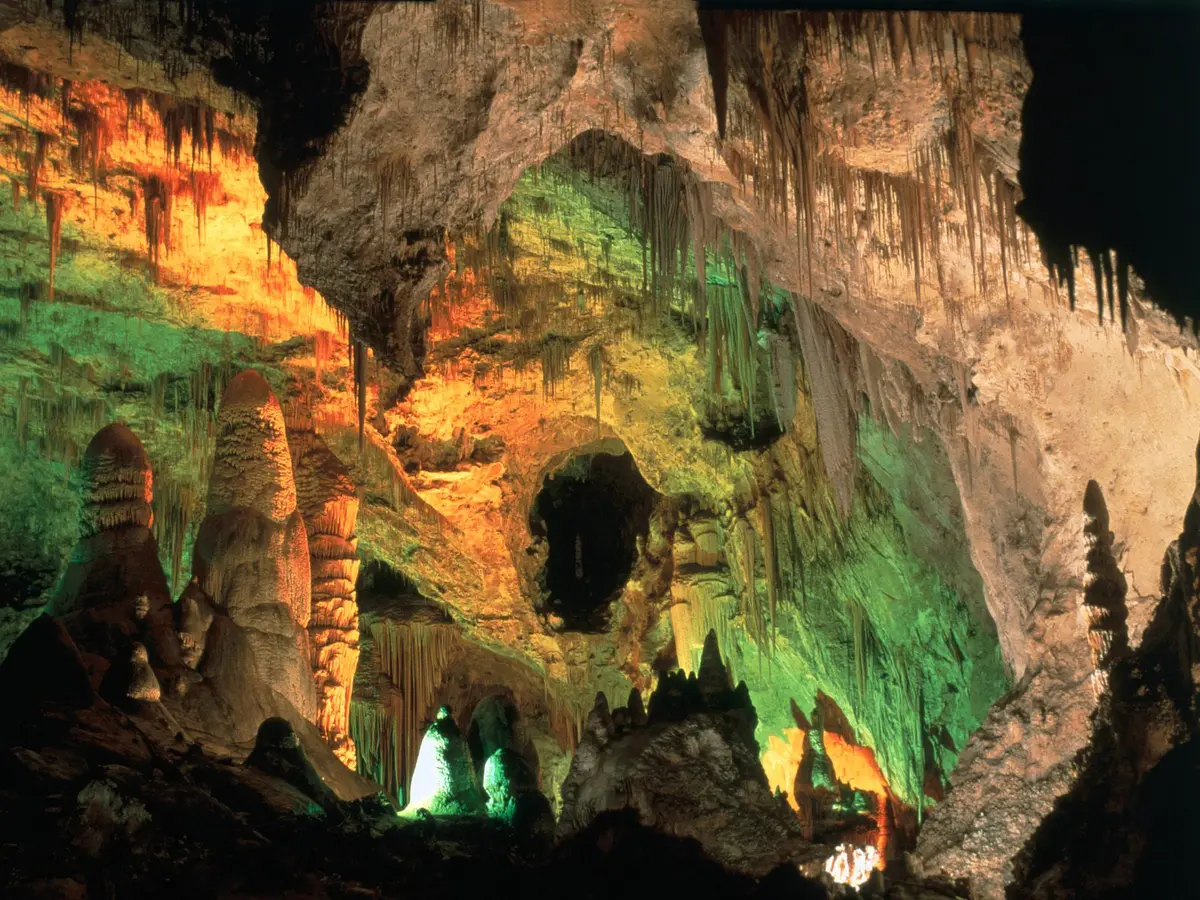
Jeita Grotto is a two-level limestone cave system with the longest stalactite on record in the upper gallery. The lower grotto is the stronger experience: you board a small electric boat and glide silently through a chamber that feels more cathedral than cave. The sound in there is genuinely unlike anywhere else — water dripping from 200-foot ceilings, no engine noise, no voices above a whisper.
- Location: 11 miles (18 km) north of Beirut, off the coastal highway
- Cost: Around $15 per adult (includes upper grotto, lower grotto, cable car between galleries, and mini-train)
- Best for: Anyone who hasn’t seen serious cave systems before; families with kids over 6
- Time needed: 1.5–2 hours
- Open: Roughly 9 a.m. to 5 p.m. in summer, closing around 4:30 p.m. in winter; closed some holidays
Two honest caveats. Photography is strictly prohibited inside — staff confiscate phones if they spot you shooting, so don’t bother. And the lower grotto closes in winter when water levels rise, which happens more often than the website admits. If the boat tour is the reason you’re going, call ahead: +961 9 220 840.
Pro Tip: Skip the souvenir photo booth at the exit. The $10 shots are printed on cheap paper and fade within a year.
Harissa — Our Lady of Lebanon
Harissa sits at 2,130 feet (650 meters) above Jounieh Bay, crowned by a 15-ton bronze statue of the Virgin Mary with her arms extended toward Beirut. The site itself is a pilgrimage destination for both Christians and Muslims — but most travelers come for the cable car up.
- Location: Teleferique base station, Jounieh (8 miles / 13 km from Beirut)
- Cost: Around $10 round-trip for the Teleferique plus funicular combo
- Best for: Photographers, travelers with even mild fear of heights looking to get past it, anyone interested in Marian sites
- Time needed: 1–1.5 hours including the ride both ways
- Ride length: 9 minutes each way, 1 mile (1.5 km) long
The Teleferique has been running since 1965 and it shows — the cabins are small, slightly rattly, and creak on the supports. It’s also one of the steepest cable cars in the world, hitting grades near 60 degrees on the middle section. If you’re afraid of heights, take the road up instead (private drivers know the switchback route).
Maintenance closures typically hit the second week of February. The site also closes in severe wind.
Pro Tip: Go up before 11 a.m. The light is better for photos and the cabin isn’t yet carrying the lunch-rush pilgrimage crowd.

What can you actually see at the Byblos archaeological site?
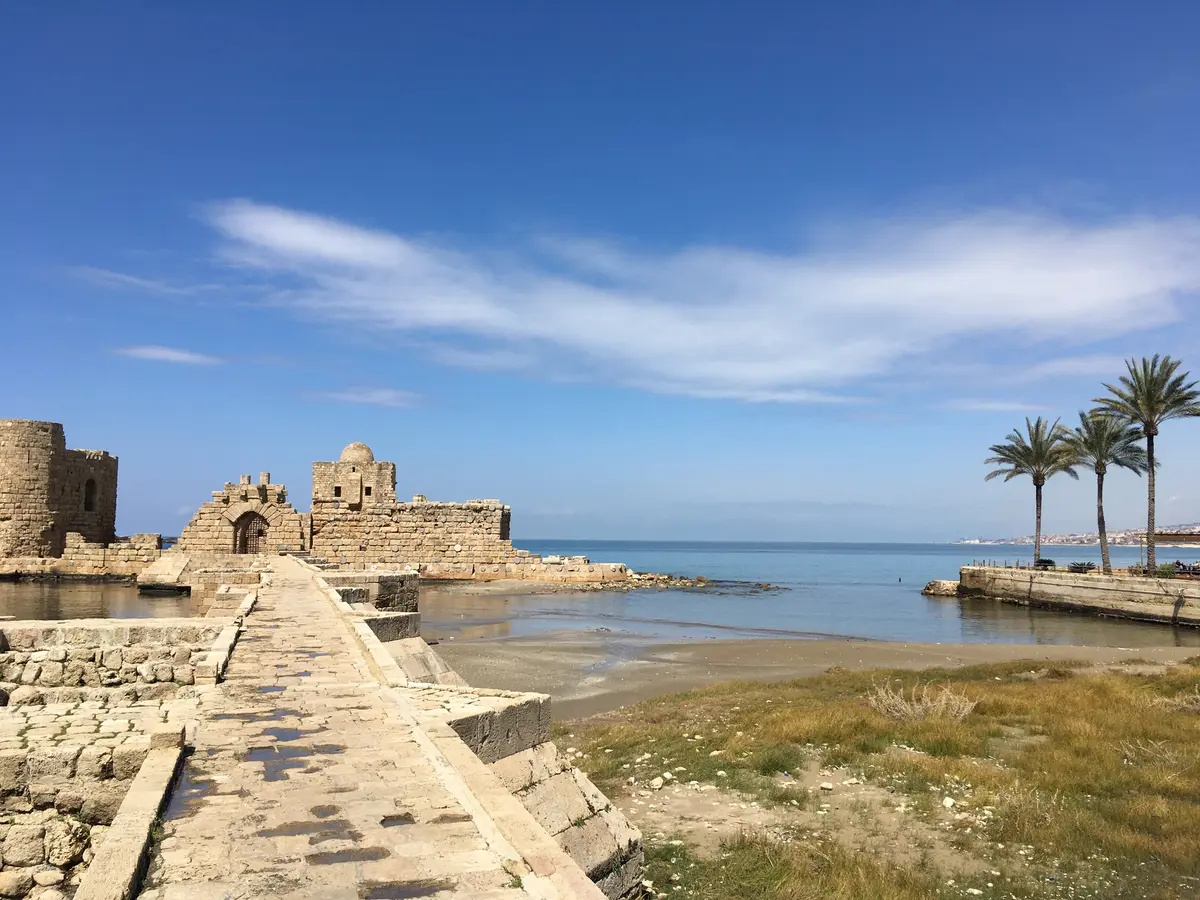
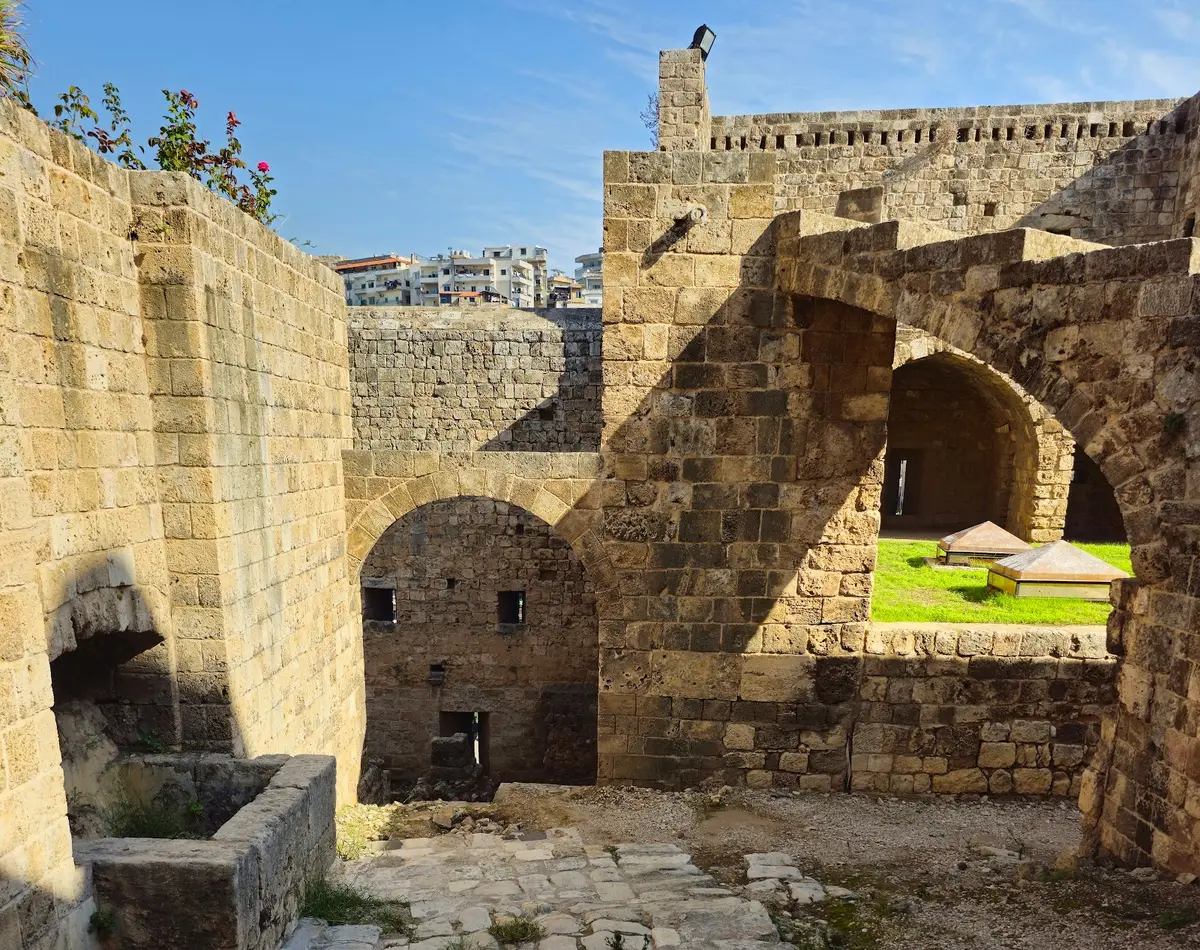
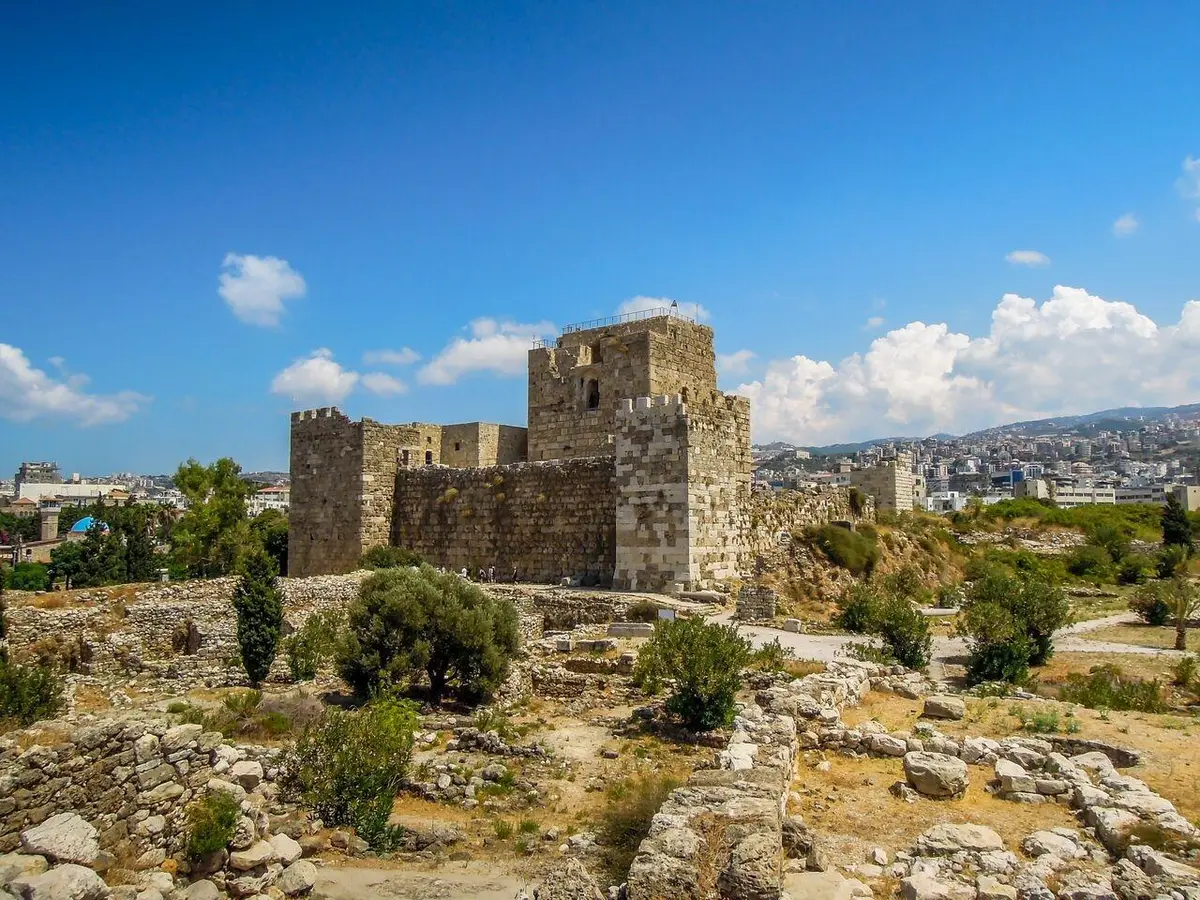
The Byblos archaeological site combines a 12th-century Crusader castle, Phoenician temples, a Roman colonnade, and the Royal Necropolis where the earliest known Phoenician alphabet inscription was found — all inside a single fenced complex overlooking the Mediterranean. Entry covers the whole site including the castle museum. Plan for at least 2 hours.
This is the main event of any Beirut to Byblos day trip. The layering is what makes it stand out among Lebanon’s archaeological sites: you walk past a 5,000-year-old Neolithic foundation, then a Phoenician temple column, then a Roman amphitheater, then climb a Crusader wall — in about a 10-minute loop.
Byblos Citadel and archaeological site
- Location: Old town, Byblos (Jbeil) — signposted from the old souk entrance
- Cost: Around $9–$15 per person, cash only (LBP accepted)
- Best for: History buffs, first-time visitors to the Levant, photographers
- Time needed: 2–3 hours
- Hours: Roughly 9 a.m. to 4:30 p.m., last entry about 45 minutes before close
Climb to the castle roof for the best combined view of the harbor, the ruins, and the coast. The Royal Necropolis — a set of nine shaft tombs cut into the rock — is down a narrow staircase and easy to miss; the sarcophagus of King Ahiram, where the Phoenician inscription was found, is now in the National Museum in Beirut, but the tomb itself is still here.
Two honest friction points. The site is almost fully unshaded — wear a hat and bring water, especially May through September. And the signage is patchy; if you want the history to land, either download an audio guide before you arrive or hire a local guide at the entrance ($20 for ~45 minutes, tip expected).
Pro Tip: Enter through the main gate but exit through the back trail that leads down toward the harbor. It bypasses the souvenir bottleneck and drops you right at the Phoenician port.
The old souk
The Byblos souk preserves its medieval street plan — narrow stone lanes, arched doorways, and no cars. The main drag sells standard tourist fare (magnets, Byblos-branded shirts, olive oil soap). The side alleys are where the real finds are.
Memoire du Temps on the main souk street is the authority on fossil fish from the Hjoula quarry inland — small framed specimens start around $30 and come with certificates. This is one of the few souvenirs from Lebanon that’s both unique and actually authentic.
Pro Tip: Skip the “antique” coins for sale near the citadel. Most are modern replicas sold to tourists who don’t know better.
The Phoenician harbor
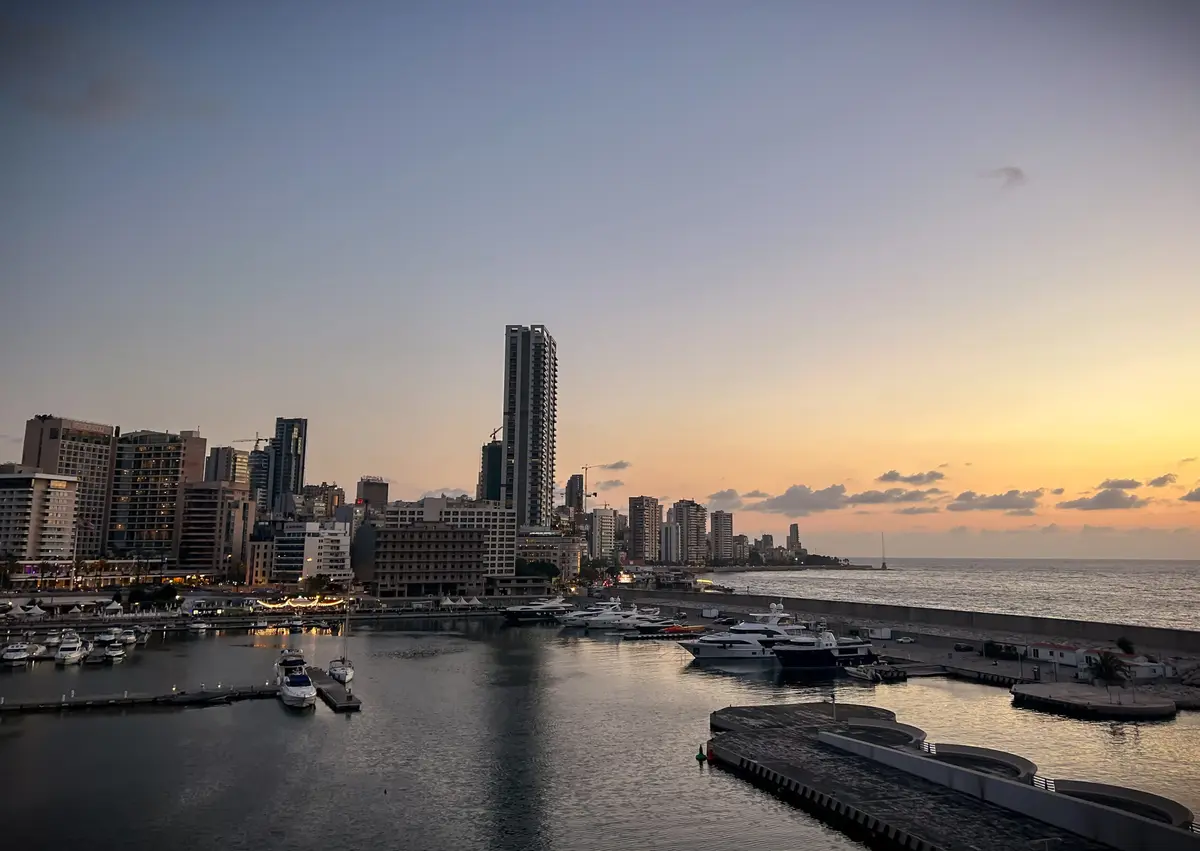
The harbor is one of the oldest continuously used ports in the world — Phoenicians shipped cedar from here to Egypt more than 4,000 years ago. Today it’s a small working marina with maybe a dozen fishing boats and a handful of restaurants along the curve.
Hiring a fishing boat for a 20-minute coastal ride runs $15–$25 for the whole boat (not per person) — negotiate at the dock. The angle is worth it: the medieval sea walls only reveal their real scale from the water.
Where should you eat in Byblos?
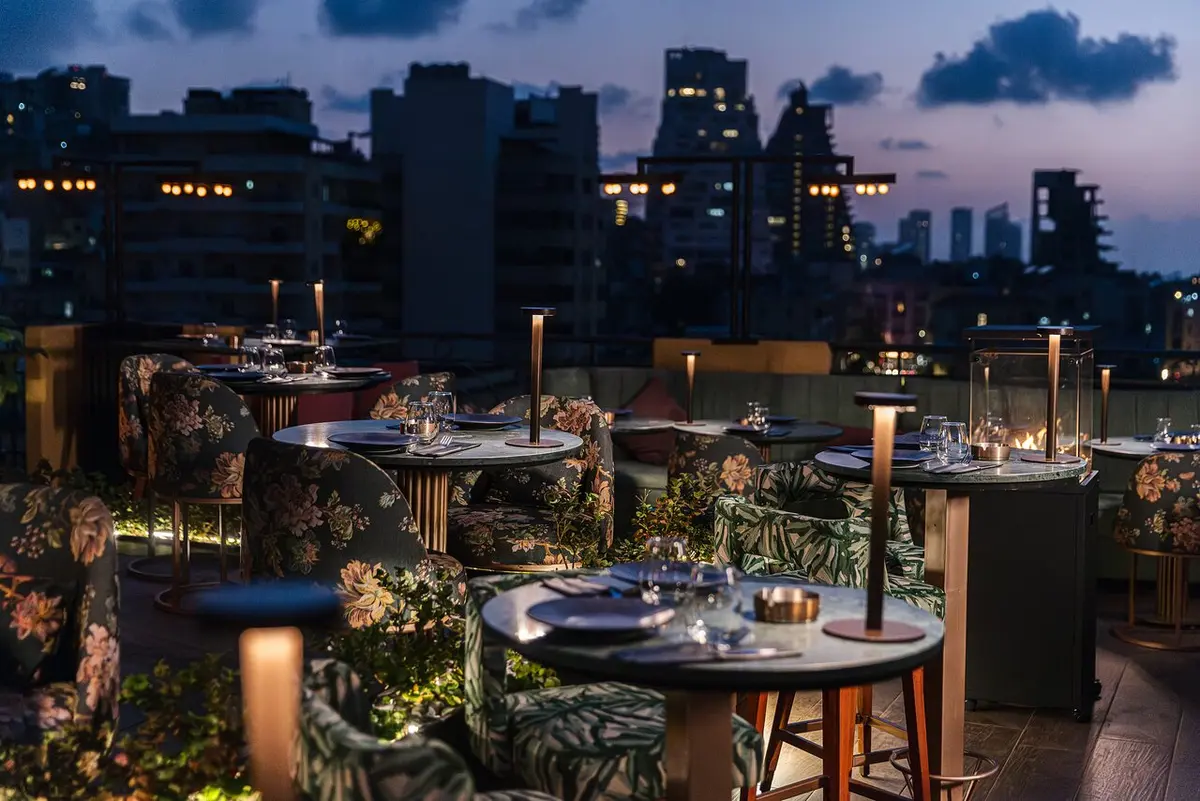
Eat at the harbor for the view, eat in the old town for the value. The harbor restaurants charge a premium — 30–50% above equivalent food inland — in exchange for sitting directly on the water at sunset. If you only have one meal, make it lunch at Bab El Mina and dinner at a souk-side spot.
Bab El Mina
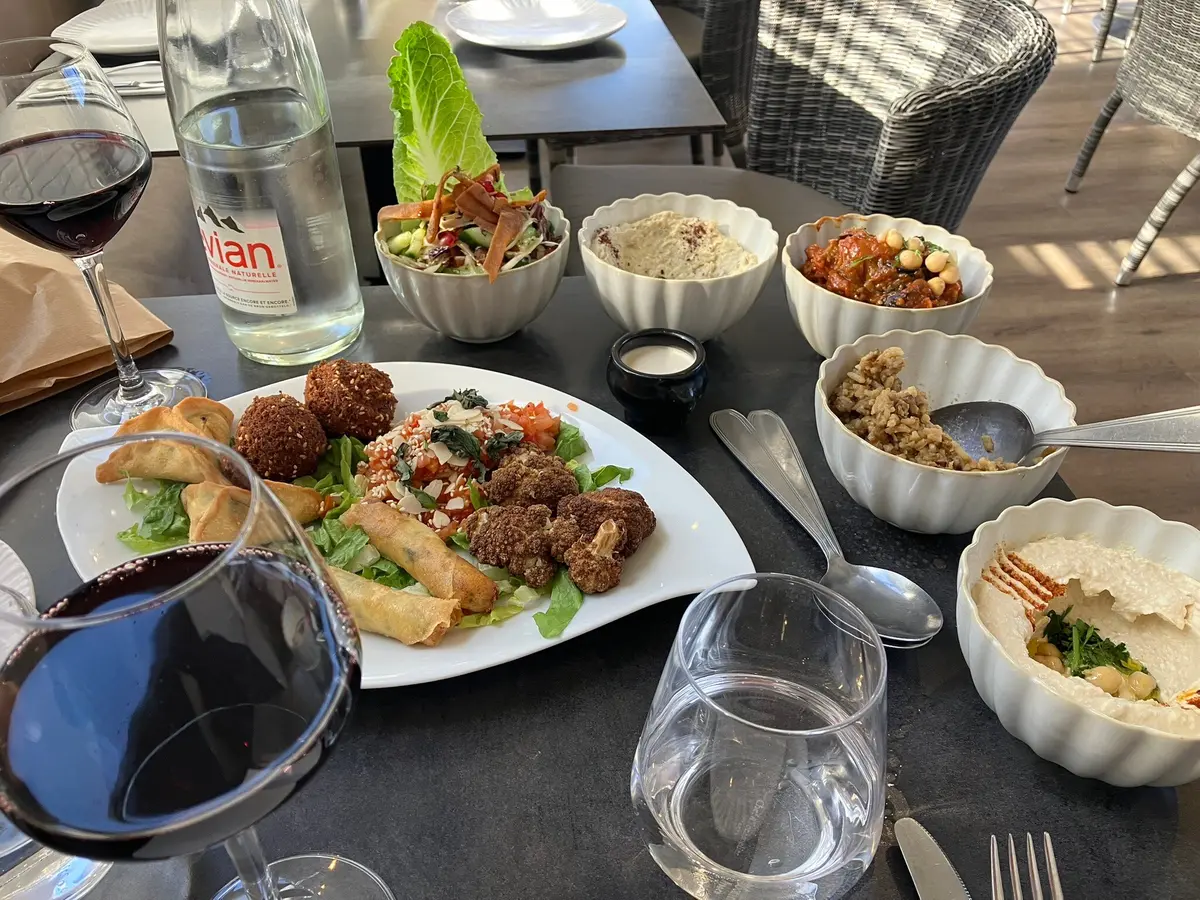
The honest seafood pick in the harbor. Fresh catch of the day, priced by the kilo, served with a standard mezze spread (hummus, tabbouleh, muhammara, warm bread). The restaurant sits right on the water — close enough that spray hits the table on windy afternoons.
- Location: Byblos old harbor, northern side
- Cost: $35–$60 per person for seafood mains and mezze
- Best for: Couples, seafood travelers, sunset
- Time needed: 1.5–2 hours
Pepe Abed’s Fishing Club
Famous for the history, not the food anymore. The “Wall of Fame” carries photos of Brigitte Bardot, David Niven, and a string of 1960s visitors. The food is average at current prices. Go for a drink on the terrace at sunset, absorb the photos, then eat elsewhere.
- Location: Byblos harbor
- Cost: $10–$15 for drinks; skip the dinner menu
- Best for: A pre-dinner cocktail with a view
- Time needed: 45 minutes
Feniqia
Romantic, atmospheric, inside the old souk. The Forest Hummus (topped with wild mushrooms and pine nuts) is the signature. Service runs slow — this is a sit-and-stay restaurant, not a quick stop before the bus.
- Location: Old souk, Byblos
- Cost: $25–$40 per person
- Best for: Couples, unhurried dinners
- Time needed: 1.5–2 hours
Budget options
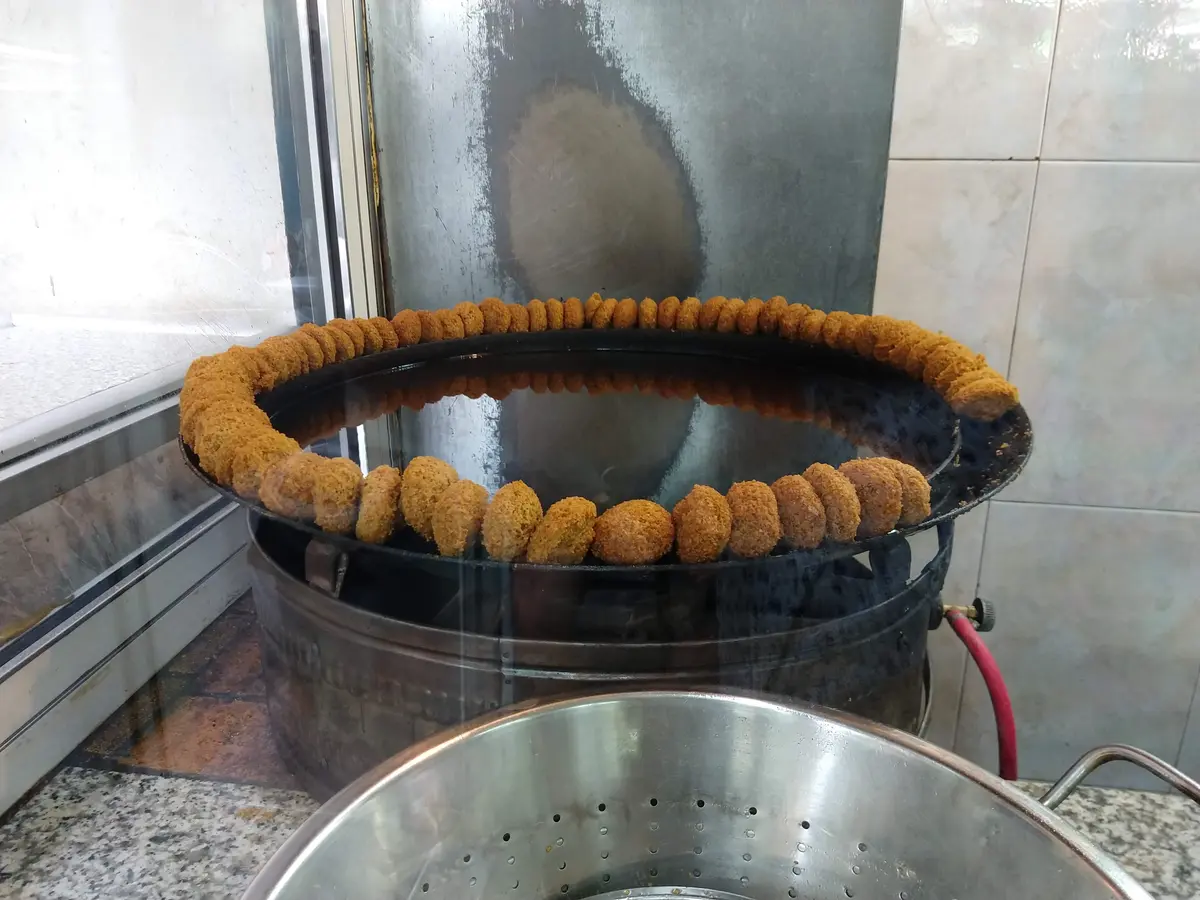
A classic Lebanese street food bite — shawarma or falafel sandwich — near the souk entrance runs $3–$5. Abou Abed’s (unmarked but obvious from the grill smoke on the main souk alley) does one of the better chicken shawarmas on the coast. Eat it walking, not sitting — the space is tight.
Pro Tip: The harbor restaurants quote fish prices per kilo, and a typical sea bream runs 500–700 grams. Confirm the total price before the kitchen starts cooking, not after it arrives at the table.
Is the Beirut to Byblos route safe for tourists?
The Beirut to Byblos corridor runs through Mount Lebanon Governorate and Keserwan — historically stable districts with continuous tourism infrastructure. For American travelers weighing Lebanon’s safety, this specific route is one of the safest in the country. The real risk is traffic, not crime. Use pedestrian bridges on the coastal highway and keep your passport on you at checkpoints.
Petty crime is rare on this route but not impossible — pickpocketing can happen in crowded souks. Violent crime against tourists is very uncommon. Solo female travelers generally report feeling safe here, though standard caution (avoid empty streets at night, cover shoulders inside religious sites) still applies.
Two specific rules:
- Do not photograph soldiers, checkpoints, or military vehicles. Even phone cameras pointed in the general direction can trigger a stop. Lower your phone when you approach a checkpoint.
- Carry your passport, not a copy. Checkpoints sometimes ask for the original, and a photocopy is not always accepted.
Pro Tip: If you’re following State Department or FCDO advisories, read the fine print. Blanket warnings often cover areas nowhere near the Beirut–Byblos route (southern Lebanon, the Bekaa Valley). The coastal corridor north of Beirut is consistently the lowest-risk zone in the country.
What’s a good one-day itinerary from Beirut to Byblos?
The best one-day itinerary leaves Beirut at 8:30 a.m., hits Jeita Grotto first, continues to Harissa via Teleferique, and arrives in Byblos by 2 p.m. for a late lunch and the archaeological site. Return to Beirut after sunset at the harbor. Total cost: $100–$180 per person with a private driver, or $30–$50 solo on public transport.
The full loop (private driver)
- 8:30 a.m. — Leave Beirut, drive to Jeita Grotto
- 9:00 a.m. — Enter Jeita, both galleries
- 11:00 a.m. — Drive to Jounieh, board the Teleferique
- 12:15 p.m. — Harissa summit, statue, viewpoint
- 1:30 p.m. — Drive to Byblos
- 2:00 p.m. — Lunch at Bab El Mina or a souk spot
- 3:30 p.m. — Archaeological site and citadel
- 5:30 p.m. — Old souk wander, fossil shopping
- 6:30 p.m. — Sunset drinks at Pepe Abed’s
- 8:00 p.m. — Return to Beirut
The budget version (public transport)
- 9:00 a.m. — LCC Bus No. 6 from Charles Helou to Byblos (~90 minutes)
- 10:45 a.m. — Walk to old town and souk
- 11:30 a.m. — Enter archaeological site
- 1:30 p.m. — Street-food lunch near souk entrance ($5)
- 2:30 p.m. — Harbor walk, medieval sea walls
- 4:00 p.m. — Public beach or harbor boat ride
- 6:30 p.m. — Sunset from the harbor
- 7:30 p.m. — Connexion bus back to Beirut
If you fall for the town and decide to stay the night, Byblos has a handful of small boutique hotels inside the old walls — handy for the next-morning ruins visit without the crowds.
Before you book
TL;DR: A Beirut to Byblos day trip is 25 miles of Mediterranean coast and 7,000 years of history packed into a single day. Bring crisp USD cash, grab a local SIM at the airport, and combine Jeita Grotto and Harissa with Byblos for a full-country loop. Shoulder season beats summer, harbor seafood beats tourist-trap fine dining, and the citadel earns every one of its two hours.
Skip the rushed version. Leave early, stay for sunset at the Phoenician harbor, and the day holds up against any coastal drive in the Mediterranean.
Have you made the Beirut to Byblos day trip, or are you still weighing the transport options? Drop your experience or questions in the comments — especially which harbor restaurant actually earned your money.