
A southeast road trip hands you mountains, marsh, and music on cheap Southern gas — from the 469-mile Blue Ridge Parkway to Charleston’s cobblestones, Savannah’s oaks, and the brass bands of New Orleans. This guide gives you one decisive two-week route, three ways to customize it, and every number you need to drive it well.
The Best Southeast Road Trip Route
The best southeast road trip is a two-week loop from Atlanta: north to Asheville and the Blue Ridge Parkway, through Great Smoky Mountains National Park, down to Charleston and Savannah on the coast, west to New Orleans, and back via Nashville. Seven days covers a focused half; two weeks is ideal.
The full loop runs roughly 2,000 miles (3,200 km) and crosses Georgia, the Carolinas, Tennessee, Alabama, Mississippi, and Louisiana. Atlanta works best as the fly-in hub because of cheap flights and a central position, but the loop also opens cleanly from other airports.
Fly-in hubs that work:
- Atlanta (ATL): cheapest flights, central, best all-around start
- Charlotte (CLT): closest to the mountains and the Parkway
- Nashville (BNA): best for a music-first trip
- Memphis (MEM): best if you want to start with Sun Studio and Beale Street
If you only have a week, run one half: the mountains-and-coast arc (Asheville, the Smokies, Charleston, Savannah) or the Tennessee music loop (Nashville, Memphis, Muscle Shoals).
I’ve driven this loop both clockwise and counter-clockwise, and starting in the mountains while you’re fresh makes the long Gulf driving days later feel earned rather than punishing.

How Many Days Do You Need for a Southeast Road Trip?
Two weeks is the sweet spot for a southeast road trip, letting you pair the mountains with the coast and a music city without rushing. Seven days covers one region well — either the Carolinas and coast or the Tennessee music loop. Three weeks lets you add the full Deep South and Gulf Coast.
Rough mileage by trip length:
- 7 days: about 900-1,200 miles (1,450-1,930 km), one region
- 14 days: about 2,000 miles (3,200 km), the full loop
- 21 days: about 3,000+ miles (4,800+ km), with the Deep South and Gulf Coast added
Cap your driving at four to five hours per day. Once you factor in city traffic, photo stops, and lunch, your real average drops to around 50 mph, so a “three-hour drive” eats most of a morning.
Pro Tip: Book at least three nights per region. On my first attempt I crammed four cities into five days and spent the whole trip in the car instead of in the places I’d flown down to see.
Coastal, Mountain, or Music: Which Route Is Right for You?
Three signature routes define the Southeast: the Coastal route (A1A, Lowcountry beaches, Charleston, Savannah), the Mountain route (Blue Ridge Parkway, the Smokies, Asheville), and the Music route (Nashville, Memphis, Muscle Shoals, New Orleans). Choose coastal for beaches and history, mountain for scenery and cool air, music for culture and nightlife.
The two-week loop above stitches all three together. If you have less time, commit to one archetype rather than sampling all three badly. Here’s how they compare:
| Route | Best For | Signature Drive | Peak Season | Days Needed | Fly-In Hub |
|---|---|---|---|---|---|
| Coastal | Families, beach lovers, history buffs | A1A Coastal Byway | Spring, early fall | 5-7 | Charleston (CHS) or Savannah (SAV) |
| Mountain | Couples, leaf-peepers, summer heat-escapers | Blue Ridge Parkway | October foliage | 5-7 | Asheville (AVL) or Charlotte (CLT) |
| Music | Culture and nightlife seekers | Natchez Trace Parkway | Spring, fall | 6-8 | Nashville (BNA) or Memphis (MEM) |
Friends always ask which route I’d repeat. For a first-timer, I send them to the mountains in October; the Parkway’s color is the single best thing I’ve seen in the region, and the cool air is a relief after a humid coastal summer.

The Two-Week Southeast Road Trip Itinerary, Day by Day
This two-week itinerary loops from Atlanta through Asheville, the Great Smoky Mountains, Charleston, Savannah, the Georgia coast, New Orleans, and Nashville before returning. Each leg keeps daily driving under five hours, with at least two nights in major cities so you experience them rather than just passing through.
Days 1-3: Atlanta to Asheville and the Blue Ridge Parkway
Pick up your rental in Atlanta and drive north to Asheville to start in the mountains while you’re fresh. Spend two nights here, using Asheville as a base for Biltmore, the breweries, and a slow morning on the Parkway.
- Atlanta to Asheville: about 3.5 hours, 200 miles (320 km)
- Stay: 2 nights in Asheville
- Don’t miss: a 60-80 mile section of the Blue Ridge Parkway south of the city
Days 4-5: Into the Great Smoky Mountains
From Asheville, drop into Great Smoky Mountains National Park via Cherokee and the Newfound Gap Road. Base in Gatlinburg or on the quieter Cherokee side, and drive the loop through Cades Cove early to catch wildlife before the cars stack up.
- Asheville to Cherokee: about 1 hour, 50 miles (80 km)
- Stay: 1-2 nights near the park
- Note: Clingmans Dome / Kuwohi tops out at 6,643 feet (2,025 m), the highest point in the park

Days 6-7: Charleston and the Lowcountry
Drive southeast to Charleston for two nights of history, shrimp and grits, and a walk along the Battery. Charleston rewards slow mornings — most of the old town is walkable, so park once and leave the car.
- Asheville/Smokies to Charleston: about 4.5 hours, 270 miles (435 km)
- Stay: 2 nights in Charleston
- Best for: history, food, walkable streets

Days 8-9: Savannah and the Golden Isles
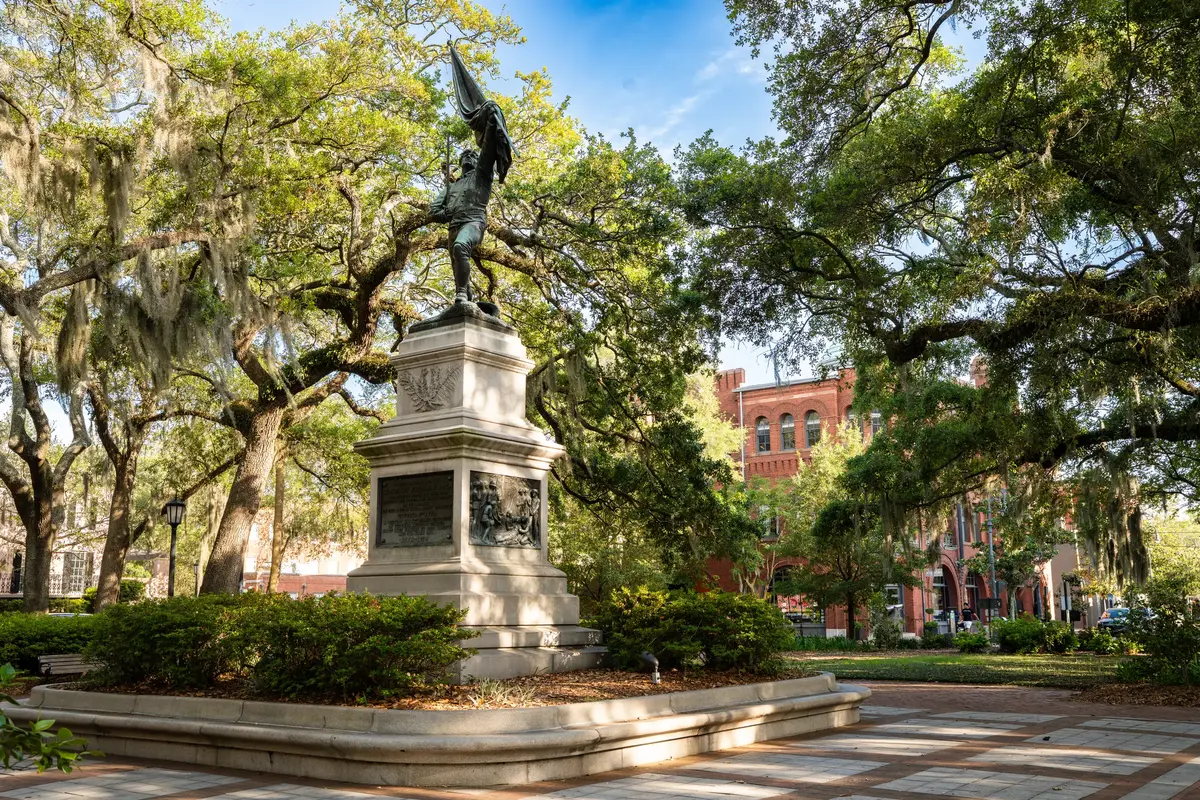
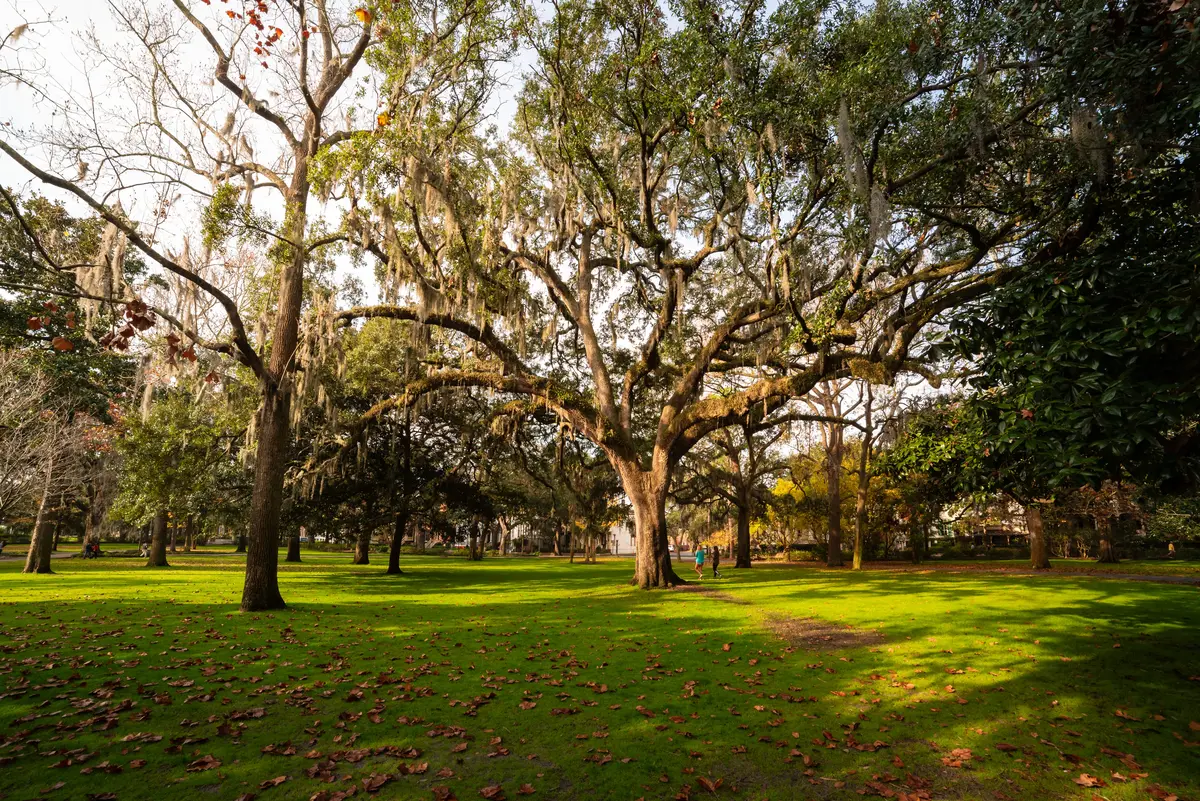
Savannah is a short hop south, built around oak-shaded squares draped in Spanish moss. Use a day to drive out to the Golden Isles — Jekyll, St. Simons, and Tybee Island — for marsh views and quiet beaches.
- Charleston to Savannah: 107 miles (172 km), about 2 hours 20 minutes via US-17/I-95
- Stay: 2 nights in Savannah
- Day trip: the Golden Isles or Tybee Island
Days 10-12: The Gulf Coast to New Orleans
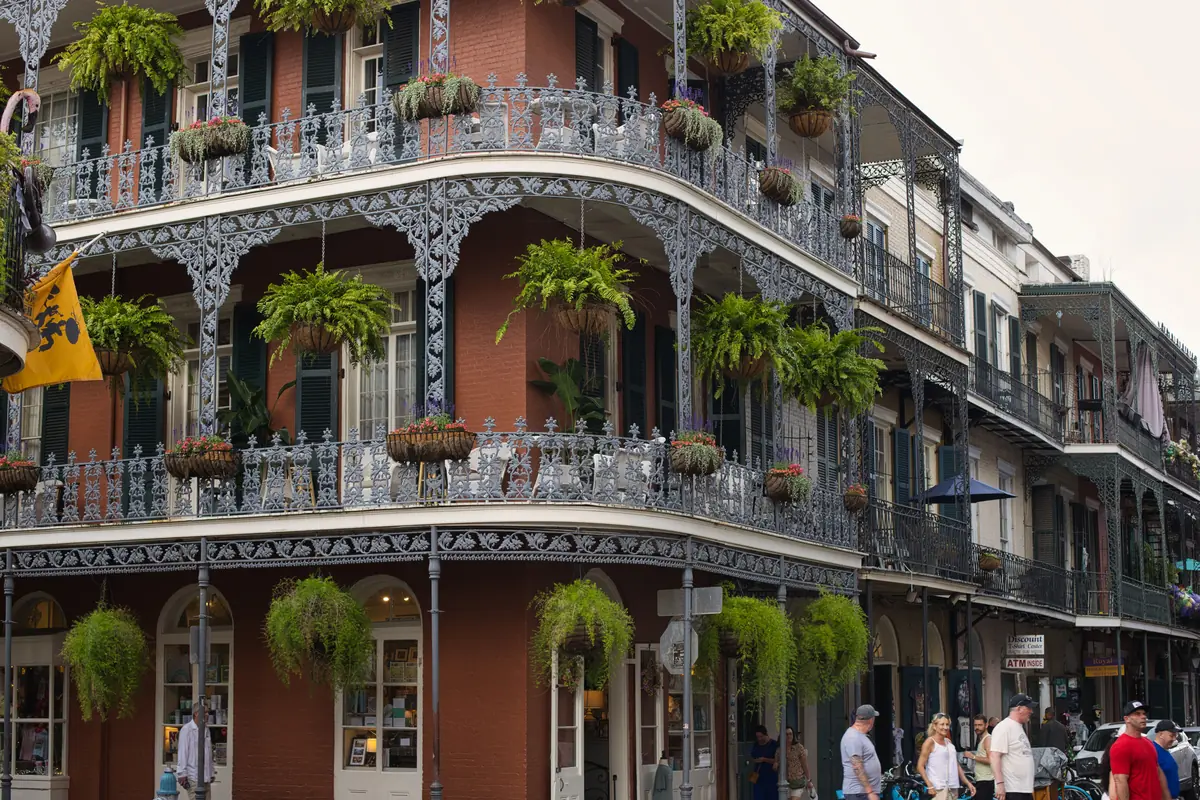
This is the long haul. Rather than push 620-650 miles (1,000-1,050 km) in one day, split it with a night in Mobile or Tallahassee, then arrive in New Orleans rested. Give the city two to three nights for the French Quarter, Frenchmen Street, and the food.
- Savannah to New Orleans: 620-650 miles (1,000-1,050 km), roughly 9.5-12 hours of driving
- Split: 1 night in Mobile or Tallahassee
- Stay: 2-3 nights in New Orleans
Pro Tip: Splitting the Savannah-to-New-Orleans drive saved our sanity. Doing it in one push the first time meant we arrived too wiped to enjoy the French Quarter that night.
Days 13-14: New Orleans to Nashville, Then Back to Atlanta
Head north to Nashville for two nights of honky-tonks and hot chicken. The fast way is the interstate (about 8 hours); the scenic way is the Natchez Trace Parkway, which trades speed for a quiet, billboard-free cruise. Close the loop back to Atlanta.
- New Orleans to Nashville: about 8 hours by interstate, longer via the Natchez Trace
- Nashville to Atlanta: about 3.5 hours, 250 miles (400 km)
- Stay: 2 nights in Nashville
The Best Scenic Drives on a Southeast Road Trip
The Southeast’s signature drives are the 469-mile Blue Ridge Parkway, the 444-mile Natchez Trace Parkway, the 72-mile A1A Coastal Byway, and the Tail of the Dragon — 318 curves in 11 miles on US 129. All reward a slow pace, and the Parkway and Trace have no gas stations, so fill up first.
Blue Ridge Parkway — 469 Miles of Overlooks
The Parkway is the headliner: more than 280 overlooks, mile-marker navigation instead of exits, and a speed limit that forces you to slow down and look. It links Shenandoah’s Skyline Drive to Cherokee, with Mabry Mill, the Linn Cove Viaduct, and Mount Mitchell along the way.
- Length: 469 miles (755 km), Shenandoah to Cherokee
- Speed limit: 45 mph, dropping to 25-35 mph in spots
- Cost: free to drive
- Gas: none on the Parkway — fuel up before you start
- Best for: overlooks, fall foliage, an unhurried scenic day
Pro Tip: Don’t try to drive all 469 miles end to end. At 45 mph that’s 12-15 hours of seat time — a hand-picked 60-80 mile section around Asheville delivers about 90% of the payoff.

Natchez Trace Parkway — 444 Miles, No Billboards
The Trace runs from Natchez, Mississippi, to Nashville with no commercial trucks, no billboards, and a steady 50 mph pace. It’s the calm counterpart to the Parkway and a slower, prettier alternative to the interstate between New Orleans and Nashville.
- Length: 444 miles (715 km), Natchez to Nashville
- Speed limit: 50 mph, no commercial traffic
- Cost: free
- Gas: none on the route — exit to nearby towns
- Best for: quiet, distraction-free cruising
Tail of the Dragon — 318 Curves in 11 Miles
This is a driving road, not a sightseeing road. US 129 at Deals Gap packs 318 curves into 11 miles (18 km) on the NC-TN line, drawing sports cars and motorcycles. The blind curves regularly produce fresh crash debris, so keep your eyes forward and pull off only in marked areas.
- Length: 318 curves in 11 miles (18 km), US 129 at Deals Gap
- Cost: free
- Services: none on the road
- Best for: confident drivers and riders — not casual sightseeing
Cherohala Skyway — The Calmer Family Alternative
If the Dragon sounds like too much, the Cherohala Skyway nearby gives you mountain views over 43 miles (69 km) of gentler curves. It’s the family-friendly version of the same area, with broad overlooks and far less traffic.
- Length: 43 miles (69 km), National Scenic Byway
- Best for: families wanting mountain scenery without white-knuckle curves
A1A — The Atlantic Coast Byway
On the coastal route, the A1A Scenic & Historic Coastal Byway runs 72 miles (116 km) of mostly two-lane road past dunes and through St. Augustine’s old town, the oldest continuously occupied European-founded city in the country.
- Length: 72 miles (116 km), Atlantic coast
- Best for: beaches, St. Augustine’s historic core
Pro Tip: On the Parkway my phone went dark for an hour past Mount Mitchell. Cell service quits exactly where the overlooks get good, so download offline maps and carry a paper one.
When Is the Best Time for a Southeast Road Trip?
The best time for a southeast road trip is spring (March-May) or fall (September-October), when temperatures sit in the 70s°F (low-to-mid-20s°C) and humidity eases. Avoid June-August heat, and note the Atlantic hurricane season runs June 1 to November 30, peaking around September 10 along the coast.
What each season actually feels like:
- Spring (March-May): 70s°F (low-to-mid-20s°C), blooms and festivals like New Orleans Jazz Fest and Savannah’s St. Patrick’s Day
- Summer (June-August): highs of 86-104°F (30-40°C), heavy humidity, hurricane season opening
- Fall (September-October): comfortable temps, foliage peaking late October to early November in the southern Appalachians
- Winter (December-February): mild on the Gulf, but cold with possible snow at Parkway elevations
Per NOAA’s National Hurricane Center, the Atlantic season peaks around September 10, with most activity between mid-August and mid-October. If you travel the coast in fall, build in one flex day.
Pro Tip: We hit the coast in early October once and watched a tropical storm reroute three days of plans. Now I always pad a fall coastal trip with a spare day and refundable hotel bookings.
How Much Does a Southeast Road Trip Cost?
A southeast road trip costs roughly $120-$250 per person per day depending on style. Budget travelers can manage near $120 a day with motels and cooking; mid-range couples spend $200-$250 a day on hotels, restaurants, and attractions. Fuel is a relative bargain, since Gulf and Southeast states are among the nation’s cheapest.
Here’s how the daily spend breaks down per person:
| Expense | Budget (~$120/day) | Mid-Range (~$200-250/day) | Luxury ($350+/day) |
|---|---|---|---|
| Lodging | $70-120 motels | $120-240 hotels | $250-420 |
| Food | cook and fast-casual, ~$25 | restaurants, ~$60 | $100+ |
| Fuel (per person) | ~$15-25 | ~$20-30 | ~$30 |
| Attractions | mostly free parks, ~$10 | $30-50 | $60+ |
A few real numbers to plan around:
- Gas: the national average sits in the high-$3s to around $4 a gallon, with Southeast and Gulf states like Georgia and Mississippi consistently among the cheapest in the country
- Great Smoky Mountains National Park: free to enter, but a Park It Forward parking tag is required for any vehicle parked over 15 minutes — $5 a day, $15 a week, or $40 a year, per vehicle
- Biltmore Estate: House & Grounds admission starts around $80 for adults; a grounds-only ticket runs from about $50, kids 16 and under are free through Labor Day, and booking online saves $10 a ticket (a timed Biltmore House reservation is required)
- Rental cars: roughly $50-70 a day, plus one-way drop fees if you don’t return to the same airport
The budget hack most guides skip: because the Smokies are free to enter and the Parkway is free to drive, an entire mountain leg can cost almost nothing beyond gas, a $5 parking tag, and a place to sleep.
Pro Tip: Our biggest surprise cost wasn’t gas — it was downtown parking in Charleston and Savannah, where garages ran far more per night than the cheap fuel ever did. Book a hotel with included parking in those two cities.
Music, Heritage, and Food Along the Route
The Southeast is America’s musical heartland: Nashville’s Grand Ole Opry and Broadway honky-tonks, Memphis’s Sun Studio and Beale Street, and Alabama’s FAME Studios in Muscle Shoals form a “Music Triangle.” The U.S. Civil Rights Trail threads Memphis, Montgomery, Selma, and Birmingham, while the food shifts from barbecue to Lowcountry to Creole.
The Music Triangle: Nashville, Memphis, Muscle Shoals
Memphis is where to start the music thread. Stand on the X that marks Elvis’s spot on the Sun Studio floor, walk through the Stax Museum of American Soul Music, and finish at Graceland. Nashville adds the Ryman Auditorium, RCA Studio B, and the neon of Broadway; Muscle Shoals adds FAME Studios and the Swampers who backed Aretha Franklin.
Pro Tip: Standing on the X on the Sun Studio floor is touristy and I still got chills. Go for the first morning tour — it beats both the crowds and the Memphis heat.
The U.S. Civil Rights Trail
The same drive doubles as a civil rights pilgrimage. The National Civil Rights Museum sits inside the Lorraine Motel in Memphis, where Dr. Martin Luther King Jr. was assassinated, and the trail continues through Montgomery, Selma, and Birmingham. Budget real time here — these stops reward slow, attentive visits over quick photo stops.
What to Eat: Barbecue, Lowcountry, and Creole
The food changes as fast as the music. Plan to eat:
- Memphis barbecue and Nashville hot chicken in Tennessee
- Charleston shrimp and grits and Lowcountry boil on the Carolina coast
- New Orleans gumbo, jambalaya, and beignets, plus Cajun boudin along the I-10 corridor
One Stop to Skip
Skip Helen, Georgia’s manufactured Bavarian kitsch if you’re short on time. Drive the extra 40 minutes to Tallulah Gorge or the Cherohala Skyway instead — both deliver real scenery rather than a theme-park version of it.
Is a Southeast Road Trip Worth the Drive?
Yes — a southeast road trip is one of the best-value drives in America, packing mountains, beaches, world-changing music, and legendary food into short, cheap-gas distances. For the best trip, drive the two-week Atlanta loop in spring or fall, cap daily driving near five hours, and book coastal cities and the Smokies well ahead.
TL;DR: Drive a two-week loop from Atlanta through Asheville, the Smokies, Charleston, Savannah, New Orleans, and Nashville — about 2,000 miles for roughly $120-$250 per person per day. Go in spring or fall, keep daily driving under five hours, and split the long Gulf legs to avoid arrival burnout.
Three trips in, the Southeast is the region I keep coming back to. Nowhere else lets me eat barbecue in the mountains and beignets by the Gulf in the same week. Which leg would you build your trip around first — the coast, the mountains, or the music? Tell me in the comments.