East Coast fishing covers more than 2,000 miles of Atlantic shoreline, where a striped bass off a Cape Cod beach and a mahi-mahi trolled off the Florida Keys belong to the same coast. This guide ranks where to go, when to go, what it costs, and how to land fish without owning a boat.
The best fishing runs from Maine to the Florida Keys, with spring and fall the prime windows coastwide thanks to the striped bass migration. The anchor destinations are Montauk, Cape Cod, Chesapeake Bay, the Outer Banks, Hilton Head and the Florida Keys. Florida ranks as the single best fishing state — and, not coincidentally, the most expensive one to fish.
Where Is the Best Fishing on the East Coast?
The best East Coast fishing destinations are Montauk (NY), Cape Cod (MA), Chesapeake Bay (MD/VA), the Outer Banks (NC), Hilton Head (SC) and the Florida Keys — each with its own mix of inshore, offshore and shore fishing. Montauk calls itself the “Fishing Capital of the World”; the Keys deliver both flats and bluewater.
Here is what each anchor spot does best, and how you reach the fish if you don’t have a boat.
- Montauk, NY: Striped bass, bluefish and offshore tuna. The port is where Frank Mundus and Donnie Braddick landed a 3,427-pound great white on rod and reel — a fish the IGFA refused to certify, because a dead whale in the water was doing the chumming. The official record still belongs to a 2,664-pound shark caught off Australia. Access: charters, party boats, and surfcasting off the Point.
- Cape Cod, MA: Striped bass and giant bluefin tuna. The peninsula reaches about 65 miles (105 km) into the Atlantic, which is why the fish come to you. Access: surf from the backside beaches and the Cape Cod Canal, plus offshore charters.
- Chesapeake Bay, MD/VA: Rockfish (striped bass) in the largest US estuary, with White Marlin Open billfish offshore. Access: light-tackle guides, bridge piers, and the Bay’s many public ramps.
- Outer Banks, NC: Gulf Stream yellowfin and wahoo 30-50 miles (48-80 km) out, plus Cape Point surf. Access: Oregon Inlet charters and 4WD surf beaches.
- Hilton Head, SC: Redfish, speckled trout and tarpon in Calibogue Sound. Access: inshore guides and marsh-edge docks.
- Florida Keys: A 125-mile (201 km) island chain with tarpon, mahi-mahi and sailfish. Access: flats skiffs, reef charters, and bridge fishing.
Pro Tip: The walk out to Cape Point is a calf-burning sand slog from the nearest public access. Bring a 4WD vehicle and a beach permit, or budget a slow half-mile haul with your cooler and rods.
New England: Cape Cod, Montauk and the Striper Coast
Six months. That is the working saltwater season up here — roughly May through October — and striped bass headline every week of it, from Cape Cod’s backside beaches to Montauk Point. Giant bluefin tuna and bluefish fill out the bite. Surfcasting is a regional craft, practiced from before dawn until dark.
The names worth knowing are the Cape Cod Canal, Nauset Beach and Race Point on the Cape, and Montauk Point for the September-to-October fall run. The bluefin fishery off Cape Cod is the same one that made Gloucester’s commercial fleet famous on television.
Pro Tip: Seals patrol the backside beaches and herd your fish off the bar. Locals have shifted to the Cape Cod Canal and the Bay flats, where the seals are thinner and the current does the work for you.
The Mid-Atlantic: Chesapeake Rockfish and the Canyon Run
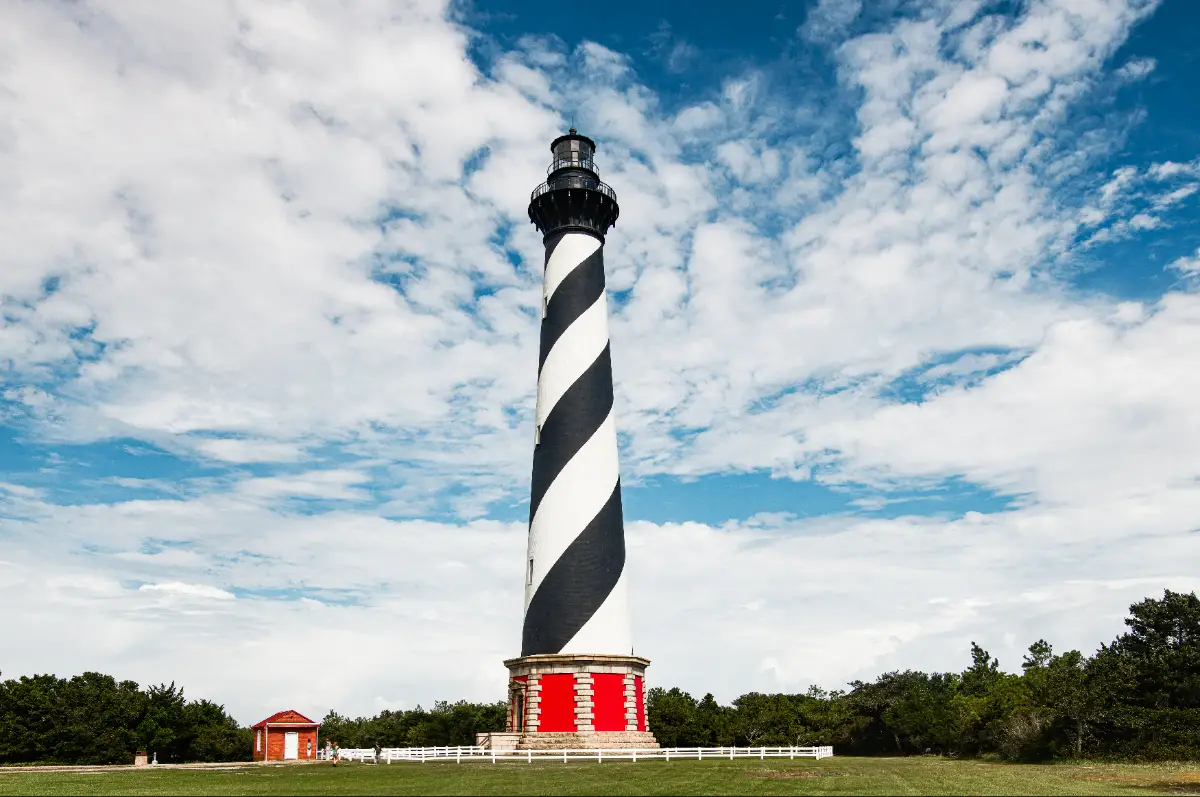
The Mid-Atlantic centers on Chesapeake Bay rockfish and the offshore canyons off Maryland and North Carolina. The Outer Banks’ Gulf Stream access, 30-50 miles (48-80 km) out, makes it one of the most productive offshore zones on the coast, while Cape Point is a surf-fishing landmark in its own right.
The Norfolk and Baltimore Canyons sit 60-80 miles (97-129 km) offshore and draw the White Marlin Open fleet to Ocean City. Inshore, rockfish run best in spring and fall, with Oregon Inlet and Cape Hatteras the launch points for the offshore run.
Pro Tip: The Hatteras Inlet ferry crossing runs about 40 minutes each way. Plan your tide around the schedule so you arrive fishing the drop instead of idling in the vehicle queue.
The South Atlantic: Hilton Head, Charleston and the Keys
From Hilton Head’s marshes to the Florida Keys’ flats, the South Atlantic offers year-round fishing for redfish, speckled trout, tarpon and snook inshore, plus mahi-mahi, sailfish and snapper offshore. Florida is the top-ranked fishing state in the country.
The Keys run about 125 miles (201 km) and start roughly 15 miles (24 km) from Miami, with daytime swordfishing happening in 1,500-1,800 feet (457-549 m) of water. Closer to shore, Hilton Head’s May River winds about 15 miles (24 km) inland, and Charleston’s Shem Creek is a reliable redfish address.
Pro Tip: Poling the flats in Florida Bay is close to silent — the only sound is water dripping off the push pole. Talk in a low voice and keep the deck clear, because a clanging hatch will spook a tarpon from forty feet away.
What Is the Best Time of Year to Fish the East Coast?
Spring and fall are the best times to fish the East Coast, because the striped bass migration brings fish close to shore twice a year. Summer favors offshore tuna and billfish, while winter pushes the action south to Florida for sailfish and inshore reds. Time trips to water temperature, not the calendar.
Stripers start in Virginia in late March and reach Maine by June, then turn south from September through November. Fish move when the water hits 48-55°F (9-13°C) and spawn at 54-68°F (12-20°C). Summer belongs to the offshore canyons, and the winter sailfish bite off Florida holds through the cold months.
There is a second reason to fish the shoulder months, and it has nothing to do with fish. Charter rates peak in summer and around holidays, running roughly 20-30% above off-season pricing. The spring and fall striper windows sit in the cheaper shoulder band. The best fishing on this coast and the best charter pricing land in the same weeks.
Pro Tip: A single warm week can lift a shallow tidal river 3-5°F (about 2-3°C) and trigger the run overnight. Watch the water temperature, not the date — and when bunker (menhaden) show up, the bass are usually minutes behind.
East Coast Fishing Calendar: What to Catch by Month
Use this month-by-month calendar to match species to season. Spring means migrating stripers and Florida tarpon, summer brings offshore tuna, mahi-mahi and billfish, fall delivers the striper run, and winter is prime for Florida sailfish and inshore redfish.
| Month | New England | Mid-Atlantic | South Atlantic |
|---|---|---|---|
| January | Offshore cod, tautog | Tautog, offshore wreck | Sailfish, redfish (FL) |
| February | Quiet, offshore cod | Tautog | Sailfish, snook (FL) |
| March | Winter flounder starts | Early stripers (VA), shad | Cobia begins, tarpon |
| April | Stripers arrive south | Spring rockfish, shad | Cobia, tarpon |
| May | Striped bass, bluefish | Rockfish, black drum, cobia | Tarpon, mahi-mahi begins |
| June | Striped bass, bluefin, fluke | Flounder, sea bass, cobia | Tarpon, mahi-mahi, snapper |
| July | Bluefin tuna, fluke, sea bass | Canyon tuna and marlin, flounder | Mahi-mahi, sailfish, reef snapper |
| August | Bluefin, false albacore | White marlin, mahi-mahi, flounder | Mahi-mahi, snapper, tarpon |
| September | Fall striper run begins, albies | Red drum (OBX), king mackerel | Bull redfish, flounder peak |
| October | Peak striper and bluefish run | Striped bass, speckled trout, red drum | Redfish, trout, king mackerel |
| November | Late stripers, tautog | Striped bass migration, tautog | Redfish, trout, sailfish begins |
| December | Offshore cod, tautog | Tautog, offshore | Sailfish, redfish, snook (FL) |
When Is the Best Time to Fish for Striped Bass?
The best time to fish for striped bass is during the spring migration (March-June) and the fall run (September-November), when fish feed aggressively close to shore. Stripers move when water reaches 48-55°F (9-13°C) and spawn at 54-68°F (12-20°C) in rivers like the Hudson, Delaware and the Chesapeake tributaries.
An estimated 70-90% of the entire Atlantic striped bass stock uses the Chesapeake Bay to spawn, with the Hudson River contributing roughly 15-20%. The spawn peaks in April and May, and dawn and dusk are the highest-percentage hours. Live eels, bunker and bucktail jigs all produce when the fish are close.
How Much Does an East Coast Fishing Charter Cost?
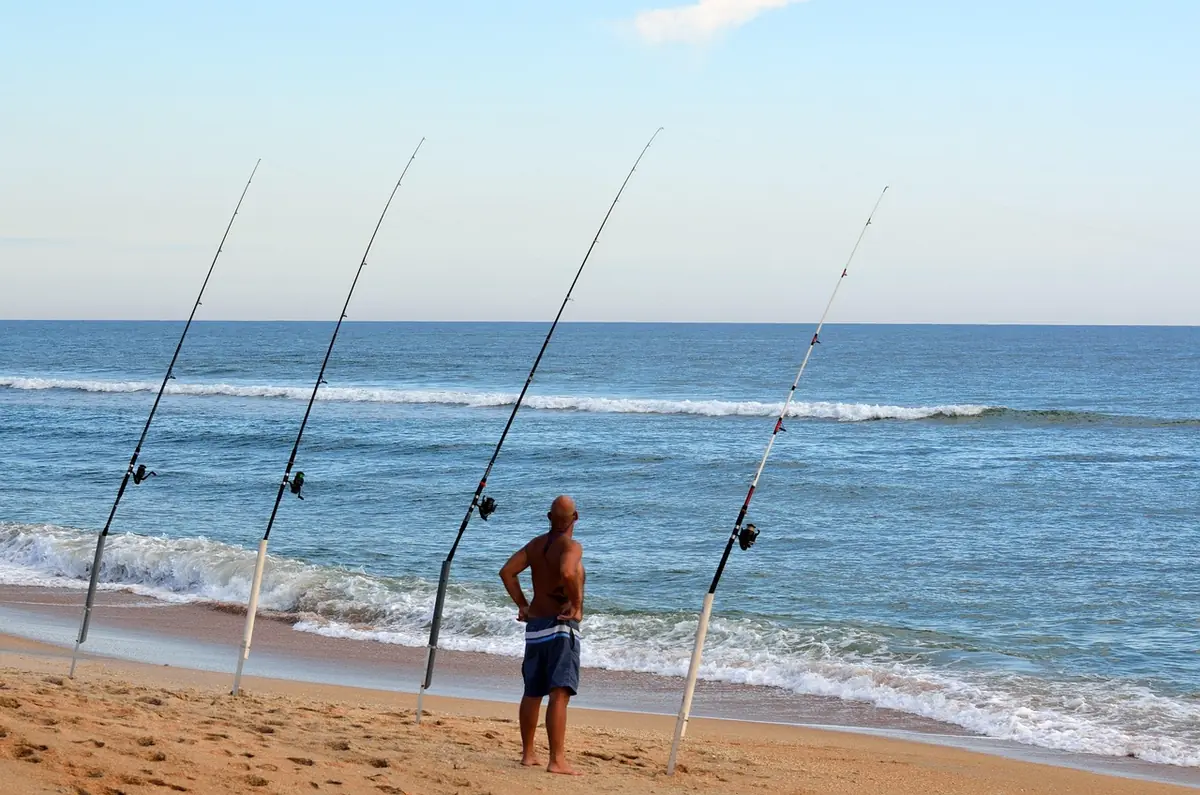
An East Coast fishing charter typically costs $50-$150 per person on a half-day party (head) boat, while a private half-day inshore charter runs about $300-$600 for up to six anglers. Full-day offshore trips climb to $800-$2,500 and beyond. Most trips include rods, bait, tackle, ice and the boat’s license.
Across a thousand-plus listed charters nationally, the median starting price sits near $573. Here is how the common options compare:
- Party (head) boat, half-day: roughly $50-$150 per person; you share the rail with strangers.
- Private inshore charter, half-day: about $300-$600 for the boat, up to six anglers. Split six ways, that is under $100 each.
- Private offshore charter, full-day: $800-$2,500+, driven by fuel and the run to the fishing grounds.
- Tipping: 15-20% of the trip price, split between captain and mate. On an $800 half-day that is $120-$160.
- Season: peak summer and holiday weeks cost 20-30% more than the off-season.
Party-boat etiquette is its own thing, and nobody warns first-timers. The rail is elbow-to-elbow and tangles with the person beside you are part of the deal, not a sign anyone did something wrong. Reel in fast when someone near you hooks up. And book popular captains early — Martha’s Vineyard guides in particular fill their calendars months out.
How Can You Fish the East Coast Without a Boat?
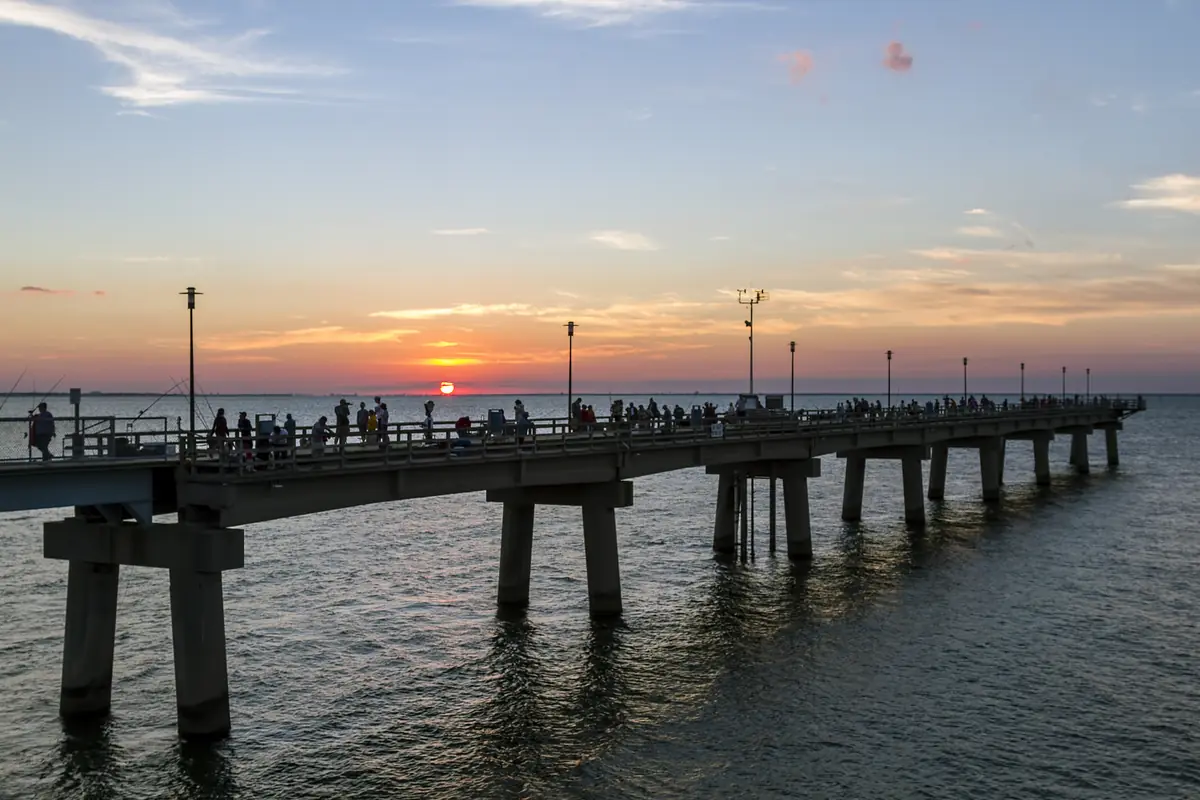
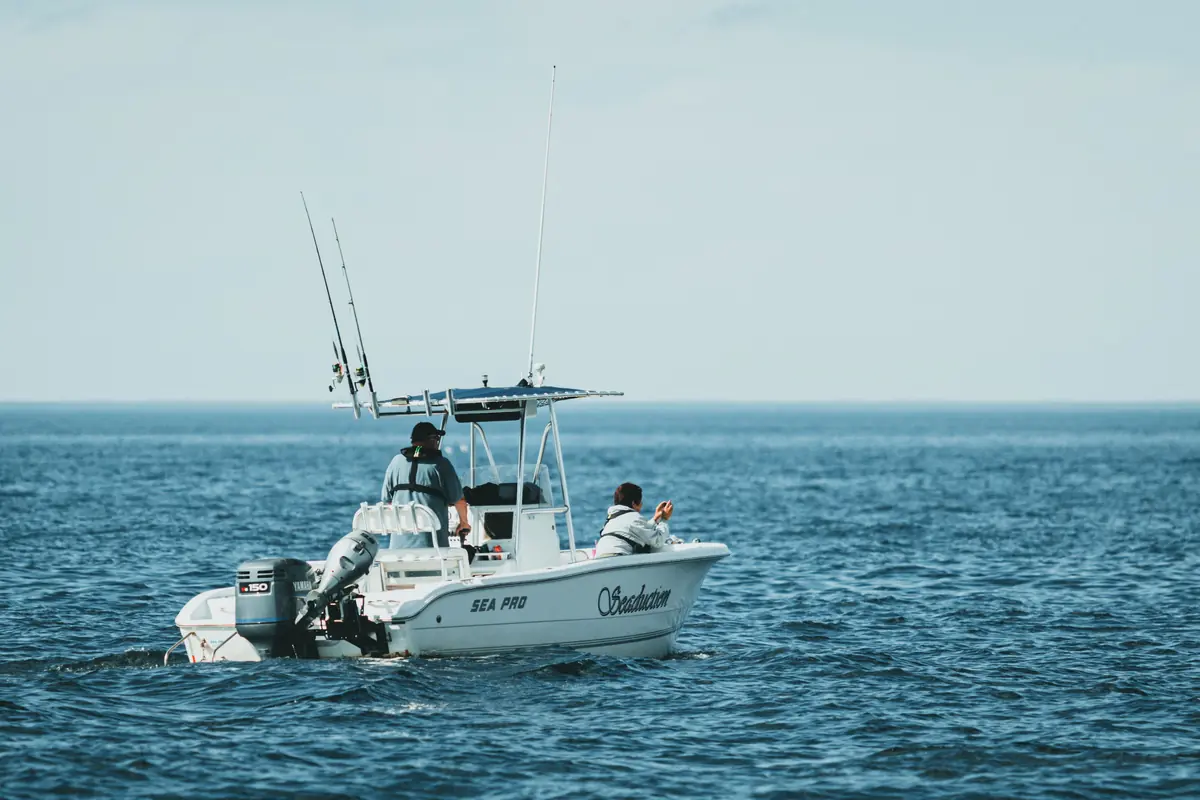
You can fish the East Coast without a boat from piers, surf, bridges and jetties. Public fishing piers like Jennette’s Pier in Nags Head charge $15 a day and cover your license under a blanket permit, which makes them the cheapest way to reach productive saltwater.
The no-boat options stack up like this:
- Jennette’s Pier, Nags Head, NC: $15 adult / $10 child daily, $2 to walk on, $12/day rod rental. The pier runs 1,000 feet (305 m). Multi-day passes cost $42 for three days and $95 for seven — worth the math only if you fish more than six days, since seven single days run $105. Cobia and king mackerel fishing needs a separate $15 pass.
- Seagull Pier, Chesapeake Bay Bridge-Tunnel, VA: about 625 feet (190 m) over deep, current-swept water.
- Inlets and jetties: Indian River Inlet (DE) and Sebastian Inlet (FL) put you on moving fish for free.
- Surf casting: no pier fee at all — just a beach, a license where required, and an 8-16 foot (2.4-4.9 m) rod.
Pro Tip: At dawn on Jennette’s Pier the regulars stake out the far end before sunrise with dock carts full of rods, coolers and pin rigs. If you want the prime corner during the fall run, you are getting there in the dark.
Best Surf Fishing Spots on the East Coast
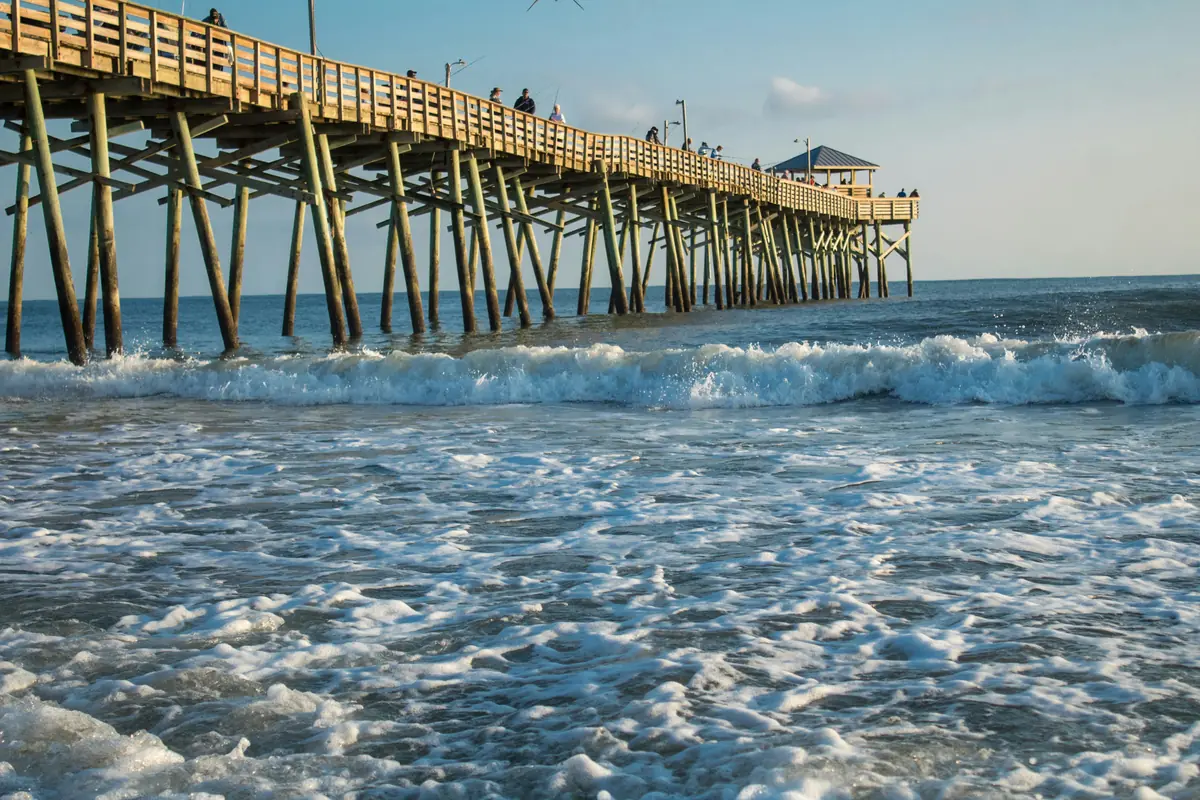
The best surf fishing is at Cape Point on the Outer Banks, where the Labrador Current meets the Gulf Stream, and along Cape Cod’s backside beaches during the striper run. Both reward anglers who read sandbars, troughs and tides instead of casting blindly into open water.
Cape Point needs a 4WD vehicle and a beach driving permit, with Oregon Inlet nearby for more access. On Cape Cod, Nauset Beach and Race Point are the names to know. An 8-16 foot (2.4-4.9 m) surf rod handles the distance, and the outgoing tide is usually the most productive window.
Pro Tip: Driving onto the sand at Cape Point, you air down your tires to about 20 psi, or you bury the truck within fifty yards of the ramp. Carry a tire gauge and a shovel; the rangers will not.
Do You Need a License to Fish the Atlantic Coast?
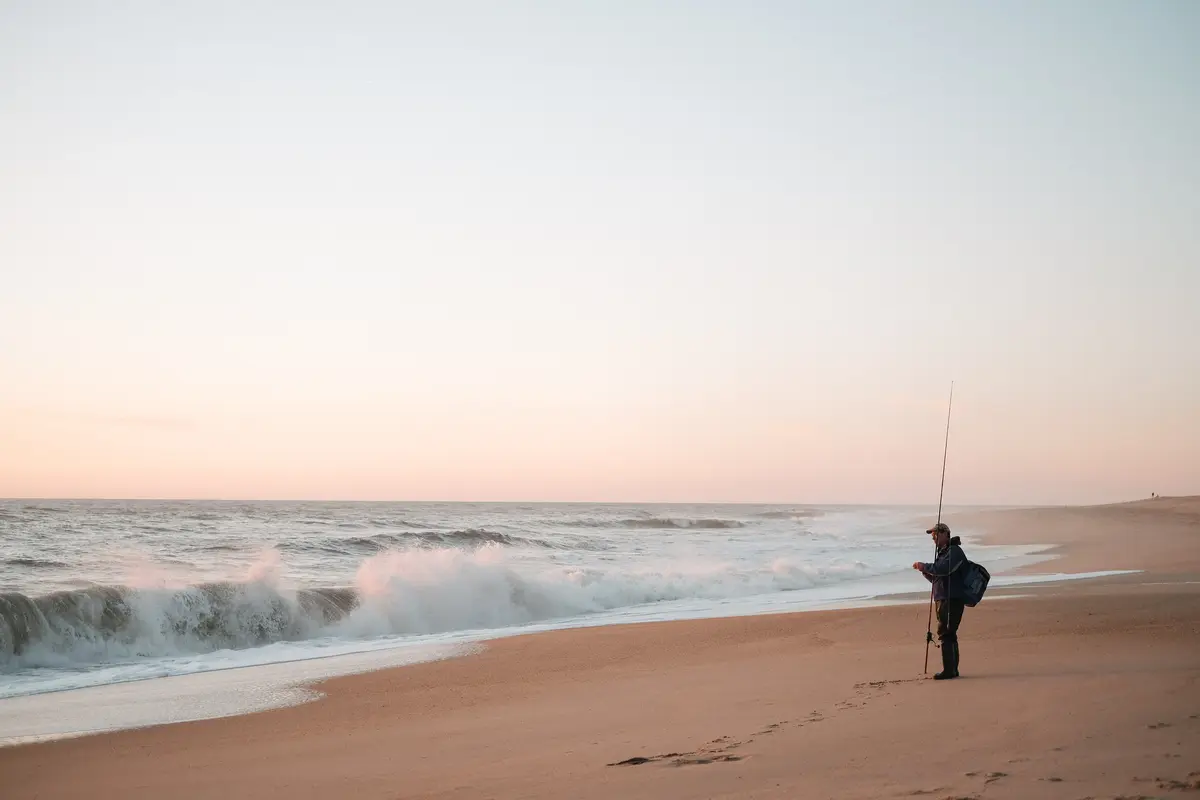
Yes — every East Coast state requires a saltwater fishing license or registration for anglers 16 and older, though charters and many piers cover you under their blanket license. A saltwater license in one state generally does not transfer to another, so buy one per state you plan to fish, unless a reciprocity agreement covers you.
A few state quirks save real money, and one of them is the best-kept license deal on the coast:
- Massachusetts: the recreational saltwater permit costs $10 and is honored in the marine waters of New Hampshire, Maine, Rhode Island and Connecticut. Anglers 60 and older pay nothing, though they still have to register. Details at Mass.gov.
- New Hampshire: a NH saltwater license also covers the Massachusetts and Maine coasts.
- New York: the marine registry is free to enroll and good for a year from the date you sign up. Connecticut and Rhode Island honor it. New Jersey does not — cross that line and you register again.
- Florida: residents fish free from shore. Non-residents pay $17 for three days, $30 for seven days, or $47 annually — the $17 figure gets quoted as the annual price constantly, and it is not. See the FWC license page for current fees.
- Charters and piers: their blanket license covers paying passengers, so you skip buying your own.
Florida also layers permits on top of the license. Snook needs a separate $10 permit. Shore-based shark fishing needs its own permit, with no exemptions — not even for anglers who are exempt from the license itself.
Pro Tip: If you forget to buy a license online, any coastal tackle shop prints one in about two minutes. Do it before you reach the beach, because cell service on remote barrier islands is unreliable at best.
Striped Bass Rules You Have to Know Before You Keep One
Along the Atlantic coast, recreational anglers may keep one striped bass per day measuring 28 to 31 inches (71-79 cm) under the ASMFC coastwide slot limit. Chesapeake Bay uses a narrower 19-24 inch (48-61 cm) slot. Inline circle hooks are required when fishing with bait, and striped bass may not be kept in federal waters.
The federal Exclusive Economic Zone, from 3 to 200 miles offshore, is closed to keeping striped bass entirely. The stock is no longer being overfished, but it is still classified as overfished and sits under a coastwide rebuilding plan. Slot sizes and bag limits change by state and waterbody, so confirm the ASMFC and your state’s rules before you keep a fish.
Here is the part almost no guide mentions. The ASMFC has adopted a standard definition of total length — a straight-line measurement with the upper and lower lobes of the tail squeezed together — precisely because a three-inch slot is too narrow for measurement style to be a matter of opinion. States that had not already written that definition into their rules were given a deadline to do so. Until every state has, the method you get measured by can vary at a state line, and on a 30.9-inch fish the method is the whole ballgame.
Pro Tip: Measure on a wet bump board, not a dry deck, with the tail pinched. Fish shrink a fraction as they dry out, and the 31-inch line is the difference between a legal keeper and a citation.
Which East Coast State Is Actually the Best for Fishing?
Florida is the best East Coast state for fishing, ranked number one in the country thanks to year-round warm water, more than 8,400 miles (13,518 km) of coastline, and the most charters and guides of any state. Maryland and North Carolina are strong runners-up for Chesapeake rockfish and Outer Banks offshore action.
The published rankings put Florida first, Maryland second (a jump from seventh), and North and South Carolina tied at fourth. Florida issues more than 720,000 non-resident licenses, permits and tags each year, more than any other state — a rough proxy for how many anglers choose it.
Read the fine print on that ranking, though. Florida’s weakest category is affordability: trip costs there have outrun what most anglers want to pay, and the state took the top spot despite its financial score, not because of it. You are paying a premium for the range.
That range is real. In the Keys you can flats-fish for tarpon at dawn and be hooked into snapper on a reef wreck by noon, which few other states let you do in a single day.
The Trip Most Anglers Should Actually Book
The honest play for most travelers is not the trip the listicles sell. If you live in the Northeast, a spring Chesapeake or Outer Banks run usually beats flying to the Keys for your first saltwater trip — comparable variety, far less travel, and a fraction of the cost. And the common “summer is best” advice is backwards for shore anglers: summer pushes stripers deep and offshore, while the spring and fall runs put bigger fish within a surfcaster’s reach, where a $15 pier ticket out-fishes a $600 July charter on pure fish-per-dollar.
So: go in spring or fall, when the stripers run and the charter rates sit in their shoulder-season band. Pick Montauk, Chesapeake Bay or the Outer Banks for variety, or the Keys if warm-water bluewater is the whole point of the trip and the budget can carry it. Fish the piers if the budget is the constraint. Measure before you keep anything.
This coast is not for anglers who want a guaranteed fish in a two-hour window — that trip exists, and it is a party boat in July, and it is fine. It is for people willing to fish a cold April dawn on a falling tide because that is when the bass are there.
The best day on the East Coast often ends the same way no matter where you fished it — cleaning your catch at the dock while gulls wheel overhead, waiting for scraps.