East Coast history runs in a straight line down the Atlantic Seaboard, from Boston’s red-brick Freedom Trail to the coquina walls of St. Augustine. Taken in order, the founding-era sites tell one story. This guide sequences them north to south, with the verified prices, capacity caps, and booking traps most lists leave out.
The Atlantic Seaboard from Maine to Florida held all Thirteen Colonies. The essential trip links Boston, Philadelphia, Washington DC, Virginia’s Historic Triangle, Charleston, Savannah, and St. Augustine — the oldest city in the country, founded in 1565.
What Is the Best Route for an East Coast History Trip?
The best East Coast history route runs north to south, Boston to St. Augustine, following the I-95 corridor and Amtrak’s Northeast Corridor. Boston, Philadelphia, and Washington DC anchor the founding story. Virginia’s Historic Triangle adds colonial life. Charleston, Savannah, and St. Augustine carry it back to 1565. Budget 7 days minimum, 10 to 14 for the full coast.
Going geographically keeps the trip in rough chronological order. You move from the Revolution’s spark down to the oldest European settlement instead of zigzagging across eras.
The rail leg deserves a word of realism. Amtrak’s Acela tops out at 160 mph (257 km/h) on the newest NextGen trainsets and 150 mph (241 km/h) on the older ones — but only for roughly 40 miles (64 km) of the 457-mile (735 km) route, and it slows south of the Delaware River. The full Boston-to-Washington run takes about 6 hours 40 minutes to 6 hours 50 minutes. Boston to New York alone is 3 hours 30 minutes at best.
The NextGen sets are still rolling out, so a “high-speed” ticket does not guarantee the new train. You can filter for it when you book. The seats are better and the Wi-Fi actually works.
Pro Tip: The Acela pulls into Boston’s South Station, and you can be standing on the Freedom Trail within 15 minutes on the MBTA — no car, no parking garage, no circling the block.
- Anchor stops, north to south: Boston, Philadelphia, Washington DC, Virginia’s Historic Triangle, Charleston, Savannah, St. Augustine
- Core Northeast leg: Amtrak Northeast Corridor (Boston–DC)
- South of DC: rental car along I-95 and US-17
- Time needed: 7 days minimum (Boston–DC), 10–14 for the full coast
- Full distance: about 1,700–2,000 miles (2,700–3,200 km), Boston to Florida
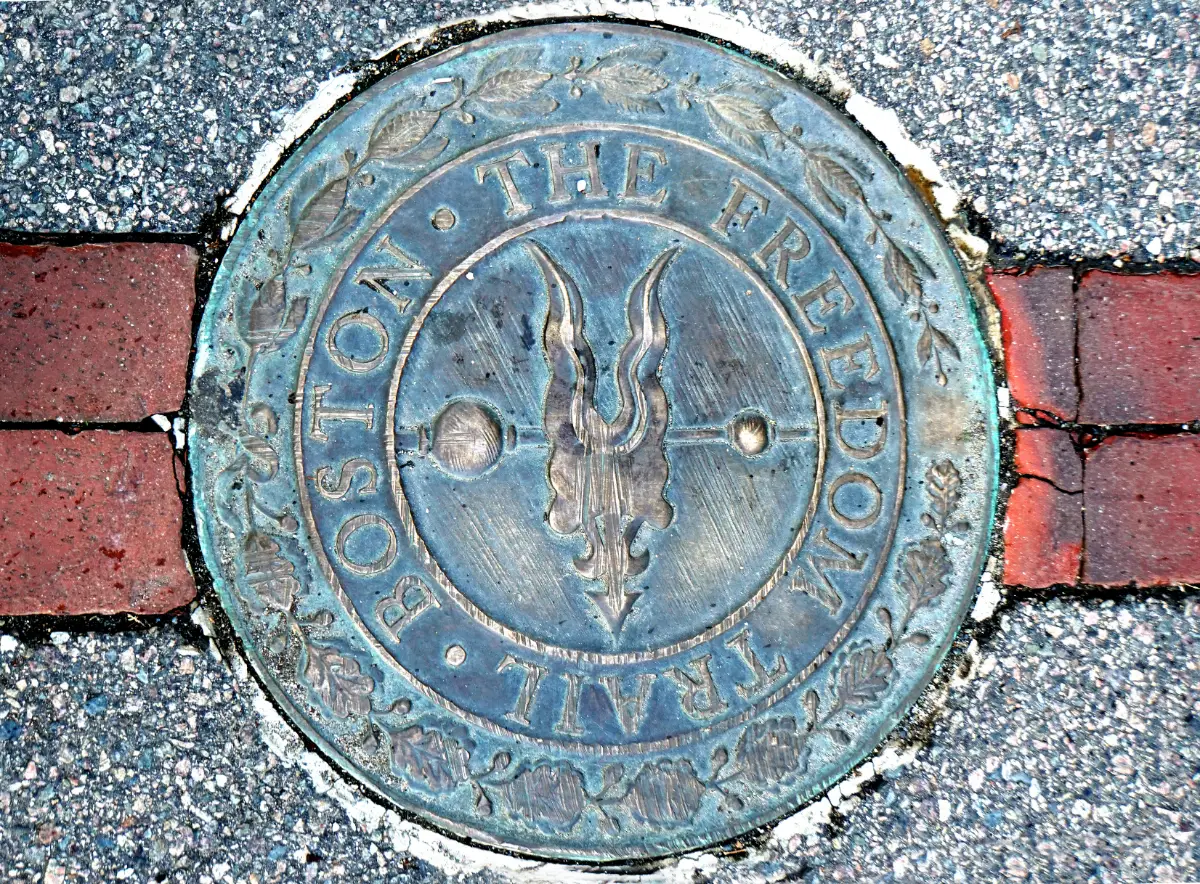
Where American Independence Began: Boston and New England
The Freedom Trail is 2.5 miles (4.0 km) long, links 16 sites, and costs nothing to walk. A red line set into the sidewalk does the navigating for you. End to end takes two to three hours if you don’t go inside the buildings, and the Freedom Trail Foundation puts annual foot traffic at over 4 million people — which is why the early hours are worth protecting.
What the Freedom Trail Actually Costs
The trail is free. A handful of its buildings are not, and the individual fees are smaller than most guides suggest.
- Paul Revere House: $6 adults, $5.50 seniors and college students, $1 for ages 5–17. Cards have a $10 minimum, so bring a few dollars in cash.
- Old North Church: $5 for self-guided entry. Add-on tours of the crypt, gallery, or bell-ringing chamber run $5 each; the audio guide is $3.
- Old South Meeting House: about $15 for adults, on a joint ticket that also covers the Old State House. Visitors 18 and under go free.
Two bundles exist, and only one is likely to save you money. The Boston 250 Pass covers five sites — Old North Church, the Paul Revere House, the Old State House, Old South Meeting House, and King’s Chapel — for around $33. Buying the first three separately comes to about $26. So the pass pays off only if you genuinely intend to do all five, which is a bigger morning than most people have the legs for.
Bunker Hill Monument — The Trail’s Hardest Climb
The Bunker Hill Monument is a 221-foot (67 m) granite obelisk with 294 steps, no elevator, and no place to sit down. Climbing is free.
The wait is the part nobody warns you about. The Park Service caps the number of people allowed inside the monument at once — roughly 20 to 25 — so a short line at the Bunker Hill Lodge can mean a real delay. The monument also runs on a reduced schedule, typically Wednesday through Sunday rather than daily, and the last climb is a half hour before closing. Check the hours before you cross the river.
Climb it first thing. By midday in summer the spiral stairwell is hot, and the higher you go the narrower it gets, with two-way foot traffic squeezing past on every landing.
Lexington, Concord, and the Plymouth Trade-Off
A short drive west, Minute Man National Historical Park preserves the Lexington and Concord battlegrounds, where “the shot heard round the world” opened the war in 1775. Entry is free. South of the city, Plymouth and the Plimoth Patuxet living-history museum ground the 1620 Pilgrim story.
Skip the crowd crush at Plymouth Rock. The stone sits behind a columned portico, fenced off and smaller than every photo suggests, and visitors keep reporting the same deflated ten seconds. Spend that time at Plimoth Patuxet instead, where Wampanoag and English-village interpreters make 1620 tangible rather than roped-off.
- Freedom Trail: 2.5 miles (4.0 km), 16 sites, free to walk
- Paid buildings: Paul Revere House ($6), Old North Church (from $5), Old South Meeting House and Old State House (about $15 joint)
- Bunker Hill Monument: 221-foot (67 m) obelisk, 294 steps, free, capacity-capped
- Lexington and Concord: Minute Man National Historical Park, free
- Time needed: a full day for Boston, a half-day for Lexington and Concord
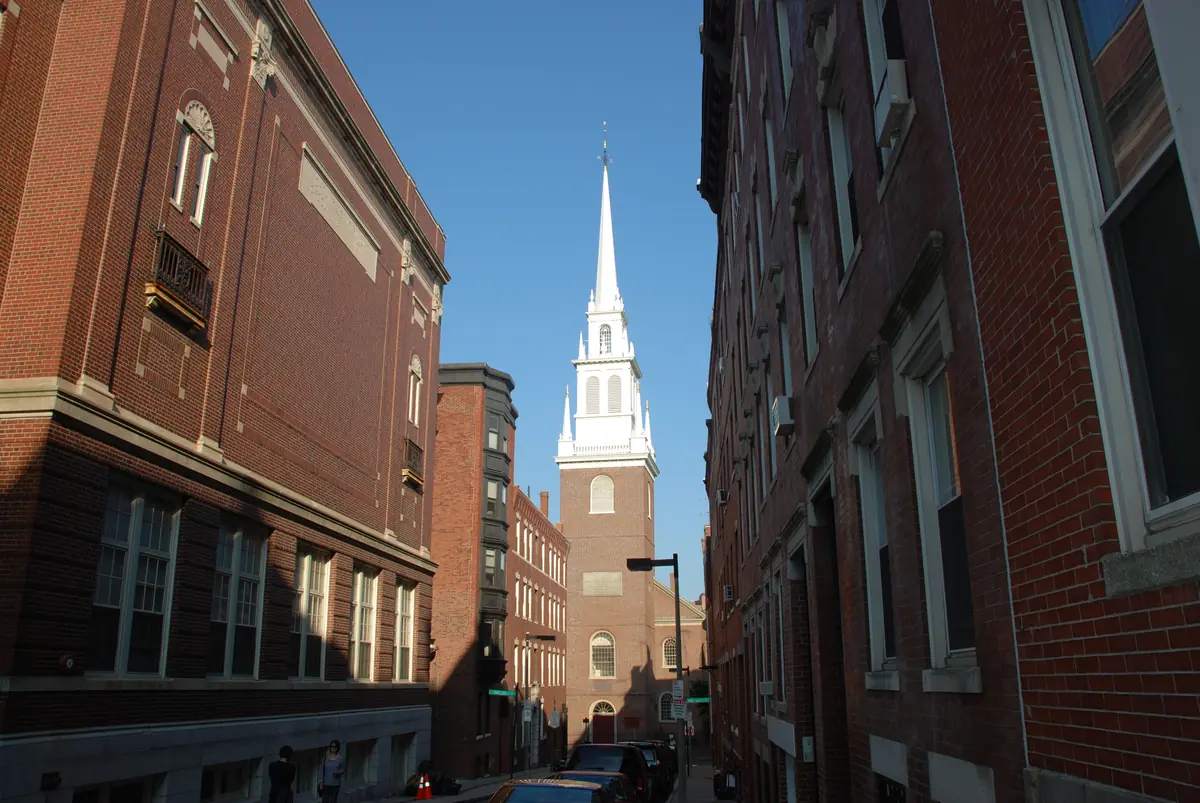
The Birthplace of the Nation: Philadelphia and Gettysburg
Both the Declaration of Independence and the Constitution were signed inside Independence Hall. The Liberty Bell Center next door is free, with no ticket required at all. And the Hall itself is now cheaper to see than most people realize — if you show up early.
Independence Hall — The Free Hour Most Guides Miss
The ticketing rules have changed, and the change is worth planning around.
- 9 a.m.–10 a.m.: open house. No ticket needed. The experience is self-guided, with rangers on hand to answer questions.
- 10 a.m.–4 p.m.: ranger-led tours every 20 minutes. Tickets required.
- 4:20 p.m.: an expanded tour of the second floor. Ticket required, and not accessible — it involves several flights of stairs.
Tickets are free but carry a non-refundable $1 administrative fee through Recreation.gov, and interagency park passes do not cover it. Reserve up to 30 days out, up to 10 per account. If your dates are sold out, a batch of next-day tickets is released at 5 p.m. the evening before — that is the release most travelers never hear about.
The first hour is the quiet one. Arrive for the 9 a.m. open house and the Assembly Room holds a fraction of the mid-morning crowd, with the original “rising sun” chair still facing the delegates’ tables before the school groups fill the benches. Capacity limits still apply, so it is not a guarantee — but on a weekday morning it usually works.
Pro Tip: Whatever slot you hold, arrive 30 minutes early. Security screening for Independence Hall opens at 8:45 a.m. on 5th Street between Chestnut and Walnut, and the line builds fast. There are no restrooms inside the secured area.
Gettysburg — Battlefield Free, Museum Not
A block from the Hall, Elfreth’s Alley is the oldest continuously inhabited residential street in the country, its rowhouses dating to 1702. For the Civil War chapter, Gettysburg National Military Park sits about 2 hours 15 minutes west by car.
The battlefield is free to drive and walk. The Film, Cyclorama, and Museum Experience, run privately by the Gettysburg Foundation, costs $20.75 for adults and $15.75 for youth ages 6–12. Children 5 and under are free, and so are active military. National Park passes are not valid there, because the visitor center is not a Park Service facility — a detail that catches out a lot of pass holders at the desk.
Film and Cyclorama showings run every 15 minutes from 8:15 a.m., with the last at 4:15 p.m. Take an early one. The 22-minute film and the 360-degree painting are the setup; the battlefield only makes sense afterward.
- Independence Hall: free open house 9–10 a.m.; ticketed tours 10 a.m.–4 p.m. ($1 fee per ticket)
- Liberty Bell Center: free, no ticket needed
- Elfreth’s Alley: oldest continuously inhabited US residential street (1702)
- Gettysburg: about 2 hours 15 minutes west; battlefield free; museum experience $20.75 adult, $15.75 youth
- Time needed: 1–2 days Philadelphia, 1 day Gettysburg
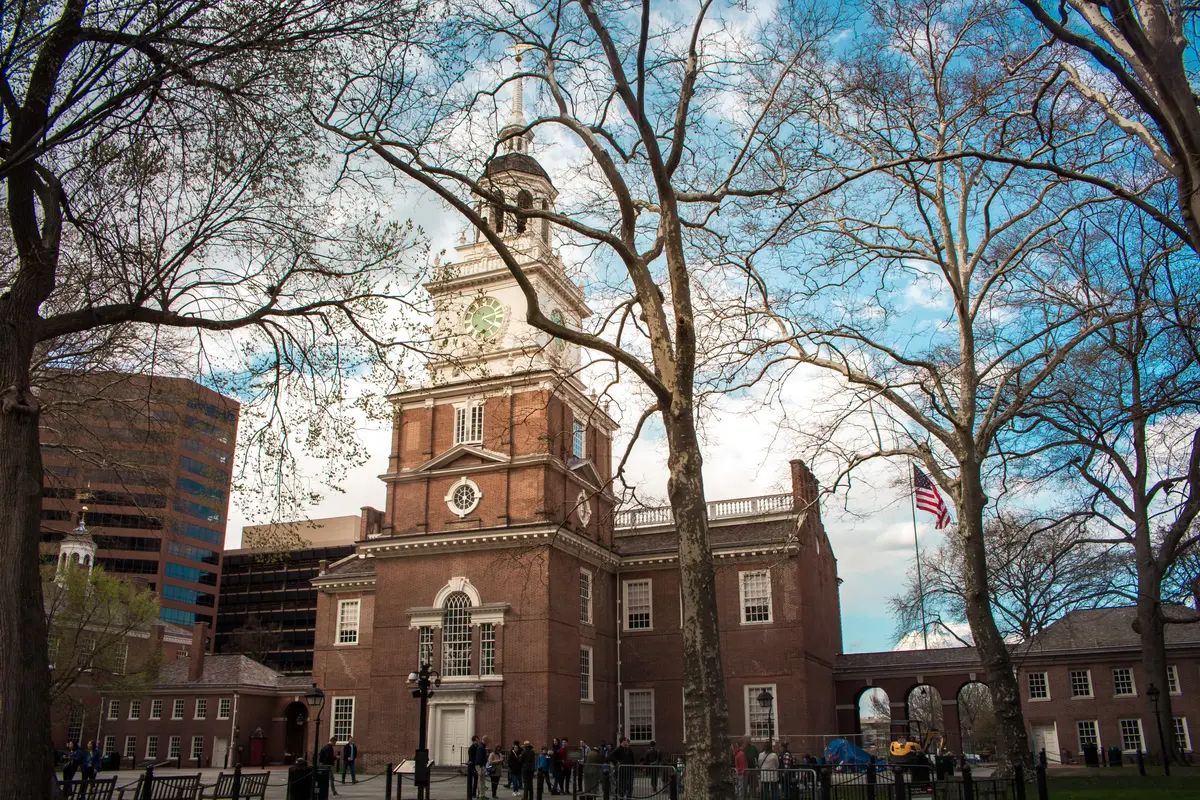
Monuments and Museums: Washington DC’s Founding Story
Washington DC packs the nation’s history into a walkable National Mall, and the museum row between 3rd and 15th Streets runs about one mile (1.6 km). Most Smithsonian museums open daily from 10 a.m. to 5:30 p.m., and admission is free — with one asterisk. Cooper Hewitt, up in New York, is the only Smithsonian museum that charges. Everything on the Mall does not.
“Free” still comes with a booking step at two of the busiest buildings. The National Air and Space Museum and the National Museum of African American History and Culture both require free timed-entry passes. At the latter, every visitor needs one regardless of age; advance passes drop 30 days out on a rolling basis, and same-day passes are released online by 8:15 a.m. Last entry is 4 p.m., and the museum opens at noon on Mondays rather than 10 a.m. Everything else on the Mall you can simply walk into.
Time the marquee artifacts to opening. Reach the National Museum of American History at the 10 a.m. unlock and you can stand alone with the Star-Spangled Banner before the line wraps the lobby. Budget about two hours for the African American History galleries alone — roughly a mile of walking, all indoors, and the museum’s own busiest hour starts at noon.
From New York, the Acela’s fastest scheduled run into Washington is about 2 hours 45 minutes, which makes the capital an easy add to the Northeast core.
- Smithsonian museums: free on and around the National Mall, most open 10 a.m.–5:30 p.m.
- Timed passes (free, pre-book): Air and Space; African American History and Culture
- Mall museum row: about 1 mile (1.6 km)
- New York to DC by Acela: about 2 hours 45 minutes
- Time needed: 2–3 days
Step Into the 18th Century: Virginia’s Historic Triangle
Virginia’s Historic Triangle — Jamestown (1607), Williamsburg, and Yorktown (1781) — traces America from the first permanent English settlement to the Revolution’s decisive victory. Colonial Williamsburg covers 301 acres with costumed interpreters, and Duke of Gloucester Street is free to walk.
What Colonial Williamsburg Actually Costs
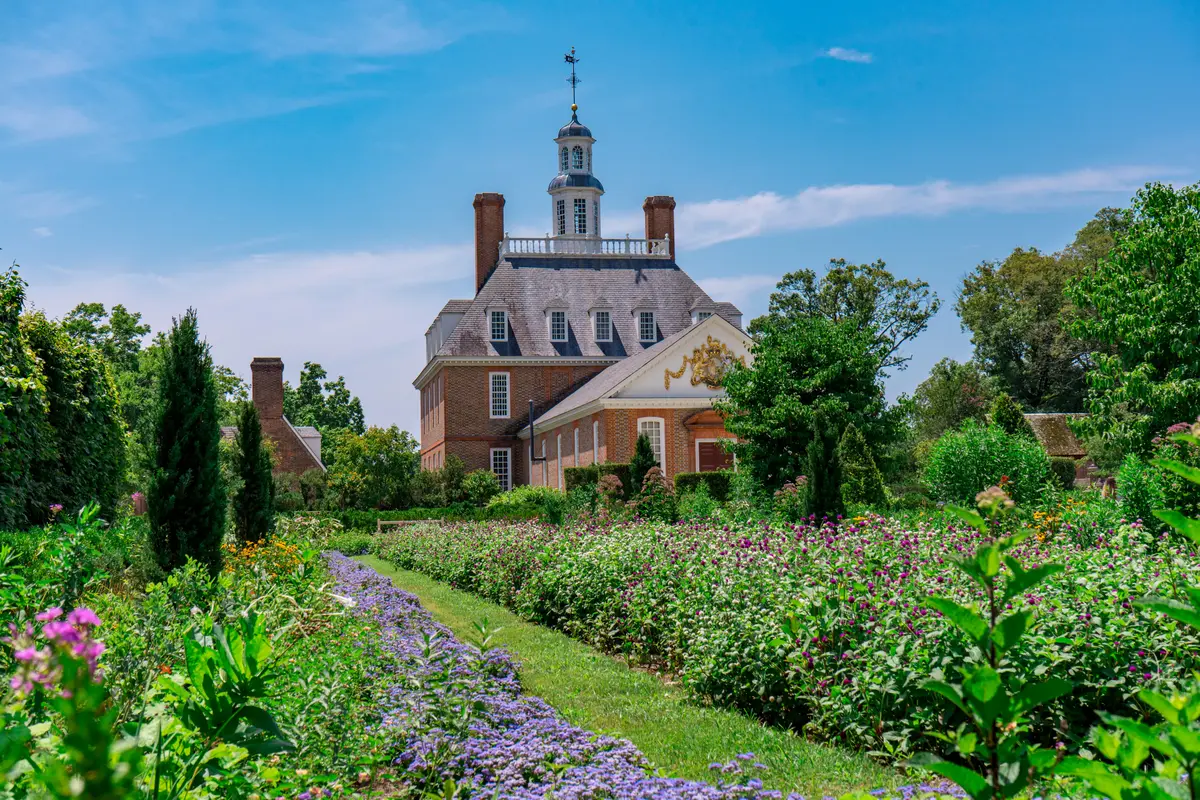
That free street is the workaround most guides miss. You can stroll Duke of Gloucester Street, catch a piece of street theater, and photograph the Governor’s Palace from the green without buying a ticket. The art museums are free as well. Paid admission gets you inside the trade shops and the guided historic buildings.
The pricing splits more cleanly than the marketing suggests:
- Single-day, adult (13+): $37.50
- Single-day, youth (6–12): $10
- Multiday, three consecutive days, adult: $55
- Annual pass, adult: $75
Read those numbers twice, because the usual advice is wrong. If you want more than one day, the three-day multiday ticket at $55 beats both two single-day tickets and the annual pass, which land at exactly $75 apiece. The annual pass only makes sense from a third separate visit onward.
Two fees get added at checkout: a 3% service fee on credit card payments, and a city admission tax of 10% on the first $10. Paying cash or check at the ticket window on site sidesteps the card fee entirely.
Is the America’s Historic Triangle Ticket Worth It?
The bundle covers five sites over consecutive days: all of Colonial Williamsburg plus Jamestown Settlement, Historic Jamestowne, Yorktown Battlefield, and the American Revolution Museum at Yorktown. It runs about $126 for adults and $57 for ages 6–15 through Colonial Williamsburg, and the Jamestown-Yorktown Foundation lists it a few dollars lower.
Now do the math the sales page doesn’t. Colonial Williamsburg’s three-day ticket is $55. The Jamestown-Yorktown Foundation’s Four-Site ticket, which covers the other four sites, is $66 for adults. That is $121 — within a few dollars of the bundle.
So the Historic Triangle ticket does not really save money. What it buys is flexibility: five consecutive days across everything instead of three at Williamsburg, and no juggling of separate windows if your plans shift. If you’re doing all three corners over a long weekend, take it for that reason and no other. If you’re doing Williamsburg only, don’t.
Jamestown, Yorktown, and the Governor’s Palace
At the Governor’s Palace, the boxwood maze smells of damp green hedge after a Tidewater morning rain — a small sensory detail that survives no brochure. Jamestown marks the first permanent English settlement of 1607. Yorktown holds the field where the war was effectively won in 1781. Both museums open at 9 a.m. and stop selling tickets at 4:30 p.m., which is earlier than people expect and the reason afternoon arrivals get turned away.
- Colonial Williamsburg: $37.50 single-day adult (13+); $10 youth (6–12); $55 three-day; $75 annual
- Free access: Duke of Gloucester Street and the art museums
- Bundle option: America’s Historic Triangle Ticket, about $126 adult — flexibility, not savings
- Jamestown: first permanent English settlement, 1607
- Yorktown: site of the decisive 1781 victory
- Time needed: 2–3 days
The Colonial South: Charleston, Savannah, and St. Augustine
The southern coast holds three of the most atmospheric historic cities on the Atlantic. Charleston (founded 1670) guards Fort Sumter, where the Civil War began in 1861. Savannah (1733) is laid out around 22 oak-shaded squares. St. Augustine (1565) is the oldest continuously occupied European settlement in the United States.
Charleston — Where the Civil War Began
Fort Sumter is reachable only by boat, and the boat is the whole logistical problem.
The authorized ferry leaves from Liberty Square in downtown Charleston or Patriots Point in Mount Pleasant. In peak season, that’s three departures a day from downtown — around 9:30 a.m., noon, and 2:45 p.m. — and just two from Patriots Point. In winter it drops to two. Miss your sailing and there is no next boat for hours. The round trip runs about 2 hours 15 minutes: 30 minutes across the harbor each way, roughly an hour on the island.
Adult tickets run about $35 to $40, kids and seniors less. Two things travelers keep getting wrong: an America the Beautiful national parks pass does not cover the ferry fee, and the ticket windows and vessels take cards only.
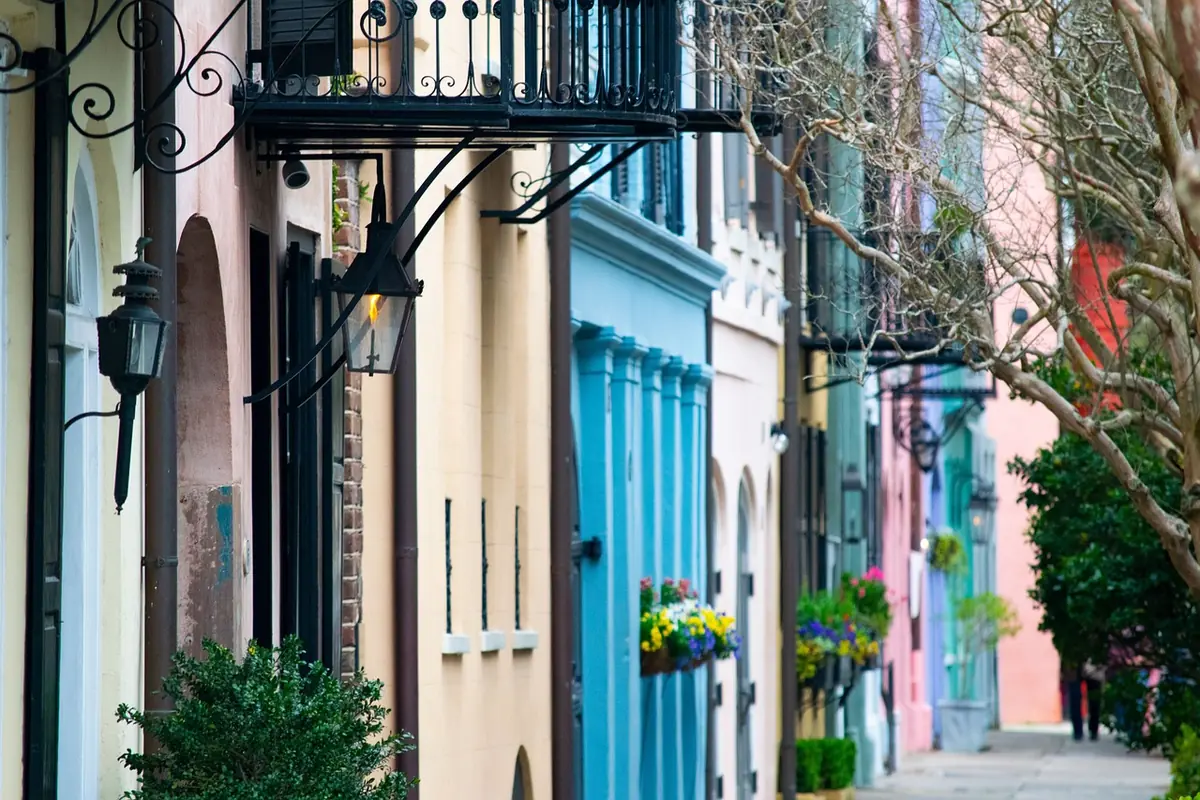
Back on land, the Battery promenade runs past the pastel houses of Rainbow Row, and the surrounding Lowcountry carries deep Gullah Geechee roots. Both are free.
- Location: Fort Sumter Visitor Education Center, 340 Concord Street, Charleston
- Cost: ferry about $35–$40 adult (includes fort admission); park passes not accepted
- Best for: Civil War readers, first-time Charleston visitors
- Time needed: 2 hours 15 minutes for Fort Sumter; 1–2 days for the city
Savannah — A City of Oak-Shaded Squares
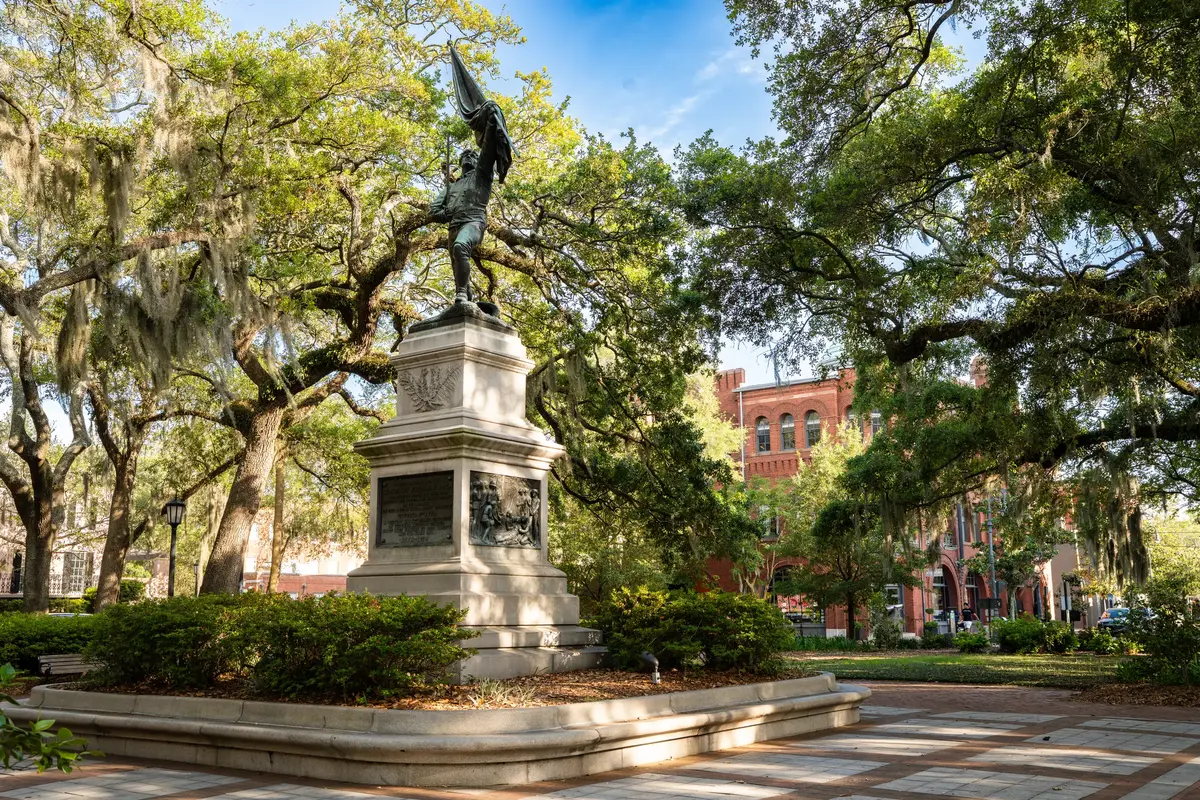
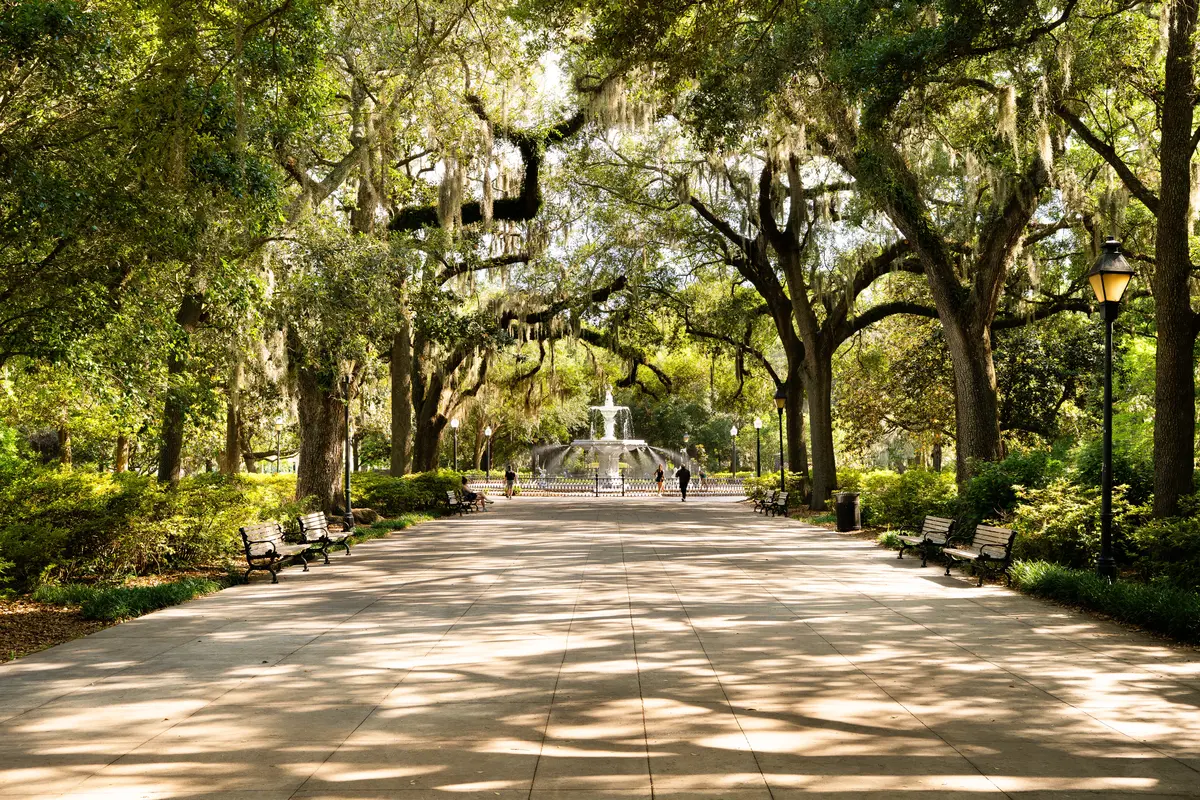
Savannah was founded in 1733 by James Oglethorpe on a grid of public squares, and 22 of the original 24 survive. Forsyth Park, about 30 acres, anchors the south end with its white fountain.
One warning from the ground: the live-oak roots buckle the brick sidewalks across the historic district. The shade is welcome and good shoes matter more here than anywhere else on this route.
- Founded: 1733, by James Oglethorpe
- Squares surviving: 22 of the original 24
- Forsyth Park: about 30 acres
- Best for: slow walkers, architecture, evenings
- Time needed: 1–2 days
St. Augustine — The Coquina Fort and the Oldest Street
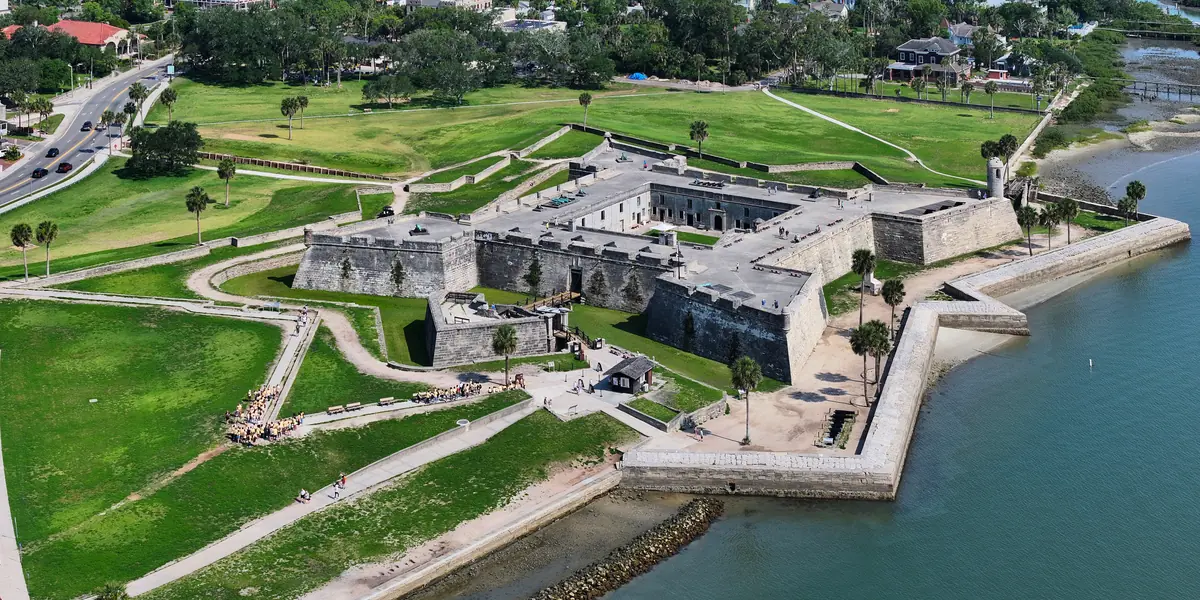
St. Augustine predates everything else on the coast. Founded in 1565 by the Spanish admiral Pedro Menéndez de Avilés, it sits 42 years ahead of Jamestown. Its centerpiece, the Castillo de San Marcos, is the oldest masonry fort in the continental United States.
Admission is $15 for adults 16 and up and is valid for 7 consecutive days — a detail worth using, since a second walk-through at golden hour costs nothing extra. Children 15 and under are free. The park takes cards only; it does not accept cash. The city lot in front of the fort charges $2.50 an hour, and only vehicles 21 feet or shorter fit.
The fort’s coquina walls feel cool and pockmarked underhand. The shellstone absorbed cannon fire rather than shattering — cannonballs lodged in it the way a knife sinks into soft cheese — which is why the Spanish never lost it to bombardment. The gundeck, where the view is, is reached by 47 steps and is not wheelchair accessible. Seawall work has periodically fenced off parts of the grounds; the fort itself stays open, but check the park’s alerts before you drive down.
Just outside, narrow St. George Street feels closer to Cartagena than to anywhere else in Florida.
Between Charleston and Savannah, skip the interstate. Scenic US-17 covers about 108 miles (175 km) in roughly 2 hours and runs through Lowcountry marsh instead of I-95’s truck lanes.
- Castillo de San Marcos: $15 adult (16+), valid 7 days; children 15 and under free; cards only
- Parking: $2.50 per hour at the lot in front of the fort
- Founded: 1565, by Pedro Menéndez de Avilés
- Charleston to Savannah: about 108 miles (175 km), roughly 2 hours via US-17
- Time needed: 1–2 days
What Is the Oldest City on the East Coast?
St. Augustine, Florida is the oldest city on the East Coast and in the United States, founded by the Spanish admiral Pedro Menéndez de Avilés in 1565. It predates Jamestown by 42 years and the Pilgrims’ landing at Plymouth by 55. It remains the oldest continuously occupied European settlement in the country.
That Spanish founding is what makes the old town feel unlike the rest of the coast. The colonial lanes off St. George Street are narrow and shaded, built on a European street plan rather than a later American grid.
What Is the Most Historic City on the East Coast?
Philadelphia is often called the most historic city in the United States — the place where both the Declaration of Independence and the Constitution were signed at Independence Hall. Boston rivals it as the cradle of the Revolution, while St. Augustine holds the title of oldest. Each city leads in a different era.
The honest answer depends on what “historic” means to you. For the founding of American government, it’s Philadelphia. For the first sparks of armed revolution, it’s Boston. For age alone, St. Augustine. Most full itineraries hit all three, which is rather the point of going in a line.
Why Were the Original 13 Colonies All on the East Coast?
The original Thirteen Colonies clustered on the East Coast because ships crossing the Atlantic made landfall there first, and deep-water harbors made trade and settlement straightforward. The Atlantic Seaboard became the political and economic core of early America, which is why its cities still hold the country’s founding history.
Stand on Charleston’s Battery promenade and the logic is obvious. A harbor this protected drew settlers, merchants, and warships in equal measure. The same coastal advantage shaped Boston, New York, and every founding-era port between them.
How Many Days Do You Need for an East Coast History Trip?
Plan a minimum of 7 days for an East Coast history trip covering Boston, New York, Philadelphia, and Washington DC. Allow 10 to 14 days to extend through Virginia’s Historic Triangle and the southern colonial cities to St. Augustine. A focused single-region trip — New England alone, or the Historic Triangle alone — works well in 3 to 4 days.
The Boston-to-DC core fits one comfortable week if you let Amtrak handle the driving and give each city its due. A realistic per-stop breakdown for the full coast:
- Boston: 1–2 days
- New York: 1–2 days
- Philadelphia and Gettysburg: 2 days
- Washington DC: 2–3 days
- Virginia’s Historic Triangle: 2–3 days
- Charleston, Savannah, St. Augustine: 1–2 days each
When Should You Go, and How Should You Get Around?
Spring (April through June) and fall (September through November) are the best windows — mild weather and thinner crowds at every site. Ride Amtrak’s Northeast Corridor between Boston and Washington, then rent a car south of DC, where rail service thins and US-17 and I-95 link the colonial cities.
The seasons do real work here. New England’s foliage peaks in October, turning Boston Common into a canopy of red and gold over the Freedom Trail, while St. Augustine is most comfortable from mid-September to mid-November, after the summer humidity breaks.
Don’t default to renting a car for the Boston-to-Washington leg just because “drive the East Coast” is the standard advice. That stretch burns hours in New York and DC traffic and stacks up parking fees at every stop. Let Amtrak carry you Boston to DC, and pick up a car only once you head south.
Pro Tip: Book the Northeast Regional instead of the Acela for the same route at a much lower fare. It’s slower by under an hour on most city pairs and stops at the same downtown stations.
- Best seasons: spring (April–June) and fall (September–November)
- Boston to DC: Amtrak Northeast Corridor (Acela or the cheaper Northeast Regional)
- South of DC: rental car via I-95 and US-17
- Charleston to Savannah: about 108 miles (175 km), roughly 2 hours via US-17
The Trip That Actually Works
This route is not for travelers who want one city and a slow week in it. It rewards people who like sequence — who want the Revolution’s first shots, then the room where the arguing happened, then the marble version of what the arguing produced, then the Spanish fort that was already 200 years old before any of it began.
Three things sell out or trip people up, so handle them before you leave:
- Pre-book (free, but capacity-capped): Independence Hall tours, Smithsonian Air and Space, African American History and Culture
- Do the ticket math in Virginia: the $55 three-day Colonial Williamsburg pass beats two single days, and the Historic Triangle bundle buys flexibility rather than savings
- Lock the Fort Sumter ferry: two or three sailings a day, cards only, and the national parks pass won’t help you
Walk the free things first — the Freedom Trail, Duke of Gloucester Street, the Battery, St. George Street. The paid buildings are worth it, but the streets between them are where the history is still standing.