An east coast road trip is the rare drive where the scenery rewrites itself every few hours — granite cliffs and lobster shacks in Maine, palm trees and turquoise water by Key West. Here’s the route, the real costs, and what to skip.
The East Coast Road Trip in Brief
The classic east coast road trip covers about 2,000 to 2,500 miles (3,200 to 4,000 km) from Maine to the Florida Keys, following I-95 with detours onto US Route 1 and the Blue Ridge Parkway. Most travelers need 14 to 21 days, budget $100 to $250 per person per day, and drive it in spring or fall.
What makes this trip different from a city-hopping flight tour is that the road between the cities is half the point. You feel the country change latitude by latitude — the air gets warmer, the accents shift, the food goes from clam chowder to shrimp and grits to conch fritters.
How Many Days Do You Need for an East Coast Road Trip?
Plan at least 10 to 14 days for the core run from New York to Savannah, and two to three weeks for the full Maine-to-Florida route. The complete drive exceeds 2,500 miles (4,000 km). If you have the time, five to six weeks lets you treat the major cities as stays rather than pit stops.
Your comfortable ceiling is 300 to 400 miles (480 to 640 km) per day. Push past that and you start seeing only billboards and gas-station bathrooms. One thing nobody warns you about: a five-hour drive feels completely different on day five than it did on day one. Fatigue compounds. Build in at least one no-driving day per week.
Here’s how the math shakes out by trip style:
- 10 to 14 days: New York down to Savannah or Charleston, skipping Maine and the Keys
- 2 to 3 weeks: the full Maine-to-Key West arc with two nights in each major city
- 5 to 6 weeks: the same route at a relaxed pace, with detours onto the Blue Ridge Parkway and the Outer Banks
Pro Tip: If you only have a long weekend, drive one segment well instead of cramming the whole coast. The Charleston-to-Savannah stretch or the New England coast each makes a strong 3-to-4-day trip on its own.
When Is the Best Time of Year to Drive the East Coast?
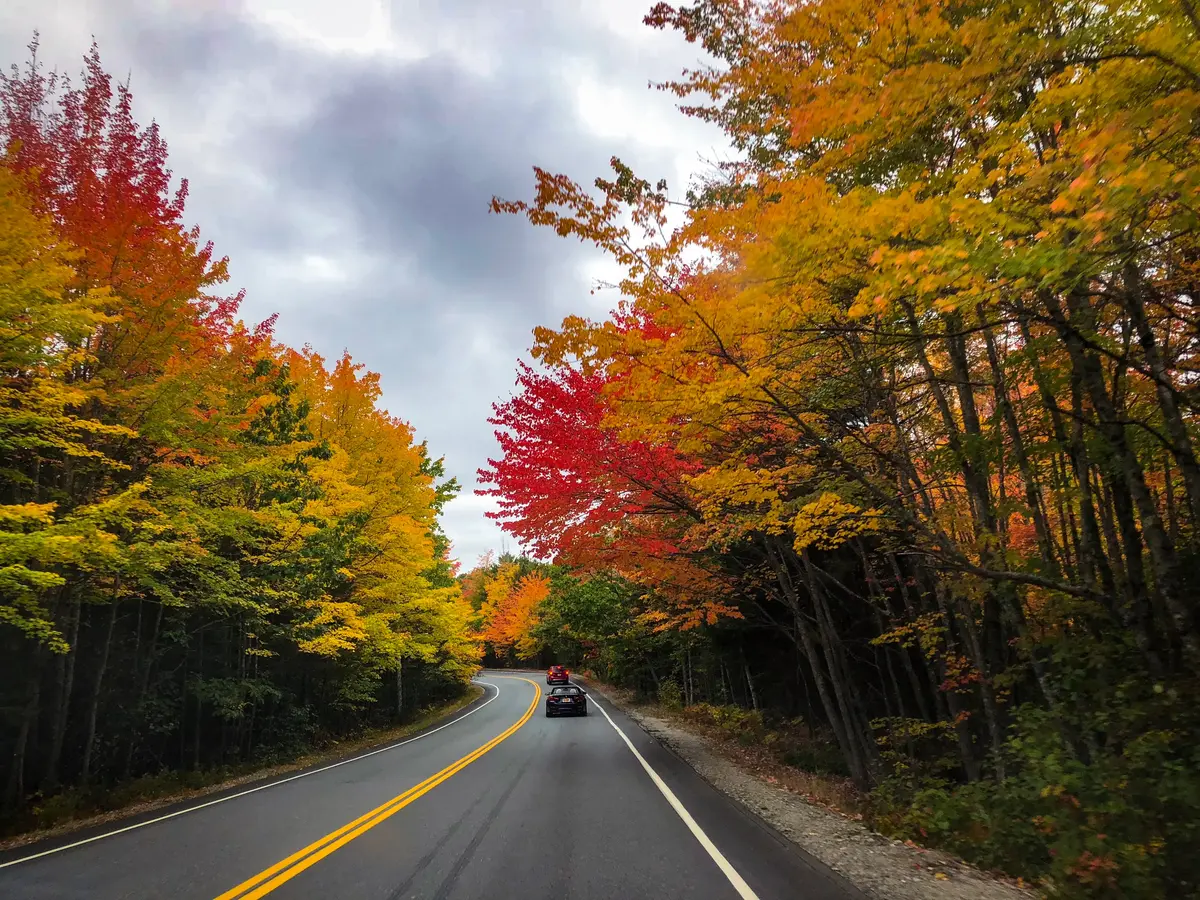
Spring and fall are the best times. Drive north to south from late September so New England foliage peaks in early to mid-October, or south to north in spring as Charleston and Savannah bloom in March. Summer brings crowds and heat; winter favors Florida and the Carolinas.
The trick is matching your direction to the calendar, because the coast spans 17 degrees of latitude and no single season works for all of it at once.
- Fall foliage: peaks in Maine, New Hampshire and Vermont from late September to mid-October, then in Virginia and North Carolina mid-to-late October
- Spring blooms: Washington’s cherry blossoms hit late March to early April; the Carolinas and Georgia green up by March
- Hurricane season: late summer into early fall is the riskiest window for the Florida Keys, so watch forecasts if you finish there
- Winter: Savannah averages around 57°F (14°C) in its coldest month, making the Deep South and Florida the off-season sweet spot
Pro Tip: The smell of cider doughnuts and cold mornings at a New Hampshire overlook in early October is worth planning your whole departure date around. Foliage moves roughly 100 miles south per week, so you can stay ahead of it the entire way down.

How Much Does an East Coast Road Trip Cost?
An east coast road trip runs roughly $65 to $400-plus per person per day. Budget travelers who camp and self-cater spend $65 to $85; mid-range travelers spend $175 to $250 split two ways; luxury runs $350 and up. Gas adds $30 to $50 a day, and a US-resident national parks pass is $80.
The day-rate is where most guides go vague, so here’s the honest breakdown by traveler type:
| Category | Budget (per person/day) | Mid-range (per person/day) | Luxury (per person/day) |
|---|---|---|---|
| Lodging | Camping / hostels | Mid-tier hotels, split two ways | Boutique and resort |
| Food | Self-catered, groceries | One restaurant meal | Full dining out |
| Daily total | $65 to $85 | $175 to $250 | $350-plus |
Then there are the fixed costs everyone pays regardless of style:
- Gas: $30 to $50 per day over an average 200-mile (322 km) driving day
- America the Beautiful annual parks pass: $80 for US residents. Non-US residents buy a separate $250 non-resident pass, and at 11 high-demand parks — Acadia among them — each non-resident aged 16 and older also pays a $100 per-person surcharge on top of standard entry (NPS nonresident fees)
- Acadia National Park entry: $35 per vehicle for 7 days (park fees); Acadia is cashless, so carry a card
- NYC congestion toll: $9 to drive into Manhattan below 60th Street, charged once per day at peak (5 a.m. to 9 p.m. weekdays), about a quarter of that overnight (MTA rates)
- Tolls: heaviest in the Northeast. The George Washington Bridge and other Port Authority crossings run $16.79 with a New York or New Jersey E-ZPass at peak, but $23.30 by mail — and an out-of-state E-ZPass tag pays that full $23.30, because the discount applies only to NY and NJ accounts (Port Authority tolls)
- Toll transponders: E-ZPass covers the Northeast; SunPass covers Florida
The single most expensive line item often surprises people: one night of parking a rental car in Manhattan can cost more than a two-night motel stay in the Carolinas — and that’s before the $9 you pay just to drive into the zone.
Pro Tip: A single $80 America the Beautiful pass covers Acadia, Shenandoah and any other fee-charging federal site on the route — two or three entries and it pays for itself. The Blue Ridge Parkway and Cape Hatteras National Seashore charge nothing to enter. Car-campers can also add a national gym membership for nationwide shower access, a hack most budget guides skip.
Is I-95 the Best Way to Drive the East Coast, or Should You Take US Route 1?
I-95 is the fastest spine, running about 1,900 miles (3,060 km) through 15 states, but it is congested and monotonous. For scenery, swap onto US Route 1 or coastal highways like Florida’s A1A through New England, the Mid-Atlantic and the Carolinas, and use inland I-81 to bypass the Washington-to-Richmond bottleneck.
The default advice to “just take I-95 the whole way” is outdated and stressful. It’s among the most congested and accident-prone interstates in the country, and the alternatives are often barely slower while being far more pleasant.
- I-95: about 1,900 miles, 15 states — fastest, but expect heavy traffic and frequent backups near the major cities
- US Route 1: about 2,369 miles (3,813 km) — the historic coastal route, slower and far more scenic
- I-81: an inland alternative through the Shenandoah Valley that dodges the worst Washington-area congestion
- A1A: Florida’s coastal highway, the prettier way south once you reach the state
A1A and US-1 are not uniformly charming, though. US Route 1 includes the 12-lane grind of Roosevelt Boulevard through Philadelphia, which feels nothing like its quiet two-lane stretches through small-town Maine. Pick your detours by segment, not as an all-or-nothing choice.
The Classic Route, Boston to Key West, Stop by Stop
The classic route links Boston, New York, Philadelphia, Washington, the Outer Banks, Charleston, Savannah, St. Augustine, Miami and Key West. Key legs run Boston to New York at 214 miles (about 4 hours), New York to Washington at roughly 226 miles, Washington to Charleston at about 530 miles, and Miami to Key West at 113 miles.
The first glimpse of the Manhattan skyline from the New Jersey Turnpike at dusk is one of those road-trip moments that lands harder than any photo prepared you for. Here are the headline legs at a glance:
| Leg | Distance | Approx. drive time | Suggested nights |
|---|---|---|---|
| Boston to New York | 214 mi (344 km) | ~4 hours | 2 |
| New York to Washington, DC | ~226 mi (364 km) | ~4.5 hours | 2 |
| Washington to Charleston | ~530 mi (853 km) | ~8 hours | 2 |
| Charleston to Savannah | ~108 mi (174 km) | ~2 hours | 1 to 2 |
| Miami to Key West | 113 mi (182 km) | ~3.5 hours | 2 |
Leg 1: Boston and Coastal New England
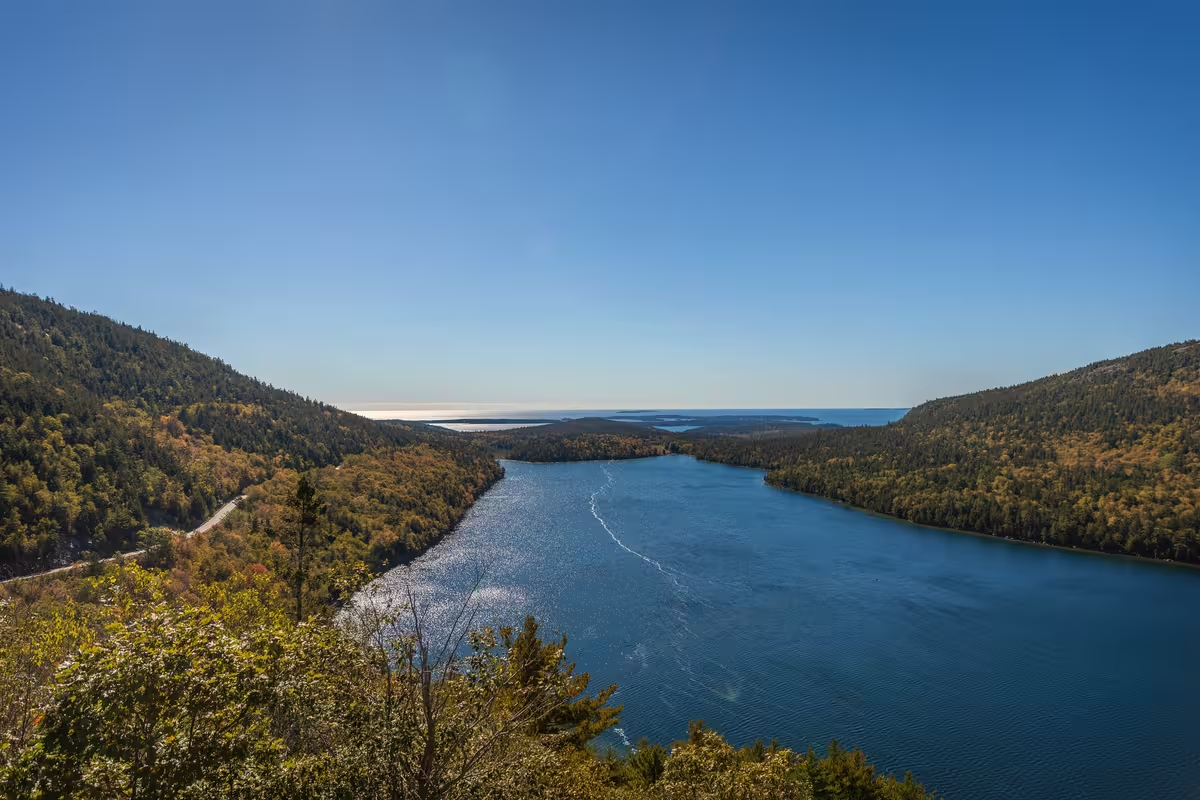
Start in Boston with the 2.5-mile (4 km) Freedom Trail linking 16 historic sites, including the Paul Revere House and Old North Church. Add two to three days north to Portland, Maine and Acadia National Park, where Cadillac Mountain claims some of the first sunrise in the country and requires a vehicle reservation on top of park entry.
The Freedom Trail is the rare walking-history route that’s genuinely worth following end to end — it’s marked by a literal red line in the sidewalk, so you can’t get lost. Fenway Park, opened in 1912, is close enough to fold in if you want a game.
North of Boston, the coast turns to working harbors and granite. Portland’s Old Port serves the lobster rolls that justify the detour, and Acadia delivers the trip’s first true wilderness: the Park Loop Road, Sand Beach, and Thunder Hole, where incoming surf slams a rock channel loud enough to feel in your chest.
The Cadillac summit at dawn is the experience people remember most. Travelers who make the pre-dawn climb keep reporting the same thing — the wind cuts straight through a fleece and coffee goes cold within minutes, so bring more layers than you think you need. Then the horizon turns orange and none of it matters.
- Location: Boston, MA, with a northern extension to Portland and Acadia National Park, ME
- Cost: Acadia entry $35/vehicle (7 days), plus a $6 Cadillac Summit Road reservation; non-US residents add a $100 per-person park fee at Acadia
- Best for: History buffs and first-timers who want a wilderness anchor before the cities
- Time needed: 2 to 4 days (1 to 2 in Boston, 2 for the Maine extension)
Pro Tip: The Cadillac Summit Road reservation is required during the busy late-spring-through-fall window and sells out fast. Book your timed entry the moment your dates are set (Recreation.gov), separately from the park pass.
Leg 2: New York, Philadelphia and Washington
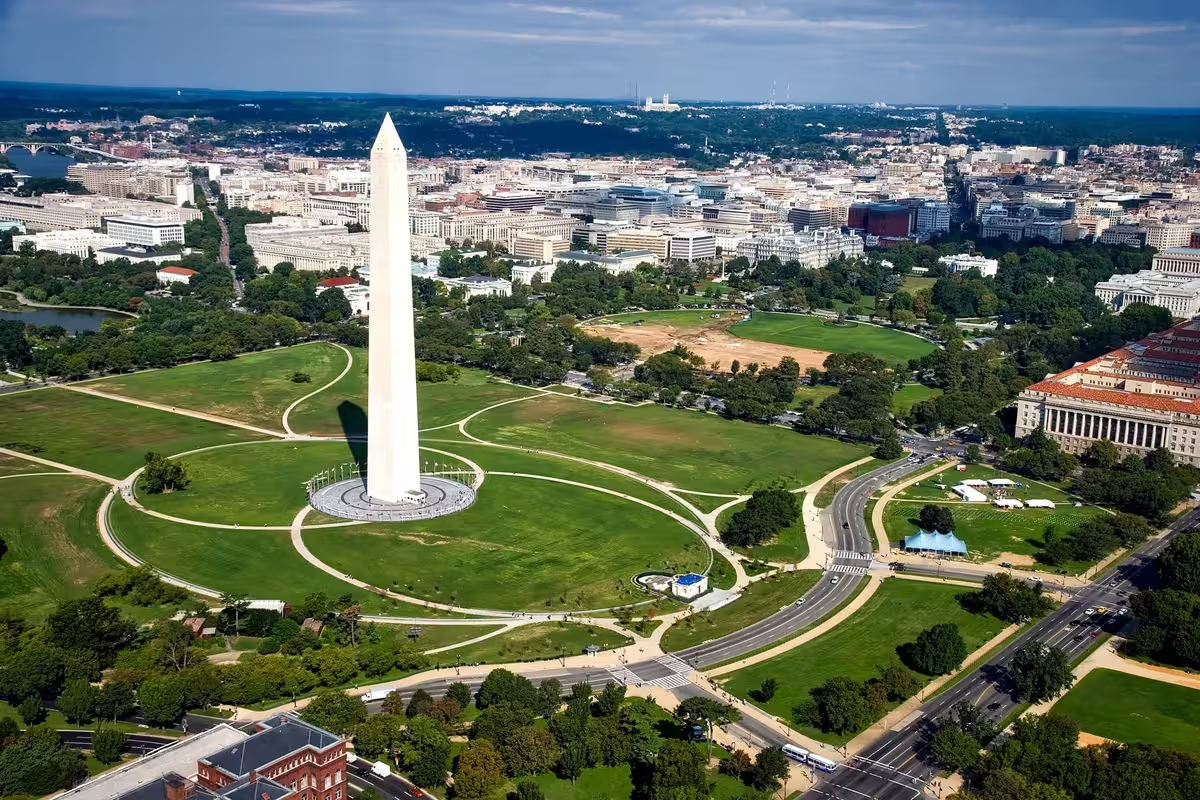
The Northeast Corridor packs three giants close together: New York, Philadelphia, and Washington, DC. Philadelphia sits about 1.5 hours from New York with Independence Hall, the Liberty Bell and Reading Terminal Market for lunch. In Washington, the Smithsonian museums on the National Mall are all free. Boston to Washington runs about 440 miles (708 km) over 7 to 8 hours with stops.
This is the densest stretch of the whole trip, and the temptation is to over-schedule. In New York, the car is a liability below 60th Street — that’s the congestion zone, where entering costs $9 a day on top of parking, so most travelers stash the car and ride the subway. Prioritize Central Park, the Brooklyn Bridge walk, and a skyline view — and on that last point, take the contrarian pick below.
Philadelphia is easy to underrate and easy to fit in as a half-day between New York and Washington. Standing inside the room where the Declaration was debated, the first thing that strikes you is how small it is — far more modest than the national mythology suggests.
- Location: New York, NY to Philadelphia, PA to Washington, DC
- Cost: Free Smithsonian museums in DC; budget for paid NYC attractions, parking, and the $9 congestion toll
- Best for: Travelers who want world history, art and food in three back-to-back cities
- Time needed: 4 to 6 days across all three
Pro Tip: Skip the Empire State Building’s long, pricey line and ride to the Top of the Rock at 30 Rockefeller Plaza instead. The view is comparable, the wait is shorter, and the Empire State Building actually appears in your skyline photos.
Leg 3: The Outer Banks and the Carolinas
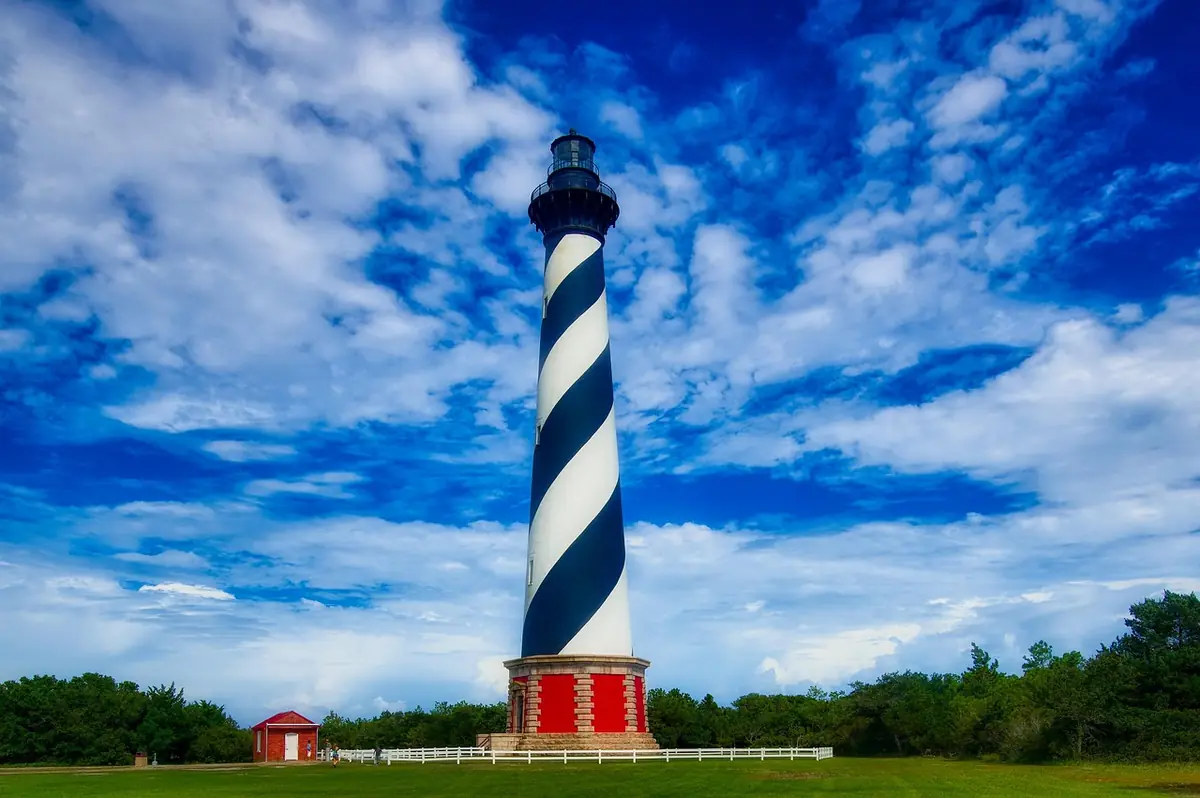
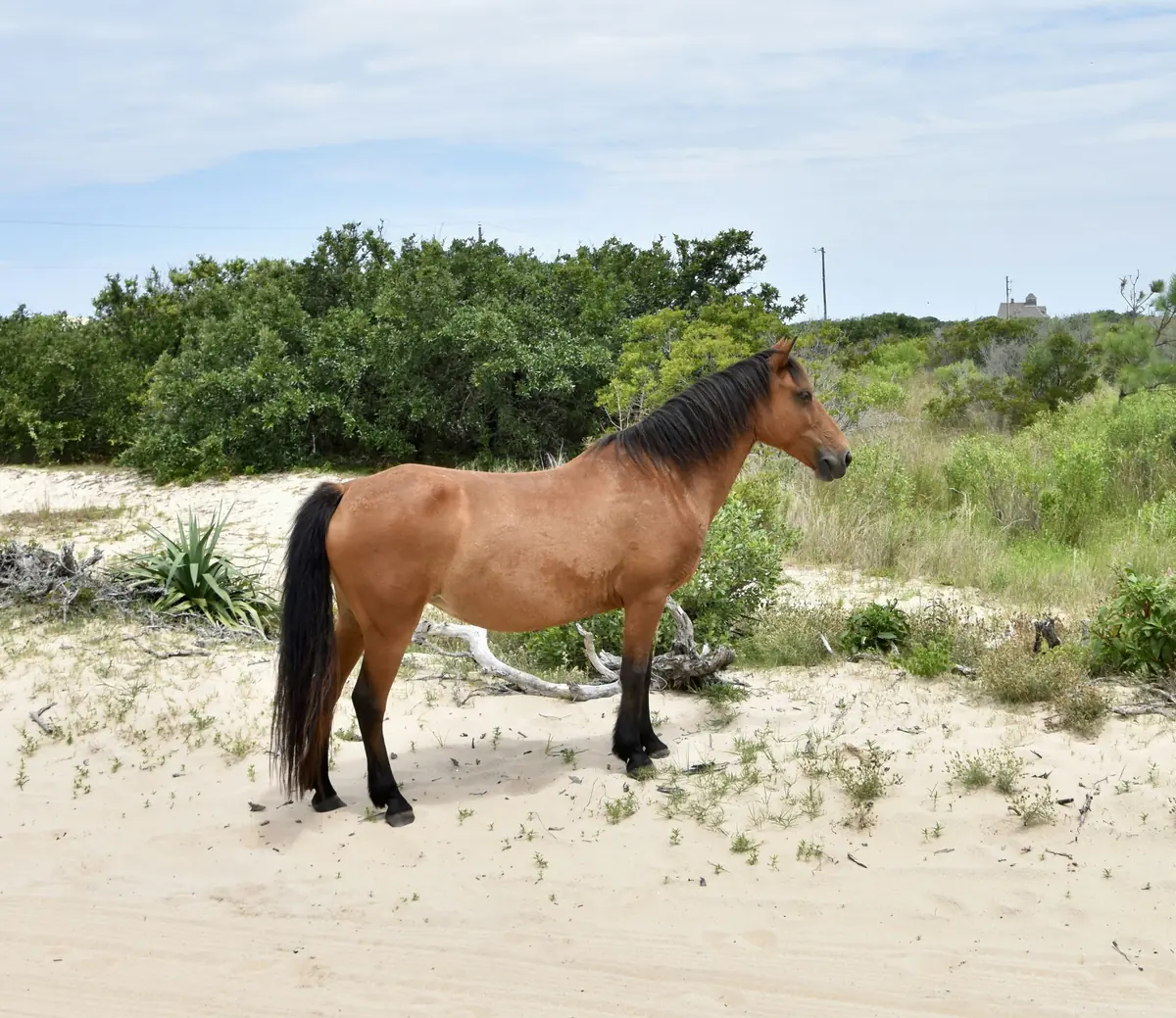
Detour off I-95 to North Carolina’s Outer Banks for the Wright Brothers National Memorial, the wild Corolla horses, and the Cape Hatteras Lighthouse, the tallest brick lighthouse in the country. A free car ferry links Hatteras to Ocracoke. Then drive to Charleston for the Fort Sumter ferry, where the Civil War’s first shots were fired.
The Outer Banks is the leg rushed travelers skip, and it’s a mistake. At Kill Devil Hills, the Wright Brothers flew the first powered flight on December 17, 1903 — they lifted off at 10:35 a.m. and covered 120 feet (37 m) in 12 seconds at a top speed of 6.8 mph (10.9 km/h). Markers on the field show exactly where the plane touched down. You can walk the distance in a few seconds and grasp how improbable it was.
To find the Corolla wild horses, you drive a 4×4 onto soft beach sand with the tires deliberately deflated — a strange, sliding ride along the dunes scanning for Spanish mustangs that have roamed here for centuries.
Charleston follows with Rainbow Row, the Fort Sumter ferry, and some of the best Lowcountry cooking on the coast.
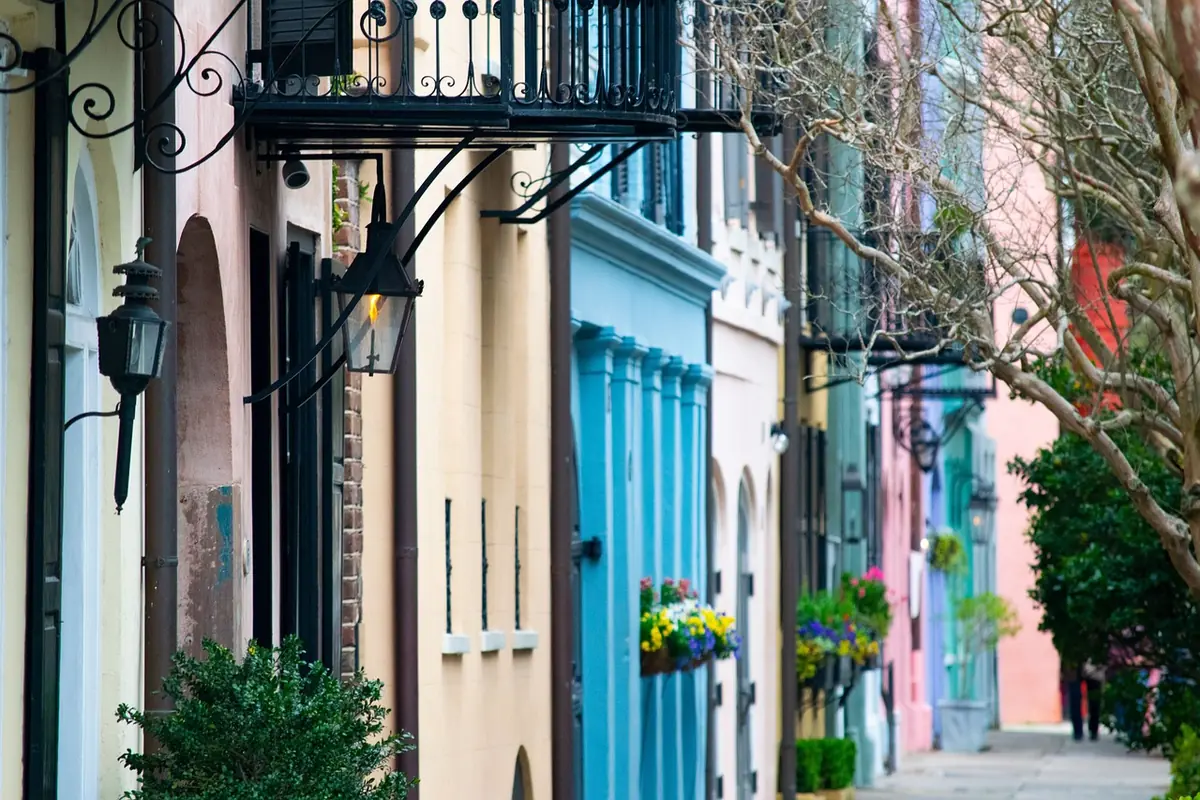
- Location: Corolla and Cape Hatteras, NC to Charleston, SC
- Cost: Corolla 4×4 wild horse tours roughly $50 to $65 per adult for a 2-hour trip (children less); Hatteras-Ocracoke car ferry is free
- Best for: Travelers who want coast and history away from the interstate
- Time needed: 3 to 4 days
Pro Tip: The Hatteras-to-Ocracoke car ferry costs nothing and is one of the few free things you’ll do all trip. Arrive early in peak season — vehicle spots fill, and missing a sailing can cost you an hour or more.
Leg 4: Savannah, St. Augustine and the Florida Finish
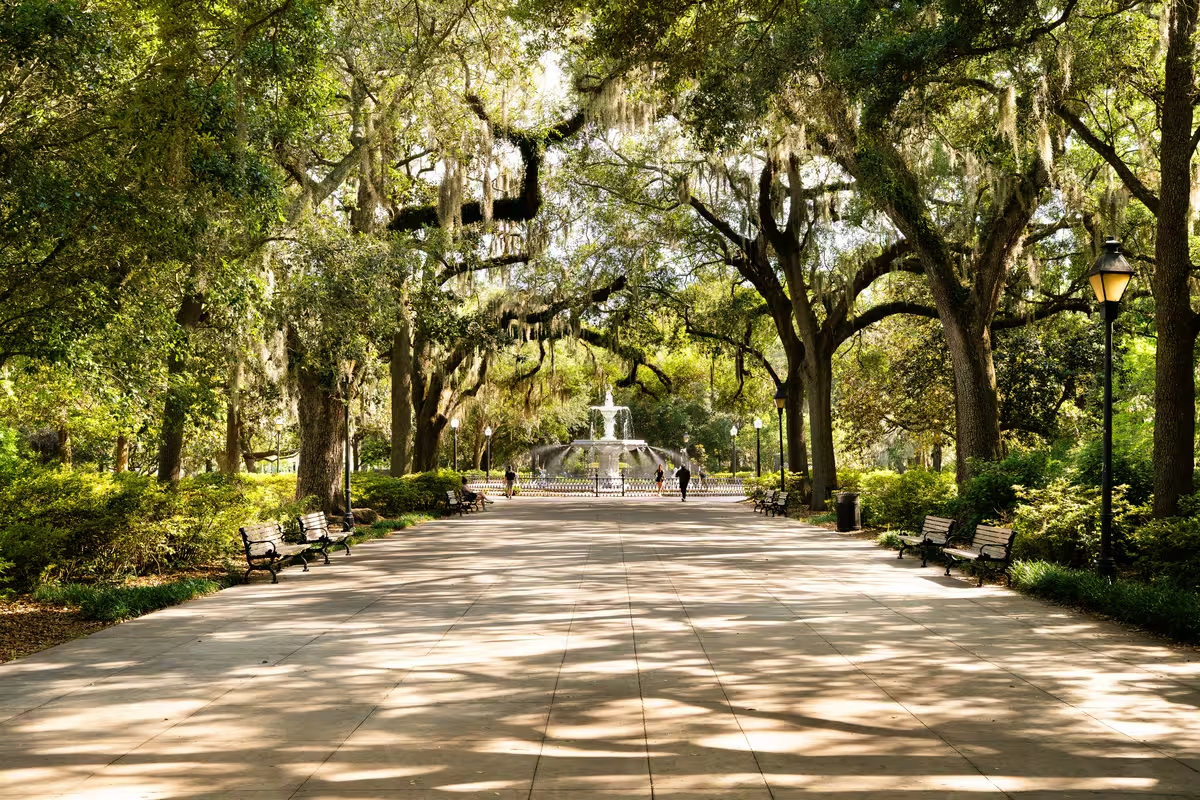
Savannah’s Historic District wraps around oak-shaded squares and Forsyth Park; book a sought-after restaurant well ahead. Savannah to St. Augustine, the oldest city in the country and founded in 1565, runs about 175 miles (282 km). Finish on the Overseas Highway, 113 miles (182 km) and 42 bridges from Key Largo to Key West.
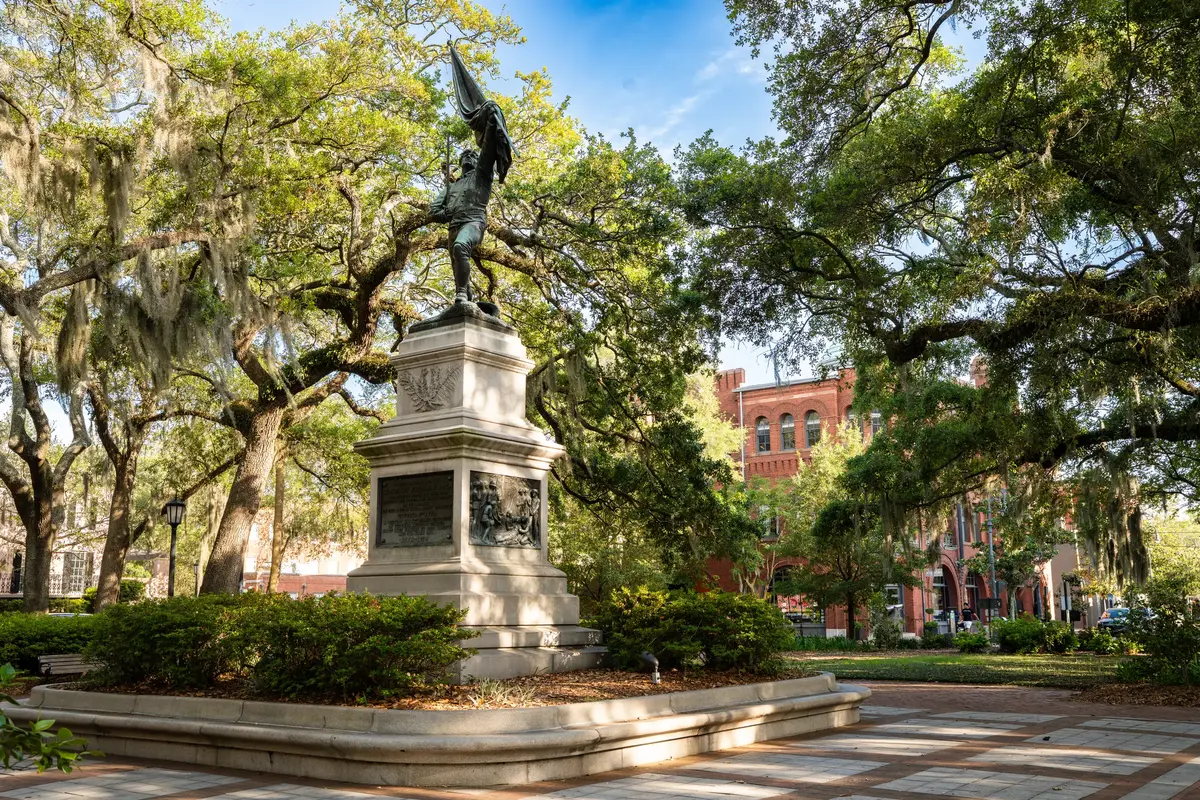
Savannah rewards slow walking. The squares are spaced a block or two apart under live oaks dripping Spanish moss, and the food scene punches above the city’s size — reserve a table at a spot like Husk or The Olde Pink House days in advance, not the day of.
St. Augustine adds the Castillo de San Marcos, a coquina-stone fort guarding the country’s oldest continuously occupied European settlement. Then Florida turns subtropical and the road runs out of land. The Overseas Highway from Key Largo to Key West crosses 42 bridges, including the Seven Mile Bridge, with Bahia Honda State Park and Mallory Square’s sunset gathering waiting near the end.
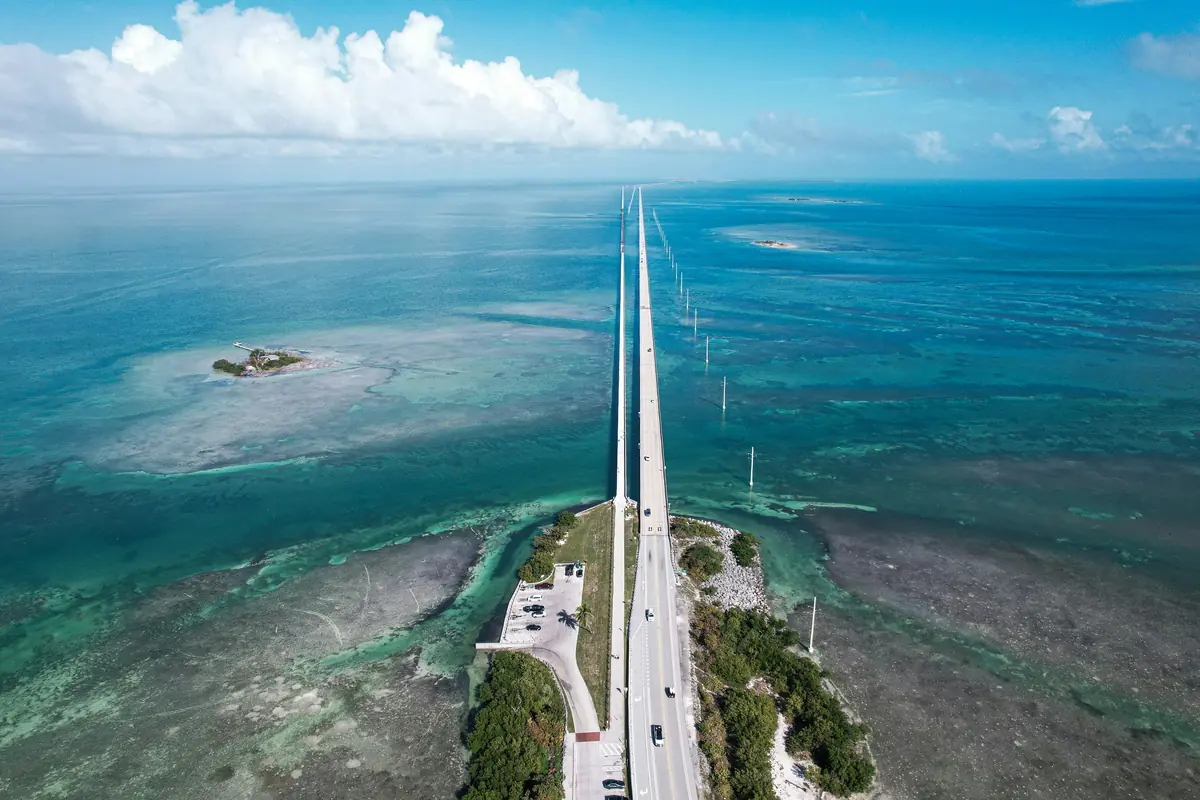
Crossing the Seven Mile Bridge with the windows down, ocean on both sides and no land in sight ahead, is the closest a US road comes to driving across open water.
- Location: Savannah, GA to St. Augustine, FL to Miami to Key West, FL
- Cost: Restaurant reservations vary; Florida state park entry fees are modest, around $8 to $10 per vehicle
- Best for: Travelers chasing Southern charm and a dramatic finish line
- Time needed: 4 to 5 days
Pro Tip: Book Savannah dinner reservations before you leave home. The best tables go a week or more out, and walking up at 7 p.m. on a weekend means a long wait or a forgettable backup.
Best Scenic Drives and Detours Along the Way
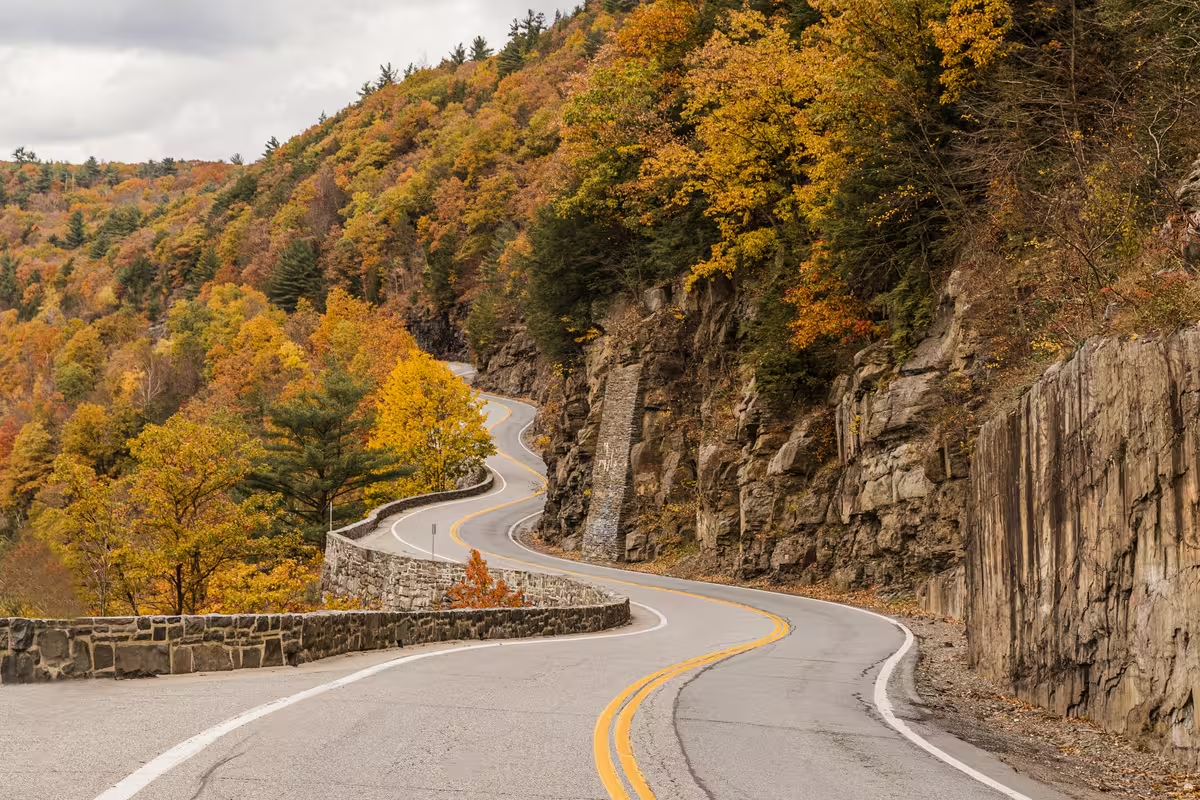
The two standout detours are the Blue Ridge Parkway, 469 miles (755 km) of 45-mph mountain scenery between Shenandoah and the Great Smokies, and the Overseas Highway to Key West. Add Shenandoah’s 105-mile (169 km) Skyline Drive. The Blue Ridge Parkway has no tolls or entry fee and 281 scenic overlooks.
These byways trade speed for the best driving of the trip. Plan them as deliberate add-ons, not shortcuts.
- Blue Ridge Parkway: 469 miles, 45 mph limit, 281 overlooks, 26 tunnels, no entry fee — allow 3 to 5 days to drive it properly
- Skyline Drive (Shenandoah): 105 miles, 35 mph, $30 per vehicle for a 7-day entry (park fees)
- Overseas Highway: 113 miles, 42 bridges, about 3.5 hours of pure driving from Miami to Key West
- Best foliage timing for the mountain drives: mid-to-late October
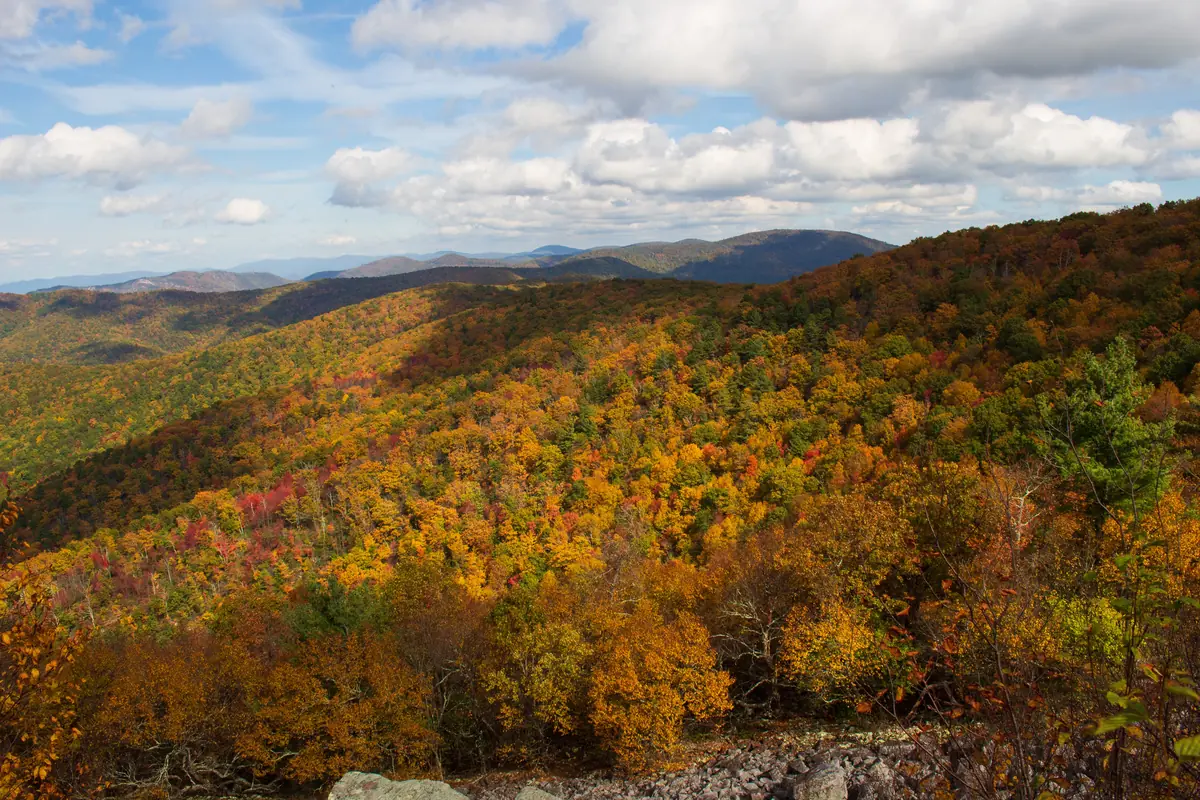
The Parkway has a moody side worth respecting. Mountain fog can roll in so thick at dawn that visibility drops to about 20 feet — thick enough that drivers regularly scrap a morning’s plans. Check conditions and don’t schedule it tight.
What to Skip and What Nobody Tells You
Skip the Empire State Building line and ride Top of the Rock instead for a comparable view with shorter waits. Don’t try to drive Maine to Florida in two days; nine-plus hours daily leaves you seeing only billboards. And know that Plymouth Rock is, literally, a small rock in a pit — much smaller than the postcards suggest.
A few more honest calls that the polished guides tend to avoid:
- Cap your driving at 300 to 400 miles (480 to 640 km) per day; beyond that the trip becomes an endurance test, not a vacation
- Time your passes through Washington and New York around rush hour, or you’ll lose an hour crawling on the interstate
- The Knoxville-to-Asheville interstate stretch carries heavy truck traffic — the Blue Ridge Parkway is the calmer, prettier alternative if you have the time
Plymouth Rock deserves its own warning. Travelers detour expecting grandeur and find a weathered stone behind railings, about the size of a kitchen table. Treat it as a two-minute photo stop, not a destination.
What to Pack and Rental Car Tips
Pack layers, because the coast spans 17 degrees of latitude — you may need a fleece in Maine and shorts in Florida the same week. Get an E-ZPass for Northeast tolls and a SunPass for Florida. If you’re renting, expect a one-way drop fee and an under-25 surcharge; the minimum rental age is 21.
The packing logic comes straight from the geography. You can genuinely run the heater at an Acadia sunrise and the AC by that same afternoon farther down the coast, so layers beat any single warm or cool wardrobe.
- Clothing: pack in layers; a fleece, a rain shell, and warm-weather basics cover the whole range
- Toll tags: E-ZPass for the Northeast, SunPass for Florida — both beat pay-by-plate. One catch: the Port Authority’s E-ZPass discount applies only to NY and NJ accounts, so an out-of-state tag still pays the full rate at the big New York bridges and tunnels
- Fuel: a fuel-price app pays for itself over a long trip with widely varying gas prices
- Rental car: budget for a one-way drop fee, a possible under-25 surcharge, and confirm the minimum age is 21
- Navigation: download offline maps for the low-signal stretches in the mountains and parts of the Outer Banks
Pro Tip: If your route is one-way (say, fly into Boston and out of Miami), price the rental’s one-way drop fee before booking. It can swing the total by hundreds of dollars and sometimes makes a round-trip loop cheaper overall.
Before You Turn the Key
Two to three weeks gets you the full east coast road trip from Maine to Key West: I-95 as the spine, US Route 1 and the Blue Ridge Parkway as the detours that make it worth doing. Go in spring or fall, budget $100 to $250 per person a day, cap your driving at 300 to 400 miles (480 to 640 km), and lock in Acadia’s Cadillac reservation plus your Charleston and Savannah dinner tables before you leave home.
Do that and the route hands you the country in cross-section — cold granite coast to open-water bridges, with the Mile Marker 0 sign in Key West waiting at the end.
This trip rewards people who like the driving itself. If long days behind the wheel drain you, fly the cities and rent locally instead. And if you’ve already made the run: which single stop would you refuse to give up, and which overhyped one did you cut to make room for it?