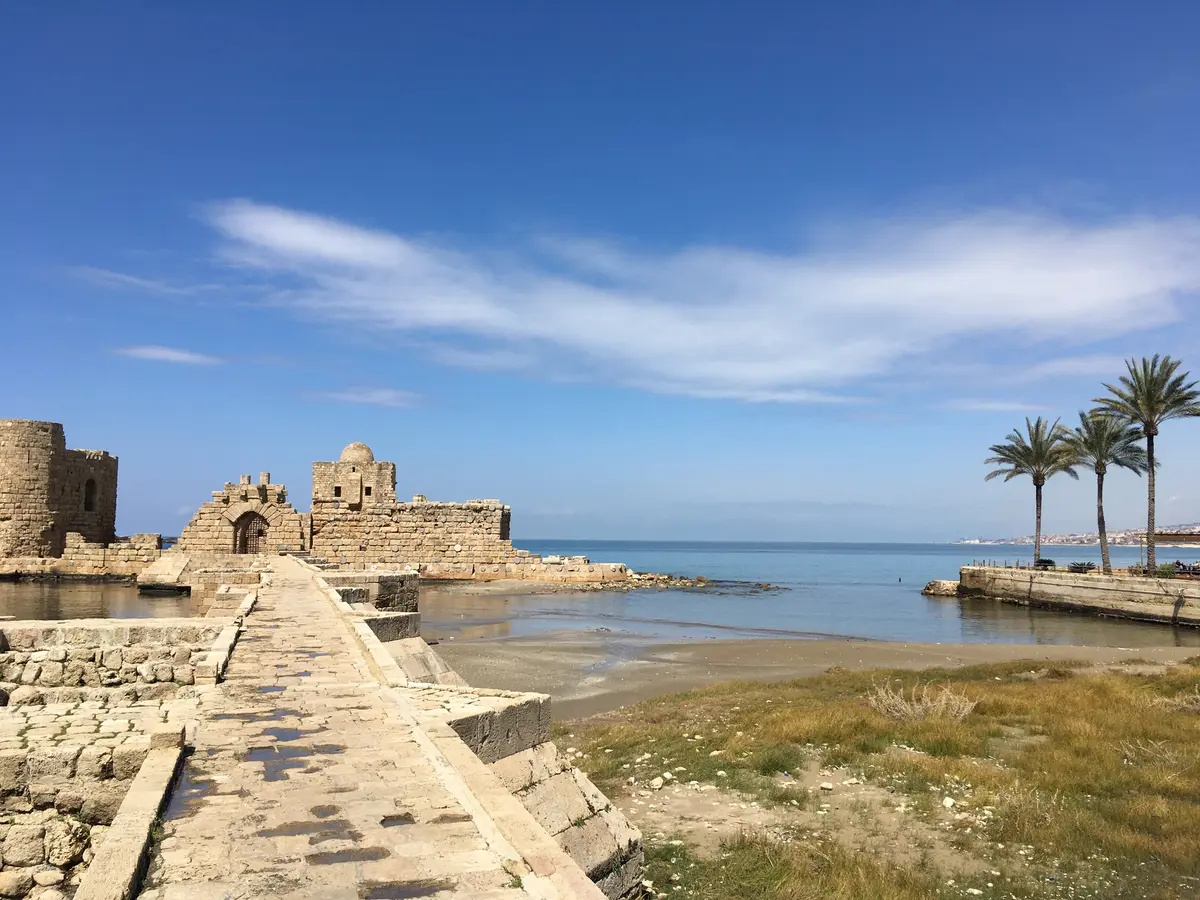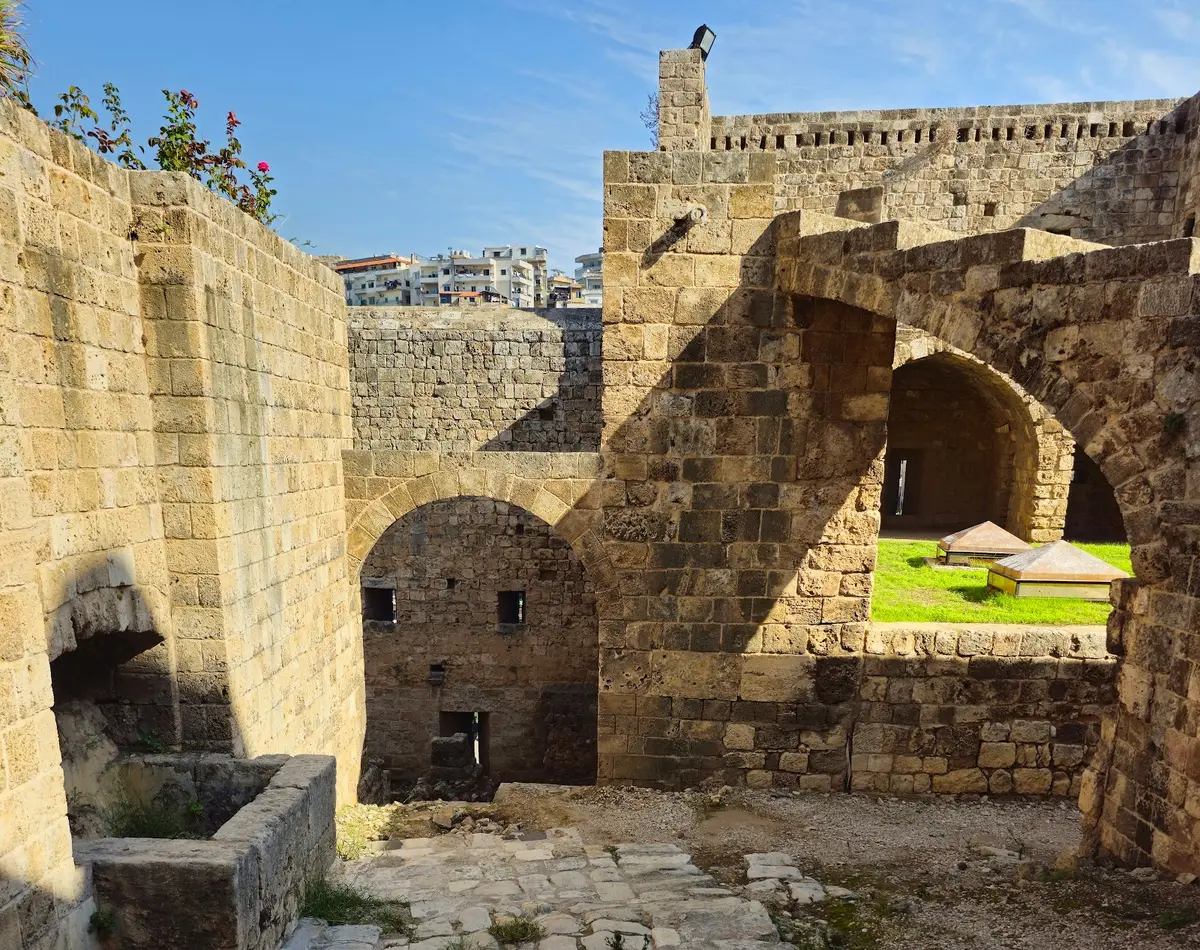
Hiking Qadisha Valley means walking a UNESCO-listed limestone gorge in north Lebanon where Maronite monks still live in cliff-cut cells above the river. Before you plan anything, read the safety section — the US State Department has Lebanon at Level 4: Do Not Travel, and that changes how this trip can responsibly be done.
Is Lebanon safe for US travelers right now?
No — not by the State Department’s measure. Lebanon sits at Level 4: Do Not Travel, with the advisory citing crime, terrorism, civil unrest, kidnapping, unexploded landmines, and the risk of armed conflict. On February 23, 2026 the Department of State ordered non-emergency US government personnel and family members to leave Lebanon, and US Embassy Beirut suspended routine consular services. American tourists who go anyway do so without meaningful consular backup.
What that means on the ground for hikers specifically:
- The Qadisha Valley itself, in the North Governorate, is geographically far from the southern Lebanon and Syria border zones where most military activity has concentrated. It is not one of the named high-risk sub-zones in the advisory.
- The country-wide Level 4 designation still applies. Commercial flights have operated but at reduced capacity, and the advisory warns they can be cancelled with little notice.
- Travel insurance is the biggest practical problem. Most standard US policies void coverage for countries at Level 4. You need a specialty war/high-risk insurer (battleface, World Nomads Explorer, IMG Patriot T.U.) — and you need to read the exclusions carefully.
- If something goes wrong — a broken ankle on LMT Section 7, a road closure on the way back to Beirut — the US Embassy has told Americans consular officers are not always able to travel to assist.
Pro Tip: Before anything else, enroll in the Smart Traveler Enrollment Program (STEP) at step.state.gov. It is free, takes five minutes, and is how the embassy reaches you if a situation escalates while you are in the valley and off signal.
The rest of this guide assumes you have read that, understood the trade-offs, and are making your own call. It is written for the reader who is going regardless — or who wants an accurate picture of what the valley would offer in calmer times.
What makes the Qadisha Valley worth the effort?
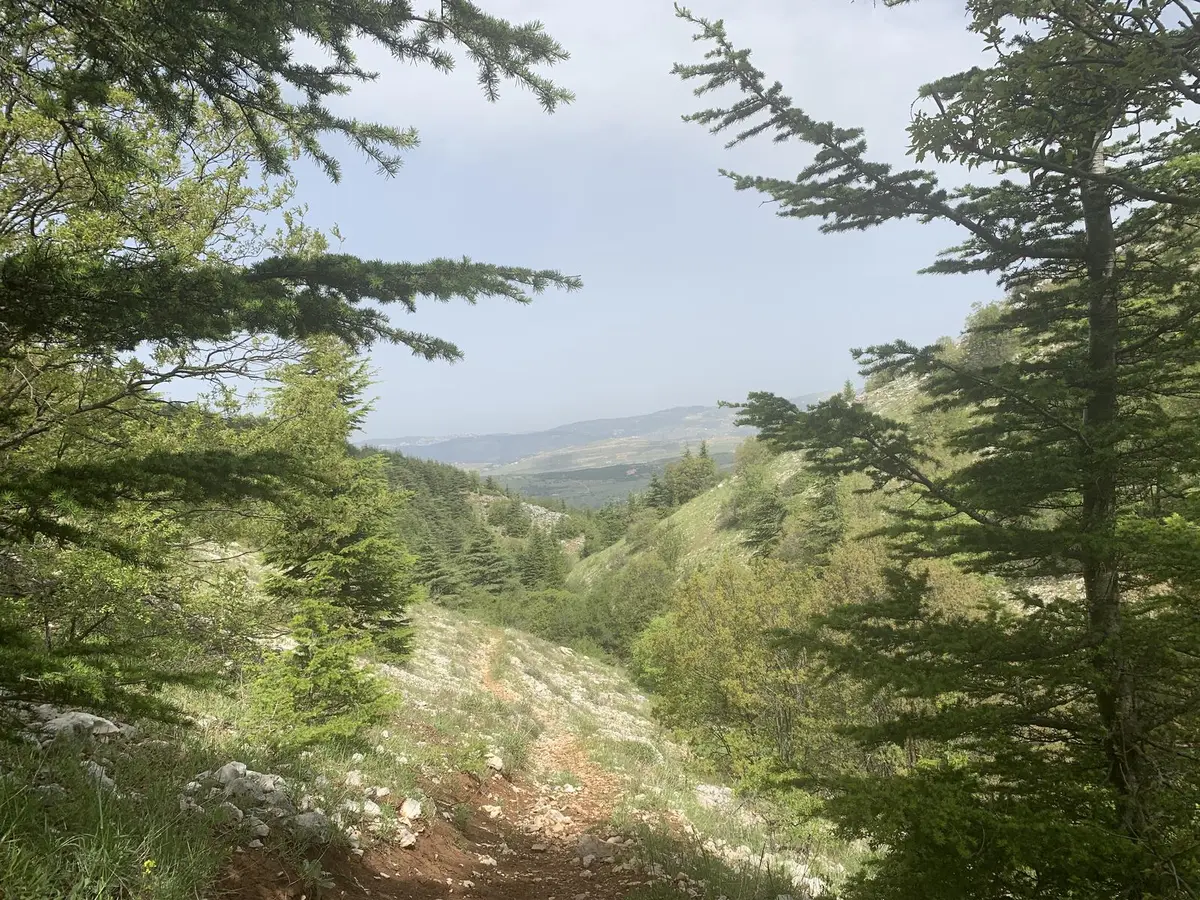
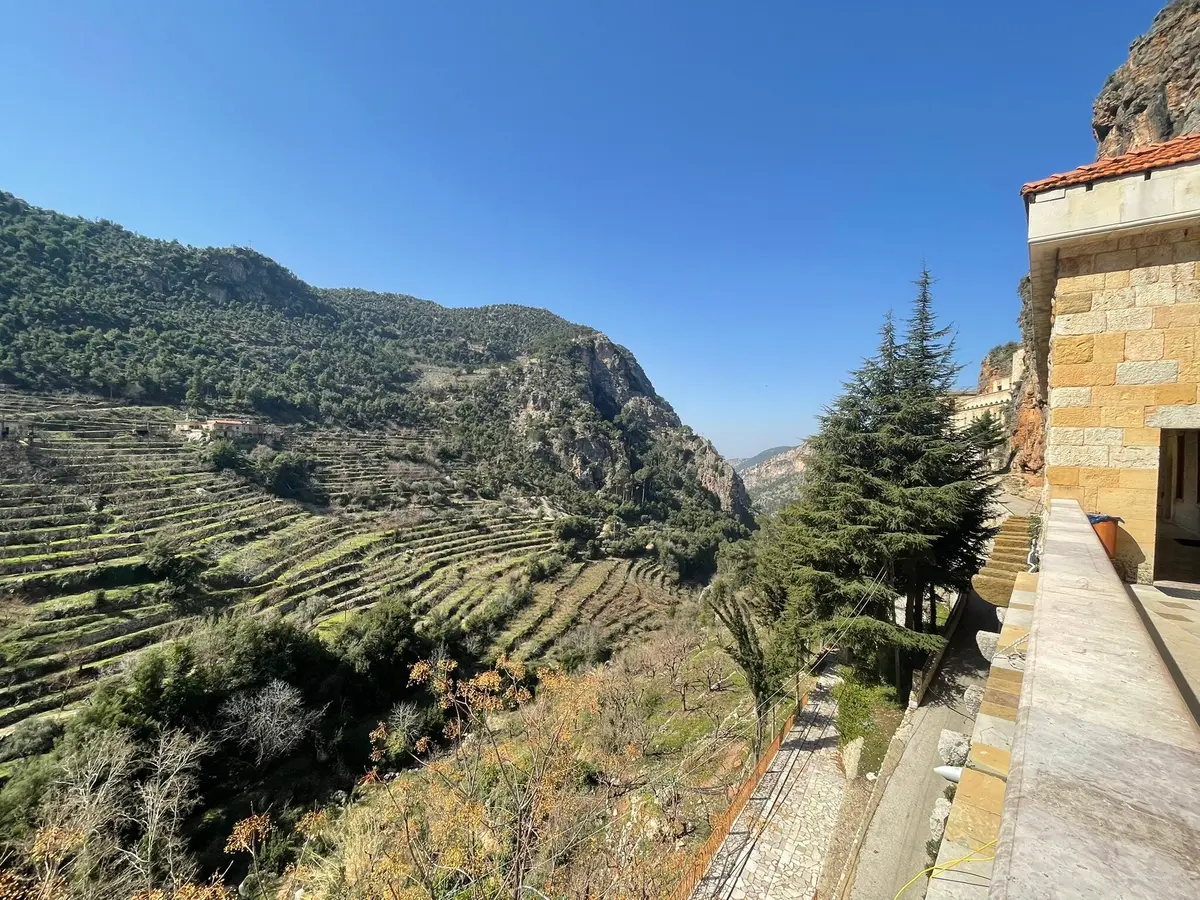
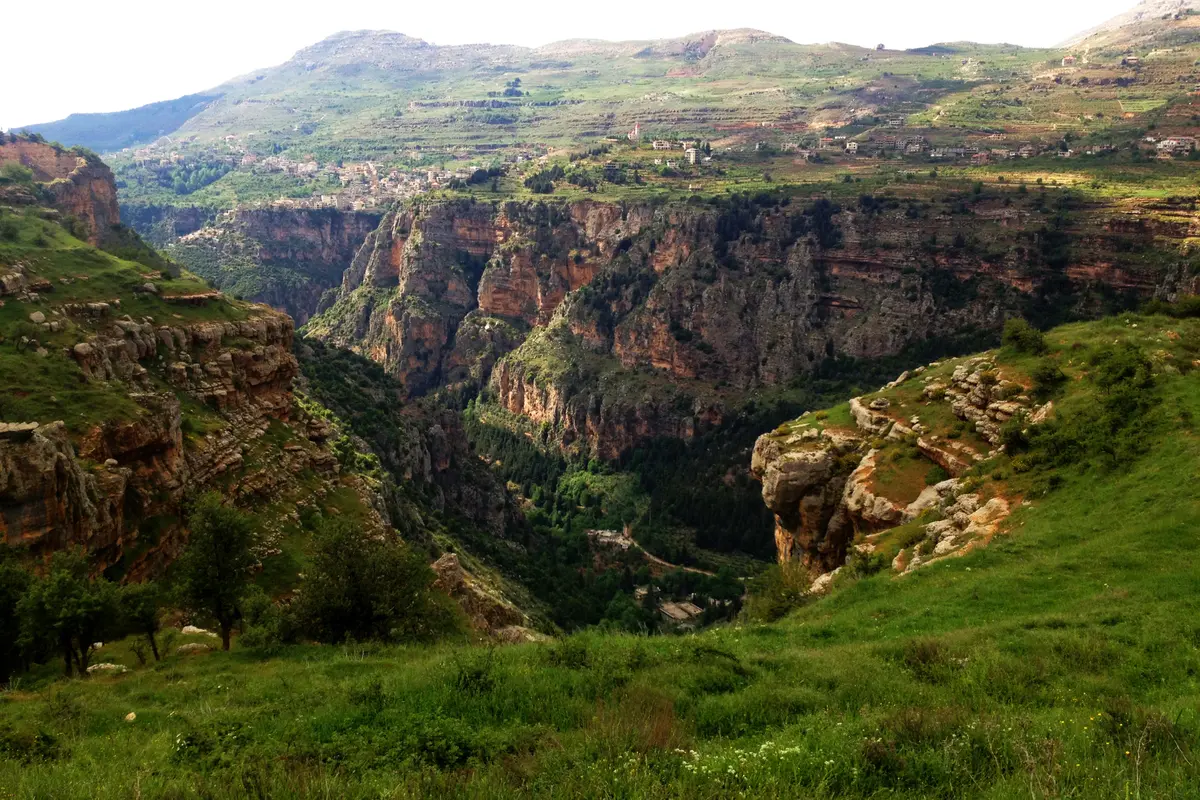
Qadisha is a deep limestone gorge carved by the Qadisha River in Lebanon’s North Governorate, inscribed on the UNESCO World Heritage List as a cultural landscape where monastic communities have lived continuously for more than a thousand years. The valley floor sits near 2,950 feet (900 meters); the rim rises above 4,920 feet (1,500 meters). The word Qadisha comes from a Semitic root meaning “holy.”
The appeal is the vertical transition. You drop from arid limestone rim into a damp, river-fed floor where fig trees grow out of cracks in the cliff and small stone chapels are cut directly into the rock. The valley splits into two branches: Qozhaya to the west and Qannoubine to the east. Because UNESCO status restricts new construction and limits vehicle access, the silence on the valley floor is real — you will hear your own breathing and the river, and not much else.
The monasteries are active prayer sites, not museum pieces. At Qannoubine, a handful of nuns live in the old patriarchal seat; at Hawqa, a single Colombian-born hermit, Father Dario Escobar, has lived in a cliff-cut cell for more than two decades. That is the experience Qadisha offers that no other hike in the region does.
How do you actually get to Bcharre from Beirut?
Bcharre is the main trailhead town for the valley, sitting about 68 to 75 miles (110 to 120 km) north-northeast of Beirut. You have three realistic options, each with different trade-offs between cost, comfort and flexibility. The drive is not long in miles but the last hour climbs a switchback road with real consequences if you’re not a confident mountain driver.
Public minibus (cheapest, longest)
Minibuses to Bcharre depart from the Dora transport hub in northeast Beirut, not from a formal bus station. Companies like Connexion and Estephan have run this route for years; you find the correct bus by asking for “Bcharre” at the Dora roundabout and expect a chaotic, informal setup.
- Cost: a few US dollars one-way, paid in cash
- Journey time: 2.5 to 4 hours depending on traffic and stops
- Best departures: 8:00–10:00 a.m. to arrive by early afternoon
- Best for: solo budget travelers comfortable with unmarked transport
Private taxi or arranged transfer (easiest)
The least stressful option. Book through your Beirut hotel rather than hailing at the airport — a concierge-booked driver quotes a fixed round-trip price upfront and knows the mountain road.
- Cost: roughly $100–$180 one-way depending on negotiation and vehicle
- Journey time: 2 to 2.5 hours
- Best for: first-time visitors, older travelers, groups of 2–4
Car rental (most flexible, highest risk)
A rental gives you the freedom to detour to the Cedars of God, the Qadisha Grotto and Ehden without re-booking a driver. The coastal highway north is straightforward; the climb from Chekka to Bcharre is hairpins, occasional rockfall and drivers who treat the center line as decorative. If you’re on the fence, our full guide to renting a car in Lebanon breaks down insurance, fuel and road realities.
- Cost: from about $45/day for a compact, plus roughly $8/gallon for fuel
- Road: steep switchbacks above Chekka; do not drive this at night
- Best for: confident mountain drivers planning 3+ days in the north
Pro Tip: If you go by taxi, negotiate the round trip with a day-of-arrival pickup. Getting a cab back from Bcharre on short notice is the single most common complaint of first-time visitors.
How does money actually work in Lebanon?
Lebanon runs on a dual-currency system where the Lebanese pound is the official currency but the US dollar is what people actually use. Outside of high-end establishments, credit cards are rarely accepted and ATMs can be unreliable for foreign travelers — cash is the primary way to pay for almost everything. Treat this as a cash-only trip and withdraw nothing once you land.
What to bring:
- Denomination mix: $100 bills for exchange at a Sarraf (money changer); plenty of $1, $5, $10 and $20 bills for direct payment for taxis, entrance fees, guesthouses and meals
- Bill condition: crisp, uncirculated, unmarked. Torn, creased, pen-marked or older-design bills get refused on sight, even at hotels. Ask your US bank for new-design blue $100s and keep them flat in a dedicated envelope
- Total to carry: budget $80–$150/day for a mid-range hiking trip; carry the full trip total plus a buffer, because you will not be refilling cash anywhere useful
The Lebanese pound trades around 89,500 to the dollar. As a tourist you almost never need pounds — you will receive small change in pounds at grocery stores and cafes, and that is fine to use up on street food.
Pro Tip: Tell your US bank you’re traveling to Lebanon before you leave so they don’t freeze your card if you do use it at a hotel. And split your cash — half in a money belt, half in the hotel safe. Pickpocketing is rare, but losing every dollar you have in one moment is the kind of problem you cannot fix locally.
When is the best time to hike the Qadisha Valley?
The valley hikes well in spring and fall and poorly in peak summer and deep winter. April through June and September through November are the windows where the weather, trail conditions and waterfall flow all line up. Aim for spring if you want wildflowers and peak snowmelt; aim for fall if you want clear long-distance views and stable temperatures.
Spring (April–June)
The best single window of the year. Waterfalls run full from snowmelt at higher elevations, wildflowers carpet the terraced fields, and daytime temperatures on the valley floor sit in the 60s–70s°F (16–24°C). Trails can be muddy in the first weeks of April — waterproof boots or trail runners with aggressive tread are the move, not mesh sneakers.
Summer (July–August)
Hikeable but hot. The valley floor can push past 90°F (32°C) by midday, and the cliff reflection amplifies the heat. This is the only window where starting at 5:30 a.m. is a real strategy, not a suggestion. Evenings at Bcharre (elevation ~4,900 feet / 1,500 m) cool to the 60s°F (16–20°C), so the village itself stays pleasant.
Autumn (September–November)
The other prime window. Air is crisp, visibility can stretch to the Mediterranean on a clear morning, and the oak and poplar turn gold by late October. Temperatures sit in the 55–70°F (13–21°C) range on the floor. Crowds — which are never huge in Qadisha — thin further after the Lebanese school year restarts.
Winter (December–March)
Not hiking season. Snow blankets the rim and Cedars area, and the valley trails ice over in shadowed sections. This is snowshoe or ski territory — Mzaar and the Cedars Ski Resort are nearby — but the monastery hikes specifically require gear and judgment most casual visitors do not have.
Which Qadisha trail should you actually hike?
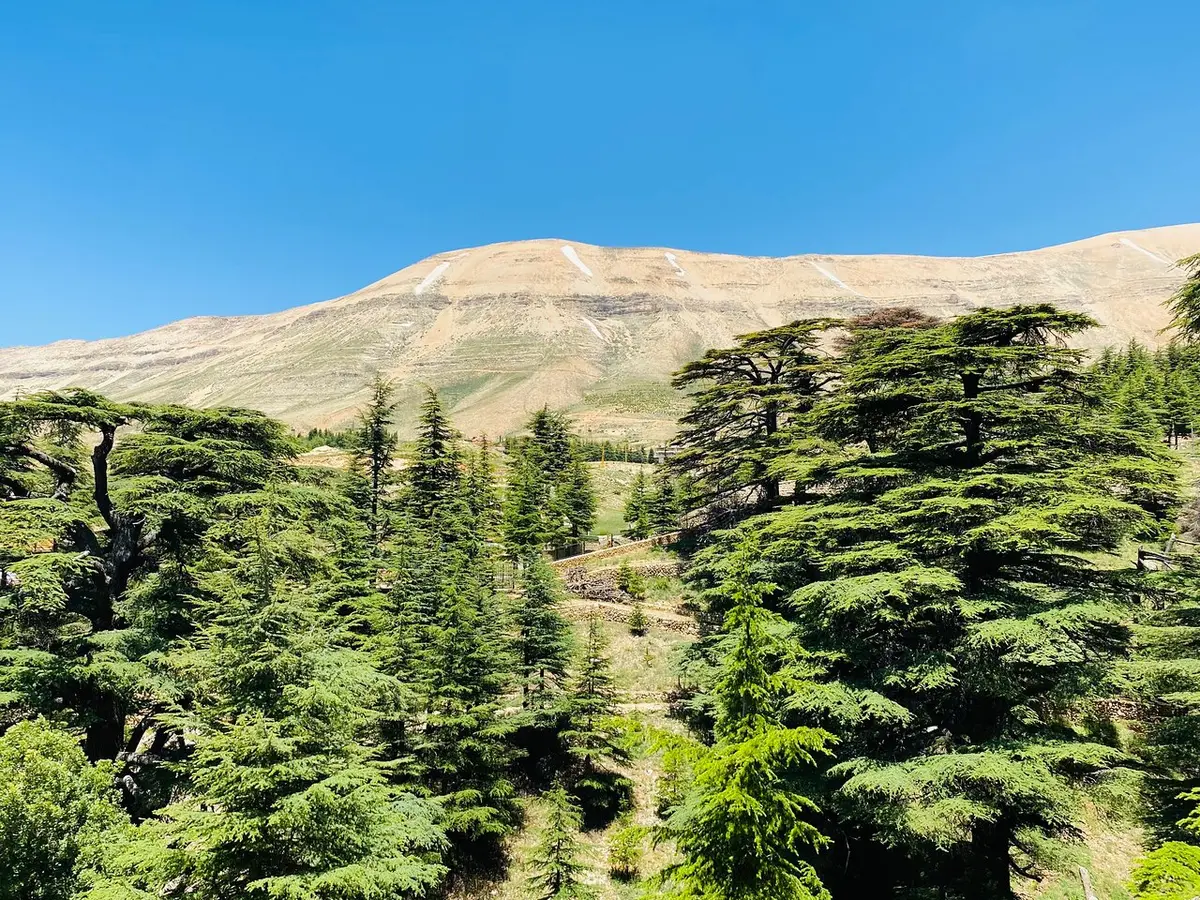
The valley has three hikes worth planning around: LMT Section 7 (the full rim-to-rim traverse), the valley-floor walk from Mar Lichaa to Qannoubine (the scenic middle option), and the Hawqa descent (short, with the hermit visit as the payoff). Pick based on fitness, time and whether cultural encounter or physical challenge is the goal.
LMT Section 7 — the full traverse
The signature long-distance hike of the region and a section of the 290-mile (470 km) Lebanon Mountain Trail. It begins near the Monastery of St. Anthony of Qozhaya, drops steeply to the valley floor, contours along the Qadisha River, then climbs hard up the serpentine switchbacks to Bcharre. External sources put the total distance anywhere from 8.2 miles (13.2 km) to 9.3 miles (15 km) depending on where the route terminates.
- Distance: roughly 8.2–9.3 miles (13.2–15 km) point-to-point
- Duration: 5.5 to 7 hours of hiking
- Difficulty: hard, rated for the climb out rather than the distance
- Trailhead: Monastery of St. Anthony of Qozhaya (finish at Bcharre, or reverse)
- Best for: fit hikers comfortable with 1,600+ feet (500 m) of sustained ascent
The logistics problem is that this is point-to-point, not a loop. You either arrange a driver to shuttle you (guesthouses in Bcharre and Ehden handle this routinely for about $40–$60), park one car at each end, or hike out-and-back and accept doubling the day.
Mar Lichaa to Qannoubine — the valley-floor walk
The best hike if you want Qadisha’s scenery without the lung-burning climb. It stays on the valley floor, follows the river, passes waterfalls and the Qannoubine monastery, and lets you turn around at any point.
- Distance: about 3.3 miles (5.3 km) one-way
- Duration: 2.5 to 3.5 hours round-trip with monastery stops
- Difficulty: moderate; rocky in places but no serious climb
- Best for: travelers with limited time, families, anyone uncertain about the big traverse
The Hawqa descent — shortest with the highest cultural payoff
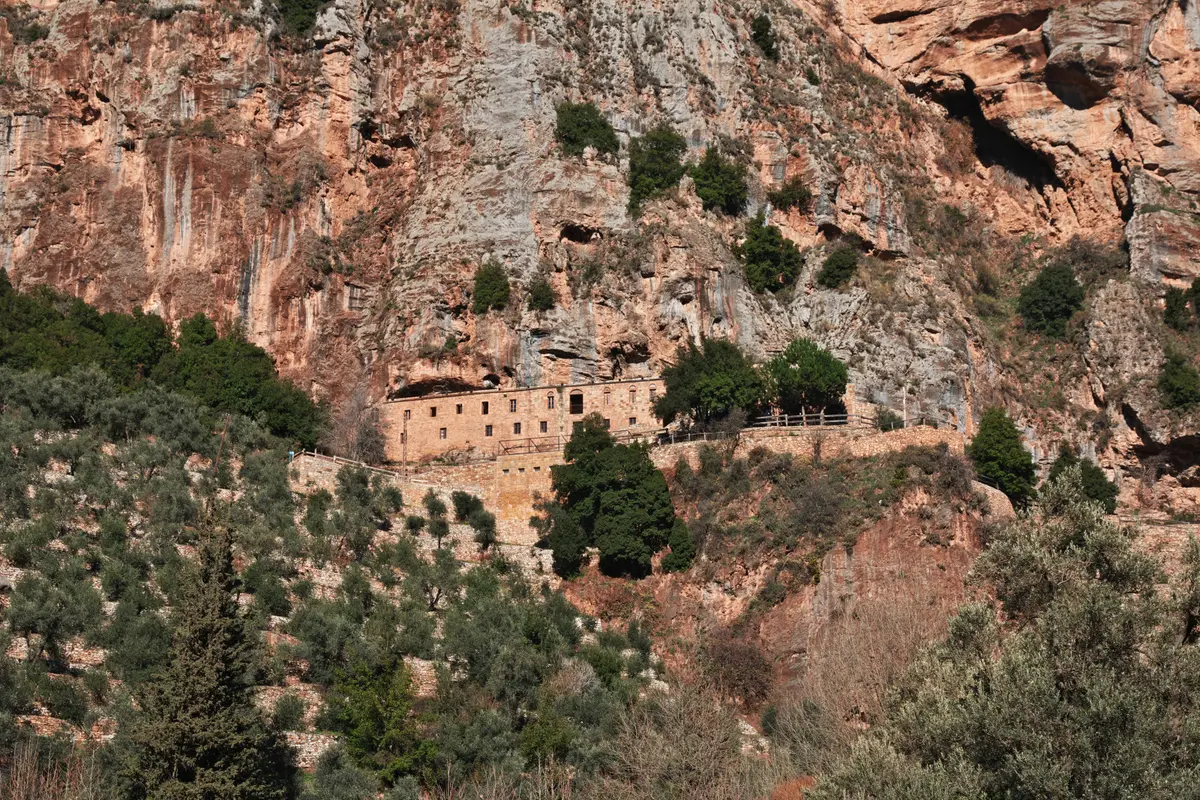
From Hawqa village on the rim, a steep stone staircase drops to the Monastery of Our Lady of Hawqa, built into the cliff face. The draw is visiting Father Dario, the resident hermit, if he is receiving visitors that day.
- Distance: about 0.6 mile (1 km) down and 0.6 mile back up
- Duration: 1.5 to 2 hours including a monastery visit
- Difficulty: short but the climb out is steep stone steps
- Best for: the cultural visit specifically; it is not a hiker’s hike
Pro Tip: Bring a small written-down question or thought for the hermit if you visit Hawqa — language is limited (he speaks Spanish, Italian and French more fluently than English), and showing up with a specific reason reads as respect, not tourism.
Which monasteries should you visit, and what’s the etiquette?
Three monasteries anchor any Qadisha itinerary: St. Anthony of Qozhaya (the most accessible), Our Lady of Qannoubine (the most atmospheric) and Our Lady of Hawqa (the hermit’s cell). They are active religious sites, not museums, and visitor conduct matters more than at a typical European abbey.
Monastery of St. Anthony of Qozhaya
The oldest and largest monastery in the valley, set in the Qozhaya branch. It housed the first printing press in the Middle East (a Syriac-language press dating to the 1500s) and has a rock-cut church and a small museum. Road access means you can drive to the door, which also means tour groups.
- Location: Qozhaya Valley, accessible by car via Ehden
- Cost: free; donations accepted
- Best for: first-time visitors, those who want the valley without a full hike
- Time needed: 1 to 1.5 hours for church, museum and grounds
Monastery of Our Lady of Qannoubine
The seat of the Maronite Patriarchate for more than 400 years, tucked into the valley floor where access requires walking in. The isolation is the point. A handful of nuns still live here and maintain the chapel.
- Location: Qannoubine Valley floor, hike-in only
- Cost: free; donations accepted
- Best for: hikers doing the Mar Lichaa–Qannoubine walk
- Time needed: 45 minutes to 1 hour on site
Monastery of Our Lady of Hawqa (Hermitage)
A small cliff-cut complex reached by the steep stone staircase from Hawqa village. Home to the valley’s living hermit.
- Location: below Hawqa village, staircase access
- Cost: free; donations accepted
- Best for: the cultural/spiritual encounter specifically
- Time needed: 45 minutes if the hermit is receiving; longer is welcome
Etiquette that actually matters
- Dress: shoulders and knees covered for everyone, men and women. Zip-off hiking pants work fine; a light scarf in your pack covers a tank top in a pinch.
- Voice: low. Inside chapels, silence is expected.
- Photos: never of monks, nuns or the hermit without explicit permission. Flash is prohibited in all chapels. Exterior architecture is fine.
- Donations: a few dollars in cash if you light a candle or sit for a service. These communities survive on this.
Where should you stay in Bcharre and the valley?
Accommodation in the region splits into three tiers: monastery guest rooms (austere, cheap, immersive), budget and mid-range mountain guesthouses in Bcharre (social, hiker-friendly), and the one proper hotel with a pool. The choice shapes the trip more than it usually does — staying in a monastic cell is a different experience from a guesthouse common room.
St. Anthony of Qozhaya Guesthouse (Monastery Stay)
Simple rooms inside the active monastery complex, most with en-suite bathrooms. No Wi-Fi, no TV, early breakfast, bells at dawn.
- Location: Qozhaya Valley, Monastery of St. Anthony
- Cost: roughly $25–$45/night per person including breakfast
- Best for: travelers who actively want digital silence and early starts
- Time needed: 1 night minimum; 2 lets you acclimatize and hike without rush
Tiger House (Budget Guesthouse, Bcharre)
A long-running backpacker favorite in Bcharre, known for owner Tony’s hospitality and a social common room where hikers compare trail notes over arak.
- Location: central Bcharre, walking distance to the main square
- Cost: from about $25/night for a dorm bed, $50–$70 for a private room
- Best for: solo travelers, budget hikers, anyone who wants local intel
- Time needed: 2 nights covers one big hike plus a rest day
Hotel Chbat (Mid-Range with Pool, Bcharre)
The comfortable option with a swimming pool, full restaurant and valley views. Rooms are plain but clean; the pool terrace is the selling point after a day on the trail.
- Location: Bcharre, above the main town
- Cost: from about $90–$130/night for a double room
- Best for: couples, post-hike recovery, travelers who want a real shower and a drink on a terrace
- Time needed: 2 to 3 nights
Bauhaus Chalets (Social Mid-Range)
A mid-range guesthouse popular with hiking groups and cycling tours. More of a group vibe than Hotel Chbat; think communal dinners over private dining.
- Location: near Bcharre, walkable to restaurants
- Cost: roughly $70–$110/night
- Best for: groups of friends, solo travelers who want structured social time
- Time needed: 2 nights
Where should you eat in and around Bcharre?
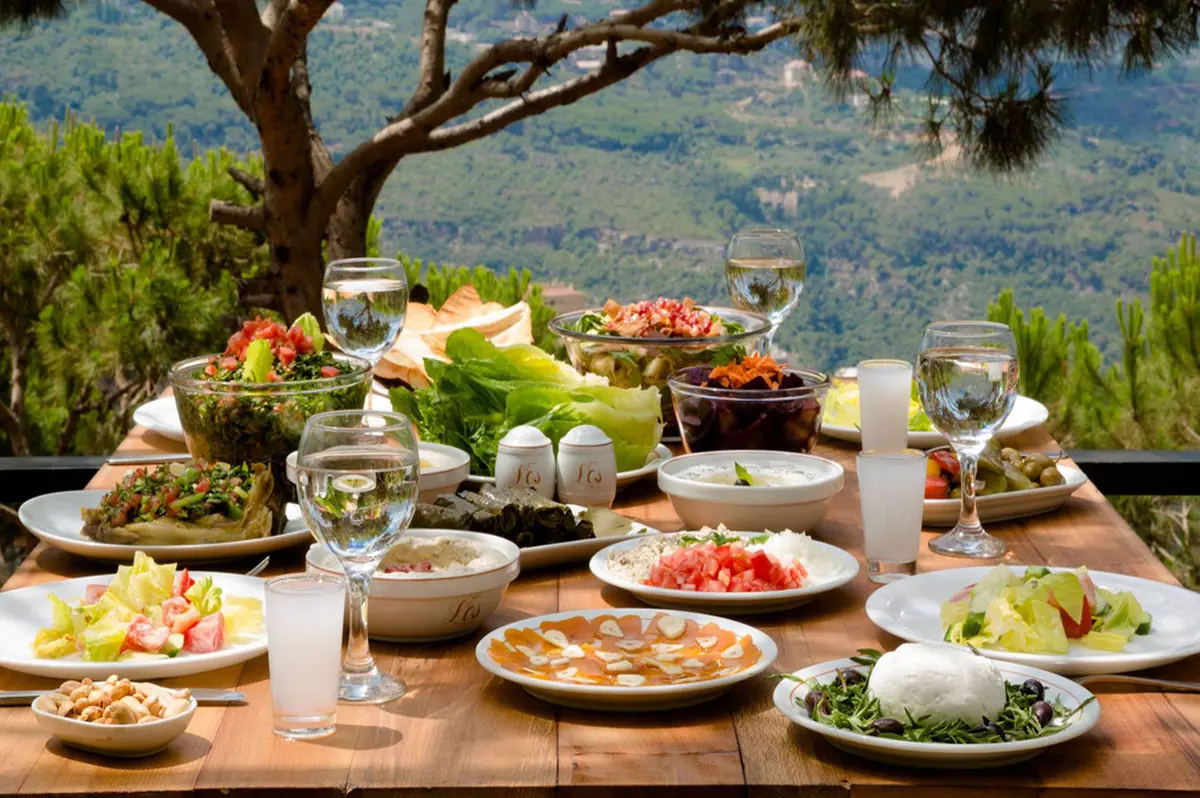
The food story in Qadisha is less about standout restaurants and more about the mouneh (preserved food) tradition — trout from the river, labneh, pickled vegetables, freshly baked manakish. Three places anchor the eating scene.
- Abou Joseph Restaurant: river-adjacent, fresh trout and full mezze spreads; the trout with tahini is the order. Expect $18–$28 per person for a full meal with drinks.
- River Rock: at the Bcharre entrance with a view that does most of the work; traditional dishes and grilled meats. About $20–$30 per person.
- Local furns (bakeries): open early, manakish with zaatar or cheese for $2–$4 and the best fuel for an early start on LMT Section 7.
Pro Tip: The Greenland Restaurant, near the end of the valley-floor walk, is where local guides bring hikers. It’s not advertised — ask your guesthouse to call ahead because they cook to order and it’s worth the extra 20 minutes before the climb back to Bcharre.
What should you actually pack?
The valley is a shoulder-season destination above 3,000 feet in a country where resupply is difficult. Bring everything — do not count on buying gear in Bcharre.
- Hiking boots or stiff trail runners with real tread (the trail has loose limestone and worn stone steps)
- Layers: a wind shell, a warm mid-layer, and a base layer even in summer
- 2L water capacity minimum — there are springs but you need a filter or tablets to trust them
- Headlamp (many hikes take longer than expected and valley dusk is fast)
- Offline map app with the LMT route downloaded (maps.me or Gaia GPS; cell signal in the gorge is patchy)
- A modest cover-up for monastery visits (a sarong or light scarf works)
- Cash in small US bills — for entrances, tips, meals and the driver
- Local SIM — Touch or Alfa; pick up at the Beirut airport. Critical for the embassy’s STEP alerts and for calling a driver from the trailhead.
- Specialty travel insurance that covers Level 4 countries. Standard US policies do not.
The bottom line
TL;DR: Qadisha Valley is one of Lebanon’s most compelling hikes and a standout across the Middle East — a UNESCO gorge where Maronite monasteries hang off cliff faces and a single hermit still lives in a cave above the river. It is also in a country the US State Department classifies as Level 4: Do Not Travel, where the embassy has ordered non-emergency personnel out and suspended routine consular services. For US travelers who go anyway: bring crisp dollars, real boots, specialty insurance that covers Level 4 countries, and register with STEP before you land.
The honest editor’s read: in calmer times, this is a five-day trip any serious hiker should take once — the LMT Section 7 traverse, a night in a monastic cell, an hour with the hermit at Hawqa, and a recovery day at Hotel Chbat with the pool and a glass of Château Musar. Those are not the current times. If you decide to go, go with your eyes open and your paperwork in order (and for the wider country picture, our Lebanon travel guide sets the baseline).
Have you hiked Qadisha, or is it on your list for when the advisory drops to Level 3? I’d like to hear how you weighed the trade-off — drop it in the comments.