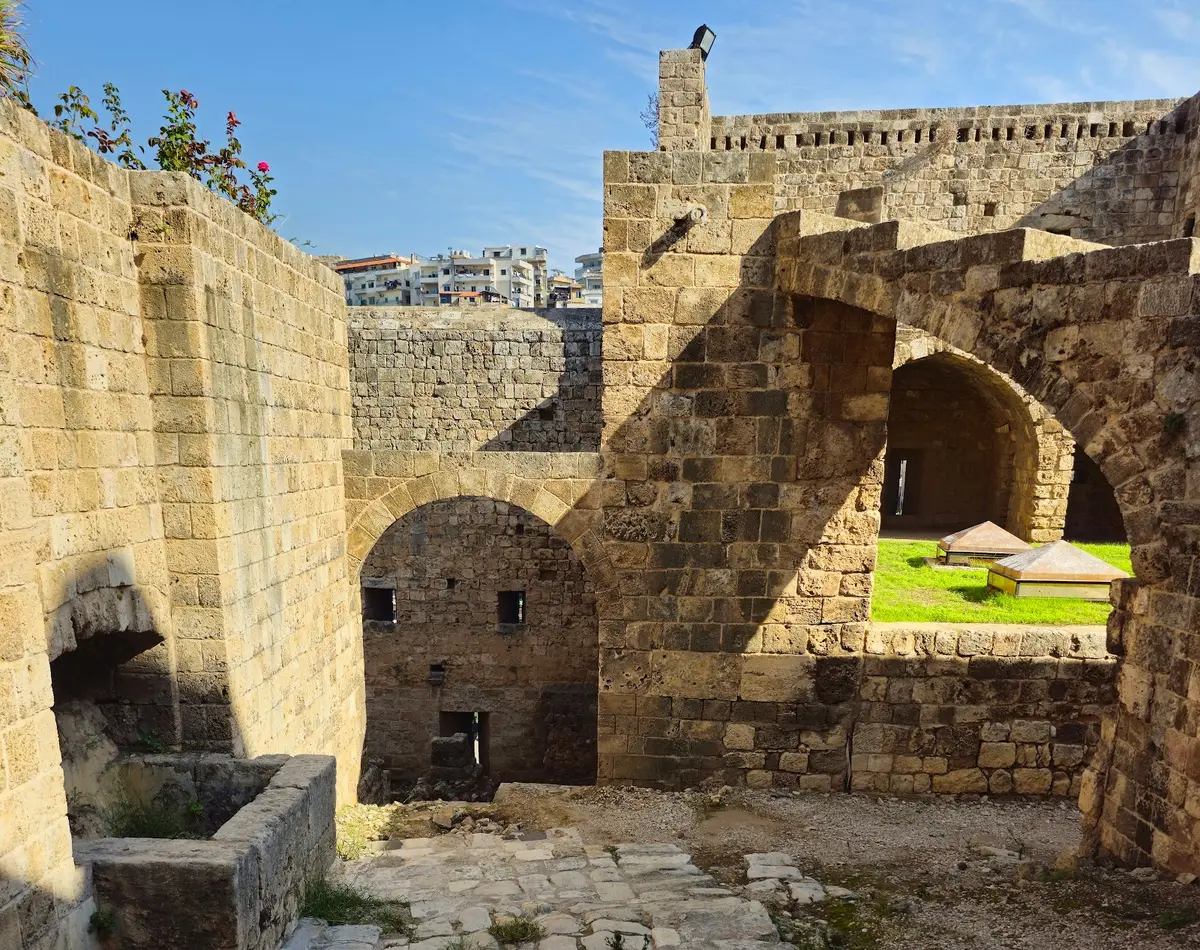
Lebanon’s electrical system will catch Americans off guard. Plug types shift from building to building, the 220V supply can fry a US hair dryer in seconds, and neighborhood diesel generators ration power by the amp. This guide covers everything you need to know about power outlets in Lebanon — hardware, voltage, subscriptions, and what to actually pack.
For the broader logistics picture, consult our Lebanon travel guide before you finalize your packing list.
What plug types will you encounter in Lebanon?
Power outlets in Lebanon come in three main types — C, D, and G — with the occasional Type A socket showing up on cheap power strips. Type C (two round pins, 220V) is by far the most common in hotels, Airbnbs, and modern apartments. Older buildings and heavy appliances often use Type D. New-construction luxury rentals increasingly use British-style Type G.
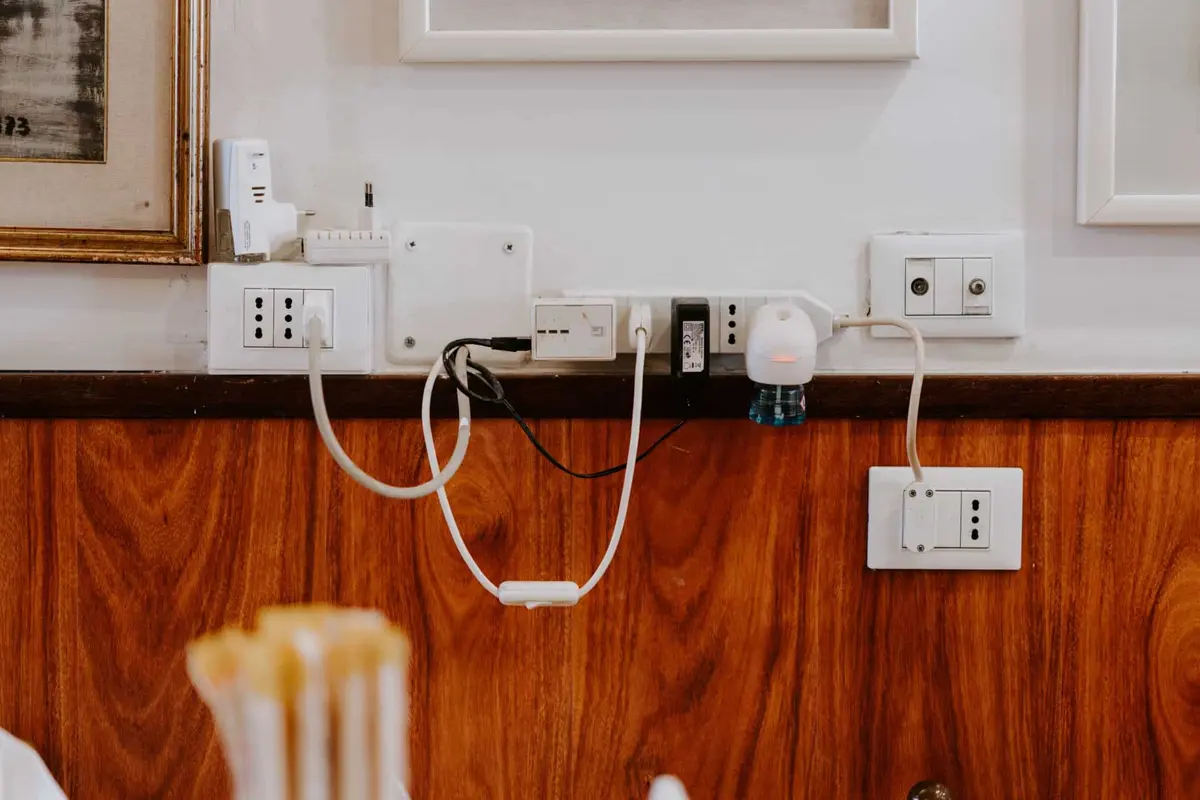
The mix of outlets tells the story of the country’s layered construction history. Buildings from different decades and under different influences sit on the same block, which is why you can walk into one hotel with Euro-style sockets and the next with British three-pin plugs. Bring adapters for all three types if you’re moving around the country.
Type C — the everyday outlet
The vast majority of power outlets in Lebanon you’ll actually use day-to-day are Type C. Two round pins, 4.0mm (0.16 inches) thick, spaced 19mm (0.75 inches) apart, ungrounded. If you’ve traveled in Italy, Greece, Germany, or France, you already know the shape. They’re standard in hotels, restaurants, residential buildings from 1990 onward, and most Airbnbs.
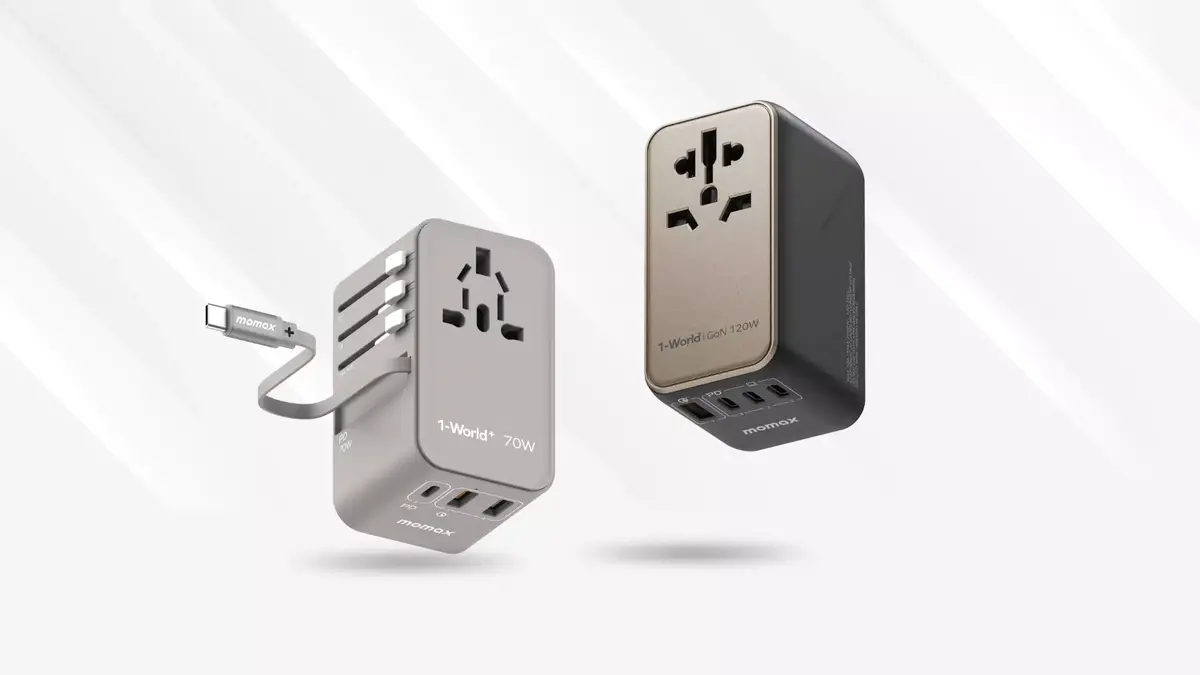
Here’s what nobody warns you about: many of these sockets are recessed into round plastic wells about an inch (2.5 cm) deep. If you brought one of those all-in-one universal adapter cubes with slide-out prongs, the body of the adapter is often too wide to reach the pins. You’ll stand there jabbing a $30 adapter at a wall and wondering why nothing is charging.
Older sockets have a different problem. The spring mechanism inside wears out, and a heavy adapter will literally slide out of the wall under its own weight. On my last trip to Hamra, I watched a friend’s laptop charger hit the floor three times in ten minutes before we gave up and moved to a different outlet entirely.
Pro Tip: Bring two or three slim, low-profile Type C adapters — the flat-body kind that sits flush against the wall. Skip the heavy adapter cubes. They don’t fit, they fall out, and you’ll end up buying a cheap local adapter at a corner store within 24 hours anyway.
Type D and G — the British-legacy outlets
Type D outlets — three large round pins in a triangle — show up in pre-1970 buildings, government offices, and many older rental apartments. You’ll often find them powering washing machines, water heaters, and wall-mounted AC units. If your Airbnb is in a historic building in Gemmayze or Mar Mikhael, ask specifically about outlet types before you arrive.
Type G — the rectangular three-pin plug used in the UK and Dubai — is the rising standard in new construction, high-end hotels, and luxury rentals. Most modern split AC units run on Type G. If you’re deciding where to stay in Beirut, newer buildings are the safest bet for avoiding adapter roulette — they typically use Type G for high-draw appliances and Type C for wall sockets in living spaces.
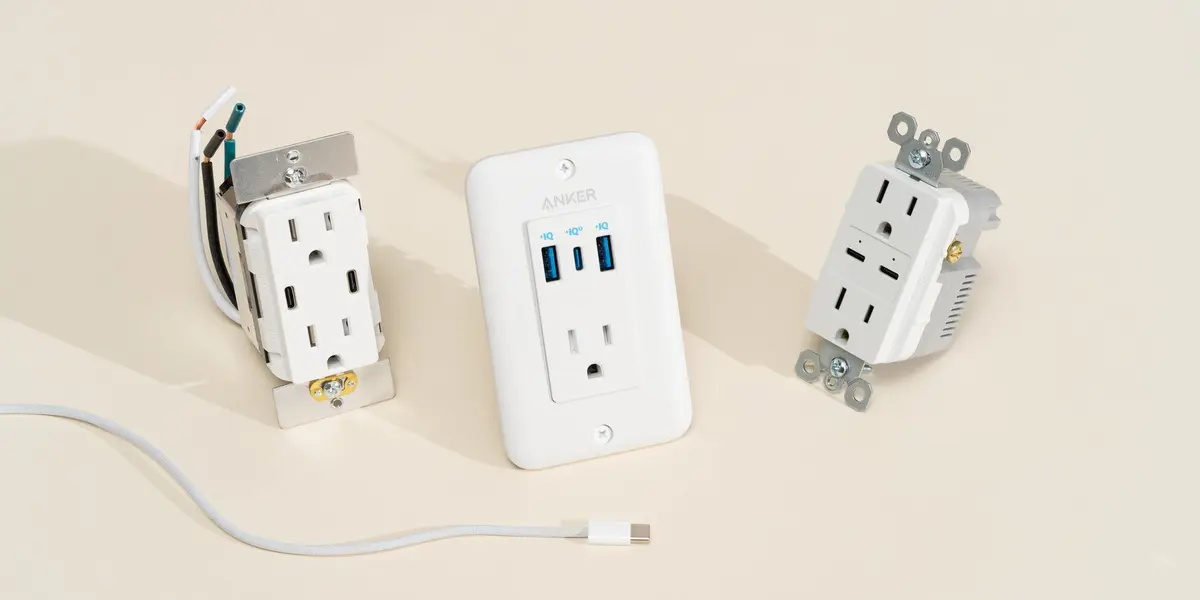
The Type A trap — a 220V disaster disguised as a US outlet
This is the one that destroys electronics. You’ll occasionally see flat two-prong sockets that look identical to US outlets, especially on cheap power strips sold at corner stores. Your instinct says plug and play.
Don’t. That outlet is delivering 220V, not 110V. Plug a 110V-only US device into what looks like a familiar wall socket and you’ll get a pop, a puff of smoke, and a dead device within two seconds. Flat irons, curling irons, old chargers, and travel kettles are the usual casualties. This is the single most common way Americans fry their electronics when using power outlets in Lebanon.
Will Lebanese voltage destroy your electronics?
Lebanon runs on 220-230V at 50Hz; the US runs on 120V at 60Hz. Most modern electronics — phone chargers, laptop bricks, camera chargers, anything with “100-240V” printed on the adapter — handle both voltages automatically and only need a plug adapter. Single-voltage devices marked “110V 60Hz” will burn out instantly on a Lebanese outlet. Check the fine print on every charger before you pack.
What actually happens to a 110V device on 220V
The physics is ugly. When voltage doubles, the power dissipated quadruples. For heating elements — hair dryers, flat irons, travel kettles — the coil goes from hot to incandescent in under a second. The element melts, the plastic housing warps, and the internal fuse pops with a flash of light. I’ve seen a friend’s flat iron melt into her countertop at an Airbnb in Achrafieh. The damage deposit conversation was not fun.
Motors have their own failure mode. A 110V razor or portable fan on 220V spins at double speed, overheats within 10 seconds, and burns out the windings. Old-style bulky chargers with capacitors rated for 120V can actually explode, releasing smoke and a burnt-plastic smell that lingers for hours.
Dual-voltage gear — what works out of the box
Read every charger’s fine print before you pack. If the input rating reads “100-240V ~ 50/60Hz,” you’re safe anywhere in the world with just a plug adapter. This covers almost every:
- iPhone and Android charger
- MacBook, Dell, and Lenovo laptop brick
- Camera battery charger (Canon, Sony, Nikon)
- Kindle, iPad, and tablet charger
- USB-C GaN charger and power bank
If it says “110V 60Hz” or just “120V,” leave the device at home. No adapter makes it safe on a Lebanese outlet.
Why cheap voltage converters are a trap
You’ll see small, lightweight “voltage converters” for $20-$30 on Amazon that promise to step 220V down to 110V. Do not use them for anything with a circuit board. These cheap converters produce a dirty, unstable electrical signal that destroys sensitive electronics — they’ve killed Dyson Airwraps, smart speakers, and high-end hair tools that cost more than the flight.
A proper step-down transformer with a heavy iron core produces clean power, but one rated for a 1,500W hair dryer weighs 15-20 pounds (7-9 kg) and costs $100 or more. You’ll pay more in baggage fees than the cost of a locally-bought 220V hair dryer. It’s one of the trade-offs to weigh when figuring out whether Lebanon is expensive for your budget.
How does Lebanon’s generator system work?
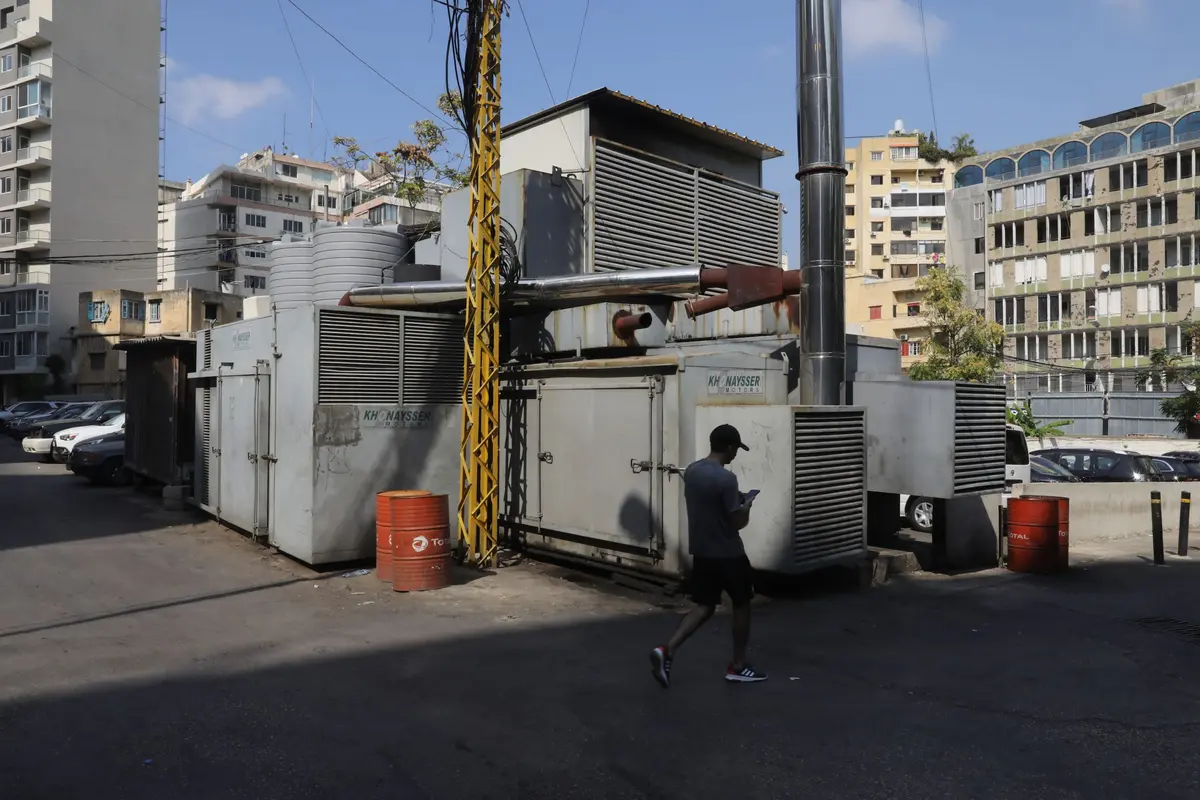
The state utility (Électricité du Liban, or EDL) supplies only a few hours of power per day — sometimes as little as one or two in peak summer. Private neighborhood diesel generators, known as “ishtirak,” fill the gap on a monthly subscription basis, but they ration output by amperage. Most apartments are limited to either 5 or 10 amps, and exceeding the limit trips a breaker that cuts power to the entire unit.
This is the single biggest lifestyle shift Americans face in Lebanon. For a deeper look at how the schedule shapes daily life, see our guide to power cuts in Lebanon.
The 5-amp and 10-amp math you need to know
The formula is simple: Watts = Volts × Amps. At 220V:
- 5-amp subscription: 220V × 5A = 1,100 watts maximum load
- 10-amp subscription: 220V × 10A = 2,200 watts maximum load
- Typical breaker trip time: 2-5 seconds over the limit
Your phone charger (20W) and laptop (65W) barely register. Charging both at once uses about 8% of a 5-amp connection. The problem is high-draw devices:
- Travel hair dryer: 1,500-1,800W — trips a 5-amp breaker instantly
- Electric kettle: 1,200-1,500W — trips a 5-amp breaker
- Portable heater: 1,500W — trips a 5-amp breaker
- Wall AC unit: 900-1,500W — leaves little headroom for anything else
Why Americans trip breakers (and how to avoid it)
Airbnb guests plunge their hosts into darkness constantly by running a hair dryer without checking the amp limit first. Even on a 10-amp connection, running the AC and a flat iron at the same time will trip the breaker. The fix is to think before you plug in — turn off the AC before using a hair dryer, unplug the iron before starting the kettle, and charge high-draw devices during EDL hours when the utility grid handles the load.
Pro Tip: The first question I ask every Airbnb host in Lebanon, before Wi-Fi, before the lockbox code, is “How many amps do we have on generator?” If they say 5, I don’t bother unpacking the travel kettle. If they say 10, I still don’t run two heating appliances at once.
What generator power actually costs
Generator subscriptions are dollarized and pricey. In central Beirut, a 5-amp subscription typically runs $100-$150 per month for shared generator service, with premium 24/7 coverage closer to $300-$320 per month. Rural areas like the Akkar region sit lower, around $40 per month. Metered connections (where you pay per kilowatt-hour on top of a base subscription) run roughly $0.40-$0.50 per kWh — about four times the US average residential rate.
For remote workers staying long-term, this matters. Running an AC 24/7 on premium generator service can push monthly electricity bills above $300, sometimes more than the rent itself. If you’re considering Beirut for digital nomads, clarify electricity terms in writing before you sign any long-term rental. Ask specifically:
- Amp limit: 5 or 10?
- Billing: flat rate or metered?
- Who pays: included in rent, or extra monthly?
- Solar backup: any panels/batteries on the building, or diesel-only?
How does solar power change the equation?
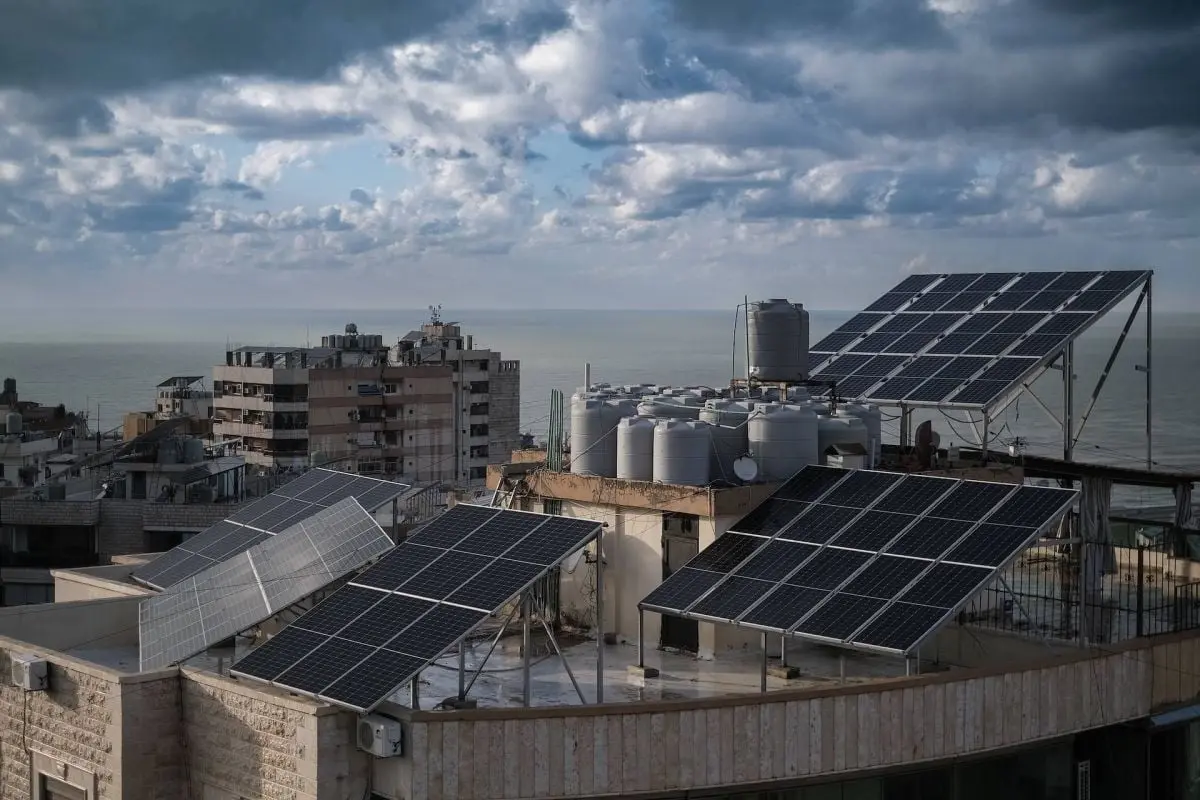
Since Lebanon’s 2019 financial collapse, residential solar has boomed — generating capacity is up roughly eightfold since 2020, and regions like Baalbek-Hermel now top 70% household adoption. Many Airbnbs and hotels now advertise “24/7 power” thanks to rooftop solar plus battery backup, which changes what you can actually plug in and when.
Daytime abundance vs. nighttime rationing
The daytime experience in a solar-equipped building is almost American: run the AC, charge every device, use a hair dryer, nobody notices. Panels typically produce more than the household uses from roughly 8 a.m. to 4 p.m., with surplus flowing into the battery bank.
After sunset, the rules change. The battery has a finite capacity — usually 5-10 kWh for a residential setup — and everything you do between 6 p.m. and sunrise drains it. Running a hair dryer at 9 p.m. can cut the household’s battery reserve by a full hour. Some hosts post explicit rules; others just assume you’ll notice when the lights flicker at 11 p.m. and figure it out. Running an iron or heater at night is the fastest way to wake up to a dark apartment.
Keeping Wi-Fi alive through power switchovers
When the power source switches between EDL, generator, and solar — which happens 3-5 times a day in most buildings — there’s a gap of 30 seconds to 2 minutes before the backup system kicks in. Lebanon’s broadband reliability is solid when power is flowing — the problem is these switchover gaps. During that gap, the Wi-Fi router reboots, your Zoom call drops, and the VPN disconnects. I’ve had this happen mid-sentence on a client call more times than I can count.
Locals solve this with a mini-UPS (uninterruptible power supply) dedicated to the Wi-Fi router. It’s a small lithium battery box that sits between the router and the wall, about the size of a paperback, and keeps the internet alive for 4-8 hours through any number of switchovers. They cost $30-$50 locally and are worth every dollar for anyone working remotely. Pairing that with a Lebanese SIM card for cellular tethering gives you a belt-and-suspenders backup for high-stakes calls.
Pro Tip: Even with a UPS on the router, keep a backup internet path. A local SIM card for tourists in Lebanon runs on its own battery and cellular network, so it’s immune to building power cuts. I tether to my phone during 4-5 switchovers a week without losing a sentence on a call.
What do medical-device travelers need to prepare?
If you depend on any powered medical equipment, the instability of power outlets in Lebanon is a real concern that requires specific preparation. The switchover gaps between EDL, generator, and solar are the main risk — not voltage or plug shape. A dedicated battery backup for your device is not optional, and comprehensive travel insurance for Lebanon that covers medical equipment is a smart second layer.
CPAP machines and the nighttime gap
The 30-second to 2-minute power gap during switchovers is exactly when you don’t want your CPAP cutting out. Most CPAP machines simply stop when wall power drops — no alarm, no gradual ramp-down, just silence and potentially interrupted sleep. A dedicated CPAP battery pack (ResMed, BMC, and Medistrom Pilot are common options, $250-$450 in the US) keeps the machine running through every switchover of the night. Do not assume the wall outlet alone will carry you through. It won’t.
Nebulizers and portable alternatives
If you use a nebulizer, bring a battery-operated portable mesh nebulizer rather than a plug-in compressor model. Trying to find a working outlet during an unexpected blackout while struggling to breathe is not a situation you want to troubleshoot at 3 a.m. Portable mesh units run $80-$150 and fit inside a Dopp kit.
What should you pack versus buy in Lebanon?
The right strategy for power outlets in Lebanon is to leave high-wattage heat tools at home, bring adapters and battery gear from the US, and buy anything voltage-sensitive locally. Local electronics are native 220V, plug-compatible with local sockets, and often cheaper than shipping a transformer would be.
Buy locally, don’t pack these
- Hair dryers, flat irons, curling irons: Philips or Babyliss models at Spinneys run $20-$50 for native 220V versions. Zero voltage risk.
- Travel kettles: Any $15 local kettle will outlast a voltage-converted US one.
- Power strips: Local multi-plug strips are designed to accept C, D, and G plugs in the same unit.
- Extension cords: Native 220V, built for the generator system.
Pack these from the US
- Two or three slim Type C adapters — flat-body, not cube style. $5-$10 each on Amazon.
- One Type D or universal adapter if you’re staying in older buildings.
- A quality power bank under 100Wh (27,000 mAh) — this is the airline carry-on limit. Make sure the capacity label is legible; Beirut Rafic Hariri Airport security routinely confiscates power banks with worn-off markings.
- All your dual-voltage chargers (phone, laptop, camera) — they work fine.
- A CPAP or medical device battery if you need one.
Pro Tip: If your power bank’s capacity label is faded or peeling, wrap the device in clear packing tape with the watt-hour rating written on the outside in permanent marker. TSA and Beirut airport security both confiscate unreadable power banks, so the 100Wh / 27,000 mAh limit is non-negotiable.
Where to shop for tech in Beirut
The four places I actually send friends to:
- EKT (Jnah): Best for technical components, voltage stabilizers, mini-UPS units, and specialized adapters. This is where locals go when something breaks.
- Spinneys supermarkets: Basic travel adapters and budget hair dryers, usually under $30.
- Virgin Megastore (ABC Ashrafieh, ABC Verdun, ABC Dbayeh, Beirut Souks, City Centre Beirut): Reliable for high-end electronics, headphones, and sealed brand-name products.
- Abed Tahan (Jnah) and Khoury Home (multiple locations): The two largest appliance chains — best for larger items, full-size hair tools, and split AC units.
Before you plug in
The biggest adjustment for US travelers isn’t the shape of the sockets — it’s the shift in mindset. In the US, power is an unlimited utility. In Lebanon, it’s a rationed resource you actively manage: switching between three different power sources, thinking twice before running a hair dryer, and keeping a power bank topped off because you never know when the next switchover will hit mid-charge. The way electricity in Lebanon works is less a utility than a daily negotiation.
With the right adapters, realistic expectations, and a little amp-math discipline, navigating power outlets in Lebanon becomes second nature within 48 hours. The lights might flicker, but your trip doesn’t have to go dark.
TL;DR: Bring slim Type C adapters and dual-voltage chargers only; leave US hair dryers and flat irons at home. Assume a 5-amp generator limit unless your host confirms otherwise, and plan for 3-5 power switchovers a day. A mini-UPS for the Wi-Fi router and a CPAP battery are worth every dollar if you work remotely or rely on medical gear.
What’s the one electronic item you can’t travel without — and how are you planning to power it during your stay in Lebanon?