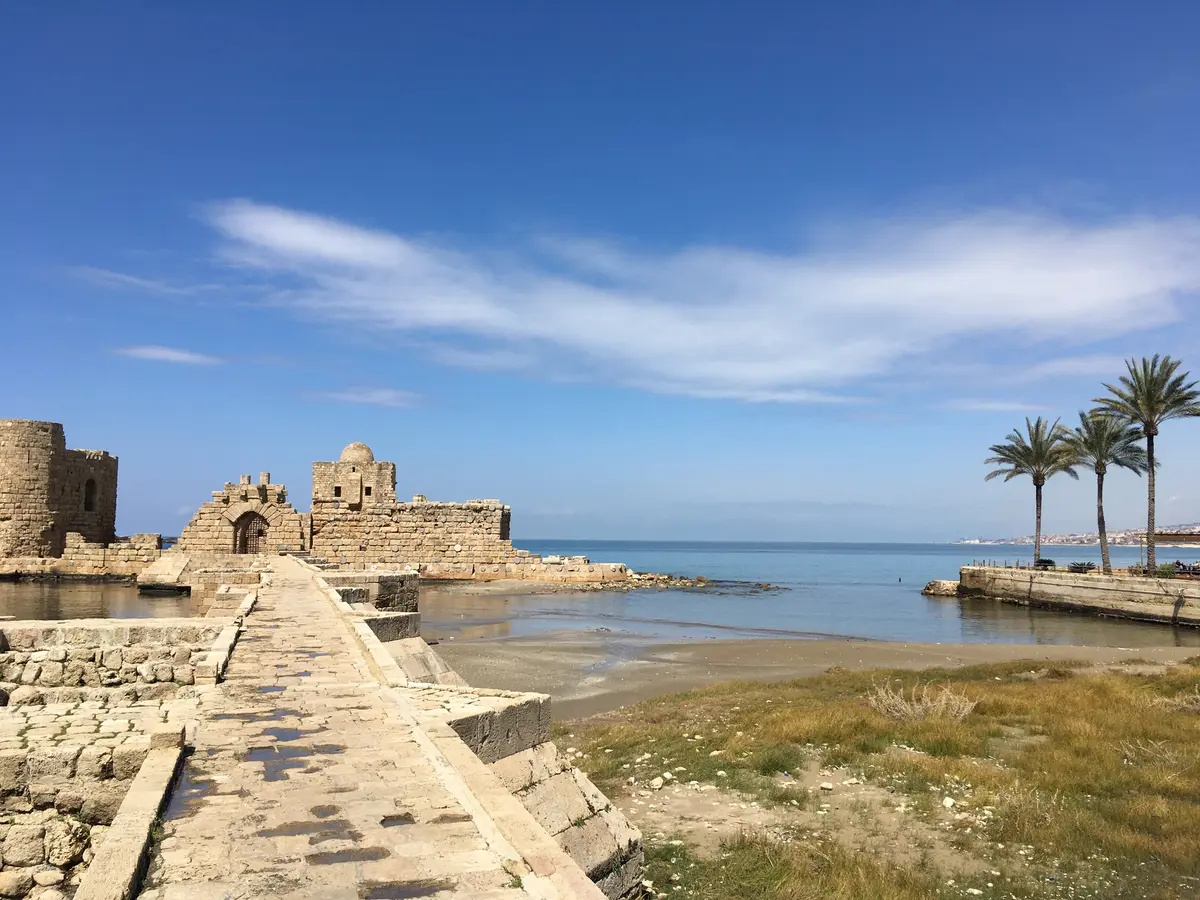
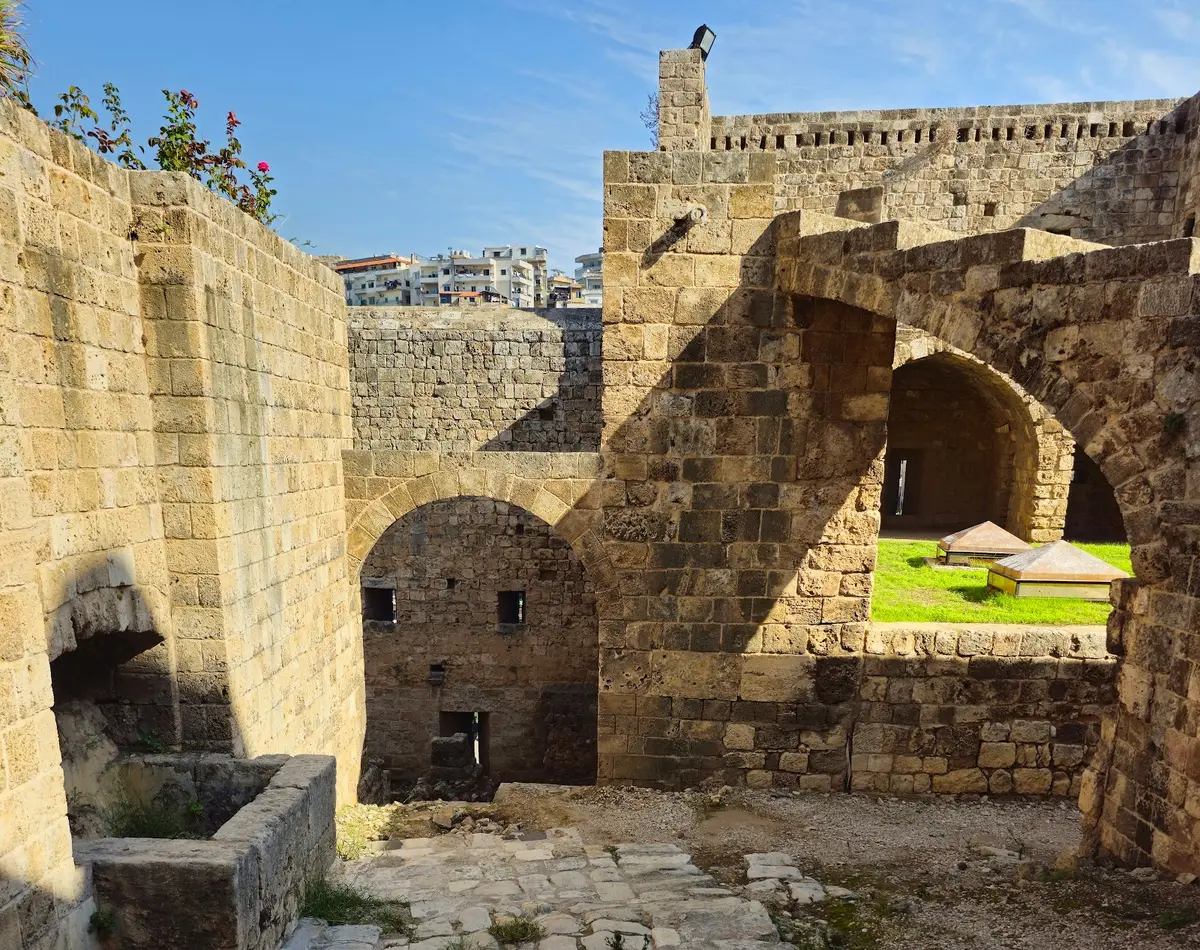
Lebanon dance runs on two tracks that rarely meet anywhere else: a stomping village folk form built to compact mud roofs, and a techno scene that books the same DJs you’d queue for in Berlin. You can catch both in the same weekend — if the security situation lets you go at all.
Before we get to the venues, read the US State Department note at the bottom of this guide. Lebanon is at Level 4: Do Not Travel as of February 2026. This article is written for the reader who has already weighed whether Lebanon is safe for Americans and decided to go anyway.
What is Dabke and why does it matter in Lebanon?
Dabke is a line dance from the Levant where dancers link arms, stomp in unison, and let a leader (the Lawweeh) improvise at the front. In Lebanon, it traces back to Ottoman-era villages in Mount Lebanon, where neighbors packed the mud-and-straw roofs of their homes together before winter rains. The communal stomping had a name — Ta’awon, meaning “cooperation” — and it became the dance.
The practical origin matters. Dabke isn’t a performance tradition first; it’s a labor tradition that turned into a celebration. That’s why it still shows up at weddings, funerals and political rallies — anywhere people need to signal they belong to the same chain. Music comes from the mijwiz (a reed pipe) and the tabl (a double-headed drum) — instruments that show up across traditional Lebanese music — with improvised sung verse called Dal’ouna layered on top.
Pro Tip: If you want to understand Dabke in 30 seconds, watch the leader’s left hand. A handkerchief, a string of prayer beads, or a cane — that’s the tempo signal. When it drops, the whole line shifts gears.
How is the Dabke line actually structured?
The line is a small society. The Lawweeh — sometimes called the Ra’as, or “head” — stands at the front, breaks the pattern with high kicks and deep knee drops, and decides when the tempo changes. Everyone else holds hands or hooks elbows and keeps the base rhythm.
The physical connection is the point. The chain moves right to left (the direction of Arabic script), and the link between bodies is how rhythm travels down the line. Let go, and you’ve broken more than the step.
What are the regional Dabke styles to know?
Dabke varies by about 50 miles (80 km) of geography. Four styles you’ll actually encounter:
- Dal’ouna: The default wedding and party version in coastal Lebanon and Mount Lebanon. Mid-tempo, six-count, accessible to beginners.
- Ra’asit el Aarjah (“The Limping Dance”): From Baalbek in the Bekaa Valley. Heavier, with an uneven step said to mimic walking rocky terrain.
- Shmaliyyeh: High-speed version with rapid stomps and hops. This is the one young dancers compete on.
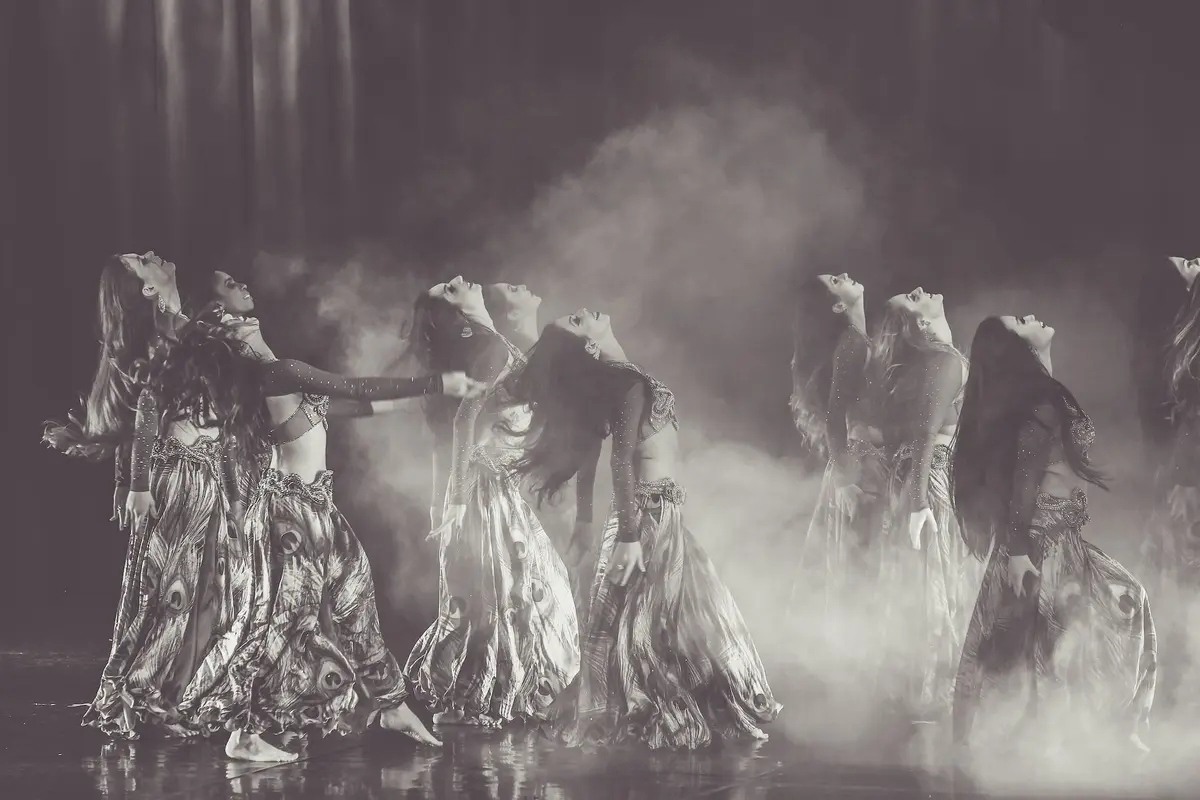
- Dabke Lebnanieh: The stage version created through a 1956 collaboration with Soviet choreographers. Polished, symmetrical, and meant for a proscenium — not a rooftop.
Where do you experience Lebanon dance nightlife in Beirut?
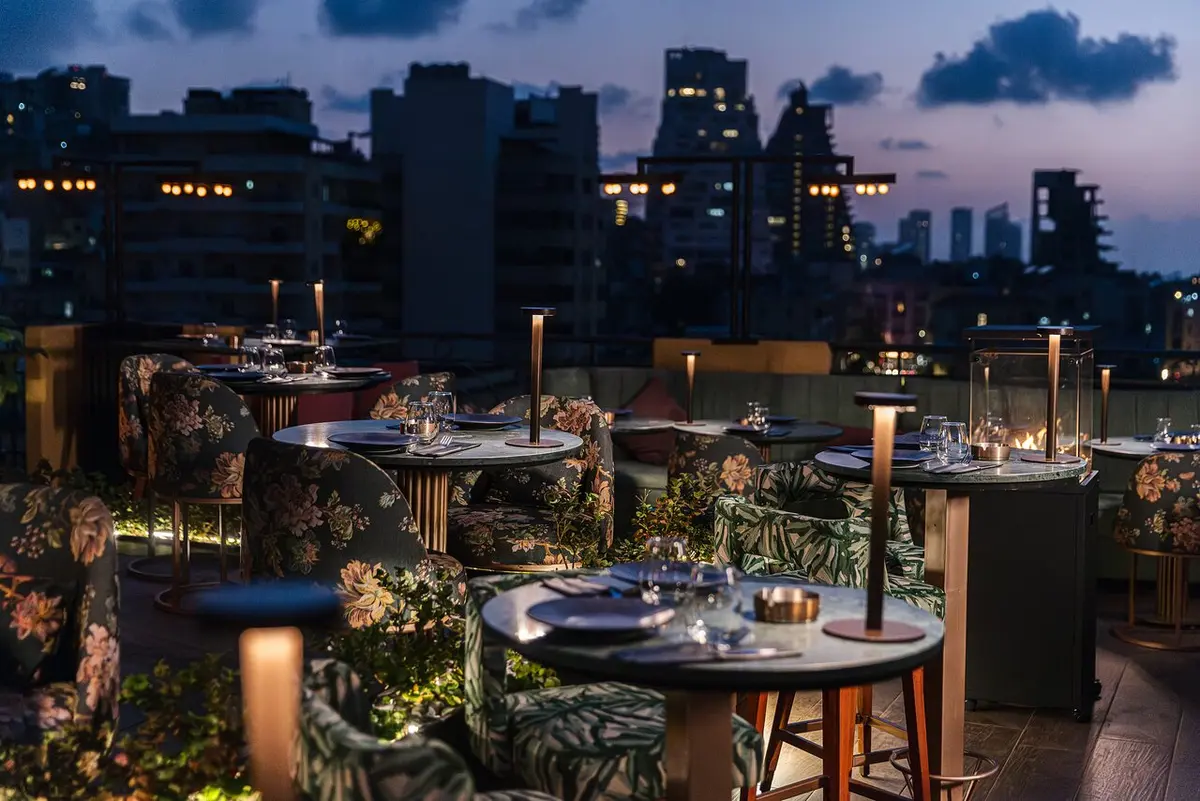
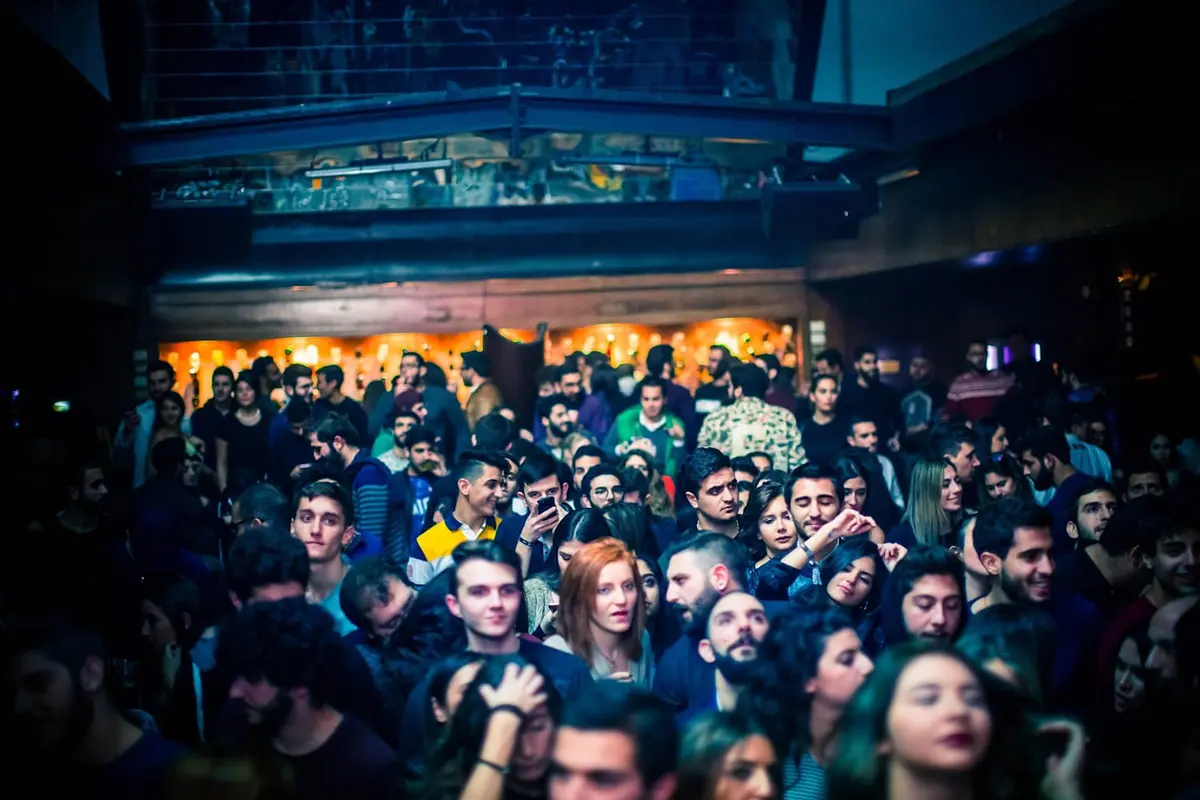
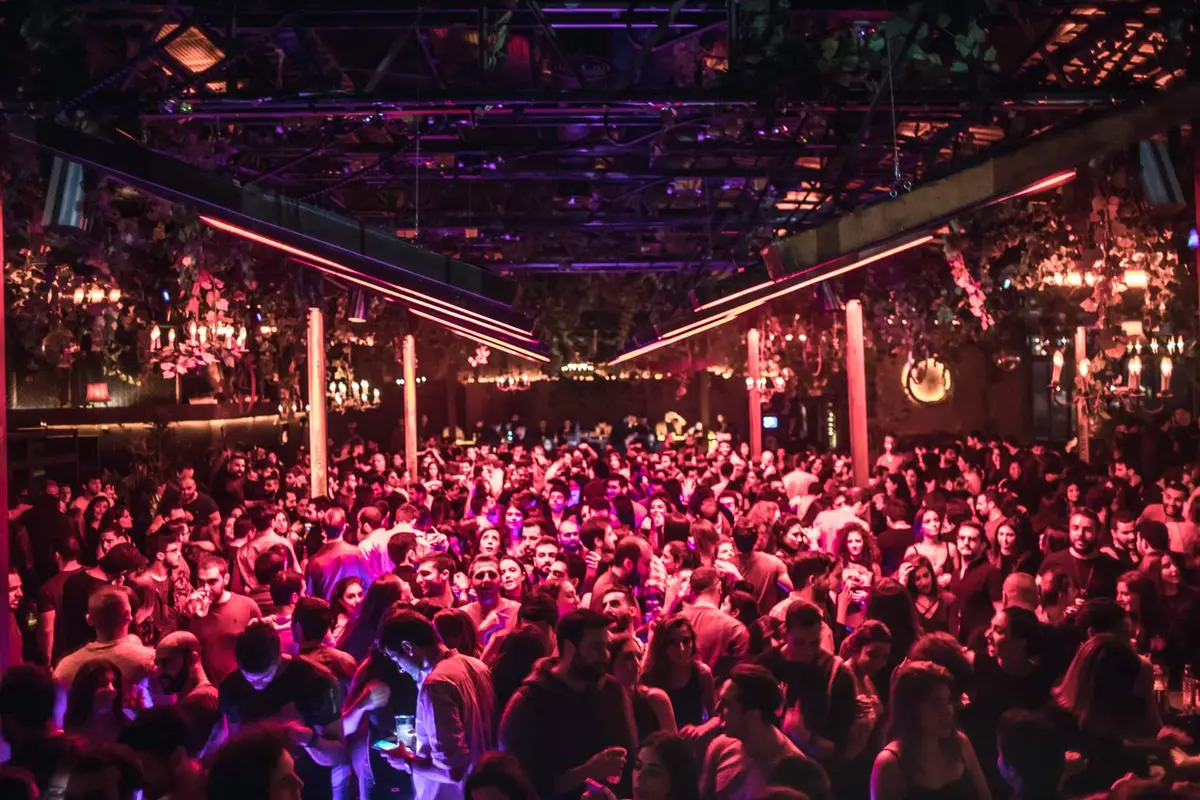
Beirut’s after-dark scene splits by season. From May through October the parties move to open-air rooftops. From November through April they retreat into warehouse spaces in Karantina and Mar Mikhael. Cover charges typically run $20–$40 at the door, drinks $10–$18. Most clubs don’t really start until 1 a.m.
The Grand Factory — techno on top of a mattress factory
The Grand Factory sits above a former mattress plant on Sea Side Road in Karantina. You get to the dance floor via a freight elevator that rattles on the way up — a bit of theater that works. When the doors open you’re hit with the Funktion-One system and a 1,000-capacity room with a kinetic lighting rig overhead.
The Factory reopened in December 2022 after the 2020 port blast knocked it out of service. It’s the home of the “C U NXT SAT” party brand and runs three spaces: the main Factory room, a 250-capacity Reunion room for deeper sets, and a 100-person cocktail bar called Soul Kitchen. Dress code on techno nights is Berlin-lite — combat boots, black on black, no logos.
- Location: Sea Side Road, Karantina district
- Cost: Entry from $25; drinks $12–$18
- Best for: Serious techno and house heads; dancers over posers
- Time needed: Arrive after midnight, plan for 3–5 hours
Pro Tip: Skip the main room for the first hour and hang in Reunion. The acoustics are better for conversation and the DJs there are usually the reason the headliners flew in.
Skybar and O1NE Beirut — the waterfront bottle-service circuit
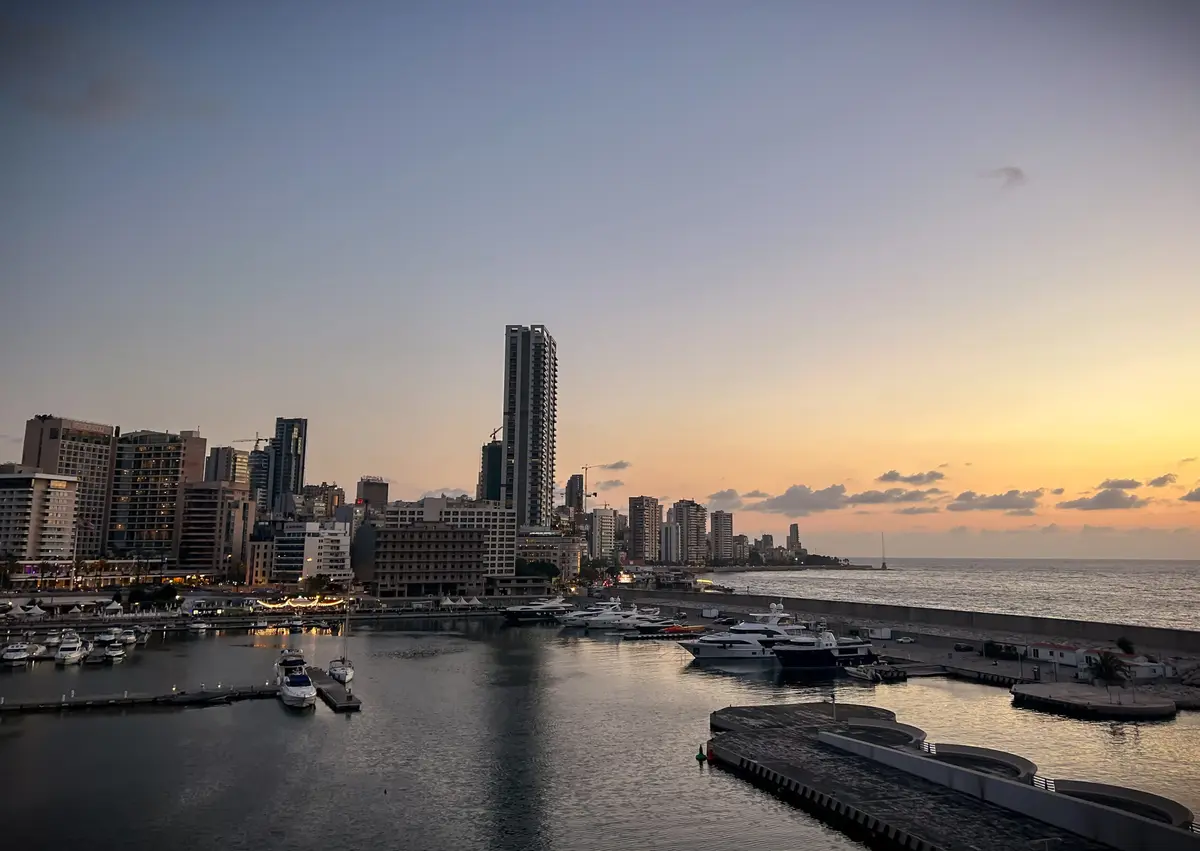
Skybar put Beirut on the global nightlife map with its 60-meter (197 ft) bar on the BIEL waterfront. Its status has been inconsistent since the 2020 port explosion damaged the area, so check its Instagram before you plan a night around it. When it runs, it runs in summer only.
O1NE Beirut is the indoor sister venue and covers winter. The exterior is wrapped in what the owners call the world’s largest privately owned graffiti wall; the interior runs 360-degree projection mapping across every surface. Music is commercial house and Arabic-R&B crossover, and the crowd is bottle service with occasional live acts. Bring a card with room on it.
- Location: BIEL, Minet el Hosn
- Cost: Table minimums from $500; drinks $15–$25
- Best for: Bottle-service crowd; visual spectacle over underground sound
- Time needed: 3–4 hours
Spine and Clap — design-led sunset into nightclub
Spine sits on the 12th floor of the G1 Building in Naccache, 5 miles (8 km) north of downtown. The lighting rig — floating illuminated squares that shift color — is the reason designers book tables here. It starts as a restaurant and slides into club mode around 11 p.m.
Clap, on the 8th floor of the Annahar Building in Downtown, gives you the best port-facing sunset drink in Beirut. The transition from dinner to dance floor is smooth; the price ladder is not. Expect $18 cocktails and a dress code that excludes sneakers.
- Clap location: Annahar Building, 8th floor, Downtown Beirut
- Spine location: G1 Building, 12th floor, Naccache
- Cost: Mains $30–$60; cocktails $16–$20
- Best for: Sunset-to-midnight arc without changing venues
B018 — the underground bunker that opens its roof at dawn
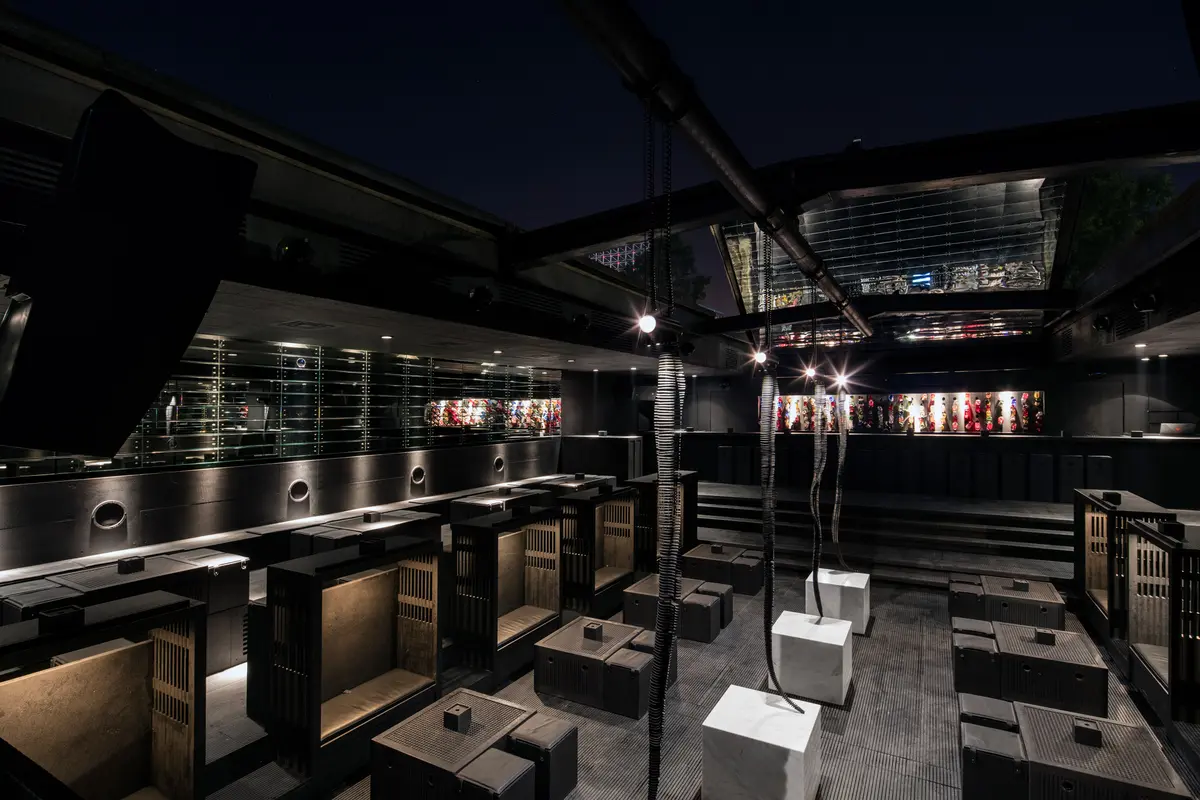
B018, designed by Bernard Khoury, is built below ground on the site of the Karantina refugee camp massacre of 1976. The architecture is the point: the retractable roof slides open as the sun rises, and the last hour of the party happens with daylight hitting a basement dance floor. That sequence — low ceiling, dim red light, then sky — is unlike any club I’ve been to anywhere.
Deep house, 80s nights on rotation, and a gritty crowd that doesn’t photograph itself. This is where Beirut’s serious clubbers go to finish a night, not start one. Show up at 3 a.m. at the earliest.
- Location: Quarantine, La Quarantaine
- Cost: Entry $20–$30; drinks $10–$15
- Best for: After-hours; travelers who want architecture as much as the set
- Time needed: 3 AM to sunrise (about 3 hours)
Pro Tip: Don’t sit at the coffin-shaped tables. They’re a design reference — built to match the site’s history — but your drinks will get knocked over every 10 minutes by people dancing on top of them. Stand against the wall near the DJ booth.
Where can you watch professional Lebanon dance performances?
If you’d rather watch than join a line, two institutions matter: Caracalla Dance Theatre and the Baalbeck International Festival. Both run seasonal programs of staged folkloric and fusion work, with tickets from $30 to $150 depending on seating.
Caracalla Dance Theatre
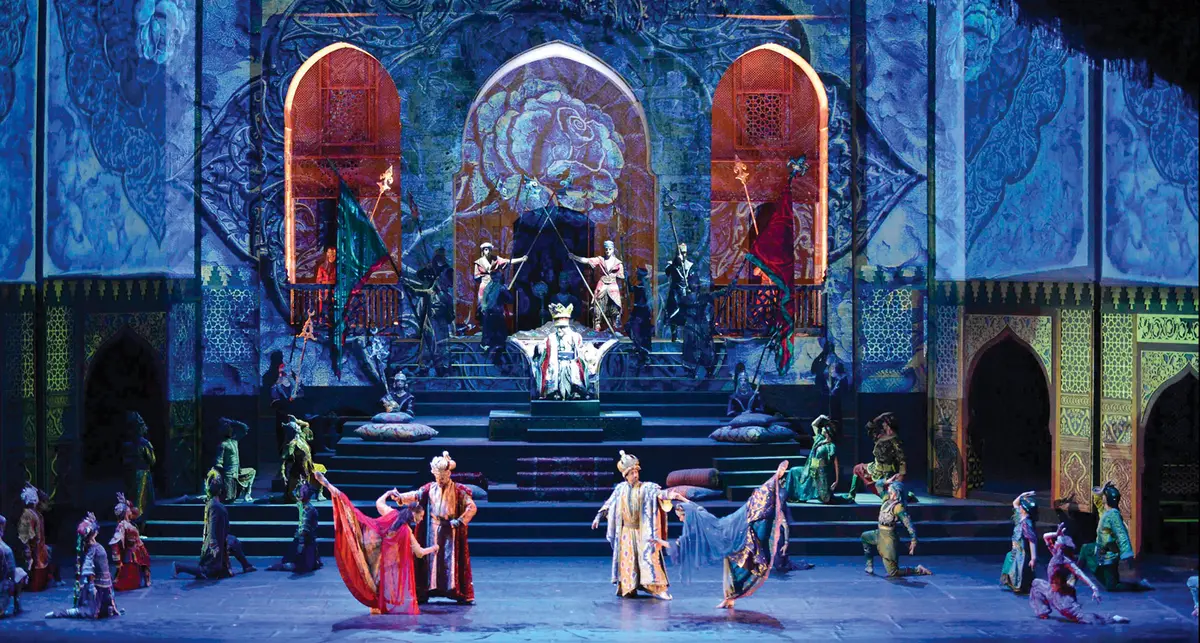
Founded in 1968 by Abdel-Halim Caracalla, this is the region’s most established theatrical dance company. Productions fuse Dabke footwork with modern dance technique and Eastern orchestration. The recurring staple is “One Thousand and One Nights,” built on Rimsky-Korsakov’s Scheherazade re-scored with oud, qanun and ney.
Honest take: Caracalla is polished stage work, not raw Dabke. If you want to feel the dance, go to a village wedding instead. If you want to see how the country choreographs its own mythology, book Caracalla.
Baalbeck International Festival
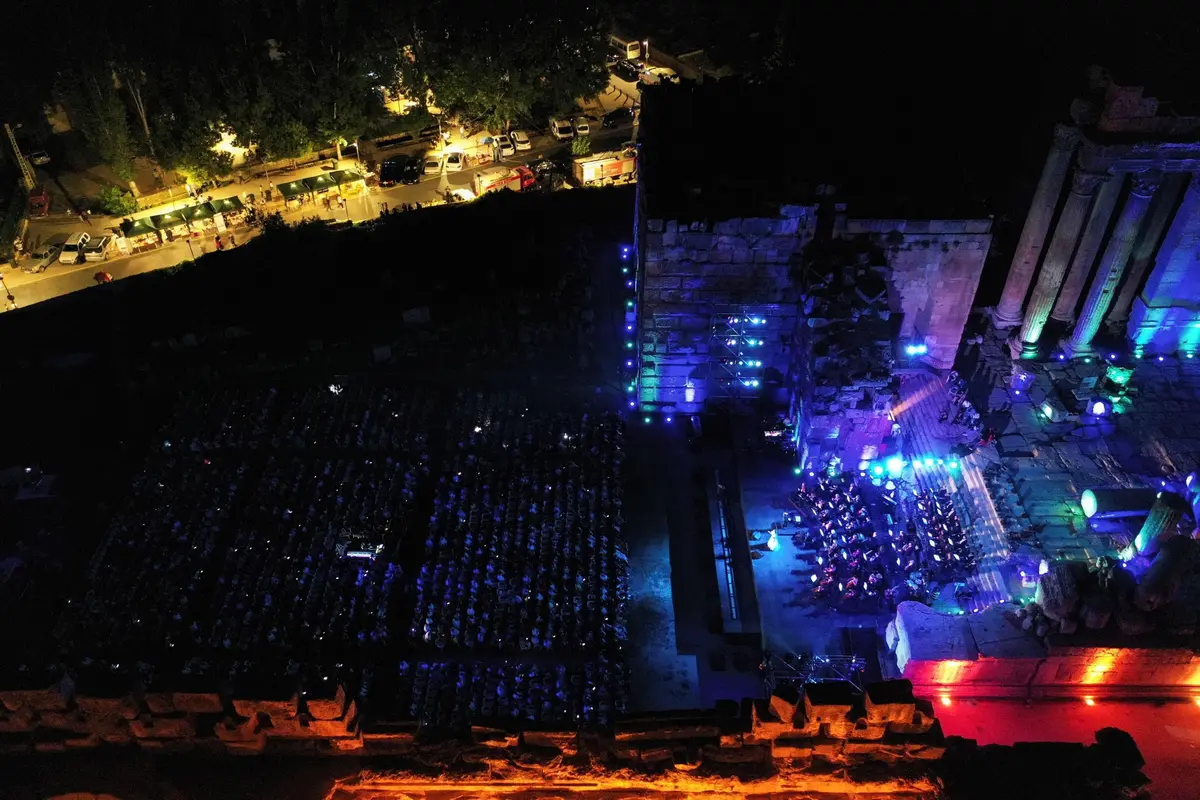
The festival runs every July and August inside the Roman Acropolis at Baalbek — the performances happen on the steps of the 2,000-year-old Temple of Bacchus. The 2026 edition marks the festival’s 70th anniversary; it opens on July 24 with a Gabriel Yared ciné-concert, closes August 8 with Hiba Tawaji performing Oussama Rahbani’s “Stages,” and includes Bizet’s “Carmen” staged outdoors on July 25–26.
Getting there is the complication. Baalbek sits in the Bekaa Valley, a 50-mile (80 km) drive from Beirut through areas that the US State Department currently flags as Level 4. The festival operates round-trip transport shuttles for ticket-holders that buy before May 1, which is the only way I’d consider making the trip under current conditions.
- Location: Baalbek Roman Acropolis, Bekaa Valley
- Cost: Tickets $30–$150; 25% student discount with valid ID
- Best for: Music lovers willing to weigh the Bekaa risk
- Time needed: Full day (performances start 9 p.m.; shuttles back to Beirut overnight)
What are the best dinner shows and mountain venues for Lebanon dance?
Not every night has to be a 4 a.m. warehouse finish. Three venues blend Lebanese food with live Arabic music and spontaneous Dabke, plus one ski resort where the party happens at 6,500 feet (1,980 m).
1. Em Sherif — culinary theater with a Tarab band
A seated, multi-course mezze dinner with a live Tarab (classical Arabic) band working the room. No stage, no distance between diners and musicians. This is a high-end date night, not a rowdy one — around $120 per person with drinks.
- Location: Ashrafieh, Beirut
- Cost: $100–$150 per person
- Best for: A single memorable dinner that sets the tone for the trip
- Time needed: 3 hours
2. Al Mandaloun — Mar Mikhael cabaret
Cabaret-format venue cycling between Western pop, Arabic pop, and Tarab across a single night. Less refined than Em Sherif, more fun. Expect tables to clear for dancing by midnight.
- Location: Mar Mikhael
- Cost: Entry plus minimum around $80 per person
- Best for: A looser night where you’ll actually end up on the dance floor
3. Mounir — Sunday mountain lunch
A restaurant in Broummana, 40 minutes northeast of Beirut, famous for long Sunday lunches that turn into spontaneous Dabke between tables. There’s no scheduled show — just mezze, arak, and the near-certainty that someone’s aunt will start a line by 4 p.m.
- Location: Broummana, Mount Lebanon
- Cost: $50–$80 per person for the full mezze
- Best for: One weekend daytime, if you only do one “real” Lebanese meal
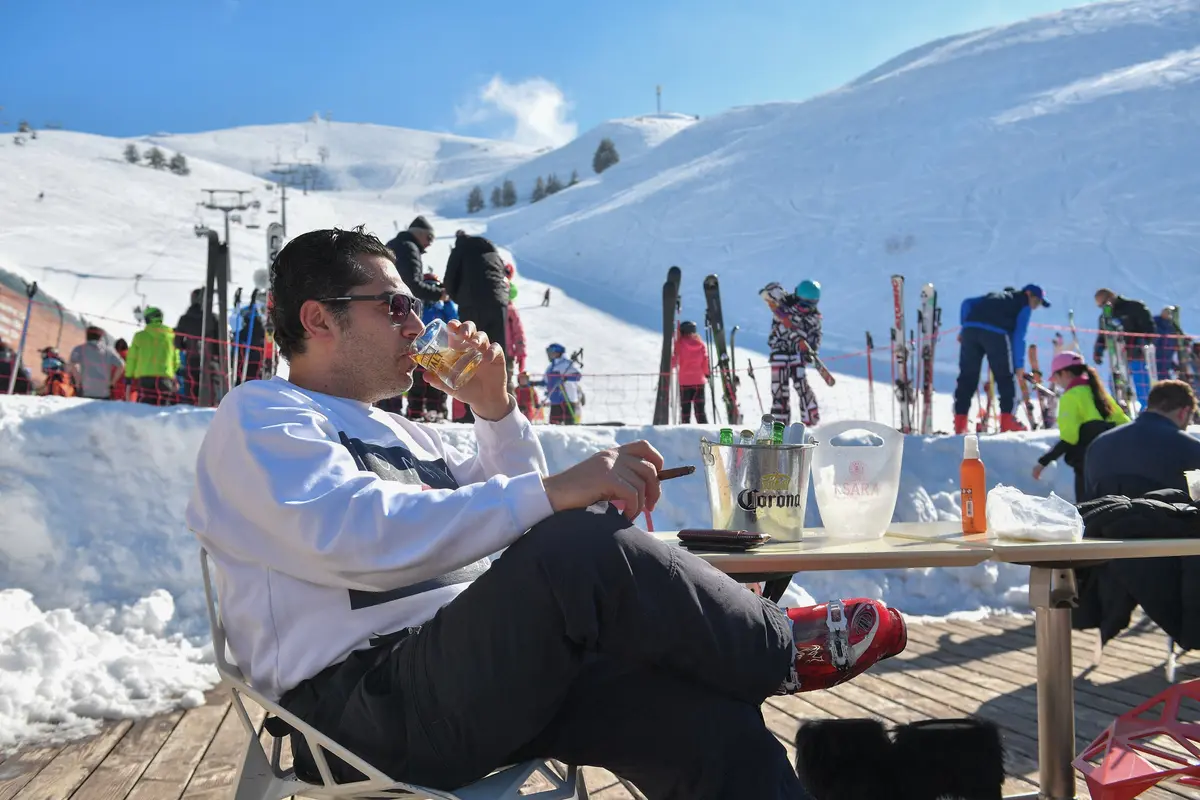
4. Odin Mzaar — après-ski house music at altitude
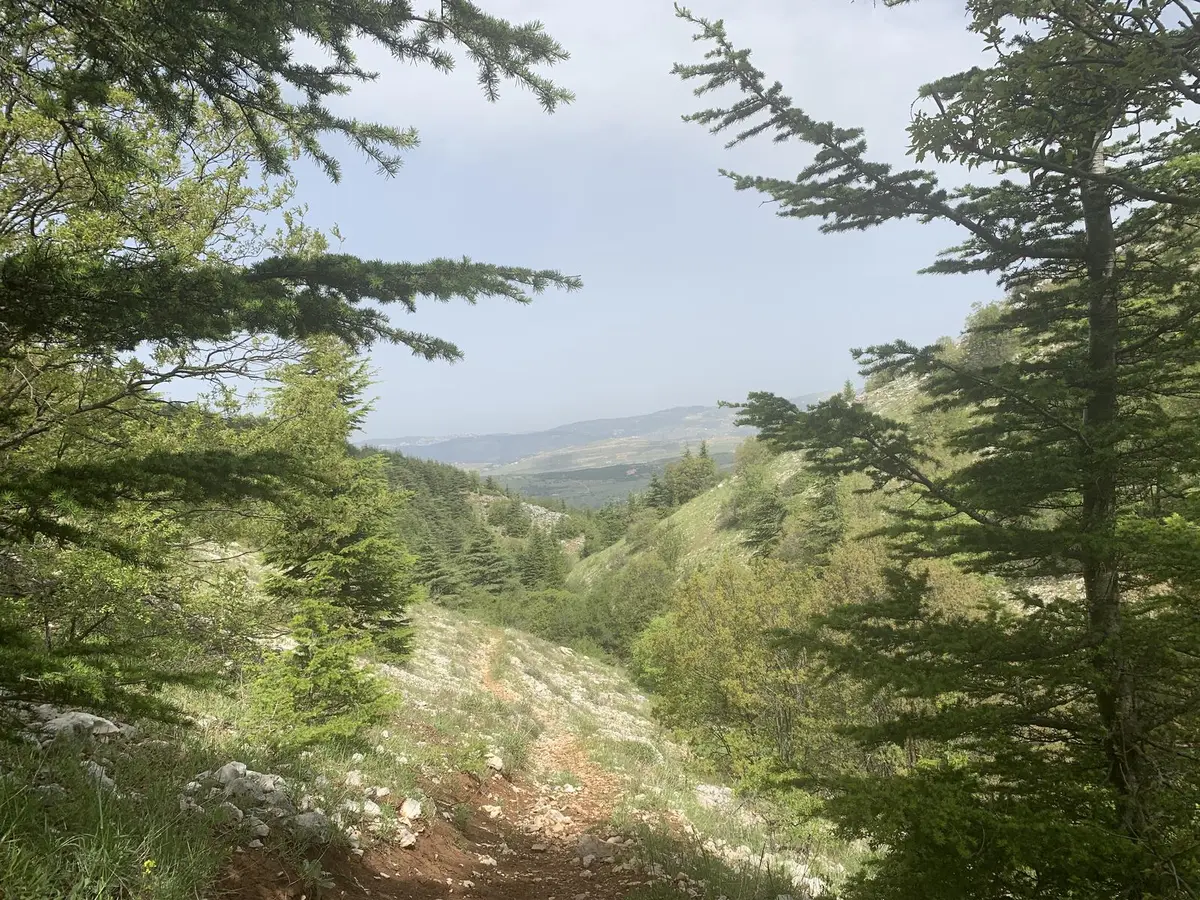
Lebanon’s old marketing line — ski in the morning, swim in the afternoon — still works in January and February. Mzaar Kfardebian is the biggest resort, and Odin is its après-ski club. “The Original Après Ski” series books the same house DJs you’d hear at The Grand Factory, but at 6,500 feet (1,980 m) with snow outside.
- Location: Mzaar Kfardebian ski resort
- Cost: Entry $20–$30; drinks $12–$18
- Best for: December–March only; combine with a ski day
- Time needed: 4 p.m. until you can’t feel your feet
Can you learn Dabke as a visitor?
Yes, and the easiest entry point is Zorba Academy on Bliss Street in Hamra, which runs beginner group classes in English for around $20 a session. Instructor Wissam Mustafa breaks the six-count rhythm down slowly before adding music. No prior experience needed, and classes run most weeks. For a theatrical version of the dance, Caracalla Dance School teaches their signature fusion style.
- Zorba Academy location: Bliss Street, Hamra, Beirut
- Cost: Around $20 per group class
- Best for: A 90-minute hands-on intro before a wedding or a festival
- Time needed: 90 minutes
A third option if you can’t travel: Malikat Al Dabke offers virtual classes in Levantine styles over Zoom, useful if you want to arrive already knowing the basic step.
Is Lebanon safe for US travelers right now?
No — not by the US government’s assessment. The US State Department has Lebanon at Level 4: Do Not Travel as of February 23, 2026, citing crime, terrorism, civil unrest, kidnapping risk, unexploded ordnance, and armed conflict. Non-emergency embassy personnel and their families have been ordered to depart. Routine consular services at US Embassy Beirut are suspended.
That’s the official floor. The practical reality is more segmented. Specific areas carry Level 4 “depart if you are there” sub-designations: all of southern Lebanon below Saida, the Syrian border region, Beirut’s Dahieh suburb, the Bekaa Valley, and refugee settlements. Most of the nightlife and cultural venues in this guide sit outside those zones — Karantina, Mar Mikhael, Ashrafieh, Hamra, Broummana, Mzaar Kfardebian. Baalbek sits inside the Bekaa Valley, which is the single biggest caveat on attending the festival.
If you go anyway, enroll in the Smart Traveler Enrollment Program (STEP) at step.state.gov before you fly. Travel insurance for Lebanon from US providers frequently excludes Level 4 countries — read the fine print before you assume you’re covered. Check the full advisory at https://travel.state.gov/content/travel/en/traveladvisories/traveladvisories/lebanon-travel-advisory.html.
What else do US travelers need to know on the ground?
- Currency: Bring crisp US dollars in small denominations. The Lebanese pound has collapsed, and most venues outside luxury hotels price in dollars and prefer cash.
- Connectivity: Pick up a local SIM card for tourists at the airport (Alfa or touch, roughly $15–$25) or set up an eSIM before you land. Data is more reliable than voice.
- Transport between venues: Use ride-hailing apps like Bolt or Careem rather than hailing street taxis. Uber pulled out of Lebanon in 2020. A typical cross-Beirut ride runs $5–$10.
- Best season: May–October for rooftops and the festival circuit; December–March for warehouse techno and skiing.
Before you book
TL;DR: Lebanon dance is one of the most concentrated Lebanese cultural experiences in the region — village-era Dabke and world-class techno within the same 24 hours. The Grand Factory, B018 and the Baalbeck festival are the three anchor experiences. Weigh the Level 4 advisory honestly before booking, bring dollars in cash, and don’t skip learning the basic step before you arrive.
Have you been to any of these venues, or are you weighing the trip now? Drop a comment with where you’re at in the decision — especially if you’ve got a recent on-the-ground perspective other readers should hear.