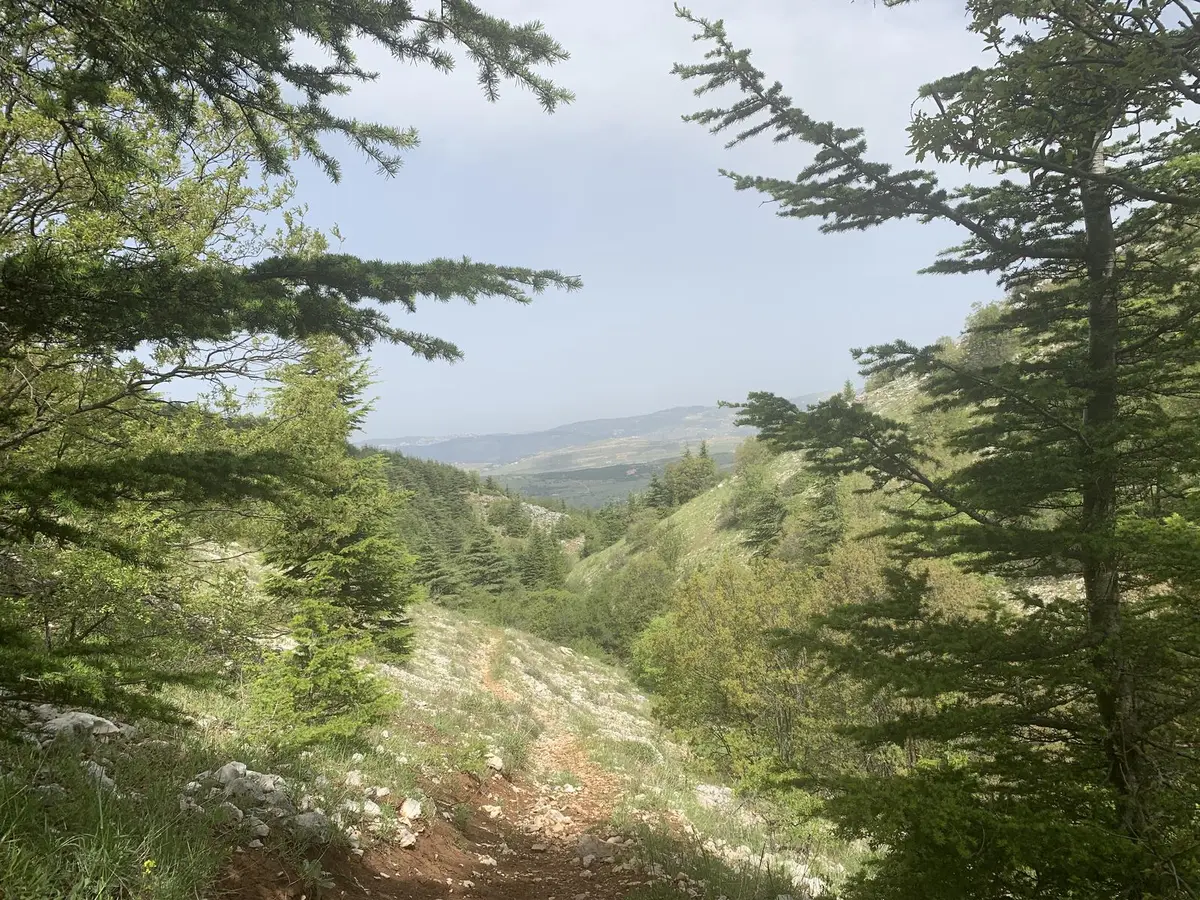
You came to Lebanon for cedars, and Barouk is where you’ll find the biggest living ones — a 400-hectare (988-acre) forest inside the Shouf Biosphere Reserve with trees older than most countries and trails that drop from alpine ridges to wetland valleys in a single day. This guide covers every Barouk Cedar Forest hiking route, what it costs, and the logistics nobody warns you about.
Why is Barouk Cedar Forest worth hiking?
Barouk Cedar Forest is worth hiking because it’s the last natural range of the Lebanon cedar on Earth, sitting inside a 550-square-kilometer (212-square-mile) biosphere reserve with 250 kilometers (155 miles) of trails. Unlike the fenced-in tree museums in Bsharri, Barouk is a working ecosystem where the forest regenerates without human help.
The Shouf Biosphere Reserve covers roughly 5% of Lebanon’s territory, stretching along the western chain of Mount Lebanon from Dahr Al-Baidar south to Niha Mountain. Barouk is one of three cedar forests inside the reserve (the others are Maasser el Shouf and Ain Zhalta-Bmohray), and it’s the largest of the three.
What makes this patch special versus the smaller northern groves like The Cedars of God: you’re walking through a contiguous biological corridor, not a roadside attraction with a gift shop glued to it. Twenty-four villages sit in the reserve’s transition zone, giving it the same lived-in, human-nature texture as the Qadisha Valley.
What you’ll find at the Barouk entrance
The Barouk entrance sits 2 kilometers (1.2 miles) uphill from the center of Barouk village and functions as both trailhead and visitor center.
- Facilities: Tourist information desk, basic trail maps, restrooms, gift shop
- What’s worth buying: Organic cedar honey (grade 1), local jams, hand-crafted souvenirs
- Accessibility feature: A 300-meter (984-foot) “Special Needs Trail” with ramps and guide bars for wheelchair users and elderly visitors
- Adopt-a-cedar program: You can buy a sapling, and they’ll put a name plaque beside it
Pro Tip: The honey at the entrance gift shop is the real deal — unfiltered, from hives inside the reserve. Buy a jar here instead of paying triple at Beirut specialty stores.
Which Barouk Cedar Forest trails should you actually hike?
The reserve runs 250 kilometers (155 miles) of trails total, but for Barouk Cedar Forest hiking specifically, you want the loops that leave from the main Barouk entrance. Signage is the weakest part of the whole operation — download offline maps before you go, full stop.
Panoramic View / Hill Lake loop (the default choice)
- Distance: 5–8 kilometers (3–5 miles)
- Difficulty: Moderate
- Time needed: 2–3 hours
- Best for: First-time visitors, moderately fit hikers, bird watchers
This is the trail most people actually do. It climbs to an artificial reservoir with a stone observation blind looking east across the Beqaa Valley — the same valley that holds the best wineries in Bekaa. The silence up there is the real attraction; on my last visit I went 40 minutes without hearing anything but wind and a pair of jays.
The catch: it’s not a true closed loop. If you miss the turn-off (and you will, because the signage stops about two-thirds in), you’ll end up walking back on asphalt alongside the access road. Carry a power bank. Cell reception dies a kilometer past the gate — a recurring problem anywhere you’re dealing with electricity in Lebanon.
Sustainable Forest trail (Batloun → Barouk)
- Distance: 16 kilometers (10 miles)
- Difficulty: Difficult
- Time needed: About 5 hours
- Best for: Serious hikers who want the agricultural-to-wilderness gradient
Starts at Batloun Village at roughly 1,073 meters (3,520 feet) and climbs through restored stone terraces, orchards and old olive groves before hitting the cedar line. Sections grade at 30%. Wear boots, not sneakers.
Barouk to Maasser connector
- Distance: 10 kilometers (6.2 miles)
- Difficulty: Moderate to hard
- Time needed: 3–4 hours
- Elevation: 544 meters (1,785 feet) ascent, 681 meters (2,234 feet) descent
- Best for: Hikers who want the coast-to-Beqaa panorama
This is the trail that pays off visually. On a clear morning you can see the Mediterranean on one side and the Qaraoun Lake reservoir in the Beqaa on the other — simultaneously. Your knees will complain on the Maasser descent because it’s longer than the climb up.
Ain Zhalta to Barouk (the wild one)
- Distance: 12–14 kilometers (7.5–8.7 miles)
- Difficulty: Very difficult
- Time needed: 5–6 hours
- Best for: Experienced trekkers who want isolation
Passes the ranger hut and cuts through the least-developed section of the reserve. If you hike any other trail on a Saturday, you’ll see other people. On this one, you might not.
Special Needs Trail
- Distance: 300 meters (984 feet)
- Difficulty: Easy, but a 25% slope means manual wheelchair users need a push
- Time needed: 20–30 minutes
- Best for: Families, elderly visitors, anyone with mobility limits
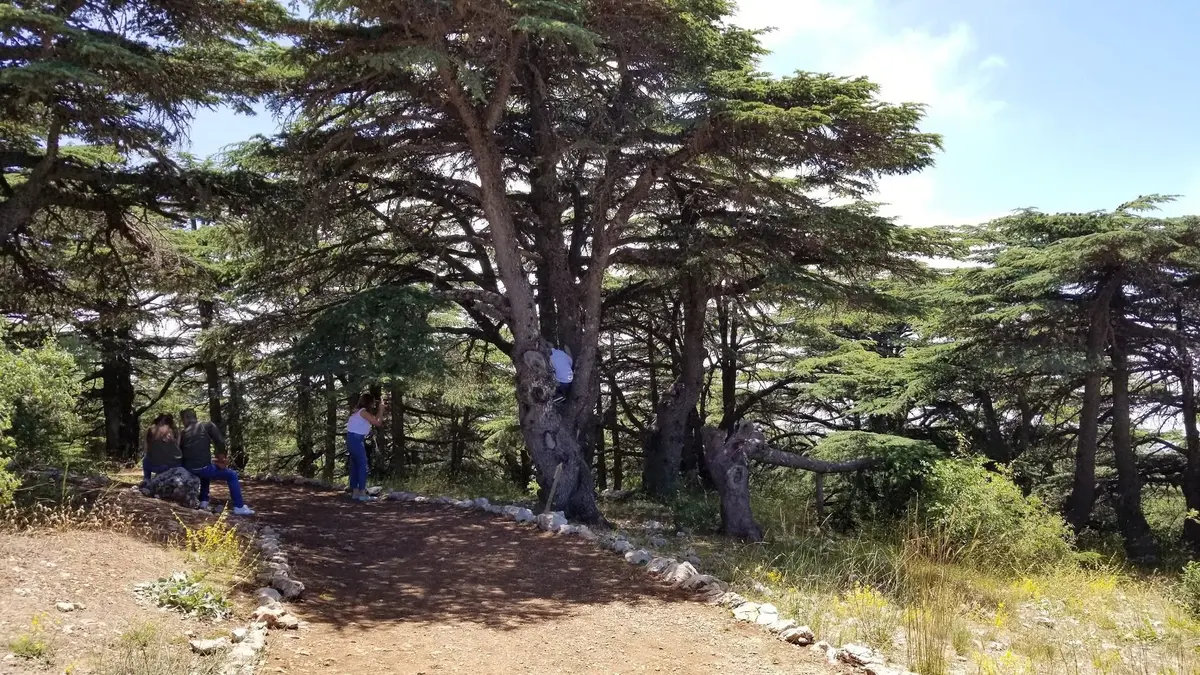
A wood-railed loop through mature cedars. You can physically touch the bark of trees older than the Roman Empire, which is the point.
Pro Tip: Skip the longer advanced trails if you haven’t hired a guide. A private guide runs $25–$40 for a half-day, and on routes like Ain Zhalta to Barouk, the trail markings are sparse enough that losing an hour to a wrong turn is realistic.
What flora and fauna will you see on a Barouk hike?
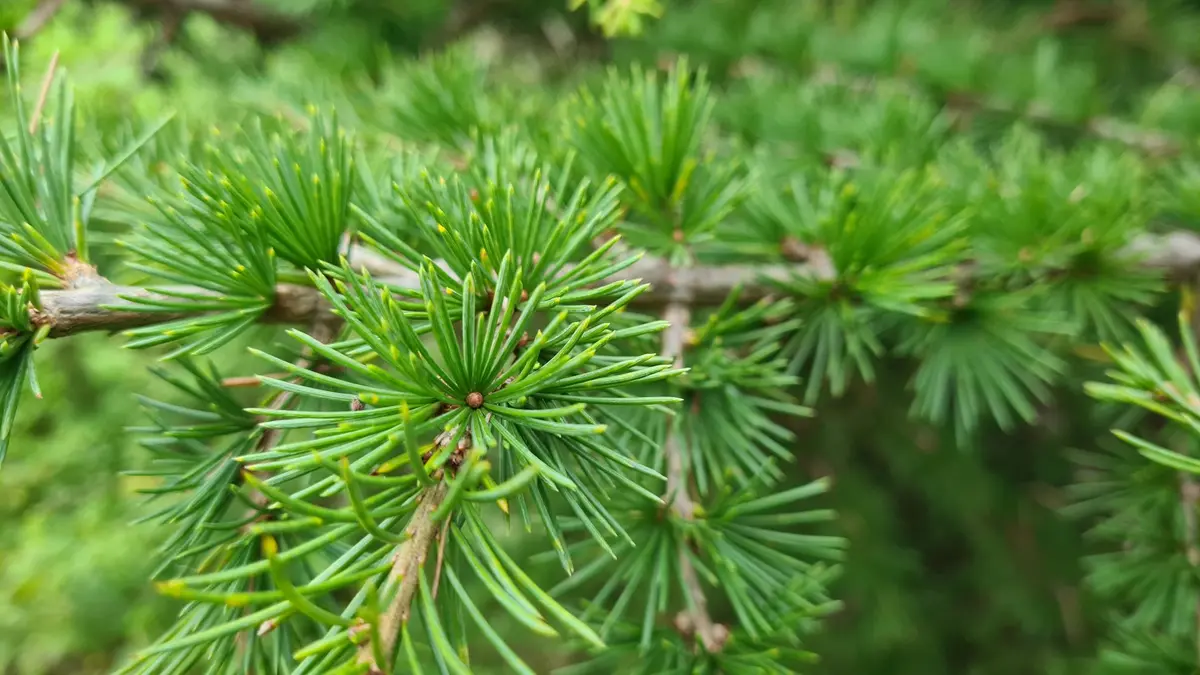
Barouk Cedar Forest hosts 500 plant species, 32 mammal species and over 250 bird species, making it the most biodiverse cedar habitat in Lebanon. You’ll see Cedrus libani alongside Cyprus oak, Brant’s oak and Kermes oak, plus 48 plant species endemic to Lebanon or the immediate Levant. Wildlife sightings are mostly birds and small mammals — wolves and hyenas live here but stay out of sight.
The cedars themselves
- Specimens estimated at 2,000–3,000 years old
- Growth rate: roughly 2–3 centimeters (0.8–1.2 inches) per year
- Natural regeneration zones visible throughout the forest — saplings pushing up between the old giants
Other trees and plants
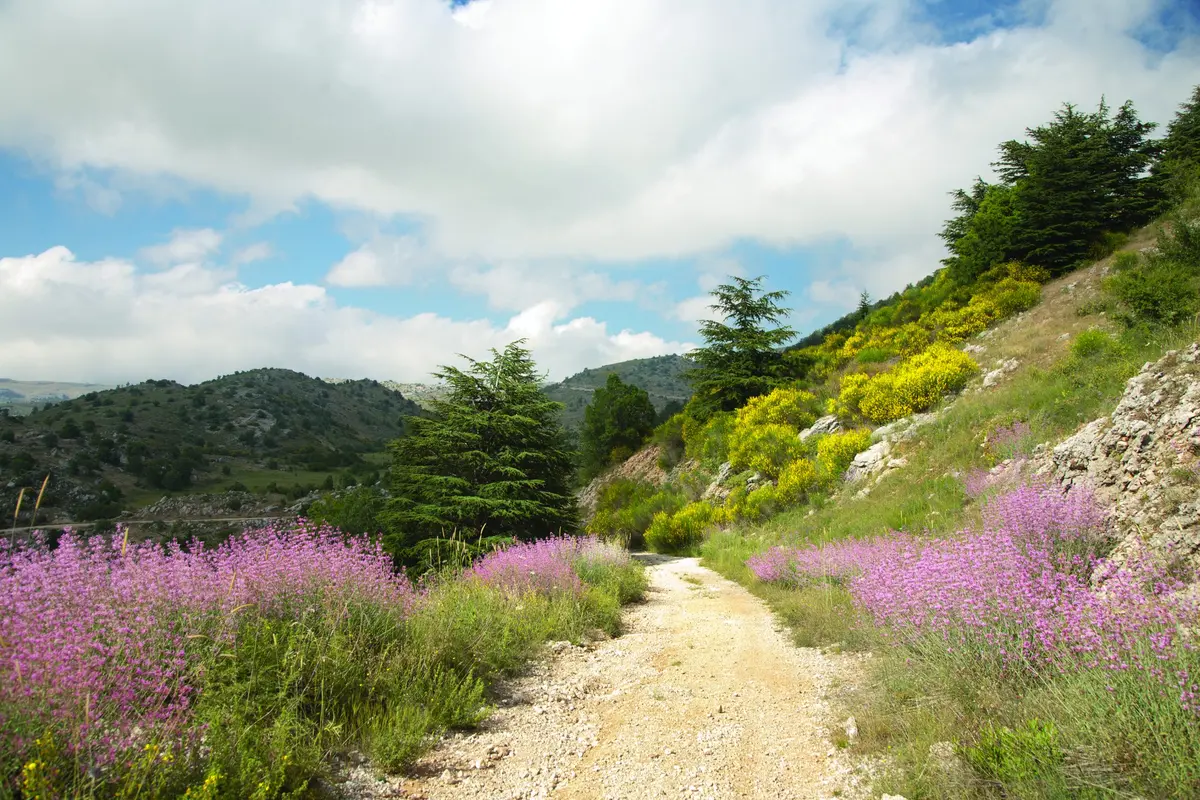
The canopy isn’t a cedar monoculture. You’ll walk through mixed stands of Cyprus oak (Quercus infectoria), Brant’s oak (Quercus brantii) and Kermes oak (Quercus calliprinos). Spring (the best time to visit Lebanon if you care about flowers) is when the floor explodes — 25 threatened species flower inside the reserve.
Wildlife: what you’ll actually see vs. what lives here
- Likely sightings: Red squirrels, jays, finches, golden eagles on thermals
- Possible sightings: Wild boar tracks, fox at dusk
- Almost never seen: Gray wolves (Canis lupus), striped hyenas (Hyaena hyaena) — both nocturnal and shy
- Being reintroduced: Nubian ibex, brought over from Jordan
For bird watchers, the reserve is a designated Important Bird Area on a major migratory flyway. The Syrian serin — regional endemic, small and yellow — is the one you want to spot.
Can you do Barouk Cedar Forest hiking in winter?
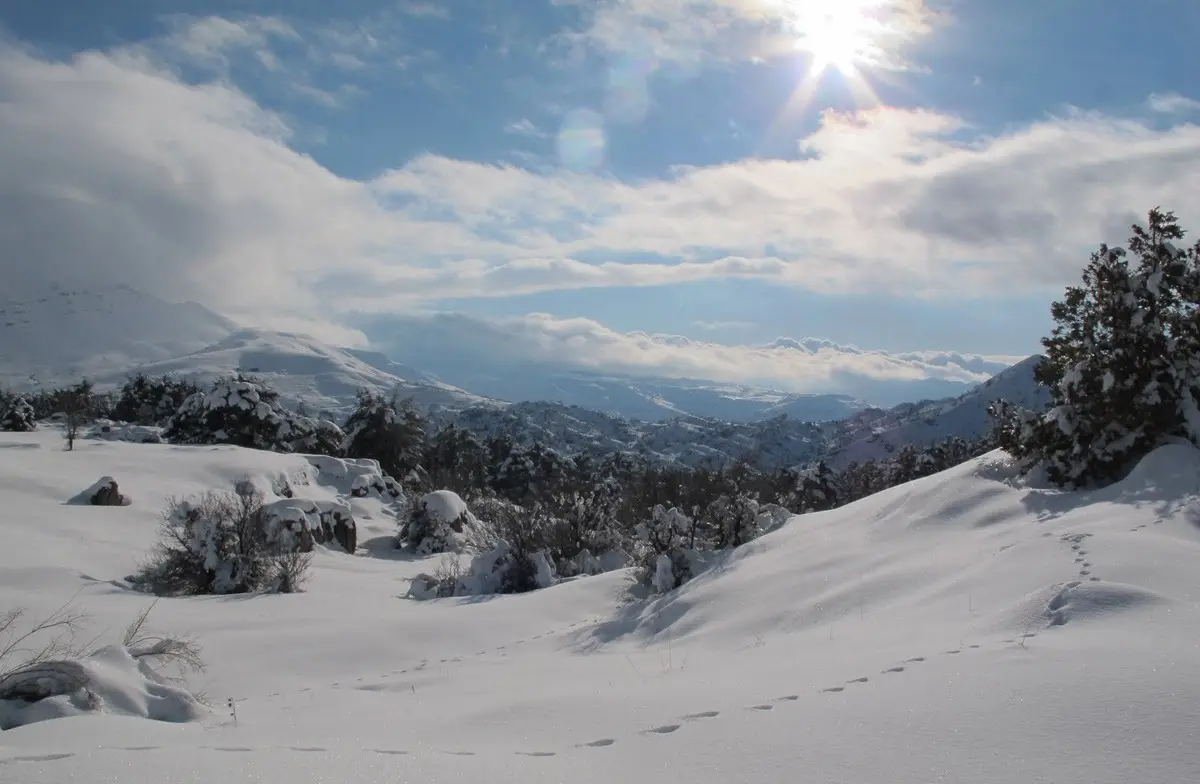
Yes. Between December and March the lower forest gets snow cover, and the gentle gradients around the main entrance make it one of the best snowshoeing spots in Lebanon — a quieter option than skiing in Lebanon. The reserve operates on a limited winter schedule, but the trails stay accessible with the right gear and transport.
Snowshoe rental runs $5–$15 per day at the entrance. Snowshoeing is one of the easiest outdoor sports to learn: strap them on, walk normally, done. The silence under a foot of snow, with the cedars black against white, is the strongest argument for coming in winter.
The logistical problem is getting there. The access road ices over and often requires a 4×4. If you’re renting a standard sedan, don’t attempt the mountain roads after a fresh snowfall — wait a day for the plows.
Pro Tip: If the forecast shows fresh snow overnight, call the reserve directly before driving up. The road gets closed without announcement, and there’s no signage telling you until you’ve driven 90 minutes from Beirut.
How much does Barouk Cedar Forest hiking cost?
A full day of Barouk Cedar Forest hiking runs $30–$90 per person depending on how you get there and whether you hire a guide. Entry is cheap. Transportation is where the budget swings.
- Entrance fee (Lebanese nationals): $5
- Entrance fee (foreign and Arab nationals): $10
- Private guide (optional but recommended on long trails): $25–$40 per half-day
- Snowshoe rental (winter only): $5–$15 per day
This fits the general Lebanon travel cost pattern — the attraction is cheap, the logistics aren’t.
How do you get to Barouk Cedar Forest from Beirut?
Barouk Cedar Forest is about 60 kilometers (37 miles) from Beirut, roughly 90 minutes by car via the Chouf mountain road. You have three real options: rent a car, hire a taxi, or take a public bus and finish on foot. Self-driving gives you the most flexibility, especially if you want to detour through Deir el Qamar.
Option 1: Rent a car
- Cost: $30–$50 per day
- Drive time from Beirut: 90 minutes via Damascus Highway, or 2 hours via the scenic route through Deir el Qamar
- Best for: Independent travelers, couples, anyone doing multi-stop day trips
You’ll want to review driving in Lebanon advice before you attempt Shouf roads. The switchbacks above Barouk village are tight, and local drivers take the center line on blind curves.
Option 2: Private taxi
- Cost: $60–$75 one way from Beirut
- Best for: Groups of 3–4 splitting the fare, people who don’t want to drive mountain roads
Stress-free, but expensive for a solo traveler.
Option 3: Public bus plus walk
- Cost: $5–$8 total
- Time: 2.5–3 hours with transfers
- Best for: Budget travelers, solo hikers
From Beirut’s Cola bus station, take a minibus or shared taxi heading toward Joub Jannine and ask the driver to drop you in Barouk village. From there it’s a 2-kilometer (1.2-mile) uphill walk to the entrance — add 30–40 minutes on top of your hike time. Or negotiate a local taxi at the drop-off.
What should you pack for Barouk Cedar Forest hiking?
Pack for weather 10°C (18°F) colder than the coast, no water sources on the trail, and poor cell reception. The essentials list is short but non-negotiable.
- Hiking boots, not sneakers — the limestone is rocky and twists ankles
- Windbreaker or fleece, year-round — the forest canopy is cool even in August
- Minimum 2 liters of water per person — zero refill points on the trails
- Power bank — cell reception vanishes past the gate
- Offline maps — download Wikiloc tracks or a GPX file from one of the essential apps for Lebanon travel before you leave the hotel
- Snacks — the entrance gift shop sells honey and jam, not lunch
Smoking and eating inside the forest proper are forbidden, so save lunch for the village restaurants below.
Where should you eat after hiking in Barouk?
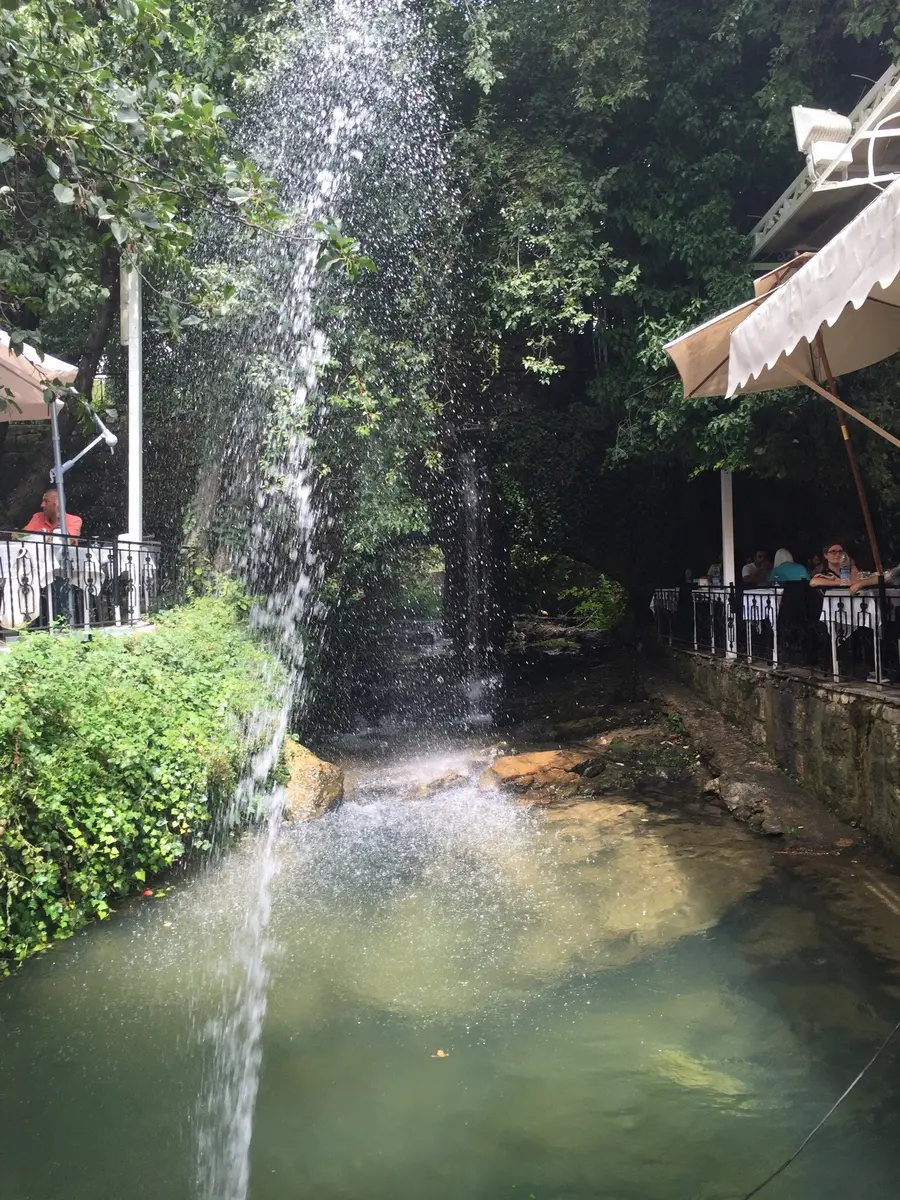
The village sits along the Nabeh Barouk river, and three restaurants directly on the water form the post-hike scene. All serve traditional Lebanese mezze and grills, and all are within a 5-minute drive of the forest entrance. Here’s what each one is actually like.
1. Shallalat Al Barouk — the riverside flagship
You eat on wooden platforms built over the river. The noise level is loud by Lebanese standards — families shouting over the water, kids wading in the shallows, the occasional wedding party. The food is solid mezze, not revelatory. You come for the setting.
- Location: Nabeh Barouk river, central Barouk village
- Cost: $20–$35 per person for a full mezze spread
- Best for: Groups, families, anyone wanting the full “dip your feet in the river” experience
- Time needed: 90 minutes minimum — this isn’t a quick lunch
2. Baytna Restaurant — the view pick
Higher up the slope with panoramic views back across the valley. Quieter than Shallalat, with a more modern menu. If you’ve done the Barouk-Maasser connector and your knees hurt, the terrace seats here are worth the short drive up.
- Location: Barouk village, elevated position above the river
- Cost: $25–$40 per person
- Best for: Couples, photographers, people who prefer quiet to atmosphere
- Time needed: 60–90 minutes
3. Al Midyaf — the trout specialist
Known locally for fresh river trout grilled whole. This is the most traditional of the three in terms of cooking, and the one locals actually eat at.
- Location: Near the river in Barouk village
- Cost: $15–$30 per person
- Best for: Solo travelers, trout eaters, anyone prioritizing traditional Lebanese food over scenery
- Time needed: 45–60 minutes
Pro Tip: Skip Shallalat Al Barouk on Sundays in spring and summer. Beirut families descend en masse between noon and 3 p.m., and you’ll wait 40 minutes for a table. Go at 4 p.m. instead, or eat at Al Midyaf any day.
Before you lace up
TL;DR: Barouk Cedar Forest hiking delivers 3,000-year-old trees, 250 kilometers of trails and real wilderness for $10 entry — but bring offline maps, a power bank and proper boots because signage and cell service both fail inside the reserve.
This isn’t a manicured national park. Trail markers are inconsistent, the access road ices in winter, and the one-way taxi from Beirut costs more than the entrance fee eight times over. What you get in return is a forest that actually regenerates itself, views that stretch from the Mediterranean to the Beqaa, and mezze by a river when you’re done. That trade-off is the whole point.
Which trail sounds right for your Lebanon trip — the easy Hill Lake loop, the Batloun traverse, or the wild Ain Zhalta route?