Your usual travel app stack won’t survive Lebanon. The country runs on a dual-currency economy, a fragmented digital ecosystem, and infrastructure quirks (rolling blackouts, unpredictable banking) that the global giants haven’t adapted to. This guide is the set of Lebanon travel apps I install every time I fly into Beirut — what each one solves, what it costs, and which ones are worth skipping.
I’ve tested every app below on the ground. Some are obvious. A few are annoying to sign up for. A couple have saved me from getting charged double for a ride at 2 a.m. outside Mar Mikhael.
Why your default travel apps won’t cut it in Lebanon
Lebanon operates on specific digital logic shaped by the ongoing financial crisis and patchy infrastructure. Cash is king, international cards misfire without warning, and the apps most US travelers rely on (Venmo, Zelle, Apple Pay) either don’t work or don’t connect to anything local. You need a different toolkit — mostly Lebanese-built apps that talk to each other and to the country’s cash networks.
Three realities drive the whole app list:
- The Lebanese Lira trades around 89,500 LBP to 1 USD and most prices are quoted in dollars anyway, but smaller vendors still transact in Lira at their own rates.
- Google Pay is rolling out, but card payments at restaurants and taxis often fail at the terminal — you’ll pay cash far more than you expect.
- Uber works, but it works differently here. Safety, pricing, and driver behavior all vary from what you’re used to.
Pro Tip: Download every financial app and verify the KYC (ID upload) before you fly. In-country verification can take days if your passport photo gets rejected, and you don’t want to be locked out of your wallet on day one.
Which money apps do you actually need for Lebanon?
Four apps cover the financial ground: one for verifying exchange rates, one as your primary e-wallet, one as a Western Union fail-safe, and one for cardless ATM cash. Together they replace the banking app you’d normally lean on. Install all four before departure — the verification steps are the slowest part.
Khod — the exchange rate you can trust
This is the app I open first every single day in Lebanon. Khod aggregates live Lebanese Lira rates from Black Market Sellers, BoB Finance, OMT, and Sayrafa, and gives you an instant USD-to-LBP calculator. When a taxi driver quotes you a figure in Lira and claims it’s “the real rate,” you pull up Khod, show the screen, and the conversation ends.
The app has crossed 150,000 users and — more importantly — runs clean. No ads, no login wall. The calculator handles decimals and foreign currencies (EUR, CAD, AUD) if you’re not US-based.
- Best for: Anyone paying in cash Lira anywhere outside a hotel
- Cost: Free
- Platform: iOS and Android
- Priority: Install before arrival

Whish Money — the local e-wallet
Whish has grown from a simple money-transfer service into the default Lebanese digital wallet. One account covers a lot: a free digital Visa card, Scan-to-Pay at more than 10,000 POS terminals across Lebanon, local and international transfers to 500,000+ pickup points, telecom top-ups for Touch and Alfa, and a travel eSIM purchased directly in the app.
The catch: KYC verification is strict. You’ll upload your passport, and the approval can bounce once or twice. Funding your Whish wallet with a foreign credit card also triggers fraud flags routinely — the most reliable way to load it is cash at one of their 500+ physical branches. For trips longer than 3-4 days, Whish is worth the setup pain.
- Best for: Medium-to-long stays, mobile top-ups, paying at local shops with QR
- Cost: Free account; 1% fee on cash-outs above monthly limits
- Platform: iOS and Android
- Priority: Install before arrival, verify on day one
OMT Pay — your Western Union fail-safe
OMT is Lebanon’s Western Union master agent. That matters because when card payments fail (and they will), you can self-remit funds from home to yourself via Western Union and pick them up across 1,400+ OMT locations countrywide — gas stations, convenience stores, dedicated OMT branches, all running extended hours. The OMT Pay app locates the closest open agent and tracks your transfer.
Important detail: all Western Union payouts in Lebanon are made in USD only, and a 2% cash-handling fee is deducted from the principal at pickup. The OMT Pay app now offers zero fees on Western Union transfers via the wallet itself, bypassing the physical handoff.
- Best for: Emergency cash backup if your debit card stops working
- Cost: Free app; 2% cash-handling fee on inbound Western Union transfers
- Platform: iOS and Android
- Priority: Install before arrival
Purpl — cardless ATM cash from abroad
Purpl partners with Remitly and other remittance platforms in 45+ countries (US, EU, UK, UAE, Australia) to let you — or a family member — send USD to Lebanon and withdraw it cardlessly at over 100 Banque Libano-Française ATMs using a one-time code. No bank account required, no card needed. Zero cash-out fees on the recipient side.
This is the safest way I’ve found to access significant cash without carrying a brick of bills from the US. The app also has a growing digital-wallet feature for spending directly at partner merchants.
- Best for: Receiving larger sums from home without a Lebanese bank account
- Cost: Free to receive; sender pays ~2% via Remitly from the US
- Platform: iOS and Android
- Priority: Install before arrival if you’re staying more than a week
Pro Tip: Don’t rely on a single financial app. I keep Whish funded with about $100 for daily payments, use Purpl to pull bigger sums when needed, and keep OMT Pay as the “something broke, I need cash now” fallback.
How do you get around Beirut without losing your mind?
Public transport in Lebanon is informal — shared service cabs, beat-up vans, no fixed schedules. For US travelers, ride-hailing is how you move. There’s no single winner: Allo Taxi for safety, Uber for familiarity, Bolt and inDrive as backups, and Google Maps as the common navigation layer.
Allo Taxi — the safe default
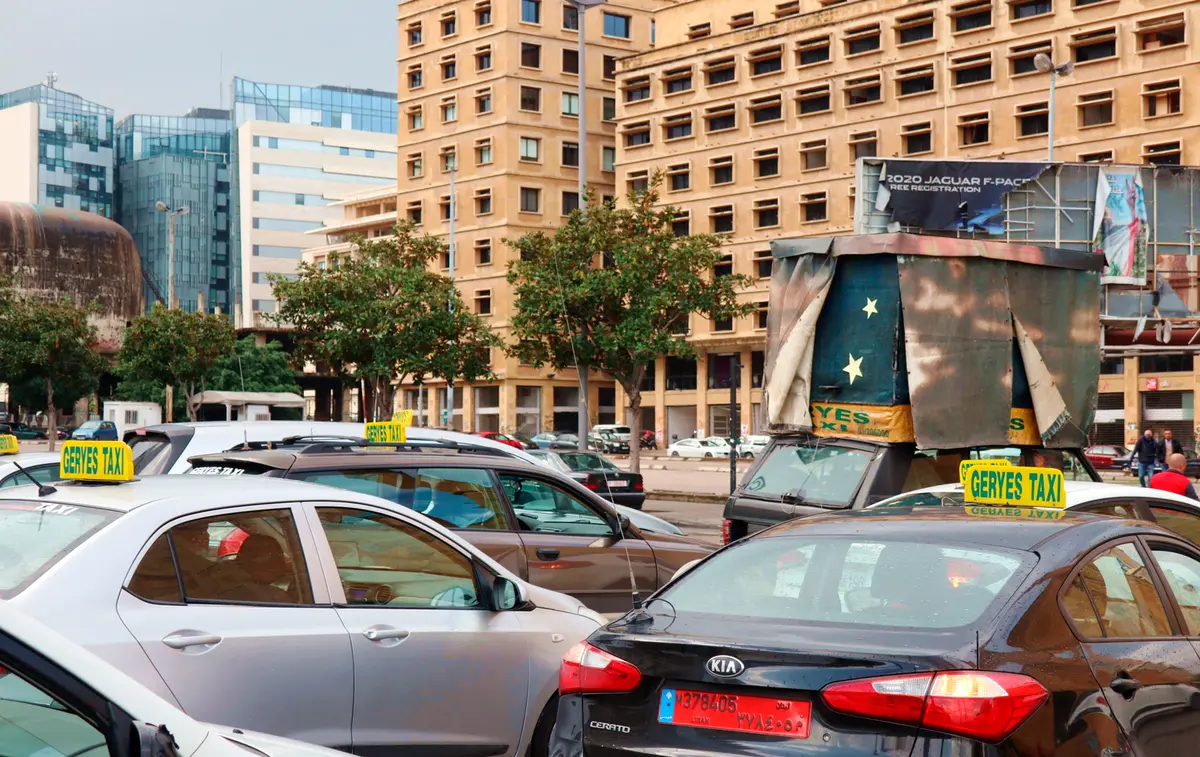
Allo Taxi runs a managed fleet with uniformed drivers, fixed fares shown before you book, and 24/7 phone support at 1213. Drivers get briefed, cars get inspected, and the company maintains partnerships with most of the major Beirut hotels (Phoenicia, Movenpick, Vendome). The app sends you the plate number and driver’s mobile by SMS before pickup.
Fares run 30-50% higher than Uber or Bolt for the same trip. That’s the premium for not having a driver demand cash mid-ride. For solo travelers, first-timers, or airport transfers, Allo is the call. I use it every single time for the Beirut Rafic Hariri Airport transfer at night.
- Best for: Solo travelers, airport runs, anyone prioritizing safety
- Cost: 30-50% more than Uber/Bolt; typical Beirut-to-airport ride around $20-25
- Platform: iOS and Android
- Priority: Install before arrival
Uber — familiar but imperfect
Uber works across Greater Beirut and the interface is the one you already know. The friction: drivers regularly accept a ride, then message to demand a higher cash fare once you’re moving. This happens when the Uber pricing algorithm lags behind fuel inflation or surge conditions. Vehicle quality swings wildly — I’ve had a new Kia and a 1998 Hyundai on the same day.
Uber’s upfront pricing is the app’s best feature, but be prepared to negotiate or cancel if a driver starts bargaining. For daytime trips in the city center, it’s fine.
- Best for: Short daytime Beirut rides when you want an English-speaking driver
- Cost: Varies; roughly $4-7 for most intra-city rides
- Platform: iOS and Android
- Priority: Install before arrival
Bolt — cheaper, riskier
Bolt prices below Uber consistently and accepts cash by default. The trade-off is a looser driver-vetting process — signing up as a Bolt driver in Lebanon reportedly takes six days versus the much higher barriers for Uber (which requires the red commercial plate). Vehicle quality and driver experience reflect this.
Use Bolt as a fallback when Uber shows no cars. Don’t lead with it at night, don’t use it for airport runs, and skip it entirely if you’re uncomfortable negotiating.
- Best for: Budget daytime rides when nothing else is available
- Cost: 10-20% below Uber for comparable trips
- Platform: iOS and Android
- Priority: Install as backup only
inDrive — the newer local challenger
inDrive (formerly popular in other MENA markets, now active in Lebanon) lets you name your own fare, which drivers can accept, reject, or counter. This works in Lebanon because pricing is inherently negotiable anyway — you’re just doing the negotiation in-app before the ride starts instead of arguing after.
Supply is thinner than Uber, and driver English is variable. I use it when Uber shows nothing and I’d rather haggle once than deal with mid-ride surprises.
- Best for: Budget travelers willing to name a price; neighborhoods outside central Beirut
- Cost: Typically 15-25% below standard fares
- Platform: iOS and Android
- Priority: Install as backup
Google Maps — good for navigation, bad for transit
Google Maps is still the best navigation tool in Lebanon, but it lies about timing. A 5 mile (8 km) trip from Hamra to Achrafieh can take 15 minutes at 7 a.m. or 90 minutes at 6 p.m. — the app rarely catches the real traffic state. Public transport data is mostly wrong or missing; do not trust bus directions.
Download offline maps of Beirut, the Chouf, and anywhere you plan to hike (Qadisha Valley, the Lebanon Mountain Trail) before you leave your hotel Wi-Fi.
- Best for: Walking directions, rough orientation, finding businesses
- Cost: Free
- Platform: iOS and Android
- Priority: Install before arrival; download offline maps on day one
Pro Tip: Skip Waze. Its crowdsourcing advantage is much weaker in Lebanon because far fewer drivers use it consistently — Google Maps ends up more accurate by default.
What are the best food delivery apps in Lebanon?
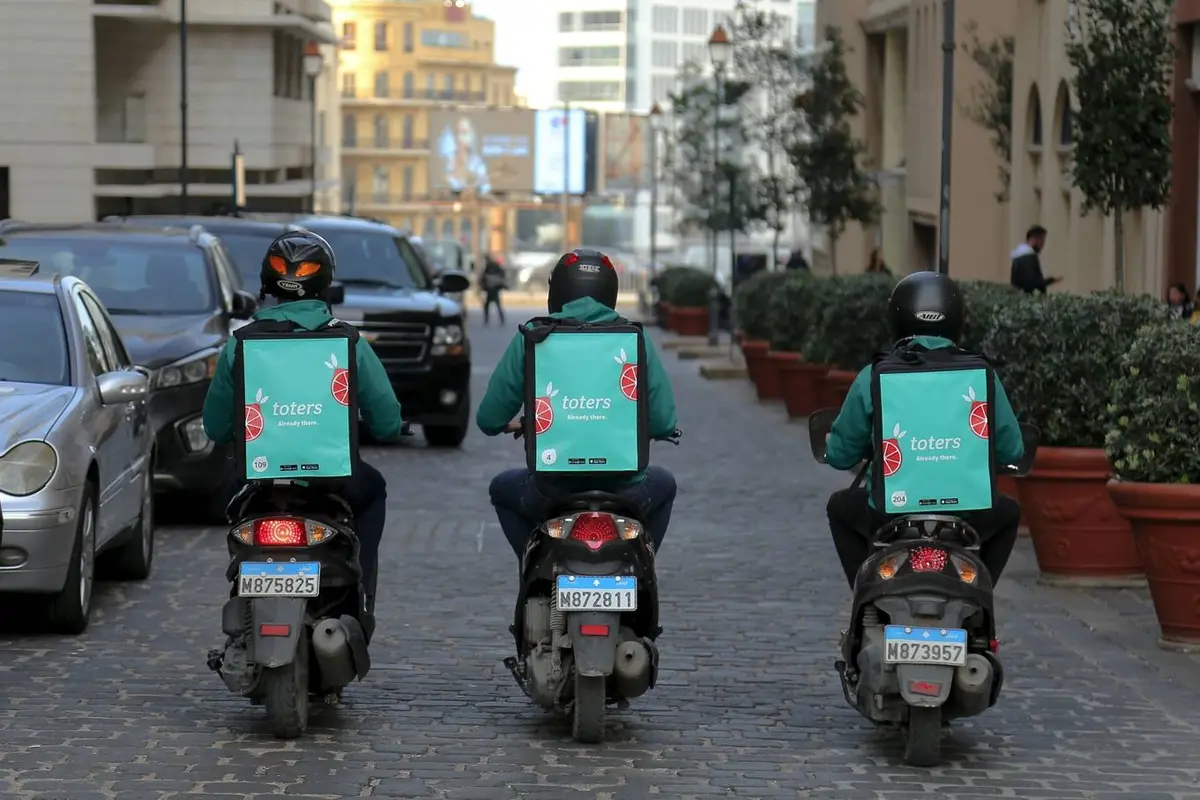
Lebanese food culture runs on Instagram for discovery and a single logistics app for delivery: Toters. After Zomato exited the market, Toters took over, and the alternatives are fine but secondary. Expect 15-45 minute delivery windows in Beirut and a 5-15% markup over dine-in prices on most restaurants.
Toters — the logistics giant
Toters is more than a food app. It’s a logistics layer covering restaurants, groceries (Toters Fresh), electronics, pharmacies, and a courier service called Toters Butler that will pick up anything that fits on a motorbike. Order manakish at 8 a.m., a laptop charger at noon, and dinner at 9 p.m. — all from the same app.
User reviews flag hidden markups and occasional delivery delays, which matches my experience. The app is still the only real option with the depth of local partnerships to justify installing.
- Best for: Food, groceries, and courier errands from your hotel
- Cost: Delivery fees $1-4; noticeable markups on menu prices
- Platform: iOS and Android
- Priority: Install on arrival
Gozilla — the cheaper alternative
Gozilla competes aggressively on price and runs free-delivery promotions frequently. Restaurant selection is narrower than Toters, but for a specific craving at a better price, it’s worth comparing.
- Best for: Price comparison against Toters before ordering
- Cost: Lower delivery fees; frequent promos
- Platform: iOS and Android
- Priority: Nice to have
NokNok — fast grocery delivery
NokNok runs dark-store operations and beats Toters Fresh on speed for essentials (water, toiletries, snacks). Delivery can hit 15 minutes in central Beirut.
- Best for: Emergency groceries and late-night toiletry runs
- Cost: Delivery fees under $2; marginal product markups
- Platform: iOS and Android
- Priority: Nice to have
Instagram — where Lebanon’s restaurants actually live
This isn’t a download — you already have Instagram. But understand that in Lebanon, restaurants, bars, and clubs publish their menus, hours, and reservation phone numbers on Instagram first, Google Maps second, and their own website almost never. Follow the places you’re interested in before you arrive. DMs are the fastest way to reserve a table at anywhere small in Mar Mikhael or Badaro.
Savor, a dish-specific review app, is emerging and worth a look, but it’s not where discovery happens yet.
- Best for: Finding and reserving at any restaurant smaller than a chain
- Cost: Free
- Platform: iOS and Android
- Priority: Already installed
How do you stay connected in Lebanon?
You need data the minute you land and a VPN once you’re on hotel Wi-Fi. Lebanon’s eSIM market is weirdly restricted — only a handful of global providers actually connect to local networks. Local prepaid SIMs are cheaper and give you a Lebanese number, which you need for Allo Taxi and bank verification SMS.
Airalo — the eSIM for day one
Airalo’s “Salbeh” plan (meaning “cute” in Lebanese dialect) is the most reliable international eSIM for Lebanon. It’s priced at $9.50 for 1 GB over 7 days — one of the most expensive Airalo plans in the region, but confirmed working by multiple US travelers. Activation takes 1-2 minutes and connects via the Alfa network.
I use it for the first 24 hours only, then switch to a local SIM for the rest of the trip. Most other global eSIM apps (Simly, MontySIM, Google Fi) don’t reliably work in Lebanon.
- Best for: Connectivity from the moment you land
- Cost: $9.50 for 1 GB / 7 days; larger plans available
- Platform: iOS and Android (eSIM-compatible phone required)
- Priority: Buy before departure
Touch and Alfa — buy local for real value
Once you’re in country, a local prepaid SIM or eSIM is dramatically cheaper than Airalo. Touch’s “Visitor Line” bundle runs $13 (excluding tax, so closer to $16 with VAT) and includes 10 GB of data, 100 local minutes, and 100 SMS over 14 days. Alfa’s starter bundle lands around $12 for a line plus a 2 GB, 7-day package.
Buy at an official Touch or Alfa store in Beirut — not at the airport (stores there are unreliable per recent traveler reports) and not at random phone shops (inflated prices). You’ll need your passport. Touch has the stronger 4G coverage countrywide.
- Best for: Any stay longer than a couple of days
- Cost: Touch Visitor Line $16 with tax, 10 GB / 14 days
- Platform: Physical SIM or eSIM
- Priority: Buy in Beirut, not at the airport
ProtonVPN and Windscribe — protect your banking apps
Hotel Wi-Fi, café Wi-Fi, and Ogero public hotspots are not places to open your US bank app uncovered. ProtonVPN’s free tier covers most of what a traveler needs (US and EU exit nodes, unlimited data). Windscribe is the alternative I reach for when I want split-tunneling — run US traffic through the VPN, local Lebanese traffic (Whish, Toters) outside it.
Both work reliably in Lebanon. Some local apps throw errors when routed through a VPN, which is why split-tunneling matters.
- Best for: Accessing US banking apps, streaming services, protecting data on public Wi-Fi
- Cost: Free tier sufficient for short trips; paid plans from $5/month
- Platform: iOS and Android
- Priority: Install before arrival
Which apps unlock the real Lebanon?
These are the ones that separate tourists from travelers: cultural calendars, ticket platforms, hiking GPX files, music streaming, and a niche app that catalogs the country’s best chalets. None are essential — all are worth the phone space if you want more than the standard Downtown-Raouche-Byblos loop.
Lebtivity — what’s happening tonight
Lebtivity aggregates events across Beirut and beyond: gallery openings, club nights, outdoor film screenings, festivals in Batroun and Jounieh, one-off dinners. It’s the answer to “what’s on tonight” that no generic travel guide can match.
- Best for: Nightlife, cultural events, one-off experiences beyond standard sights
- Cost: Free
- Platform: iOS and Android; web version also strong
- Priority: Install on arrival
Tick’it and Ihjoz — concert and festival tickets
These are the two platforms that control ticketing in Lebanon. Anything from the Beiteddine Festival to a smaller indie gig at Radio Beirut runs through one of them. Both accept international credit cards and deliver QR tickets.
- Best for: Concerts, major festivals, venue events
- Cost: Ticket price plus small booking fee
- Platform: iOS and Android (web works fine too)
- Priority: Install only if you’ve booked an event
Wikiloc and Gaia GPS — hiking trails Google doesn’t have
Lebanon’s mountains have excellent hiking — the Qadisha Valley, Jabal Moussa, the full 290-mile (470 km) Lebanon Mountain Trail — and Google Maps knows almost none of it. Wikiloc is where local guides upload GPX tracks with photos and notes. Gaia GPS is the more professional tool for importing official Lebanon Mountain Trail files and using topographic overlays.
On a solo day hike in the Chouf, I followed a Wikiloc track that added 2 miles to the route Google suggested — and avoided a washed-out section the main trail had lost. The extra detail is not optional if you’re going anywhere remote.
- Best for: Day hikes, multi-day treks, LMT segments
- Cost: Wikiloc free; Gaia GPS $40/year for full topo access
- Platform: iOS and Android
- Priority: Install before any hiking trip

Anghami — the local music scene
Anghami is the Middle East’s answer to Spotify and the only way to hear the Lebanese indie and pop scene without falling into YouTube autoplay. It has more Fairuz, more Mashrou’ Leila, more Bedouin Burger than Spotify’s regional offering.
- Best for: Getting the actual soundtrack locals listen to
- Cost: Free tier with ads; Plus $5/month
- Platform: iOS and Android
- Priority: Install before arrival
Kazderni — chalets and guesthouses outside Beirut
Kazderni is a directory of weekend rentals — chalets in Faraya, guesthouses in the Chouf, farm stays in the Bekaa. It’s where Beirutis book their own weekends away, which makes it better than Booking.com for anything outside the main hotel belt.
- Best for: Weekend trips outside Beirut, mountain and coastal getaways
- Cost: Varies by property
- Platform: iOS and Android
- Priority: Install only if planning weekend trips
Which safety and utility apps are worth the space?
Three apps round out the kit — one for the electricity grid, one for emergencies, and a US government enrollment that isn’t really an app but functions like one.
Ejet Elkahraba — track the power cuts
Lebanon’s state electricity company, Électricité du Liban, runs on a rationing schedule. Your hotel probably has a generator, but cafés and coworking spaces don’t always. Ejet Elkahraba tracks the state grid schedule by neighborhood so you know when the state supply will cut and the generator takes over (or doesn’t).
For a traveler, it matters less than for a resident, but if you’re doing remote work from a café in Gemmayzeh it’s the difference between a productive afternoon and a dead laptop.
- Best for: Digital nomads, remote workers, anyone needing predictable power
- Cost: Free
- Platform: iOS and Android
- Priority: Install only if working remotely
Lebanese Red Cross — emergency services
The Lebanese Red Cross handles ambulance and emergency response across the country. The app gives you one-tap access to their hotline and basic first-aid guidance. Lebanon does not have a universal emergency number that routes reliably to English-speaking operators; the Red Cross is your best direct line if something goes wrong.
- Best for: Medical emergencies, accident response
- Cost: Free
- Platform: iOS and Android
- Priority: Install before arrival
STEP — US State Department alerts
The Smart Traveler Enrollment Program isn’t a phone app but a web registration that pushes US State Department security alerts to your email and phone. Lebanon’s security situation shifts — protests, border tension in the south, occasional airport closures — and STEP is how the US Embassy in Beirut reaches you if something major happens.
Enroll at step.state.gov before you fly. It takes five minutes and the alerts are worth having.
- Best for: All US travelers, every trip, no exceptions
- Cost: Free
- Platform: Web enrollment; alerts via email and SMS
- Priority: Enroll before arrival
Pro Tip: If you have an iPhone with satellite messaging (iPhone 14 or later), learn how to use it before you travel. Cell coverage drops in the Chouf mountains, parts of the Bekaa, and the Akkar, and satellite SOS has rescued more than one hiker on the Lebanon Mountain Trail.
Before you fly: the install order that actually works
TL;DR: Install four financial apps (Khod, Whish, OMT Pay, Purpl), one safety-first ride app (Allo Taxi), Google Maps with offline Beirut downloaded, Airalo for day one, and ProtonVPN before you leave home. Everything else you can add after landing as you need it. This stack has taken me through four trips without any major friction.
The real shift for US travelers isn’t any one app — it’s the mindset. In Lebanon, you don’t use one super-app; you use five narrow ones that each solve one specific problem the crisis economy has created. Khod for rate verification. Whish for payments. Allo for rides you trust. Toters for everything that should arrive on a motorbike. The sooner you stop trying to force Venmo or Apple Pay into the flow, the smoother the trip runs.
Which Lebanon travel apps have saved your trip — or burned you? Drop a note in the comments. I’m especially curious what’s changed on the ground since I last tested my setup.